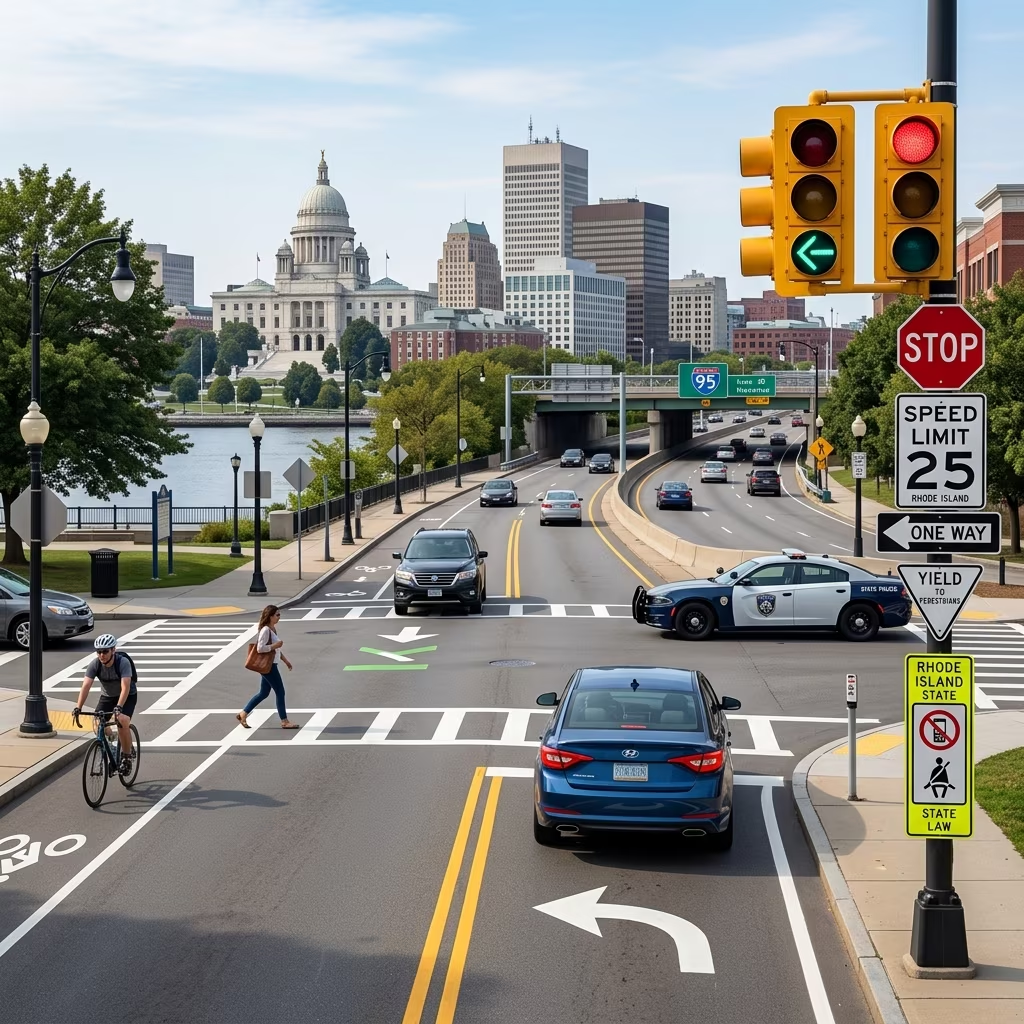
Understanding the Road Rules in Rhode Island
Rhode Island driving laws are designed to keep traffic moving safely while reducing the risk of collisions, injuries, and avoidable violations. Many of the rules that matter most to drivers are simple in concept, but they are easy to overlook in daily travel. Knowing the basics can help you avoid tickets, protect your license, and make better decisions behind the wheel.
The state’s traffic rules cover everything from how fast you may drive to how closely you may follow another vehicle. They also address safety habits such as wearing seat belts, using child restraints, and yielding to emergency or stopped roadside vehicles. In practice, these requirements shape the most common situations drivers face on Rhode Island roads.
Speed Limits and the Cost of Going Too Fast
Speeding is one of the most common traffic violations, and Rhode Island treats it seriously. The state sets different maximum speeds depending on the type of road, with lower limits generally applying in neighborhoods and higher limits on certain highways. Drivers should always look for posted signs, because local conditions and roadway design can affect the lawful speed.
According to Rhode Island traffic guidance, the general maximums include:
- 65 mph on rural interstates
- 55 mph on urban interstates
- 55 mph on other limited-access public roads
- 25 mph in residential areas
The financial consequences of speeding increase as the speed over the limit rises. Rhode Island law provides a minimum fine of $95 for driving 1 to 10 miles per hour over the posted limit, and a minimum fine of $205 for traveling 11 miles per hour or more over the limit. Repeated violations can bring even higher per-mile fines and may also lead to a short license suspension.
That structure matters because it shows that speeding is not just a single flat-ticket offense. A driver who repeatedly exceeds the limit can face escalating consequences, which means even a relatively small mistake may become more serious if it happens again within a short period.
Following Distance and Safe Passing
Maintaining a safe space between vehicles is another important part of Rhode Island’s traffic code. Drivers may not follow another vehicle more closely than is reasonable and prudent. In everyday terms, that means tailgating is prohibited whenever the distance creates an avoidable risk.
The law also requires drivers in business or residential districts to leave enough room for an overtaking vehicle to enter safely when traffic conditions allow. This rule helps prevent rear-end crashes and makes lane changes less hazardous in dense traffic.
Passing rules are equally important. Drivers are expected to pass on the left and not cut back in front of the vehicle they have overtaken before completing the maneuver safely. In addition, passing must be completed before the driver comes within 100 feet of oncoming traffic. These requirements are meant to prevent head-on conflicts and unsafe merges.
Right-of-way rules matter at intersections too. When two vehicles reach an intersection at about the same time from different highways, the driver on the left must yield to the driver on the right. That rule helps resolve ambiguity and reduce crashes when no traffic signal or sign controls the movement.
Turning, Yielding, and Intersections
Turning safely is not just a matter of signaling and steering. Rhode Island drivers must yield to oncoming traffic and pedestrians before making a turn. This rule applies even when a turn may seem routine, because intersections are among the most conflict-prone places on the road.
Drivers turning left usually need to be especially careful, since opposing vehicles may be moving straight through the intersection. The obligation to yield remains when another vehicle is close enough to create a hazard. In other words, a turn is only lawful if the driver can complete it without forcing others to brake or swerve unexpectedly.
Rhode Island also prohibits blocking intersections. A driver should not enter an intersection unless there is enough room on the other side to clear it. This prevents gridlock and helps keep cross traffic from becoming trapped.
Headlights, Wipers, and Visibility Rules
Visibility rules are especially important in a state where weather can change quickly. Rhode Island requires headlights to be used from sunset to sunrise and whenever visibility drops below 500 feet. Headlights are also required during rain or snow and whenever windshield wipers are on.
These rules are meant to do more than help the driver see. They also help other motorists notice the vehicle sooner, which lowers the risk of lane drift, rear-end collisions, and missed turns. Drivers who turn on their lights only when conditions seem severe may already be driving in a situation where visibility is below the legal threshold.
In poor weather, headlights should be treated as a basic safety tool rather than an optional accessory. A vehicle that is easier to see is easier to avoid.
Seat Belts, Child Seats, and Passenger Safety
Rhode Island requires seat belt use by drivers and passengers. That rule is straightforward, but it has broad practical importance because it applies in ordinary trips as well as long commutes. Seat belts reduce the chance of ejection and help keep occupants positioned safely during a sudden stop or collision.
Young children require additional protection. Children younger than eight years old must ride in a federally approved restraint seat in the back seat of the vehicle. The restraint must be used according to the manufacturer’s instructions, including any age and weight limits. That requirement reflects the greater vulnerability of children in a crash and the need for restraints designed specifically for their size.
For families, this means child safety is not left to the driver’s discretion. The state expects the correct seat, proper installation, and proper placement in the vehicle.
Insurance, Registration, and Driver Documentation
Rhode Island drivers must carry proof of insurance and the vehicle registration while driving. Proof of insurance is not just a paperwork issue; it is part of the state’s broader approach to financial responsibility after a crash. Failure to comply can bring a fine.
Drivers also must be prepared to show their license, registration, and insurance information if stopped by law enforcement. If asked, a driver must provide identification and may also be required to write their name in the officer’s presence for identification purposes. If an officer directs a driver to exit the vehicle, the driver must do so.
At night, a stopped motorist must turn on the interior vehicle lights and keep them on until the officer permits departure. This makes the stop safer for both the driver and the officer and reduces confusion during roadside contact.
Texting, Headsets, and Distracted Driving
Distracted driving laws are intended to keep a driver’s attention on the road. Rhode Island prohibits texting while driving, and the state also bars motorists from operating a vehicle on a public highway while wearing earphones or headsets. Both restrictions reflect the same safety concern: a driver who is visually or audibly disconnected from traffic is less able to react to hazards.
These rules are especially important in stop-and-go traffic, near pedestrians, and during lane changes. Even brief distraction can become dangerous when other vehicles are braking, merging, or turning nearby. For that reason, Rhode Island’s approach is to limit behaviors that interfere with awareness and reaction time.
The Move-Over Requirement for Stopped Vehicles
Rhode Island’s move-over law requires drivers to slow down and, when possible, change lanes when approaching a designated stopped vehicle with flashing lights or other warning signals. The law applies to emergency and service vehicles such as fire, ambulance, police, tow, and certain maintenance or utility vehicles.
If a driver is on a multi-lane road and can safely change lanes away from the stopped vehicle, they must do so. If changing lanes is not safe or possible, the driver must slow down and create as much distance as possible. On a two-lane road, the practical response is to reduce speed and proceed cautiously while leaving room between the vehicle and the stopped unit.
This rule protects the people working near traffic, but it also protects passing motorists from secondary crashes. A stopped roadside vehicle often means a person is standing near moving traffic, so the law expects drivers to act early and deliberately.
Easy-to-Overlook Rules That Can Still Lead to Trouble
Some Rhode Island traffic requirements are less famous than speeding or seat belt laws, but they still matter. For example, drivers are generally expected to keep their vehicle under control and avoid dangerous maneuvers that interfere with traffic flow. They are also expected to drive with awareness of road conditions, weather, and nearby vehicles.
Drivers should also remember that local enforcement may focus on conduct that creates risk even if the behavior seems minor at first glance. Examples include following too closely, failing to yield, driving without lights in poor visibility, or ignoring a roadside emergency vehicle. Small mistakes can lead to larger problems when they happen in traffic.
| Rule area | What drivers should remember |
|---|---|
| Speeding | Posted limits vary by road type, and fines rise with speed. |
| Passing | Pass on the left and complete the maneuver safely before returning right. |
| Intersections | Yield when required and do not block the crossing. |
| Visibility | Use headlights in darkness, rain, snow, or low visibility. |
| Passengers | Use seat belts and proper child restraints. |
| Roadside safety | Slow down and move over for stopped emergency or service vehicles. |
What Drivers Can Do to Stay Compliant
The easiest way to avoid traffic violations in Rhode Island is to build a few habits into every trip. Drivers should watch posted speed signs, maintain enough following distance, and check mirrors before changing lanes. They should also confirm that headlights are on when weather or daylight conditions require them.
Before driving, it is smart to verify that insurance documents are in the vehicle and that all passengers are buckled properly. Parents should also confirm that young children are secured in the correct seat. These steps take only a moment, but they can prevent a ticket or a dangerous mistake.
During the drive, the safest approach is to treat every intersection and roadside stop as a place where extra caution is needed. If another vehicle is pulled over or an emergency worker is nearby, slow down early and move over when safe. If traffic is dense, stay patient and avoid abrupt lane changes or aggressive passing.
When a Traffic Violation Becomes More Serious
Some violations are handled as simple citations, but repeat offenses or unsafe behavior can have broader effects. A speeding violation may lead to higher fines on repeat occurrences, and serious or repeated traffic mistakes can affect a driver’s record. For many motorists, the real cost is not only the ticket itself but also the possibility of increased insurance premiums, court appearances, or license consequences.
Because traffic law enforcement is closely tied to safety, drivers should assume that habits developed on an ordinary commute can have legal consequences. A careful driver reduces both crash risk and the chance of accumulating avoidable penalties.
Frequently Asked Questions
What is the basic speed limit in Rhode Island neighborhoods?
Rhode Island generally sets residential speed limits at 25 mph unless a posted sign says otherwise.
Can I pass another car on the right?
Rhode Island passing rules require drivers to pass on the left in ordinary situations and to complete the pass safely before returning to the lane.
Do I need to turn on my headlights during rain?
Yes. Headlights must be used when it is raining or snowing and whenever windshield wipers are in use.
Are children allowed to ride without a car seat?
Children under eight years old must be transported in a federally approved restraint seat in the back seat of the vehicle.
What should I do when I approach a stopped emergency vehicle?
If it is safe, move over to a lane away from the vehicle. If moving over is not safe, slow down and leave as much distance as possible.
Is texting while driving allowed in Rhode Island?
No. Rhode Island prohibits texting while driving.
References
- Laws You Must Know — Rhode Island Division of Motor Vehicles. n.d. https://dmv.ri.gov/node/1371
- Motor Vehicle Laws — Rhode Island State Police. n.d. https://risp.ri.gov/safety-education/motor-vehicle-safety-information/motor-vehicle-laws
- General Laws of Rhode Island Section 31-15-12 — Rhode Island General Assembly / Justia mirror. 2025. https://law.justia.com/codes/rhode-island/title-31/chapter-31-15/section-31-15-12/
- General Laws of Rhode Island Section 31-41.1-4 — Rhode Island General Assembly / Justia mirror. 2025. https://law.justia.com/codes/rhode-island/title-31/chapter-31-41-1/section-31-41-1-4/
- Title 31 – State of Rhode Island General Laws — Rhode Island General Assembly. n.d. https://webserver.rilegislature.gov/Statutes/TITLE31/INDEX.HTM