
Revoking a Will: Practical Methods and Legal Pitfalls
Learn the main ways to revoke a will, when revocation happens automatically, and how to avoid disputes over your final wishes.
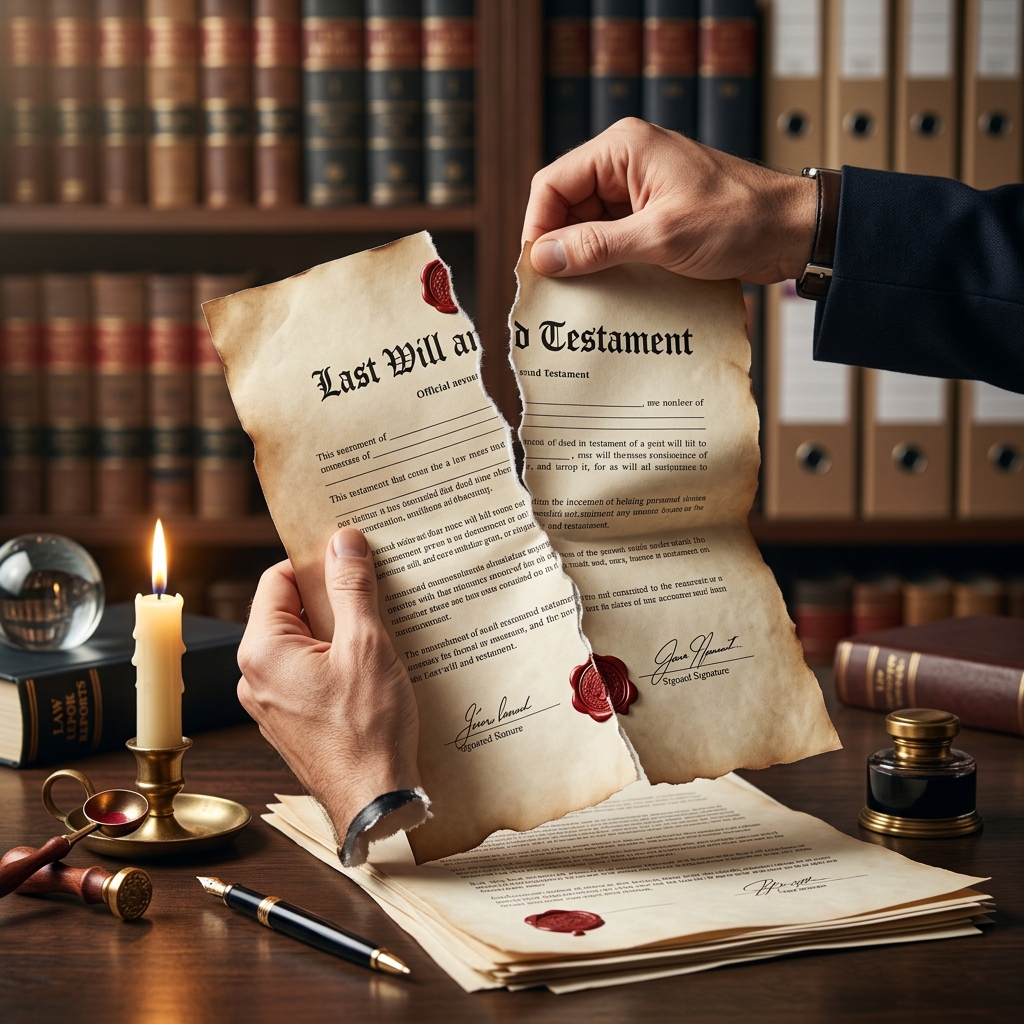
Many people focus on how to make a will, but fewer understand how to cancel or replace one when life changes. Revoking a will is the legal process of making your current will no longer effective so that a new plan, or state law, controls what happens to your property when you die. Doing this correctly is essential to prevent confusion, family conflict, and expensive court battles.
This guide explains the primary ways a will can be revoked, why your intent matters, what “revocation by operation of law” means, and common mistakes people make when trying to change their estate plan. It is general information, not legal advice, and specific rules vary by state. Consulting an experienced estate planning attorney is strongly recommended before you revoke or replace any will.
What Does It Mean to Revoke a Will?
To revoke a will is to legally declare that the document is no longer your binding last wishes. Once revoked, the will should not be used by a court to distribute your assets. Instead, your new will, other estate planning documents, or (if you have no valid will) your state’s default inheritance law will govern your estate.
Key ideas behind revocation include:
- Intent – You must intend to cancel the will; destruction or replacement without intent may not count.
- Proper method – The law recognizes specific acts, such as destroying the document or signing a new, valid will.
- Timing – Only the person who made the will (the testator) can revoke it, and only while they are alive.
A revoked will cannot be “partially valid”—either the document has legal effect or it does not. However, you can revoke parts of a will while leaving the rest intact by using a properly executed amendment known as a codicil.
Who Has the Power to Revoke a Will?
In nearly all U.S. jurisdictions, only the testator (the person who created the will) has authority to revoke it. After the testator dies, the will becomes a legally binding document and cannot be revoked or altered, though it may be challenged in court for reasons such as lack of capacity or fraud.
Important points about who can revoke a will:
- A spouse, child, executor, or other relative cannot lawfully cancel a will on their own.
- The testator can direct someone else to physically destroy the will, but that destruction must occur at the testator’s request and usually in their presence or in accordance with specific state rules.
- There is no legal limit on how many times a testator may revoke or replace their will, as long as they have the capacity to do so.
Overview of Common Revocation Methods
While details vary by state, most U.S. laws recognize three broad ways to revoke a will:
- By later instrument – signing a new will or separate revocation document
- By physical destruction – destroying the original document with intent to revoke it
- By operation of law – automatic revocation or modification triggered by events like divorce or conflicting provisions in a newer will
| Revocation Method | How It Works | Typical Use Case |
|---|---|---|
| New will or revocation document | Testator signs a properly executed document that cancels prior wills. | Updating the entire estate plan after major life changes. |
| Physical destruction | Will is torn, burned, shredded, or obliterated with intent to revoke. | Quick cancellation when no new will is yet in place or when creating a new one. |
| Operation of law | Law automatically changes or nullifies parts of a will after certain events. | Divorce, annulment, or conflicting terms in new documents. |
Revoking a Will by Creating a New Document
Drafting a new will is often the safest and most comprehensive way to revoke your existing will. A new will can both cancel prior documents and replace them with updated instructions for your estate.
Express Revocation Clauses
A will frequently includes language clearly stating that all prior wills and codicils are revoked. This is known as express revocation. When properly executed, such a clause leaves little doubt about which document is intended to control your estate.
Typical features of express revocation:
- Clear statement that the new will is your “last will” and that all previous wills are canceled.
- Signed by the testator and witnessed according to state law formalities.
- Often prepared by an attorney to ensure compliance with local statutes.
Implied Revocation by Inconsistent Provisions
Even if the new will does not explicitly say it revokes prior wills, the law may treat the old will as revoked when the new document is inconsistent with previous instructions. This is sometimes called implied revocation.
For example, if your old will leaves your house to one child and your new will leaves the same house to a different child, the newer provision generally controls, and the conflicting part of the old will is revoked.
Stand-Alone Revocation Documents
Some people revoke a will using a separate written document rather than a new will. This is sometimes referred to as a stand-alone revocation instrument. Such a document usually:
- States that a specific will (identified by date or description) is revoked.
- Is executed with the same formalities required for a will, including signatures and witnesses.
- May be used when a person moves to other estate planning tools, such as trusts.
Because a stand-alone revocation leaves you without a will unless you create another one, it should be used cautiously and only with a clear plan for how your assets will be handled.
Revoking a Will by Physical Destruction
A common and intuitive way to revoke a will is to physically destroy the document. Many state statutes recognize acts such as tearing, burning, shredding, or otherwise mutilating the paper as valid methods of revocation, but only when done with the specific purpose of canceling the will.
Typical Acts of Destruction
States often use similar language to describe which physical acts can revoke a will. These may include:
- Cutting or tearing the document so it is clearly damaged
- Burning or otherwise charring the paper
- Shredding the will into small pieces
- Obliterating or crossing out key portions of the text
These actions should make it obvious to anyone who later sees the document that it was meant to be destroyed and no longer treated as a valid will.
Why Intent Matters
Physical damage alone is not enough. The destruction must occur with a current intent to revoke the will. If a will is damaged by accident—such as a house fire or water leak—most state laws do not treat that as revocation.
Courts often look for evidence of intent, such as:
- Statements the testator made about wanting to cancel the will.
- Witnesses who saw the testator destroy the document.
- Written instructions from the testator directing destruction of the will.
Some statutes allow a third party to destroy the document at the testator’s request, but only if specific conditions are met, such as the testator being present or giving written authorization.
Electronic Wills and Digital Copies
In states that recognize electronic wills or allow digital copies to serve as original documents, revocation may involve deleting or otherwise rendering the electronic record unreadable. As with paper wills, the testator must intend for the deletion to cancel the will, and it is often wise to create a new will afterward to avoid disputes.
If you destroy only one copy of a paper will but leave other signed copies intact, a court may still treat the surviving copy as valid. For clarity, many lawyers advise testators to destroy all signed originals and known copies when revoking a will.
Revocation by Operation of Law
Sometimes a will is partially revoked automatically when certain life events occur or when new estate planning documents conflict with older ones. This is referred to as revocation by operation of law.
Conflicts Between Old and New Documents
When a new will or codicil contains provisions that contradict terms in an older will, the newer instructions usually control. The conflicting part of the old document is treated as revoked, even if the testator did not specifically say so.
This principle allows people to update portions of their estate plan without having to rewrite everything, but it also highlights the importance of coordinating all documents carefully to avoid confusion.
Divorce, Annulment, and Similar Events
Many states provide that certain provisions in a will are revoked automatically when a person experiences events like divorce, dissolution of marriage, or annulment.
Common examples include automatic revocation of:
- Gifts to a former spouse
- Appointment of a former spouse as executor or personal representative
- Certain benefits for a former spouse’s relatives
These laws aim to prevent unintended benefits to ex-spouses, but they vary by state and may not cover every situation. A fresh will after major life changes is still strongly recommended.
Changing a Will Without Fully Revoking It
You may not always wish to throw out your entire will. Instead, you might want to adjust specific gifts or appointments. This is usually done with a document called a codicil—a formally executed amendment that modifies, adds, or revokes parts of an existing will.
Features of codicils include:
- They must be signed and witnessed with the same formalities as a will.
- They refer to the original will and specify exactly which provisions are changed.
- They can revoke or replace portions of the will while leaving the rest intact.
Because multiple codicils over time can make your estate plan complex and harder to interpret, many attorneys prefer drafting a new, consolidated will after several changes.
When a Missing Will May Be Presumed Revoked
In some jurisdictions, if a will was last known to be in the testator’s possession but cannot be found after their death, courts may apply a rebuttable presumption that the testator destroyed it with intent to revoke.
This presumption can sometimes be overcome by evidence, such as:
- Proof that the will was lost or destroyed without the testator’s knowledge.
- Copies kept with an attorney or third party showing the testator did not intend revocation.
- Testimony about the testator’s continued belief that the will was valid.
Because missing documents can cause major disputes, storing your will safely and telling trusted people where it is kept is an important part of estate planning.
Common Mistakes When Revoking a Will
Revocation errors can lead to uncertainty and litigation. Some frequent problems include:
- Accidental destruction – A will damaged by flood, fire, or other accident without revocatory intent may still be considered valid, creating questions about what the testator wanted.
- Partial destruction – Tearing or crossing out only certain portions can be unclear unless accompanied by a formal codicil or new will.
- Unclear new documents – A new will that does not clearly revoke or replace old instructions can produce overlapping, conflicting provisions.
- Improper execution – A new will or revocation document that is not properly signed and witnessed may fail, leaving the old will in effect.
- Failure to destroy all copies – Keeping old signed originals can invite challenges that those documents still reflect the testator’s wishes.
Working with an attorney and carefully documenting your actions can help reduce the risk that a court will later need to guess about your intentions.
Best Practices Before You Revoke a Will
Because revocation affects what happens to your property after death, these best practices are widely recommended:
- Consult a qualified estate planning lawyer before you destroy or replace any will.
- Decide whether you intend to cancel the will entirely or simply update parts of it.
- If creating a new will, include a clear revocation clause addressing all prior wills and codicils.
- Ensure the new document is properly signed, dated, and witnessed according to state law requirements.
- Store the new will in a secure, accessible location and inform your executor or trusted person.
- Destroy all known originals and copies of the old will if you truly intend to revoke it.
- Review your estate plan after major life events, such as marriage, divorce, birth of a child, or significant changes in assets.
FAQs About Revoking a Will
Can I revoke my will simply by saying I no longer want it?
Verbal statements alone are generally not enough. Most states require a recognized legal act—such as physical destruction, a properly executed new will, or a written revocation document—to cancel a will. Verbal evidence can help show intent, but it usually must be paired with an action recognized by law.
Is tearing a will in half always effective?
Tearing can be a valid act of revocation if done by the testator (or someone at their direction) with the present intent to cancel the will. However, if the tear is accidental or done without the testator’s knowledge or consent, the will may still be treated as valid. Because proof of intent can be challenged, many attorneys prefer revocation by new will.
Do I need witnesses when I revoke a will?
Whether witnesses are required depends on the method used and state law. Creating a new will or stand-alone revocation document almost always requires the same witnessing formalities as a will. Physical destruction of the document may not require witnesses by statute, but having witnesses can help prove that the testator intended to revoke the will.
What happens if I revoke my will and never sign a new one?
If you revoke your last valid will and do not create a new one, your estate will generally be distributed under your state’s intestacy laws, which specify who inherits when someone dies without a will. This may not match your wishes, so most people are advised to maintain an up-to-date will rather than rely on default rules.
Does getting divorced automatically revoke my entire will?
Usually not. Many states automatically revoke certain provisions benefiting a former spouse, but the rest of the will may remain intact. Because rules differ by jurisdiction and may not cover every situation, updating your will after divorce is strongly recommended.
Can my family revoke my will after I die if they think it is unfair?
No. Once you die, only a court can set aside or ignore a will, and typically only for legal reasons such as lack of capacity, undue influence, or failure to follow formalities. Your family cannot revoke your will; they can only challenge it through legal procedures. The best way to ensure your intentions are respected is to create and revoke documents properly while you are alive.
References
- How to Revoke a Will — FindLaw. 2023-08-15. https://www.findlaw.com/estate/wills/how-to-revoke-a-will.html
- Revoking a Will, Methods — Napa Valley Law Firm. 2022-05-10. https://www.napavalleylawfirm.com/news/trust-and-estates/revoking-a-will-methods/
- Ways Your Will Can Be Revoked — Wagner Oehler, Ltd. 2021-11-30. https://www.wagnerlegalmn.com/ways-your-will-can-be-revoked/
- Revoking a Will in Ohio — Dworken & Bernstein LPA. 2020-04-27. https://dworkenlaw.com/revoking-a-will-in-ohio/
- What Voids a Will? Steps for How to Revoke a Will — Keystone Law Group. 2023-02-21. https://keystone-law.com/what-voids-a-will
- You Can Revoke Your Will — Millhorn Elder Law Planning Group. 2019-06-14. https://www.millhorn.com/you-can-revoke-your-will/
Similar Articles








Read full bio of Sneha Tete


