
Revocable vs. Irrevocable Trusts: Your Estate Guide
Discover key differences between revocable and irrevocable living trusts to choose the best estate planning tool for your needs and goals.
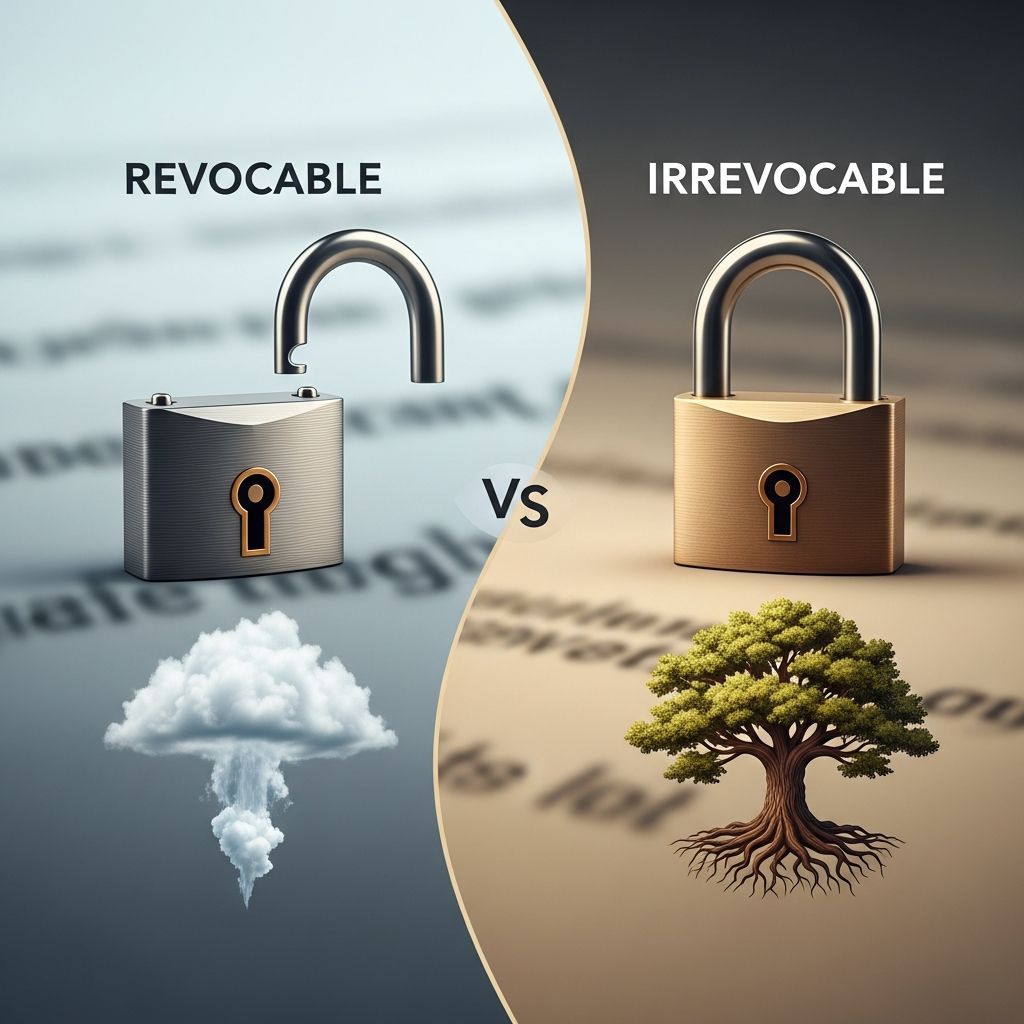
Choosing between a revocable and an irrevocable living trust is a pivotal decision in estate planning. These tools help manage assets during life and after death, but they differ significantly in flexibility, protection, and tax implications. This guide explores their features, advantages, drawbacks, and ideal scenarios to help you decide.
Understanding Living Trusts: The Basics
A living trust is established during your lifetime to hold and distribute assets. It names a trustee to manage property for beneficiaries, bypassing traditional probate processes. Revocable trusts allow changes, while irrevocable ones lock in terms permanently.
Both types avoid court-supervised probate, ensuring faster asset transfer. However, revocable trusts keep you in control, treating assets as yours for tax and creditor purposes. Irrevocable trusts transfer ownership, potentially shielding assets but surrendering control.
Key Features of Revocable Living Trusts
Revocable living trusts, often called simply ‘revocable trusts,’ let the creator (grantor) amend, revoke, or alter terms anytime. You typically serve as trustee and beneficiary while alive, maintaining full access.
- Probate Avoidance: Assets pass directly to heirs without court involvement, saving time and costs.
- Privacy Maintenance: Unlike wills, trusts stay private, avoiding public probate records.
- Incapacity Management: A successor trustee handles assets if you become unable to, preventing guardianship proceedings.
- Flexibility: Update beneficiaries or terms as life changes occur, like marriage or birth.
These features make revocable trusts popular for straightforward estates seeking control and efficiency.
Key Features of Irrevocable Living Trusts
Irrevocable trusts cannot be modified post-creation without beneficiary or court consent. Assets are permanently gifted to the trust, removing them from your estate.
- Asset Protection: Shields property from creditors, lawsuits, and estate recovery since you no longer own it.
- Tax Advantages: Reduces taxable estate size, potentially lowering estate taxes; useful for life insurance or high-value assets.
- Medicaid Planning: Helps qualify for benefits by excluding assets from eligibility calculations.
- Controlled Distributions: Specifies exact terms for heirs, protecting minors or spendthrifts.
Irrevocable trusts suit those prioritizing long-term protection over adaptability.
Pros and Cons: Side-by-Side Comparison
To clarify differences, consider this table summarizing core attributes:
| Feature | Revocable Trust | Irrevocable Trust |
|---|---|---|
| Changeability | Yes, anytime | No, permanent |
| Control Over Assets | Full retention | Surrendered to trust |
| Probate Avoidance | Yes | Yes |
| Asset Protection | No | Yes |
| Estate Tax Reduction | No | Possible |
| Setup Cost | Moderate | Higher, more complex |
| Privacy | High | High |
This comparison highlights revocable trusts’ ease versus irrevocable trusts’ protective power.
Advantages of Revocable Trusts in Depth
Beyond basics, revocable trusts streamline family transitions. They prevent disputes by clearly outlining distributions, reducing emotional strain during grief. For blended families, specify inheritances precisely without probate challenges.
Incapacity planning is crucial: without a trust, courts appoint guardians, delaying decisions. Trusts empower trusted successors immediately. Privacy preserves dignity, keeping family finances confidential.
Funding is key—transfer deeds, titles, and accounts properly to maximize benefits. Unfunded assets still probate.
Advantages of Irrevocable Trusts Explored
Irrevocable trusts excel in high-net-worth scenarios. By removing assets, they minimize federal estate taxes, especially with exemptions around $13 million per person (adjusted periodically). Life insurance trusts (ILITs) keep policy proceeds tax-free.
For special needs beneficiaries, supplemental needs trusts provide support without disqualifying government aid. Creditor protection is robust; once transferred, assets are beyond reach.
Drawbacks and Risks to Consider
No tool is perfect. Revocable trusts offer no creditor shield—assets remain vulnerable. They don’t save taxes and require diligent funding, which can be overlooked.
Irrevocable trusts demand finality; regretting terms is difficult. Setup costs more due to complexity, and you lose access—ideal only if protection outweighs control. Separate tax filings may apply.
Trusts Versus Wills: When to Use Each
| Aspect | Revocable Trust | Will |
|---|---|---|
| Probate | Avoided | Required |
| Cost | Higher upfront | Lower initially |
| Privacy | Maintained | Public |
| Incapacity | Covered | Not covered |
| Flexibility | High | Moderate |
Wills suit simple estates; trusts enhance comprehensive plans. Many use both—a ‘pour-over’ will catches unfunded assets.
Specialized Trust Variations
Beyond basics, consider joint spousal trusts for couples, splitting into A-B for tax efficiency. QTIP trusts secure spousal support while controlling remainder. Blind trusts minimize conflicts for public figures.
Costs and Implementation Steps
Revocable trusts cost $1,000–$3,000 to draft, plus funding efforts. Irrevocable ones run higher due to customization. Steps include:
- Consult an estate attorney.
- Draft and execute documents.
- Fund by retitling assets.
- Name successors and notify banks.
Professional guidance ensures compliance.
Who Benefits Most from Each Type?
Opt for revocable if you value control, have moderate assets, and prioritize probate avoidance. Choose irrevocable for asset protection, tax minimization, or public benefits planning. Assess net worth, family dynamics, and goals.
Frequently Asked Questions
Can I change a revocable trust after creating it?
Yes, you retain full power to amend or revoke it anytime while competent.
Do irrevocable trusts protect against all creditors?
Generally yes, but fraudulent transfers or certain claims may penetrate; timing matters.
Is a living trust expensive to maintain?
Ongoing costs are low, mainly trustee fees if not self-managed; setup is the bulk.
Can trusts hold real estate?
Absolutely—deed property to the trust for seamless transfer.
Do I still need a will with a trust?
Yes, for contingencies like unfunded assets or guardianships.
Making the Right Choice for Your Legacy
Evaluate your situation: revocable for flexibility, irrevocable for fortification. Combine with powers of attorney for holistic planning. Consult professionals to tailor solutions.
References
- Living Trust vs Revocable Trust: The Ultimate Guide — Frame & Frame Attorneys at Law. 2023. https://frameandframe.com/blog/living-trust-vs-revocable-trust/
- 4 Common Types of Trusts Compared (Pros & Cons) — Trust Point. 2023. https://trustpointinc.com/types-of-trusts-compared-pros-cons/
- What Are the Advantages and Disadvantages of a Living Trust? — Preserve Your Estate. 2023. https://preserveyourestate.net/blog/living-trust-in-connecticut/what-are-the-advantages-and-disadvantages-of-a-living-trust/
- The Pros and Cons of a Living Trust — The Law Firm of Brown & Jensen. 2023. https://www.bncjlaw.com/posts/pros-and-cons-of-a-living-trust
- Advantages and Disadvantages of Creating a Living Trust — Matus Law. 2023. https://matuslaw.com/advantages-disadvantages-creating-living-trust/
- Revocable or Irrevocable: Which Living Trust is Right for Me? — Wallace Jordan. 2023. https://wallacejordan.com/revocable-or-irrevocable-which-living-trust-is-right-for-me/?print=print
- Revocable Living Trust vs. Will — Charles Schwab. 2023. https://www.schwab.com/learn/story/revocable-living-trust-vs-will
Similar Articles








Read full bio of medha deb




