
Beyond the Binary: Why Ending Mass Incarceration Requires Rethinking Violent Crime
To truly fix our justice system, we must fundamentally change how we handle violent offenses.
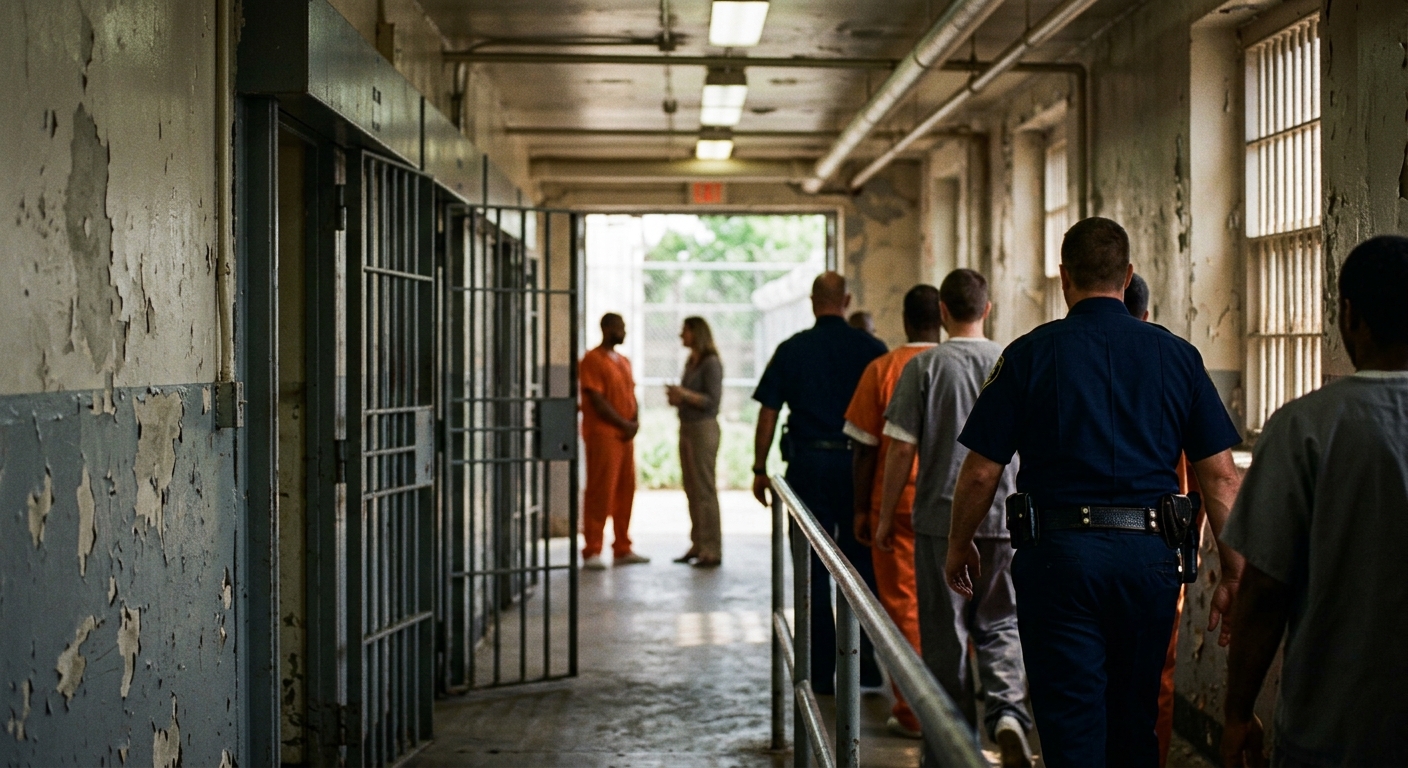
The Limits of Low-Level Reform
The United States holds the grim distinction of being a global leader in incarceration. For decades, policymakers, advocates, and the general public have grappled with the profound moral, social, and economic tolls of locking up millions of citizens. In recent years, a bipartisan consensus has emerged acknowledging that mass incarceration is a crisis that must be dismantled. However, the solutions most frequently championed by politicians—reducing sentences for non-violent drug offenses and low-level property crimes—are inherently limited in their scope. While these reforms are necessary and long overdue, they are not a silver bullet. The uncomfortable truth is that we will not fundamentally alter the scale of our prison system until we radically rethink our approach to violent crime.
The prevailing public narrative suggests that the prison population is overwhelmingly composed of individuals serving time for minor drug possession or non-violent infractions. This misconception has shaped criminal justice reform for decades, making it politically palatable to advocate for the release of ”non-violent offenders” while maintaining a harsh, punitive stance on those convicted of violent crimes. Yet, the empirical data paints a vastly different picture. A significant majority of the prison population is incarcerated for offenses categorized as violent. To truly end the era of mass incarceration, society must move beyond the politically safe ”violent versus non-violent” dichotomy and critically examine how extreme sentence lengths, flawed deterrence theories, and the actual needs of crime victims are addressed within the legal framework.
The Illusion of the ”Non-Violent Only” Solution
For years, the political appetite for criminal justice reform has been largely restricted to the ”low-hanging fruit” of the legal system. Politicians from across the ideological spectrum have championed initiatives like specialized drug courts, diversion programs, and the reduction of mandatory minimums for non-violent drug offenses. These efforts are commendable and have successfully reduced prison populations in some local jurisdictions. However, relying solely on non-violent reform to end mass incarceration on a national scale is mathematically impossible.
According to research from the Prison Policy Initiative, the vast majority of people incarcerated in state prisons—which house the bulk of the nation’s incarcerated population—are serving sentences for violent offenses . If every single person incarcerated for a drug offense were released tomorrow, the United States would still possess an incarceration rate far higher than most developed nations across the globe. We cannot fix a systemic crisis by ignoring the largest demographic caught within it.
Furthermore, the categorization of crimes as ”violent” warrants heavy scrutiny. The legal definition of a violent offense is incredibly broad and varies significantly from state to state. It can encompass a wide range of behaviors, some of which do not involve direct physical injury to another person. For example, a robbery where no weapon was used, or a burglary of an unoccupied dwelling, can be legally classified as violent crimes in many jurisdictions. By excluding anyone with a ”violent” label from reform efforts, lawmakers effectively shut the door on millions of individuals who could safely return to society. This exclusion is often driven by a fear of political backlash rather than a commitment to public safety. The ”tough on crime” rhetoric of the late 20th century ingrained a deep-seated fear in the public consciousness, making any leniency toward violent offenses a perceived political liability.
The Failure of Severe Punishment as a Deterrent
One of the primary justifications for imposing decades-long or life sentences for violent crimes is the theory of deterrence—the idea that harsh, unyielding punishments will prevent future crimes from occurring. However, empirical evidence from criminologists consistently contradicts this assumption. The National Institute of Justice (NIJ) clearly states in its research on deterrence that the certainty of being caught is a vastly more powerful deterrent than the severity or length of the punishment .
When an individual considers committing a crime, the length of the potential prison sentence rarely factors into their immediate decision-making process. The heat of the moment, impaired judgment, severe economic desperation, or the belief that they will simply not be apprehended are far more significant drivers of criminal behavior. Sending an individual to prison for thirty years instead of fifteen does not incrementally increase public safety; rather, it exponentially increases the financial and human costs of the justice system.
Additionally, the concept of ”aging out of crime” is a well-documented criminological phenomenon. Research consistently shows that criminal behavior peaks in late adolescence and early adulthood, sharply declining as individuals reach their late twenties and thirties. By the time a person reaches their forties or fifties, the likelihood of them committing a violent offense is statistically minuscule. Yet, our current sentencing structures often mandate that individuals remain incarcerated well into old age, long past the point where they pose any tangible threat to their communities. This results in the creation of ”geriatric prisons,” where taxpayers fund the expensive, specialized medical care of elderly inmates who are physically incapable of committing the violent acts that originally landed them behind bars.
What Survivors Actually Want: Rethinking Justice and Healing
A cornerstone of the argument for severe punishment is the assertion that it provides justice, peace, and closure for victims of violent crimes. The criminal justice system frequently invokes the name of survivors to justify extreme sentencing, assuming that victims universally desire maximum retribution against those who harmed them. However, this assumption is fundamentally flawed and ignores the complex, nuanced needs of actual crime survivors.
The Alliance for Safety and Justice (ASJ) conducted comprehensive national surveys of violent crime victims, revealing a profound disconnect between what the justice system provides and what survivors actually want to see. According to their reporting, a significant majority of victims prefer safety investments in prevention, mental health, and trauma treatment over longer prison sentences . Survivors often express a deep desire for accountability that involves the perpetrator understanding the harm they caused and taking actionable steps to change their behavior, rather than simply wasting away in an isolated cell.
Victims of violence are also disproportionately likely to be low-income individuals, people of color, and those living in marginalized communities. These are the very same demographics most negatively impacted by the destructive force of mass incarceration. Many survivors recognize firsthand that the current punitive system perpetuates cycles of trauma and economic instability that lead directly to further violence. They frequently advocate for restorative justice models over purely retributive ones.
| Traditional Justice System Focus | Restorative / Survivor-Centric Focus |
|---|---|
| Punitive measures, isolation, and lengthy sentences | Accountability, behavioral change, and rehabilitation |
| State vs. Offender adversarial dynamic | Repairing direct harm to the victim and the community |
| Extended incarceration to establish deterrence | Addressing the root-cause drivers of the criminal behavior |
| Reactive responses to violence after it occurs | Proactive investments in mental health, housing, and jobs |
Addressing the Root Causes: Prevention Over Punishment
To meaningfully reduce violent crime and, consequently, the prison population, society must collectively pivot from a reactive model of punishment to a proactive model of prevention. Violence is rarely a spontaneous, isolated event occurring in a vacuum; it is frequently the culmination of complex, intersecting socio-economic factors. Systemic poverty, lack of access to quality public education, inadequate mental health care, untreated substance abuse disorders, and generations of unaddressed community trauma all contribute to environments where violence is significantly more likely to occur.
Our current approach involves waiting for violence to happen and then deploying the blunt instrument of the criminal justice system to punish the offender. This strategy completely fails to address the underlying conditions that gave rise to the violence in the first place. When billions of taxpayer dollars are poured into constructing and operating massive prison complexes, those funds are inherently diverted from community resources that could prevent crime from happening altogether.
Investing in communities is the most effective strategy for ensuring long-term public safety. This means fully funding public schools, providing accessible and affordable mental health and addiction treatment, creating sustainable economic opportunities, and supporting community-based violence intervention programs. These programs, which often employ individuals with lived experience in the justice system to mediate conflicts and mentor at-risk youth, have demonstrated remarkable success in reducing gun violence and homicide rates in cities across the country. By addressing the root causes of violence, we can break the cycle of trauma and incarceration.
Policy Shifts for a Sustainable Future
Achieving a significant reduction in the prison population requires bold, systemic policy shifts that directly confront the issue of violent crime without fearmongering. Lawmakers must be willing to dismantle the punitive infrastructure that has defined the American justice system for decades. This involves several critical steps:
- Ending Mandatory Minimums: Judges must be granted the judicial discretion to consider the unique, individual circumstances of each case, including the defendant’s background, trauma history, and potential for rehabilitation, even in violent offense cases.
- Expanding Parole Opportunities: Individuals incarcerated for violent crimes must have meaningful opportunities to demonstrate their rehabilitation and earn release. Implementing ”second look” legislation, which allows judges to review and potentially modify long sentences after a certain number of years, is crucial.
- Redefining ”Violent” Crimes: The legal definitions of violent offenses must be narrowed to accurately reflect the actual severity of the conduct. Minor altercations or property crimes should not carry the same heavy statutory weight as offenses resulting in severe physical harm.
- Investing in Reentry Programs: Successfully reintegrating individuals into society is essential for preventing recidivism. Comprehensive reentry support, including immediate housing assistance, employment training, and continued mental health care, must be provided to all individuals returning from prison.
Shifting the paradigm on violent crime is not about excusing harm or prioritizing offenders over victims. It is about acknowledging that our current system is failing everyone—victims, offenders, and society as a whole. It is about recognizing that true public safety is rooted in community well-being, not in the endless expansion of prison walls.
Conclusion
The path to ending the mass incarceration crisis in the United States is fraught with political, cultural, and institutional obstacles. For far too long, the conversation has been artificially constrained by the fear of addressing violent crime. We have settled for incremental, ”safe” reforms that nibble at the edges of the problem while leaving the core engine of mass incarceration largely intact.
If we are serious about dismantling the prison-industrial complex and creating a more just, equitable society, we must possess the courage to rethink our entire approach to violence. We must move beyond the false allure of severe punishment and embrace evidence-based strategies that prioritize prevention, accountability, and the holistic healing of survivors. This requires a profound transformation in how we define justice itself—a shift from a system obsessed with measuring the amount of pain inflicted on an offender, to a system dedicated to measuring the amount of harm repaired and the number of lives restored. Only then can we truly end mass incarceration and build a future where safety and justice are tangible realities for all communities.
Frequently Asked Questions (FAQ)
Q: Why can’t we just focus on releasing individuals convicted of non-violent drug offenses to solve the mass incarceration problem?
A: While reforming drug policies and ending the War on Drugs is absolutely essential, it is statistically insufficient to end mass incarceration. The majority of the state prison population—which makes up the largest segment of incarcerated individuals in the U.S.—is serving time for offenses classified as violent. Ending mass incarceration requires policy changes that also address these populations.
Q: Does reducing sentences for violent crimes make communities less safe?
A: Empirical evidence suggests that severe, long-term sentences do not effectively deter crime. Furthermore, people generally ”age out” of criminal behavior. Keeping individuals incarcerated well into their older years, long past their likelihood to re-offend, does not increase public safety; it merely drains critical resources that could be used for proactive community crime prevention.
Q: What is restorative justice?
A: Restorative justice is an evidence-based approach that focuses on repairing the harm caused by criminal behavior. It emphasizes accountability, allowing offenders to understand the impact of their actions, and prioritizes the healing and needs of the victim (when they choose to participate) and the community, rather than focusing solely on state-sanctioned, isolated punishment.
Q: How do victims of violent crimes feel about criminal justice reform?
A: National surveys reveal that many crime survivors prefer investments in crime prevention, mental health, and rehabilitation programs over increasing the length of prison sentences. Victims often seek accountability that leads to fundamental behavioral change, ensuring the harm they experienced does not happen to someone else in the future.
References
- Mass Incarceration: The Whole Pie 2024 — Prison Policy Initiative. 2024. https://www.prisonpolicy.org/reports/pie2024.html
- Five Things About Deterrence — National Institute of Justice. 2016-06-05. https://nij.ojp.gov/topics/articles/five-things-about-deterrence
- Crime Survivors Speak: A National Survey of Victims’ Views on Safety and Justice — Alliance for Safety and Justice. 2022-09-01. https://allianceforsafetyandjustice.org/crimesurvivorsspeak/
Similar Articles








Read full bio of Sneha Tete




