
Rethinking Safety: Systemic Police Reform
True police reform demands systemic overhauls, not just procedural tweaks.
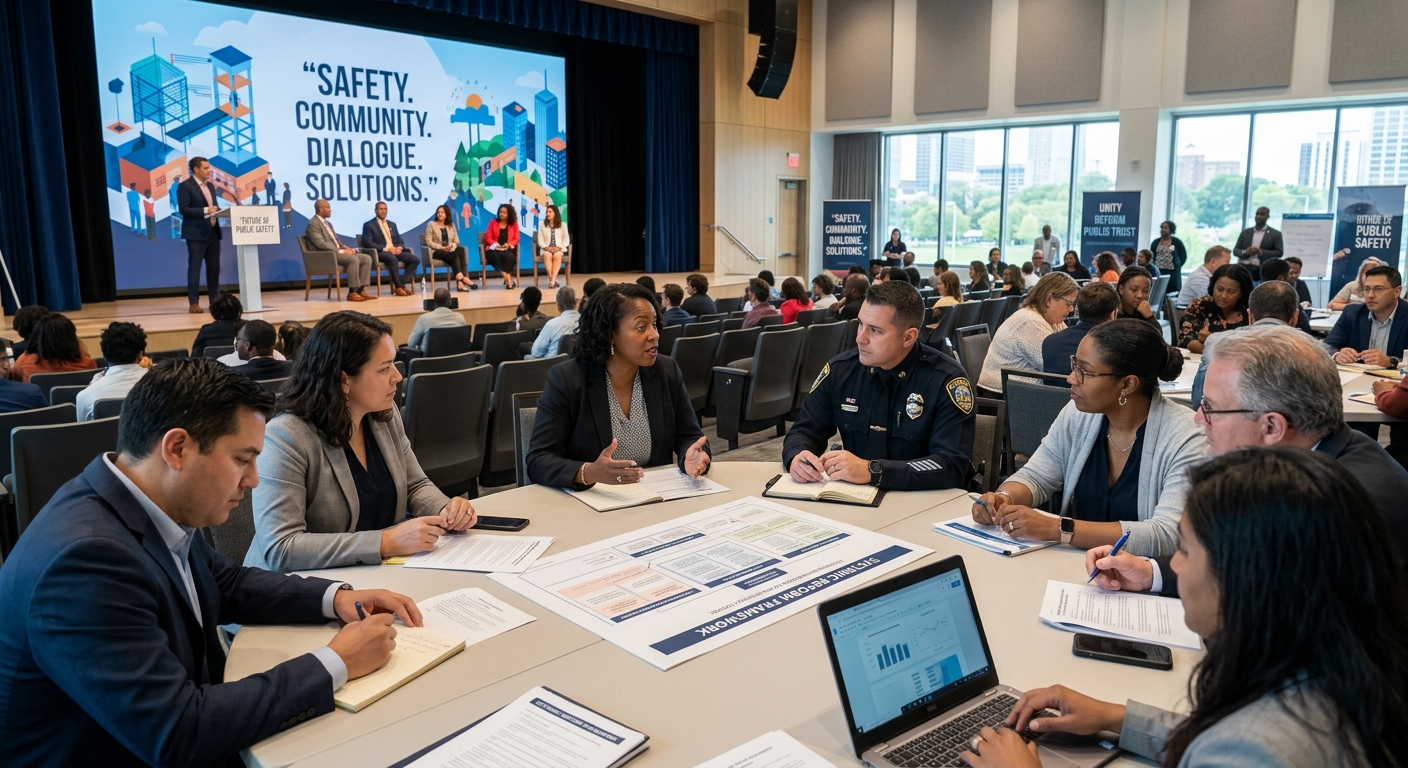
Rethinking Public Safety: The Urgent Need for Structural Change
For decades, the national conversation surrounding law enforcement and community relations has been punctuated by cycles of tragedy, public outcry, and promises of reform. Yet, despite countless legislative task forces and departmental reviews, marginalized communities—particularly Black and Hispanic populations—continue to disproportionately experience the severe and often fatal impacts of law enforcement encounters. The conventional narrative frequently attributes these recurring tragedies to a “few bad apples” within otherwise functional departments. However, a deeper examination reveals that the disparities in arrests, uses of force, and fatal encounters are not accidental anomalies. Rather, they are the predictable outcomes of a system that was historically designed to control specific demographics. True public safety cannot be achieved by merely tinkering around the edges of a flawed framework. To address systemic racial bias and build a truly equitable society, local and federal governments must undertake a comprehensive, structural transformation of how public safety is defined, funded, and implemented across the United States.
The Historical Roots of Modern Policing
To fully grasp the persistent racial disparities in contemporary law enforcement, one must critically examine the historical origins of policing in the United States. In many regions of the country, the earliest iterations of organized police forces were explicitly tied to the subjugation and control of minority populations. In the American South, modern policing traces its direct lineage back to slave patrols—legally sanctioned squads of white men tasked with capturing runaway enslaved people, deterring uprisings, and ruthlessly enforcing an oppressive racial hierarchy. In Northern cities, early police departments were often formed to protect commercial assets, control the influx of immigrants, and suppress organized labor movements.
While the institution of policing has evolved significantly over the past two centuries, the foundational ethos of monitoring and controlling marginalized demographics has cast a long, enduring shadow. Policies that emerged in the late 20th century, such as the War on Drugs and the widespread implementation of “Broken Windows” policing, disproportionately targeted Black and Hispanic neighborhoods. These enforcement strategies operated on the flawed premise that the hyper-policing of minor infractions would prevent major violent crimes. Instead, they led to the mass criminalization of entire communities, fractured families, and sowed deep-seated generational distrust between the public and the state. Acknowledging this historical continuum is a necessary first step for modern policymakers; it is impossible to effectively redesign an institution without first understanding the discriminatory blueprint upon which it was built.
The Shortcomings of Procedural Reforms
In the wake of highly publicized instances of police violence, city councils and police chiefs frequently default to procedural adjustments. These “reformist reforms” commonly include mandating the use of body-worn cameras, implementing implicit bias training for officers, banning specific physical maneuvers like chokeholds, and attempting to diversify the demographic makeup of police departments. While these measures may initially seem like common-sense steps toward transparency and accountability, empirical evidence and lived community experiences suggest they are vastly insufficient for addressing deeply rooted systemic issues.
Implicit bias training, for instance, operates on the optimistic assumption that making officers academically aware of their subconscious prejudices will fundamentally alter their split-second decision-making in the field. However, extensive research indicates that such training rarely alters long-term behavioral patterns, especially in high-stress, rapidly unfolding situations. Similarly, body-worn cameras were championed over the last decade as the ultimate technological tool for accountability. In practice, footage is frequently withheld by departments under the guise of ongoing investigations, cameras can be muted or deactivated, and even when clear, objective evidence of misconduct is captured, it rarely guarantees disciplinary action or a shift in departmental culture.
These procedural tweaks fail because they leave the underlying architecture of policing completely intact. They assume that law enforcement is currently tasked with the correct societal responsibilities and simply needs to execute them more politely. To truly dismantle racial disparities, society must confront not just how police conduct their daily duties, but whether armed police should be the ones responding to certain social crises in the first place.
Redefining the Scope of Law Enforcement
One of the most profound drivers of excessive police contact in communities of color is the vast, unwieldy scope of modern law enforcement. Over the past half-century, municipal police officers have effectively become the default, catch-all responders for nearly every civic and public health crisis, ranging from mental health emergencies and substance abuse overdoses to homelessness, truancy, and neighborhood disputes.
The Dangers of Over-Policing Routine Issues
When armed, combat-trained officers are dispatched to handle behavioral health crises or minor civil infractions, the risk of rapid escalation increases dramatically. A 2024 report by the Bureau of Justice Statistics highlighted that while millions of residents initiate contact with the police seeking urgent help, non-white populations consistently face higher rates of nonfatal force during these very encounters. The data underscores a grim reality: introducing a badge, a firearm, and the looming threat of arrest into a public health crisis often yields tragic, rather than therapeutic, outcomes.
Alternative Crisis Response Models
To aggressively mitigate these risks, forward-thinking municipalities are developing and expanding alternative response models that deploy unarmed civilian professionals instead of traditional officers. The most prominent and successful example is the Crisis Assistance Helping Out On The Streets (CAHOOTS) program operating in Eugene, Oregon. Established over 30 years ago, CAHOOTS dispatches specialized two-person teams consisting of a medic and a behavioral health crisis worker to handle mental health emergencies, welfare checks, and substance abuse interventions.
According to research and municipal program evaluations, alternative response models successfully divert roughly 20% of 911 calls away from the traditional law enforcement apparatus. In the vast majority of these civilian-led dispatches, police backup is never requested or required. By utilizing trauma-informed care and clinical de-escalation tactics, these alternative responders can safely stabilize individuals in crisis, directly connect them with vital social services, and completely bypass the punitive criminal justice system. Expanding these proven models nationwide would not only save civilian lives but also free up traditional law enforcement resources to focus strictly on violent crime and complex criminal investigations.
Overhauling Traffic Enforcement
Another crucial area ripe for structural reform is routine traffic enforcement. Traffic stops are by far the most common form of interaction between the police and the American public. Historically, these low-level stops have been utilized as a pretext to fish for drug offenses or outstanding warrants, a practice that heavily and disproportionately targets Black and Hispanic drivers. Many criminal justice reform advocates argue that armed police officers should be entirely removed from routine traffic duties. Transferring the administrative responsibility of enforcing speeding limits, broken taillights, and expired vehicle registrations to unarmed civil servants or automated safety systems would dramatically reduce the footprint of policing. This structural shift would instantly eliminate millions of potentially volatile armed encounters each year, safeguarding communities of color from pretextual harassment.
Economic Reinvestment: Funding Communities Over Incarceration
A central pillar of the modern movement to fundamentally alter policing is the concept of economic reinvestment—often summarized by grassroots organizers as the push to reallocate or divest municipal funds. City and county budgets are fundamentally moral documents that reflect a community’s true priorities. In many major metropolitan areas, police departments consume an outsized, continuously expanding portion of the general fund, leaving vital community services chronically starved for resources.
A structural approach to ending systemic racism in public safety requires recognizing that true safety does not emanate from heavily armed patrols; it grows from fully funded, well-resourced communities. When cities systematically divest from public education, mental health clinics, affordable housing initiatives, and youth employment programs, they create a fractured environment where poverty, desperation, and crime inevitably flourish. The current criminal justice model attempts to aggressively manage this artificially created poverty through punitive policing and mass incarceration.
Reinvesting in the community means intentionally shifting financial resources away from the bloated apparatus of law enforcement and injecting those exact funds directly into the social safety net. By providing stable, affordable housing, comprehensive physical and mental healthcare, and robust educational opportunities, municipalities can address the root systemic causes of crime proactively. This holistic, forward-thinking approach builds resilient, empowered neighborhoods that are inherently safer, naturally reducing the societal need for a reactive, militarized police presence.
Dismantling Legal Barriers to Accountability
Even with a drastically reduced scope of responsibilities, police officers will inevitably continue to interact with the public. When abuses of power and misconduct occur, the legal system must provide a viable, accessible avenue for victims to seek justice. Currently, several formidable structural legal barriers make it nearly impossible to hold officers accountable for violating constitutional civil rights.
The Hurdle of Qualified Immunity
At the absolute center of the police accountability debate is the judicial doctrine of qualified immunity. Established by the Supreme Court in the 1967 civil rights case Pierson v. Ray, qualified immunity effectively shields government officials, including local police officers, from personal financial liability in civil rights lawsuits. To successfully overcome this formidable legal shield, a plaintiff must prove not only that their constitutional rights were blatantly violated but also that the officer violated a “clearly established” statutory or constitutional right.
In actual courtroom practice, this legal standard is notoriously difficult, if not impossible, to meet. Federal courts often require plaintiffs to point to a previous, binding case with nearly identical factual circumstances where an officer was found liable. If a victim was subjected to excessive force in a highly specific, slightly novel manner, the offending officer can be granted immunity simply because no prior court ruling matches the exact scenario. This creates a deeply frustrating cyclical paradox: victims cannot set new legal precedents because their cases are dismissed on immunity grounds, and cases are routinely dismissed on immunity grounds precisely because there is no prior legal precedent. Abolishing or severely restricting the doctrine of qualified immunity at the state and federal legislative levels is an absolute necessity for restoring a sense of justice, fairness, and deterrence within American law enforcement.
Police Union Contracts and Disciplinary Shields
Beyond the confines of the federal courtroom, powerful police union contracts often serve as formidable administrative barriers to departmental accountability. Many collective bargaining agreements contain deeply entrenched provisions that insulate officers from meaningful oversight. These controversial protections can include mandatory waiting periods before an officer involved in a fatal shooting can be formally interrogated, the automatic expungement of internal disciplinary records after a remarkably short period, and binding arbitration processes that frequently reinstate officers who were rightfully terminated for egregious misconduct.
To build a significantly more equitable system, local government leaders must boldly negotiate contracts that prioritize public transparency over the shielding of officer misconduct. Civilian oversight boards must be granted robust, independent investigatory authority, complete with binding subpoena power, to ensure that internal affairs departments are no longer acting as protective silos for administrative bad behavior.
Moving Toward a Holistic Vision of Public Safety
The path to eradicating systemic bias in law enforcement is undeniably steep and fraught with intense political challenges. It requires a stark departure from the comfortable, pervasive illusion that minor policy tweaks, friendly public relations campaigns, and superficial procedural reforms can fix an inherently flawed institution. True, lasting reform necessitates a massive paradigm shift in how modern society envisions and constructs safety.
Public safety must be aggressively redefined not as the mere absence of crime achieved through the heavy threat of state violence, but as the active presence of community well-being, equitable resource accessibility, and holistic health. By dramatically shrinking the massive societal footprint of the criminal justice system, empowering civilian crisis responders, investing deeply in historically marginalized communities, and systematically tearing down the legal fortresses that protect abusive actors, society can finally begin to dismantle the tragic legacy of systemic racism. This sweeping structural overhaul remains the only viable route to a future where genuine safety, dignity, and justice are guaranteed for all individuals, regardless of their race, zip code, or socioeconomic status.
Frequently Asked Questions
What is qualified immunity and why is it controversial?
Qualified immunity is a judicially created legal doctrine that protects government officials, particularly police officers, from being held personally liable in civil lawsuits for constitutional violations, provided their actions did not violate “clearly established” law. It is highly controversial because federal courts have interpreted “clearly established” so narrowly that officers are frequently shielded from civil accountability even when they commit egregious acts of violence, leaving victims and their families without any legal recourse or financial compensation.
Does reallocating police funds mean communities will be left without protection?
No. Reallocating, often referred to as “divesting,” is about strategically shifting taxpayer resources from reactive, punitive policing into proactive, preventative community investments. The ultimate goal is to fund critical social services, affordable housing, and mental health care to prevent crime before it happens. Traditional law enforcement would still exist to handle serious violent crimes, but they would no longer be inappropriately burdened with complex social issues that are far better suited for trained health and civil professionals.
How do alternative crisis response models work?
Alternative response models, such as the widely praised CAHOOTS program in Oregon, dispatch highly trained medics, social workers, or crisis intervention specialists to 911 calls involving mental health breakdowns, homelessness, or severe substance abuse. Because these specialized responders are completely unarmed and rigorously trained in clinical de-escalation, they can connect vulnerable individuals to proper care without the looming threat of arrest or lethal force, proving significantly safer for both the community and traditional law enforcement.
Why aren’t body cameras enough to solve police misconduct?
While body-worn cameras can occasionally provide objective visual evidence of a police encounter, they do absolutely nothing to change the underlying structural issues of policing, such as the disproportionate over-policing of minority neighborhoods or the robust legal protections that shield officers from meaningful consequences. Furthermore, policies governing body cameras often allow police departments to selectively withhold footage from the public, severely minimizing their intended effectiveness as an objective transparency tool.
References
- Contacts Between Police and the Public, 2022 — Bureau of Justice Statistics. 2024-10-04. https://bjs.ojp.gov/library/publications/contacts-between-police-and-public-2022
- CASE STUDY: CAHOOTS — Vera Institute of Justice. 2020-08-18. https://www.vera.org/publications/case-study-cahoots
- Unincorporating Qualified Immunity — Villanova University Charles Widger School of Law. 2024. https://digitalcommons.law.villanova.edu/
Similar Articles








Read full bio of medha deb




