
Retail Crowd Control: OSHA‑Aligned Safety Strategies
Practical OSHA-aligned crowd management strategies to protect retail workers and customers during high-demand sales events.
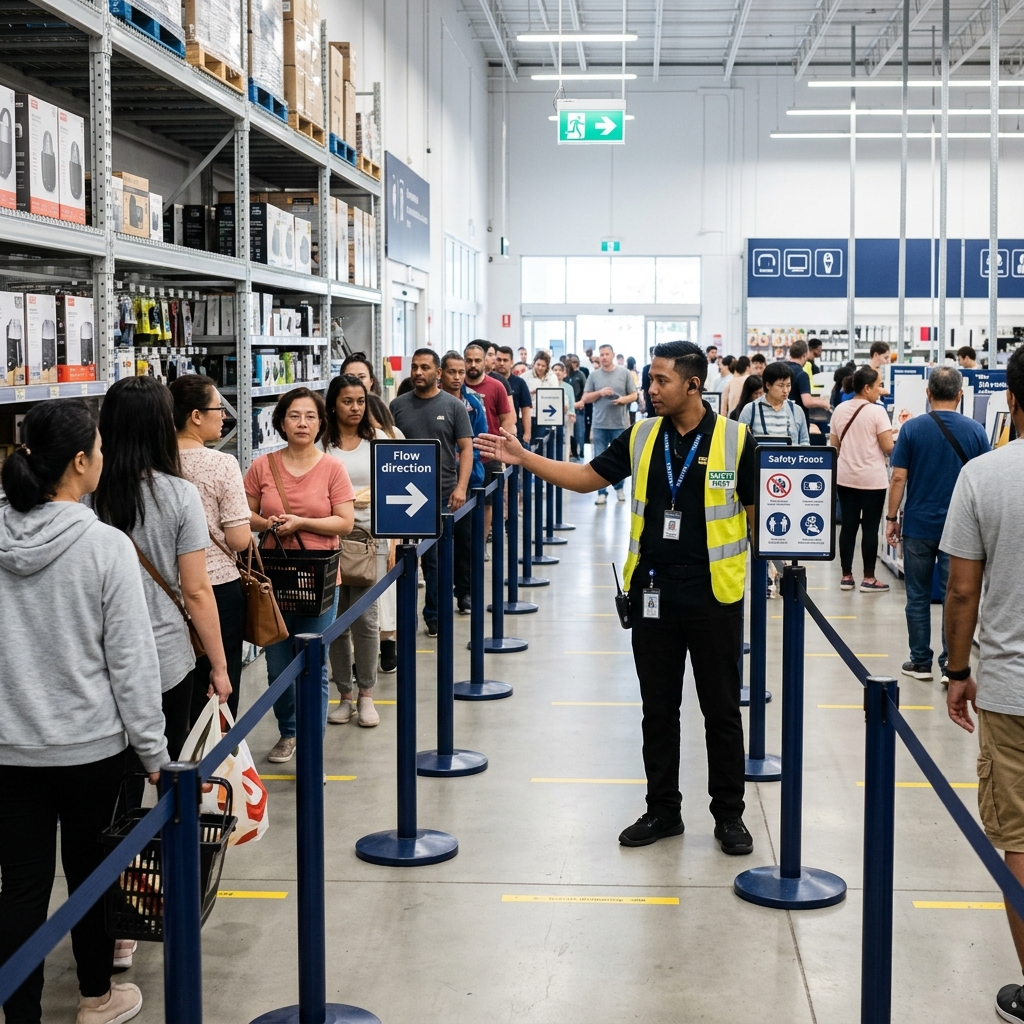
Major retail sales events can turn ordinary stores into high-risk environments where large crowds, excitement, and limited-time offers combine to create dangerous conditions for workers and customers. Occupational Safety and Health Administration (OSHA) guidance makes clear that retail employers have a duty to anticipate these risks and implement effective crowd management strategies to prevent injuries and fatalities. This article explains how retailers can plan, operate, and respond safely during high-demand events such as Black Friday and other major promotions, using OSHA‑aligned practices while protecting employees and maintaining compliance.
Why Crowd Management Matters for Retail Employers
The responsibility to manage crowds is not just a business concern; it is a workplace safety obligation. Under OSHA’s General Duty Clause, employers must provide their employees with a workplace free from recognized hazards likely to cause death or serious physical harm. Large crowds at retail events qualify as a recognized hazard, especially when poor planning leads to crushing, trampling, blocked exits, or panic.
OSHA has issued specific guidance and reminders to retailers emphasizing the importance of crowd management plans, including the use of trained security personnel, maintaining clear exit routes, and controlling store occupancy. While many of these recommendations are not formal regulations, retailers can face enforcement if they fail to take reasonable steps to protect workers from foreseeable crowd-related dangers.
Key Risk Scenarios During Major Sales Events
Understanding typical risk scenarios helps retailers design effective prevention strategies. Common hazards identified in OSHA communication and related safety guidance include:
- Entry rushes when doors open, leading to crushing, falls, and trampling near entrances.
- Bottlenecks in narrow aisles or around high-demand items where pushing and crowd surges can occur.
- Blocked or locked exits due to merchandise, displays, temporary barriers, or crowd overflow.
- Overcapacity conditions when occupancy limits are ignored and crowd density becomes dangerous.
- Poor emergency communication where employees are unsure who to call, how to respond, or how to direct customers.
- Inaccessible routes for people with disabilities, including obstructed entrances, aisles, or service counters.
Each of these scenarios can be mitigated with deliberate planning, clear procedures, and adequate staffing aligned with OSHA recommendations.
Building an OSHA‑Aligned Crowd Management Plan
An effective crowd management plan is comprehensive, documented, and communicated to all staff before the event. OSHA advises retailers to adopt safety guidelines that address staffing, physical layout, emergency procedures, and communication strategies. A robust plan typically includes the elements in the table below:
| Plan Component | Purpose | OSHA‑Aligned Example |
|---|---|---|
| Staffing and roles | Ensure enough trained personnel to manage crowds and respond to emergencies. | Designate security at entrances, assign employees to specific locations, and identify a 9‑1‑1 caller. |
| Physical barriers and layout | Control crowd flow and prevent surges and bottlenecks. | Use rope lines and barricades set back from doors; keep aisles clear of obstacles. |
| Occupancy control | Maintain safe crowd density and avoid overcapacity conditions. | Monitor occupancy; stop entry when maximum capacity is reached. |
| Emergency procedures | Provide a clear response plan for medical, fire, or crowd incidents. | Designate contacts for emergency services; keep exits unblocked; provide AEDs and first-aid kits. |
| Communication strategy | Inform employees and customers clearly and calmly throughout the event. | Use PA systems or bullhorns; post signage for entrances and exits; brief staff frequently. |
| Accessibility measures | Ensure safe access for people with disabilities or special needs. | Maintain wide, clear aisles and accessible service counters and entrances. |
Pre‑Event Preparation: Laying the Safety Foundation
Effective crowd management starts well before customers arrive. OSHA and related safety guidance emphasize planning, coordination with local authorities, and physical setup completed in advance. Pre‑event preparation should include the following steps:
1. Coordinate with Local Police and Fire Services
Retail employers should contact local police and fire departments prior to major sales events to ensure all legal and safety requirements are understood and met. This coordination typically involves:
- Informing authorities of the expected crowd size and event timing.
- Reviewing emergency access routes and assembly areas.
- Confirming how emergency responders will access the building if needed.
Advance communication helps emergency services prepare and reduces confusion if an incident occurs.
2. Develop a Detailed Staffing and Security Plan
OSHA guidance encourages retailers to deploy trained security or police officers and assign employees to specific locations, especially near entrances, exit routes, and high-demand areas. Key staffing actions include:
- Hiring or contracting trained security or crowd management personnel to be onsite.
- Creating a written staffing map indicating where each employee and guard will be stationed.
- Scheduling additional workers for peak hours to handle crowd flow and customer assistance.
- Designating specific employees to call 9‑1‑1 and to make critical decisions during emergencies.
3. Set Up Barricades, Rope Lines, and Waiting Areas
Physical controls are essential to prevent sudden surges at entrances. OSHA’s fact sheet and subsequent guidance recommend establishing barricades or rope lines for customer queues, ensuring that lines do not begin directly in front of the store entrance. Best practices include:
- Positioning queue lines several feet away from the doors to create a buffer zone for staff.
- Designing lines with breaks and turns to reduce the risk of pushing from the rear of the crowd.
- Creating designated waiting areas where customers can line up in smaller, controllable groups.
- Keeping shopping carts and other potential obstacles inside the store and away from entrance pathways.
4. Prepare Clear Signage and Customer Information
Signage is a simple but powerful tool to reduce confusion and crowd tension. OSHA‑aligned guidance recommends using clear signs to indicate entrances, exits, opening times, and other critical information. Retailers should:
- Post opening times and any ticket or wristband procedures prominently near queues.
- Mark all entrances and exits clearly, including accessible routes.
- Provide maps or pamphlets showing key sale areas to minimize random crowd movement.
- Use signage to direct customers to restrooms, customer service, and emergency exits.
Employee Training and Briefings
Even the best plan fails if employees are not trained to carry it out. OSHA emphasizes that employers should train workers on crowd management procedures, emergency plans, and practice scenarios before big events. Effective training should cover:
- Crowd management procedures: How to control lines, manage entrance and exit flow, and respond to aggressive behavior.
- Emergency action plans: Who to call, how to evacuate, and where to direct customers.
- Location of safety equipment: First-aid kits, Automated External Defibrillators (AEDs), fire extinguishers, and alarms.
- Communication protocols: Using radios, PA systems, or bullhorns to relay information quickly.
- Accessibility awareness: Assisting customers with disabilities and maintaining clear accessible routes.
On the day of the event, retailers should conduct a final briefing to remind staff of opening procedures, emergency instructions, and key crowd control measures.
Managing Crowds During the Event
Real-time crowd management is about applying the plan consistently from the moment customers arrive until the event ends. OSHA guidance and related resources highlight several practices that reduce risk.
1. Control Store Entry and Occupancy
Controlling entry is critical at the moment doors open and throughout the event. Employers should:
- Ensure all employees and guards know when doors will open and are prepared for crowd movement.
- Staff entrances with uniformed guards, police, or trained crowd managers positioned to the side of customer pathways, not directly in front.
- Use a public address system or bullhorns to provide opening announcements and instructions.
- Limit entry when the store reaches maximum occupancy and keep additional customers outside until others leave.
2. Maintain Clear and Safe Exit Routes
OSHA repeatedly stresses that retailers must keep exit routes clear and must not block or lock exit doors. During the event, managers should:
- Ensure exits are unobstructed by displays, merchandise, or temporary barriers.
- Prohibit locking of any exit door while customers or workers are inside.
- Regularly inspect aisles and pathways for congestion and remove obstacles promptly.
- Assign staff to monitor key exits and assist with directional guidance if crowds become dense.
3. Use Effective Communication with Waiting Crowds
Clear communication reduces anxiety and prevents sudden surges. OSHA‑aligned tips include using loudspeakers or PA systems to relay information and update customers. Retailers should:
- Explain opening times, entrance procedures, and any ticket or numbered group systems before doors open.
- Remind crowds to remain calm and follow staff directions, especially just before opening.
- Provide updates if delays occur or if unexpected changes are necessary.
- Use staff outside the store to answer questions and direct customers to appropriate lines.
4. Protect Accessibility and Special Needs Customers
OSHA guidance underscores the importance of maintaining safe entry and exit for people with disabilities. During major events, retailers should:
- Ensure accessible entrances remain open and clearly marked.
- Maintain aisles wide enough for wheelchairs, walkers, and strollers.
- Provide accessible service counters and assistance when needed.
- Consider separate lines or entry procedures for customers who may need additional time or support.
Responding to Emergencies and Incidents
Even with careful planning, emergencies can occur. OSHA recommends that employers maintain formal emergency procedures and ensure designated workers are trained to respond. Effective response involves:
1. Immediate Actions in an Emergency
- Do not block or restrict exits; keep all doors free for rapid evacuation.
- Have designated employees contact emergency medical responders and follow their instructions, even if company rules would normally apply.
- Use PA systems or bullhorns to calmly direct customers toward exits and away from danger.
- Ensure staff understand they must prioritize safety over continuing sales activity.
2. Medical Preparedness and Equipment
Preparedness includes not only plans but also physical resources. OSHA guidance and safety organizations advise retailers to keep first-aid kits and AEDs available and to train personnel in their use. Employers should:
- Maintain fully stocked first-aid kits and ensure their locations are known to staff.
- Provide Automated External Defibrillators (AEDs) in accessible areas where crowds gather.
- Train employees in CPR and AED use or ensure trained personnel are present during major events.
3. Post‑Incident Review and Improvements
After any significant incident, retailers should review what happened and adjust future plans. This may include:
- Documenting the incident, including time, location, and contributing factors.
- Consulting with emergency responders and OSHA compliance staff if required.
- Updating crowd management plans, training content, and physical layouts based on lessons learned.
Frequently Asked Questions (FAQs)
Is crowd management required by OSHA regulations?
OSHA’s crowd management recommendations for retailers are primarily provided through fact sheets, letters, and guidance documents, which are not themselves binding regulations. However, OSHA can use the General Duty Clause to cite employers who fail to protect workers from recognized crowd-related hazards, making practical crowd management effectively necessary to maintain compliance.
Do small retailers need formal crowd control plans?
Any employer expecting large crowds or unusual customer behavior should develop some form of written plan. Even small retailers can experience dangerous conditions during popular promotions. OSHA guidance does not exempt small employers from the duty to maintain safe workplaces; instead, it encourages tailored, reasonable steps based on the scale of the event.
What is the most critical element of crowd safety?
No single element is sufficient, but maintaining clear, unblocked exit routes and controlling store occupancy are among the most critical factors in preventing serious injuries or fatalities. These measures directly reduce the risk of crushing, trampling, and entrapment during emergencies.
How often should employees be trained on crowd management?
Employees should receive training before each major sales event and periodic refreshers for general emergency procedures. OSHA encourages employers to ensure workers understand crowd management plans, emergency actions, and the location of safety equipment prior to high-risk events.
Can retailers rely solely on local police for crowd control?
Local police can be valuable partners, but employers retain primary responsibility for worker safety. OSHA guidance recommends using trained security or police in addition to a comprehensive internal plan, clear procedures, and employee training. Retailers should not assume that police presence alone satisfies their legal obligations.
References
- US Labor Department’s OSHA sends reminder to retail associations — Occupational Safety and Health Administration (OSHA). 2013-11-18. https://www.osha.gov/news/newsreleases/national/11182013
- Crowd Management Safety Guidelines – Letter to Retailers — Occupational Safety and Health Administration (OSHA). 2014-11-12. https://www.osha.gov/memos/2014-11-12/crowd-management-safety-guidelines-letter-retailers
- US Department of Labor’s OSHA provides crowd control guidelines for retailers — Occupational Safety and Health Administration (OSHA). 2009-11-17. https://www.dol.gov/newsroom/releases/osha/osha20091117-0
- OSHA Crowd Control Safety Tips for Retailers — FindLaw. 2019-11-22 (last updated, approximate). https://www.findlaw.com/employment/workplace-safety/osha-crowd-control-safety-tips-for-retailers.html
- Protecting Workers During Holiday Sales Events — STP Compliance EHS. 2014-11-21. https://blog.stpub.com/protecting-workers-during-holiday-sales-events
- Crowd Control During Retail Sales Events — BHS Insurance. 2017-11-01 (approximate). https://bhsins.com/blog/crowd-control-during-retail-sales-events
- Quick Guide to Crowd Management Safety — OSHA Education Center. 2020-11-10 (approximate). https://www.oshaeducationcenter.com/articles/crowd-management-safety/
Similar Articles








Read full bio of Sneha Tete




