
Restoring the Ballot: Voting Rights and the Justice System
Dismantling barriers to the ballot for justice-impacted voters.
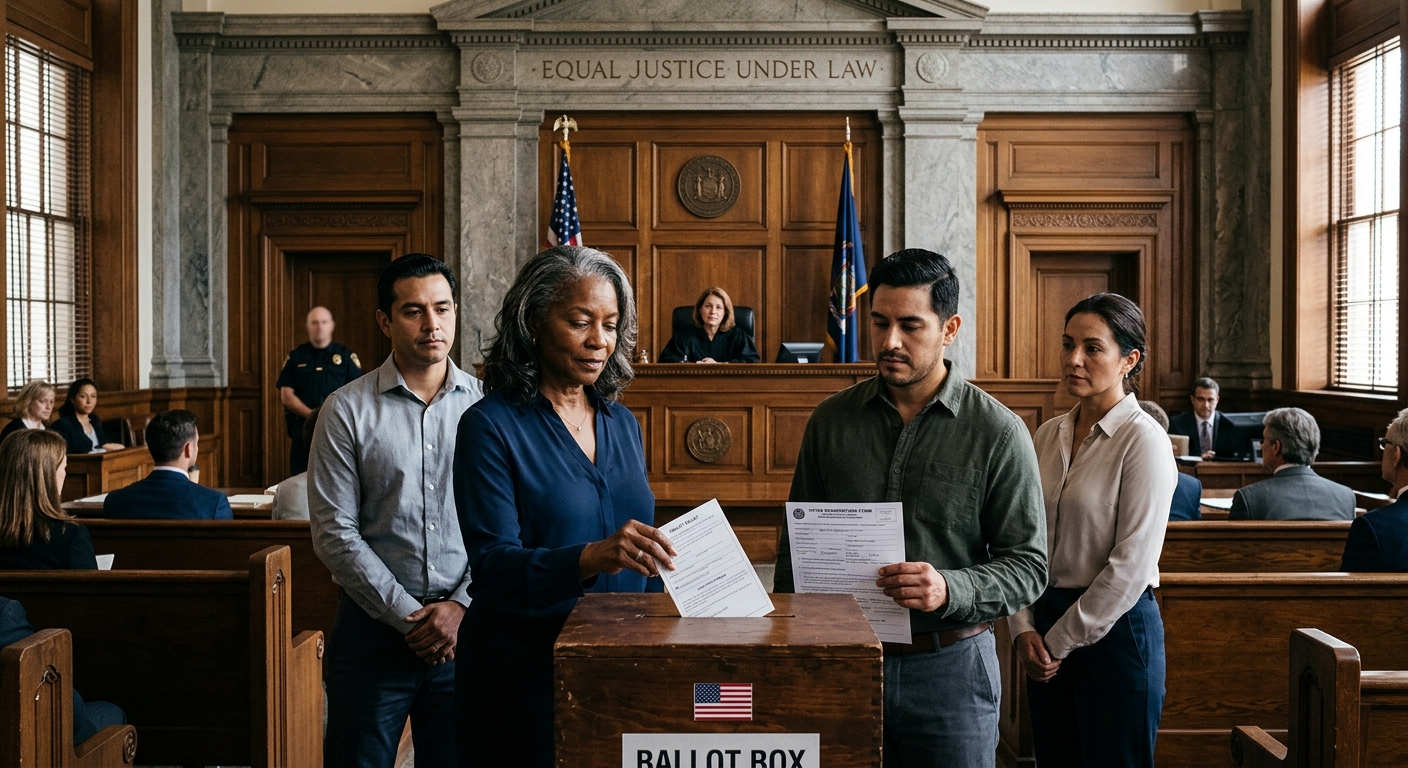
The Foundation of a Representative Democracy
A thriving democracy is fundamentally reliant on the active participation of its citizens. The right to cast a ballot is not merely a procedural aspect of government; it is the cornerstone of civic engagement, providing individuals with the agency and power to shape the policies, leadership, and ultimate direction of their communities. Through voting, citizens articulate their needs, protect their rights, and hold elected officials accountable. However, for millions of Americans, this essential constitutional right is systematically stripped away, caught in the intricate, unforgiving, and highly bureaucratic web of the criminal legal system.
As election cycles bring heightened national focus to the ballot box, the critical issue of voting rights for justice-impacted individuals demands urgent attention and rigorous public scrutiny. Felony disenfranchisement—the state-sanctioned practice of revoking a person’s voting rights due to a criminal conviction—stands as one of the most significant and pervasive barriers to achieving a fully representative democracy in the United States today. By excluding millions of otherwise eligible adults from the electoral process, the nation compromises the core principles of equality and representation that form the bedrock of its political identity.
The Intersection of Criminal Justice and Civic Duty
When individuals interact with the criminal justice system, the punitive consequences often extend far beyond their judicially mandated sentences. The collateral consequences of a criminal conviction can severely affect access to housing, employment opportunities, educational funding, and fundamental civil rights, most notably the right to vote. According to comprehensive data analysis conducted by leading criminal justice organizations, roughly four million Americans are currently barred from participating in elections due to felony convictions. These disenfranchised individuals live in our neighborhoods, pay taxes, and contribute to the local economy, yet they are entirely silenced at the polls.
This widespread disenfranchisement creates what is effectively a dual-class system of citizenship. Those who are justice-impacted are expected to abide by laws and contribute to the societal tax base, but they are denied the reciprocal right to have a say in how those laws are written or how their tax dollars are allocated. Civic participation is a two-way street, and severing that connection alienates individuals from the very society they are expected to successfully reintegrate into after serving their time. The systemic silencing of such a massive block of the population skews electoral outcomes and dilutes the political power of communities that are disproportionately targeted by the criminal legal system.
A Historical Look at Disenfranchisement Tactics
To fully grasp the contemporary landscape and profound impact of felony disenfranchisement, one must look backward into the complex history of American voting rights. While the concept of losing civil rights as a consequence of criminal behavior has ancient roots, the specific expansion and weaponization of felony disenfranchisement laws in the United States occurred primarily during the post-Reconstruction era. Following the abolition of slavery and the passage of the 15th Amendment—which constitutionally prohibited denying the right to vote based on race, color, or previous condition of servitude—many states sought alternative legal mechanisms to maintain white political dominance and suppress the newly acquired political power of Black citizens.
Lawmakers during the Jim Crow era meticulously crafted criminal statutes to disproportionately target offenses they believed were more frequently committed by Black individuals, simultaneously ensuring that convictions for these specific offenses carried the severe penalty of lifetime disenfranchisement. This deliberate and racially motivated legislative engineering served as a highly effective workaround to the 15th Amendment. By tying voting rights strictly to a biased criminal justice system, states could legally suppress minority voter turnout without explicitly mentioning race in their election laws.
The historical intent behind these laws continues to cast a long, dark shadow over modern elections. Today, the racial disparities embedded in the criminal legal system inevitably translate into racial disparities at the ballot box. African American and Latino citizens are disenfranchised at significantly higher rates than the general population, meaning that the historical goal of diluting minority political power remains an ongoing reality, even if the explicit language of modern statutes appears race-neutral on the surface.
The Fractured Landscape of State Regulations
One of the most confounding aspects of voting rights for justice-impacted individuals is the utter lack of federal uniformity. Because the United States Constitution delegates the administration of elections largely to individual states, the eligibility criteria for individuals with criminal records vary wildly across state lines. A person who is legally allowed to vote from a prison cell in one state could face a lifetime ban for the exact same offense simply by crossing a state border.
This patchwork of legislation can generally be categorized into several distinct tiers of restriction. The complexity of these laws not only confuses the public but often baffles local election officials who are tasked with enforcing them.
| Policy Category | Description of State Laws | Impact on Democratic Participation |
|---|---|---|
| Unrestricted Access | A small minority of jurisdictions (e.g., Maine, Vermont, and Washington D.C.) never revoke voting rights, regardless of conviction or incarceration status. | Individuals maintain their civic voice and can vote via absentee ballot while serving their sentences. |
| Post-Release Restoration | In many states, individuals lose their voting rights while incarcerated but automatically regain them upon release from prison. | Promotes reintegration, though individuals must often proactively re-register to vote once they return to their communities. |
| Post-Supervision Restoration | Some states require individuals to complete not only their prison terms but also their entire probation or parole periods before rights are restored. | Keeps individuals disenfranchised for years or decades after they have successfully returned to society. |
| Conditional / Lifetime Bans | A few states impose permanent voting bans for certain offenses, or require complex pardons or interventions by a governor to restore rights. | Creates permanent civic exile, effectively declaring that some individuals can never fully rejoin the democratic process. |
The Financial Barrier: Pay-to-Vote Mechanisms
Even in states that have passed progressive legislation to restore voting rights after a period of incarceration or supervision, hidden bureaucratic traps often remain. A particularly insidious element of modern disenfranchisement policies is the requirement that individuals pay all outstanding legal financial obligations—including court fines, administrative fees, and victim restitution—before their voting rights can be legally restored.
For many individuals exiting the prison system, securing stable housing and finding gainful employment with a criminal record is already a monumental challenge. Adding the burden of thousands of dollars in court debt creates an insurmountable barrier to the ballot box. Critics frequently compare these financial prerequisites to the unconstitutional poll taxes of the Jim Crow era. By conditioning the fundamental right to vote on a person’s ability to pay debts, the system effectively disenfranchises the poor while allowing wealthier individuals with the exact same criminal convictions to readily regain their political voice.
Misinformation and De Facto Disenfranchisement
Beyond the strict letter of the law, there is a pervasive and chilling psychological barrier that keeps eligible voters away from the polls: rampant misinformation. The constantly shifting nature of state election laws, combined with the extreme complexity of the criminal justice system, creates widespread confusion. This phenomenon is commonly referred to as ‘de facto disenfranchisement’—when individuals who are legally eligible to vote abstain from participating because they falsely believe they are banned, or because they fear severe legal repercussions if they make a mistake.
This fear is not entirely unfounded. In recent years, highly publicized crackdowns on alleged ‘voter fraud’ have resulted in the arrest and prosecution of individuals who mistakenly cast ballots, genuinely believing their rights had been restored. When the state provides little to no proactive education or clear guidance to individuals leaving the prison system regarding their civic status, the safest option for many is simply to avoid the polls altogether. The failure of state agencies to seamlessly communicate with one another—such as the Department of Corrections failing to notify the Board of Elections when a sentence is completed—further compounds this bureaucratic nightmare.
Advocacy and the Societal Benefits of Re-enfranchisement
Despite these daunting systemic challenges, a robust and growing bipartisan movement is actively fighting to dismantle felony disenfranchisement. Grassroots advocates, civil rights organizations, and community leaders are pushing for legislative reforms, successfully placing constitutional amendments on state ballots, and launching massive voter education campaigns directly inside correctional facilities and transition centers.
The argument for restoring the vote extends far beyond abstract concepts of constitutional fairness; it is rooted in tangible public safety and societal health. Extensive research into criminal justice reform indicates that civic engagement is a vital component of successful reentry into society. When individuals are encouraged to participate in the democratic process, they feel a stronger connection to their communities and a greater stake in the collective future. This sense of belonging and civic responsibility has been correlated with significantly lower rates of recidivism. In short, a more inclusive democracy is inherently a safer and more stable society.
Frequently Asked Questions (FAQs)
What exactly is felony disenfranchisement?
Felony disenfranchisement refers to state laws that restrict or completely revoke an individual’s right to vote as a direct consequence of being convicted of a felony crime. The duration and severity of these restrictions depend entirely on the specific laws of the state where the individual resides and where the conviction occurred.
Do people with misdemeanor convictions lose their right to vote?
In the vast majority of states, a misdemeanor conviction does not result in the loss of voting rights. Even if an individual is currently serving time in a local jail for a misdemeanor offense, they typically retain their legal right to vote and can often do so by requesting an absentee ballot. However, it is crucial to verify local state laws, as a handful of states may have specific restrictions related to election-fraud misdemeanors.
Can paying court fines affect my eligibility to vote?
Yes, depending on where you live. Some states legally condition the restoration of voting rights on the complete payment of all court-ordered fines, fees, and restitution. In these jurisdictions, if you have finished your prison sentence and probation but still owe money to the court, you remain legally barred from casting a ballot.
How can someone with a record find out their voting status?
Because laws vary by state and are subject to frequent legislative changes, individuals should consult their local Secretary of State’s office or their local Board of Elections. Additionally, numerous non-partisan civil rights organizations and legal aid clinics provide free, state-specific resources and hotlines to help justice-impacted individuals determine their current voter eligibility.
Conclusion
The health of a democratic nation is measured by the inclusivity of its electoral process. Continuing to lock millions of justice-impacted Americans out of the voting booth perpetuates historical injustices and undermines the legitimacy of our political institutions. Dismantling the labyrinth of felony disenfranchisement laws is not merely about reforming the criminal justice system; it is about fundamentally restoring the integrity of the ballot. True representation demands that every citizen—regardless of their past—has the opportunity to contribute their voice to the future of the nation.
References
- Guide to State Voting Rules That Apply After a Criminal Conviction — U.S. Department of Justice (Civil Rights Division). 2024-09-01. https://www.justice.gov/voting/voting-criminal-conviction
- Restoration of Voting Rights for Felons — National Conference of State Legislatures. 2026-05-28. https://www.ncsl.org/elections-and-campaigns/felon-voting-rights
- Locked Out 2024: Four Million Denied Voting Rights Due to a Felony Conviction — The Sentencing Project. 2024-10-10. https://www.sentencingproject.org/reports/locked-out-2024-estimates-of-people-denied-voting-rights/
Similar Articles








Read full bio of medha deb


