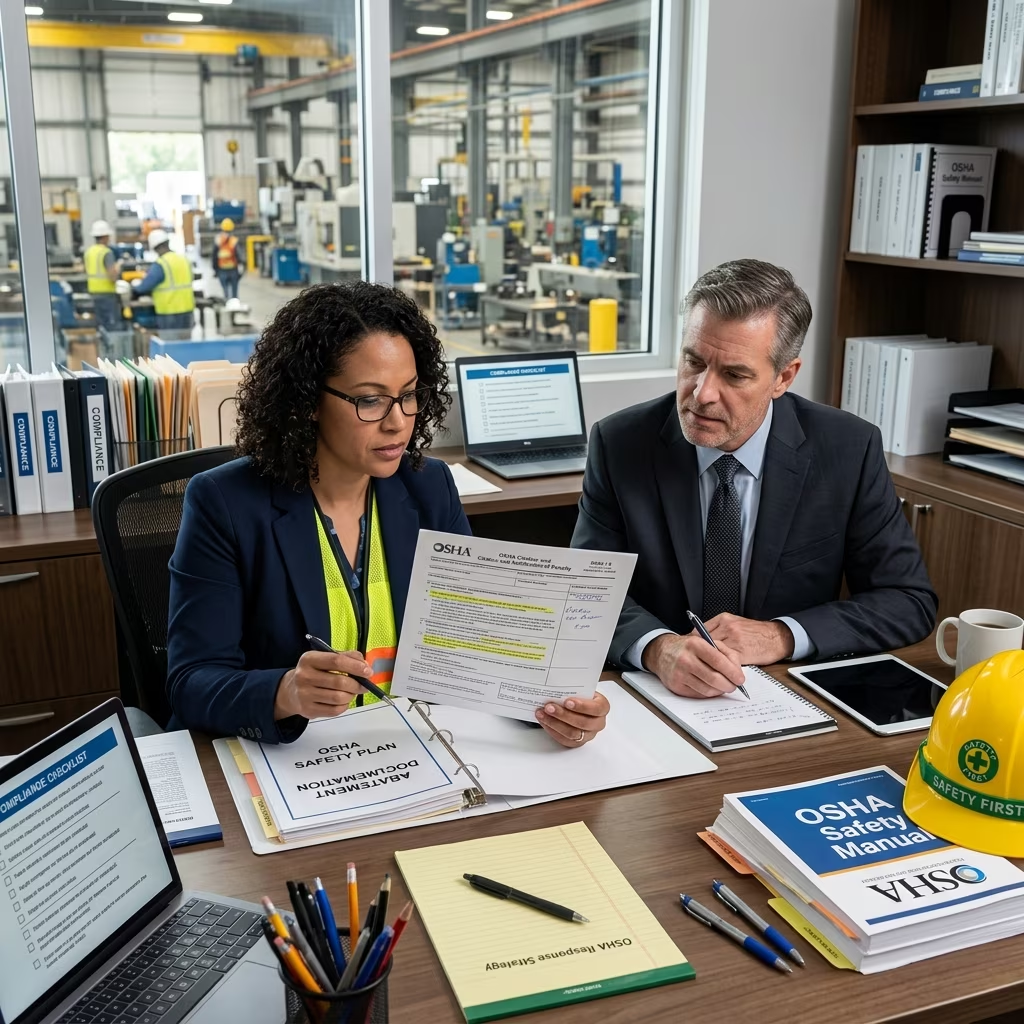
When your business is notified of an alleged OSHA violation, the way you respond in the first few days can significantly affect your legal exposure, costs, and employee trust. A violation claim is not just a paperwork issue—it is a formal signal that federal safety regulators believe employees may be exposed to hazards in your workplace. Understanding the process and your rights is essential to protecting both your organization and your workforce.
Understanding OSHA and Violation Claims
The Occupational Safety and Health Administration (OSHA) is the federal agency tasked with ensuring safe and healthful working conditions for employees in most private-sector workplaces in the United States. When OSHA believes a workplace may be unsafe or out of compliance with its standards, it can conduct inspections and issue citations.
What Triggers an OSHA Inspection?
An OSHA inspection can arise from several different events. Common triggers include:
- Employee complaints about unsafe or unhealthy working conditions
- Reports of serious injuries, hospitalizations, or fatalities
- Targeted enforcement programs focusing on high-risk industries
- Referrals from other government agencies or media reports
- Follow-up inspections after previous citations
Employees have the right to file confidential complaints about safety and health concerns, and they are protected from retaliation when doing so. This means a violation claim may originate internally, even if management was unaware of the specific issue.
Key Terms in OSHA Enforcement
When OSHA believes a standard has been violated, it may issue a Citation and Notification of Penalty, which is the formal document describing alleged violations, proposed penalties, and required corrective actions. Citations are categorized based on the severity and nature of the hazards. Common types include:
- Serious: There is a substantial probability that death or serious physical harm could result from a hazard the employer knew or should have known about.
- Other-than-serious: Violations that have a direct relationship to job safety and health but are not likely to cause death or serious physical harm.
- Willful: Violations committed with intentional disregard for, or plain indifference to, OSHA requirements.
- Repeat: Violations similar to those previously cited for the same employer.
- Failure-to-abate: When an employer has not corrected a cited violation within the allotted abatement period.
The classification affects the size of the penalty and potential legal consequences. Willful or repeat violations typically carry significantly higher fines and may lead to criminal referrals in extreme cases.
What Happens When You Receive an OSHA Citation?
Receiving a citation is a pivotal moment. OSHA regulations impose specific obligations and strict deadlines as soon as the citation arrives. Employers must act quickly and deliberately to avoid additional penalties.
Immediate Employer Obligations
Upon receipt of a Citation and Notification of Penalty, employers are generally required to meet a number of immediate obligations:
- Posting the citation at or near the place where each violation occurred, making employees aware of the hazard and the enforcement action.
- Ensuring the citation remains posted for three working days or until the violation is corrected, whichever period is longer.
- Reviewing the citation carefully, including the alleged standards violated, the classification of each violation, proposed penalties, and abatement dates.
Failure to comply with posting requirements can itself be treated as a separate violation and may increase your overall penalty exposure.
Critical Deadlines You Must Track
OSHA’s process is driven by strict timeframes. Two of the most important deadlines for employers are:
| Deadline | Timeframe | What It Covers |
|---|---|---|
| Contest period | 15 working days from receipt of citation | Time to file a written notice of contest for any citation, proposed penalty, or abatement date. |
| Penalty payment | Generally within 15 working days from penalty notice | Time to pay proposed penalties if you choose not to contest. |
| Posting period | Minimum three working days | Time during which citations must be visible to employees at or near the affected area. |
Missing the 15-working-day contest window usually means the citation becomes a final order and can no longer be challenged, so calendar discipline is crucial.
Evaluating Your Options: Accept, Negotiate, or Contest
After reviewing the citation, employers must decide how to respond. There is no single correct approach for every situation; the best strategy depends on the strength of OSHA’s evidence, the seriousness of the hazards, and business considerations. Broadly, employers have three paths: accept, negotiate informally, or formally contest.
Option 1: Accepting the Citation and Abating the Hazards
Many employers choose to accept some or all violations, particularly when the hazard is clear and the evidence is strong. Accepting a citation generally entails:
- Correcting the hazardous condition by the abatement date set in the citation
- Documenting abatement and notifying the OSHA area director that corrective actions have been taken
- Paying the proposed penalties within the required timeframe
In some cases, OSHA may require an abatement plan or periodic progress reports showing the steps you are taking to protect employees and resolve hazards, especially for complex or multi-step corrections.
Option 2: Requesting an Informal Conference
Before deciding whether to contest, employers can request an informal conference with the OSHA area director. This is a meeting where the employer and OSHA discuss the citations, evidence, abatement requirements, and possible settlement.
Benefits of an informal conference include:
- Clarifying OSHA’s expectations and understanding the basis for each citation
- Negotiating penalty reductions or reclassification of violations where appropriate
- Adjusting abatement dates to better reflect realistic timelines
- Resolving certain disputes without a formal contest process
Employers typically prepare for informal conferences by gathering training records, incident reports, safety policies, inspection logs, photographs, and evidence of corrective measures that may support their position.
Option 3: Formally Contesting the Citation
If you disagree with OSHA’s findings, you may file a notice of contest within 15 working days. This written notice can challenge any part of the citation, penalty, or abatement deadline.
Key points about formal contests:
- The contest initiates a legal process, typically before the Occupational Safety and Health Review Commission (OSHRC).
- Issues may include whether a violation occurred, whether it was properly classified, and whether the penalties are appropriate.
- Legal counsel experienced in occupational safety and health law is usually advisable to navigate the procedures and evidentiary rules.
While contesting can protect your rights and reduce liability, it also extends the duration of the enforcement matter and may involve substantial preparation and potential litigation costs.
Consequences of OSHA Violations
OSHA violations carry repercussions that go beyond the immediate fines. Understanding the potential consequences can help employers make informed decisions about whether to contest or settle and underscore the importance of strong safety programs.
Financial Penalties
OSHA imposes penalties that reflect the severity of the violation, the employer’s history, the size of the business, and the employer’s good faith efforts to comply. Serious violations can lead to substantial fines, and willful or repeat violations result in much higher penalty ranges.
In addition to direct fines, employers may incur indirect costs such as:
- Legal and consulting fees associated with investigations, conferences, and litigation
- Expenses to implement corrective measures and engineering controls
- Increased workers’ compensation premiums and insurance costs
- Disruption to operations due to shutdowns or changes in processes
Potential Criminal Exposure
While most OSHA cases are civil matters, extreme circumstances can lead to criminal enforcement. If a willful violation results in the death of an employee, OSHA can refer the case for criminal prosecution, and employers may face fines and imprisonment under federal law. These cases are relatively rare but underscore the seriousness of willful non-compliance.
Reputational and Employee Relations Impact
OSHA citations can affect public perception, contract eligibility, and internal morale. Employees may question management’s commitment to safety if they perceive hazards as neglected. Conversely, a transparent and proactive response can reassure workers and demonstrate your commitment to their wellbeing.
Employer Rights and Responsibilities After an OSHA Inspection
The enforcement process is not one-sided. OSHA’s regulations provide employers with specific rights to challenge findings and manage abatement while also imposing responsibilities designed to protect workers.
Your Key Rights as an Employer
Following an inspection and citation, employers have several important rights:
- The right to receive detailed written citations describing alleged violations and proposed penalties
- The right to request an informal conference with OSHA
- The right to file a written notice of contest within the 15-working-day period
- The right to participate in hearings before the OSH Review Commission if a contest proceeds
- The right to obtain and review inspection records and evidence relevant to the citation
Your Ongoing Responsibilities
Alongside these rights, employers retain critical responsibilities, including:
- Providing a workplace that is free from recognized serious hazards (the “general duty” requirement)
- Complying with OSHA standards and abatement orders in a timely manner
- Maintaining accurate records of work-related injuries and illnesses
- Posting required notices, including citations and certain OSHA documents, for employee review
- Ensuring that employees are not retaliated against for exercising their OSHA rights, such as filing complaints or participating in inspections
Practical Steps to Strengthen Your Response
Beyond meeting legal requirements, effective management of a violation claim involves thoughtful internal coordination and communication. The following practical steps can improve your position and reduce risk.
Build an Internal Response Team
When a citation arrives, designate a cross-functional team to coordinate the response. This team often includes:
- Senior management or the site manager
- Safety and health professionals or compliance officers
- Human resources representatives
- Legal counsel with OSHA or employment law experience
- Operations or engineering staff with knowledge of the affected processes
This group should oversee document collection, internal investigations, communication with OSHA, and tracking of abatement steps and deadlines.
Gather and Preserve Relevant Evidence
From the outset, assemble and preserve documents that may be relevant to the citations, such as:
- Training records and sign-in sheets
- Written safety policies and procedures
- Maintenance and inspection logs
- Incident reports and witness statements
- Photographs or video of the cited conditions, both before and after abatement
Robust documentation can support negotiations, demonstrate good faith efforts, and form the basis of any formal contest.
Communicate Transparently with Employees
Employees will see posted citations and may have concerns. Address those concerns through clear communication:
- Explain what OSHA has alleged and how the company is responding
- Reaffirm your commitment to safety and health
- Encourage employees to report hazards without fear of retaliation
- Share updates on abatement measures as they are implemented
Open communication helps maintain trust and can encourage cooperation in implementing corrective actions.
Preventing Future OSHA Violations
The best way to manage OSHA enforcement risk is to prevent violations before they occur. A strong, proactive safety program reduces hazards, minimizes regulatory exposure, and protects employees.
Core Elements of an Effective Safety Program
While programs should be tailored to each workplace, effective systems often share several elements:
- Management commitment: Leadership visibly supports safety initiatives and allocates resources to hazard control.
- Employee involvement: Workers participate in safety committees, hazard reporting, and solution development.
- Hazard identification: Regular inspections and job hazard analyses are used to locate and prioritize risks.
- Training and education: Employees receive clear, role-specific instruction on procedures, protective equipment, and emergency response.
- Incident investigation: Near misses and injuries are analyzed to identify root causes and prevent recurrence.
- Continuous improvement: Safety performance is monitored using metrics, and corrective actions are evaluated and updated over time.
Practical Prevention Strategies
Employers can adopt practical measures to limit the likelihood and severity of future violation claims:
- Conduct periodic audits comparing workplace practices to current OSHA standards and guidance.
- Establish clear reporting channels for employees to raise safety concerns confidentially.
- Correct hazards promptly when identified, documenting actions taken.
- Review and update safety procedures following organizational changes, new equipment, or process modifications.
- Engage qualified safety consultants or legal counsel for complex regulatory issues.
Frequently Asked Questions About OSHA Violation Claims
How much time do I have to respond to an OSHA citation?
Employers generally have 15 working days from the date they receive a citation to contest any part of it in writing. If you do not file a notice of contest within that window, the citation usually becomes a final order.
Do I have to post the OSHA citation for employees to see?
Yes. OSHA rules require that citations be posted at or near the place where the violation occurred, and the notice must remain posted for at least three working days or until the hazard is corrected, whichever is longer. This requirement applies even if you plan to contest the citation.
Can employees file complaints that lead to OSHA inspections?
Employees are entitled to file confidential safety and health complaints with OSHA if they believe their workplace is unsafe or unhealthy. Complaints can be submitted online, by phone, by mail, or in person, and OSHA may conduct an inspection based on the information provided.
What happens if I cannot correct the hazard by the abatement date?
If you cannot meet the abatement deadline, you may need to request a modification and provide detailed information about the steps taken so far, why more time is needed, and how employee safety will be protected in the interim. OSHA may also require abatement plans and progress reports for complex hazards.
Can I be penalized for retaliating against employees who complain to OSHA?
Yes. Employers are prohibited from retaliating against workers for exercising their OSHA rights, including filing safety complaints, participating in inspections, or reporting injuries. Retaliation claims can result in separate enforcement actions under OSHA’s whistleblower protection laws.
References
- Employer Rights and Responsibilities Following a Federal OSHA Inspection — Occupational Safety and Health Administration. 2002-01-01 (original publication, still authoritative as official guidance). https://www.osha.gov/sites/default/files/publications/OSHA3000.pdf
- Citation and Notification of Penalty — Occupational Safety and Health Administration. 2023-01-01. https://www.osha.gov/abatement
- Worker Rights and Protections — Occupational Safety and Health Administration. 2024-01-01. https://www.osha.gov/workers
- File a Complaint — Occupational Safety and Health Administration. 2024-01-01. https://www.osha.gov/workers/file-complaint
- What are the Types of OSHA Violations? — AmTrust Financial. 2023-05-10. https://amtrustfinancial.com/blog/loss-control/what-are-the-types-of-osha-violations
- What Happens If a Company Violates OSHA? Consequences and Penalties Explained — FACS. 2023-09-01. https://facs.com/blog/what-happens-if-a-company-violates-osha-consequences-and-penalties-explained/
- What To Do if an OSHA Violation Arrives — McLane Middleton. 2019-04-04. https://www.mclane.com/insights/what-to-do-if-an-osha-violation-arrives/