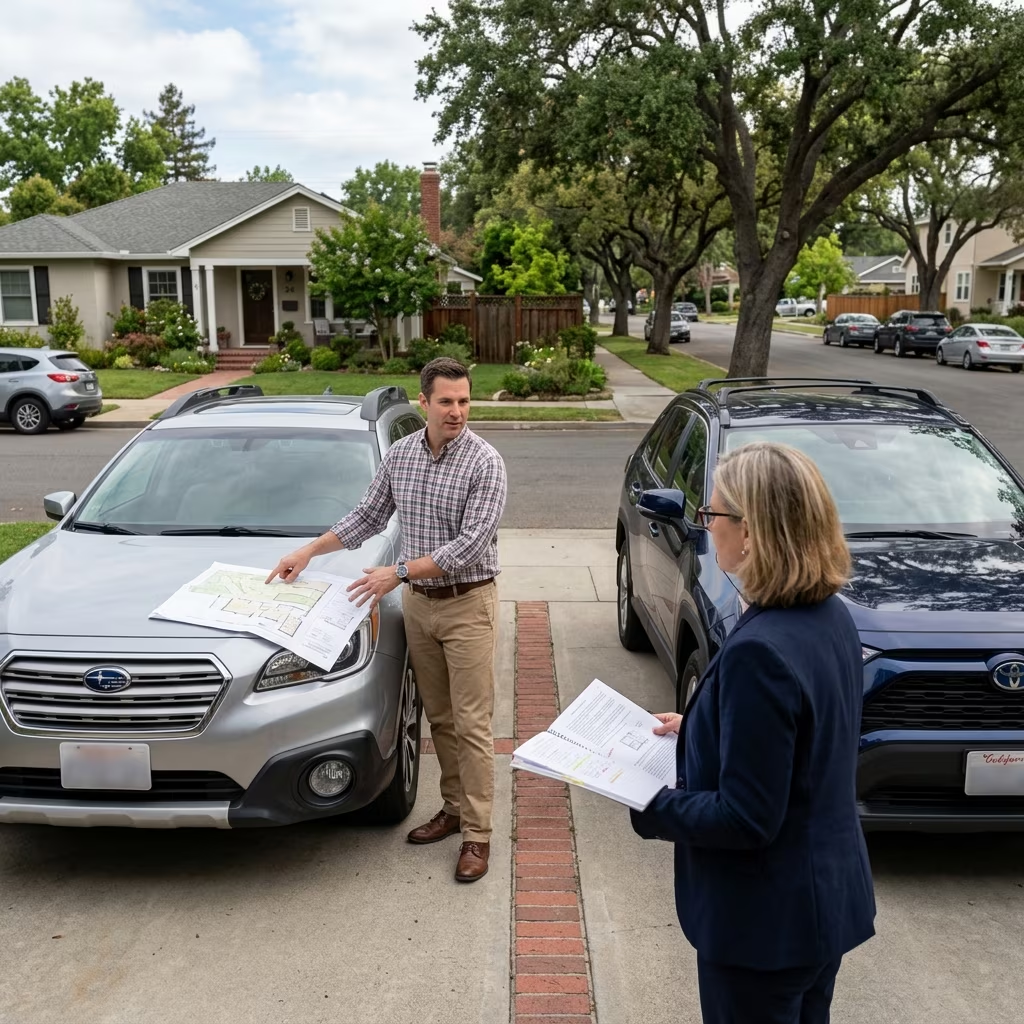
Parking conflicts are one of the most common sources of friction between neighbors. Whether someone repeatedly blocks your driveway, occupies your assigned space, or ignores homeowners association rules, how you respond can determine whether the situation is resolved quickly or escalates into a long-term feud. This guide explains practical, legally grounded steps you can take to address parking issues while protecting your rights and maintaining a livable community.
Understanding the Nature of Parking Disputes
Not all parking problems are legally the same. Before taking action, it is important to identify where the vehicle is parked and what rights apply. The approach differs depending on whether the parking occurs on:
- Private property you own or rent (e.g., driveway, deeded space).
- Common areas in a condominium or planned community, subject to association rules.
- Public streets owned and regulated by the city or county.
In many jurisdictions, unauthorized parking on private land can amount to civil trespass or interference with easement rights, while improper parking on public streets is handled through local ordinances and enforcement agencies. Understanding this distinction will guide which authorities you can involve and what remedies are realistic.
| Location | Typical Rights | Likely Remedies |
|---|---|---|
| Private driveway or deeded space | Exclusive use by owner or tenant | Request removal, document incidents, civil action for trespass or injunction if repeated |
| Shared access easement | Right to ingress/egress without obstruction | Formal demand, potential court order to prevent blocking the access |
| HOA-controlled parking areas | Use governed by association rules | Association complaints, fines, or enforcement actions against violators |
| Public street parking | Open to all, subject to local rules | Report violations to parking authority or police; limited ability to claim a specific space |
First Step: Calm, Direct Communication
Most parking disputes are resolved without court proceedings; a calm, evidence-based approach is usually more effective than confrontation. In many cases, your neighbor may not realize their parking habits cause a problem.
How to initiate the conversation
- Choose a low-stress moment: Avoid addressing the issue when you are angry or rushed. Instead, speak when both parties are calm.
- Be specific: Explain what is happening (e.g., blocking your driveway, using your assigned spot) and why it affects you.
- Focus on solutions, not blame: Ask whether you can agree on practical boundaries—such as not parking past a certain line or avoiding certain hours.
- Stay respectful: Personal attacks increase the risk of escalation and may later complicate legal proceedings.
Document the conversation in your personal notes: date, time, what was discussed, and any agreements reached. These records can be valuable if the situation continues and you later involve an association, mediator, or lawyer.
Written Notice: When Talk Is Not Enough
If verbal discussion does not resolve the problem, a written notice can formalize your concerns and show that you have attempted reasonable steps before seeking enforcement.
Elements of an effective parking complaint letter
- Clear description of the issue: Identify the vehicle, where it is parked, and how often the problem occurs.
- Reference to applicable rules: Include relevant clauses from your lease, HOA documents, or local parking ordinances when available.
- Reasonable request: State what change you are asking for, such as not parking in your designated space or leaving access to your driveway.
- Notice of future steps: Without being threatening, note that you may need to involve the HOA, local authorities, or legal counsel if the situation does not improve.
Keep a copy of the letter and proof of delivery, such as certified mail, hand delivery with a witness, or an email record. This paper trail will support you if the dispute escalates.
Documenting the Problem Thoroughly
Good documentation strengthens your position with HOAs, mediators, agencies, and courts. It also helps distinguish occasional inconvenience from a sustained pattern of behavior.
What to record
- Dates and times: Note each incident, including how long the vehicle remained.
- Photos or videos: Capture the vehicle’s position relative to your property, driveway, or signs.
- Copies of communications: Save letters, emails, text messages, and any replies.
- Impact on use: Record instances where you were unable to leave, enter, or safely access your home.
This evidence can make a crucial difference if you submit a complaint to your HOA, request municipal enforcement, or seek a court order in a civil case.
Using HOA and Property Management Processes
In condominiums, planned communities, or rental complexes, parking is often governed by covenants, conditions, and restrictions (CC&Rs) or lease terms. Homeowners associations and property managers usually have authority to enforce these rules.
When to involve your HOA or landlord
- Rule violations: If your neighbor ignores posted parking rules, assigned spaces, or permit requirements, file a formal complaint with the HOA or property manager.
- Repeated issues: Once informal efforts fail, association intervention may be more effective and less confrontational.
- Safety concerns: Blocking fire lanes, emergency access, or creating hazards should be reported promptly.
Some associations can issue warnings, levy fines, suspend privileges, or in serious cases, pursue legal action to enforce parking rules. Review your community’s governing documents to understand available remedies and procedures.
Mediation: Preserving Neighbor Relationships
Where you and your neighbor must continue living side by side, mediation can be an effective way to resolve disputes without formal litigation. Community mediation services or private mediators help both parties discuss the problem with the support of a neutral facilitator.
Benefits of mediation in parking disputes
- Lower cost and stress: Mediation is typically cheaper and less adversarial than court.
- Flexible solutions: The parties can agree to creative arrangements—such as alternating spaces or adjusting parking times—that courts might not order.
- Relationship focus: Mediation emphasizes communication and long-term coexistence, which is particularly valuable between neighbors.
If direct communication and written notice fail, consider mediation before turning to lawsuits or enforcement agencies. Many local governments and non-profit organizations maintain neighbor dispute resolution programs.
When to File a Complaint With Authorities
In some situations, you may need to involve law enforcement or municipal parking authorities, particularly when access is blocked or local rules are violated repeatedly.
Typical scenarios for official complaints
- Obstructed driveways: Many cities prohibit parking that blocks or significantly impedes driveway access; authorities may tow or ticket vehicles in violation.
- No-parking zones: Parking in fire lanes, near hydrants, or in posted no-parking areas can trigger immediate enforcement.
- Permit-only areas: In neighborhoods with permit systems, non-permitted vehicles may be subject to fines or removal.
When making a complaint, provide specific details: location, license plate, photographs, duration of the obstruction, and prior attempts to resolve the matter. Different jurisdictions vary in how quickly they respond and what remedies they provide, so review local ordinances or city resources to understand the process.
Legal Remedies: Trespass, Easements, and Civil Actions
Persistent or deliberate parking violations on or across private property may justify legal action. Common legal theories involve trespass, nuisance, or interference with easement rights.
Parking on private land
Repeated parking in your driveway or deeded space without permission may be treated as civil trespass. Courts can issue injunctions requiring the neighbor to stop the behavior, and in some cases award damages if you suffered quantifiable losses.
Blocking shared access easements
Where a shared driveway or access road is subject to an easement, neither party is usually allowed to obstruct ingress and egress. In such cases, a court may order the neighbor to cease parking in a manner that interferes with the easement.
When to consult an attorney
- Persistent harassment or threats: If the dispute escalates beyond simple parking to harassment, stalking, or threats, professional legal advice is essential.
- Complicated property documents: Easements, covenants, and boundary issues often require legal interpretation and may not be self-explanatory.
- Previous attempts failed: When communication, mediation, and association enforcement have not worked, an attorney can evaluate whether litigation or a formal demand letter is appropriate.
Attorneys experienced in real estate or neighbor disputes can review your deed, easement documents, and local law to identify the best strategy.
Key Do’s and Don’ts in Parking Disputes
Recommended actions
- Do remain calm and factual: Emotional confrontations can worsen the situation and may later be used as evidence against you.
- Do understand your legal rights: Review association rules, leases, and local ordinances before asserting claims.
- Do keep detailed records: Photos, logs, and copies of communications strengthen your position at every stage.
- Do seek professional help when needed: Mediation, HOA involvement, and legal counsel can provide structured solutions.
Actions to avoid
- Do not damage or block the neighbor’s vehicle: Tampering with cars or unlawfully clamping/towing them can expose you to civil or criminal liability in many jurisdictions.
- Do not engage in harassment: Repeated yelling, threats, or retaliatory behavior may undermine your legal position.
- Do not ignore formal notices: If your neighbor or association sends you written complaints, respond promptly and consider legal guidance.
Frequently Asked Questions (FAQs)
Can I reserve the public street in front of my house?
Generally, you cannot claim legal ownership of public street parking in front of your home. Public roads are typically managed by local authorities, and spaces are available to any driver who complies with parking regulations. Some areas use permit systems, but even then, a specific curbside spot is rarely reserved for one resident.
May I have a neighbor’s car towed from my driveway?
If a vehicle blocks your ability to exit or enter your property, you may be able to request assistance from law enforcement or authorized towing services, depending on local law. However, many jurisdictions restrict private individuals from towing or immobilizing vehicles on their own authority, so you should contact the appropriate agency rather than taking direct action.
What if my neighbor keeps parking in my assigned space in a condo?
Start with a polite conversation and a written note, then escalate the issue to your condominium association or property manager if the behavior continues. Associations often have authority to issue fines or take other enforcement steps based on community parking rules.
Is blocking a shared driveway ever allowed?
Where a shared driveway is subject to an easement for access, neither party is typically allowed to obstruct ingress or egress. Continual blocking may justify legal action, including a court order preventing parking that interferes with the easement.
When should I stop trying to handle it alone?
If the dispute affects daily access to your home, involves threats or harassment, or persists despite communication, documentation, and association involvement, consult a qualified attorney or mediator. Professional advice can prevent missteps and help you choose between mediation, formal complaints, or potential litigation.
References
- Parking disputes with neighbours: Your legal rights — The Silver Brief. 2026-05-11. https://thesilverbrief.blog/2026/05/11/parking-disputes-with-neighbours/
- How To Legally Resolve Parking Disputes with Neighbors — Super Lawyers. 2023-08-15 (approx.). https://www.superlawyers.com/resources/real-estate/real-estate-disputes/how-to-legally-resolve-parking-disputes-with-neighbors/
- What can I do legally to stop my neighbours from parking? — Avvo Legal Answers. 2019-04-02 (approx.). https://www.avvo.com/legal-answers/what-can-i-do-legally-to-stop-my-neighbours-from-p-1014823.html
- Neighbor Parking Dispute Legal Advice: What Are Your Rights? — JustAnswer Law. 2022-07-10 (approx.). https://www.justanswer.com/law/3xvbs-recently-bought-house-neighbor-across-street.html
- How to Resolve Neighbor Disputes: Here’s What You Need to Know — Mellor Law Firm. 2021-11-30 (approx.). https://www.mellorlawfirm.com/real-estate-education/dispute-resolution-how-to-resolve-neighbor-disputes/
- Bronx Property Dispute Lawyers | Boundary & Neighbor Conflicts — Adon & Associates PC. 2020-06-15 (approx.). https://www.adonlaw.com/legal-services/real-estate-transactions/property-dispute-resolution