
Driving Records: State Request Steps, Fees, And Fixes Explained
A practical guide to getting driving records from state DMVs, including formats, fees, and common request methods.
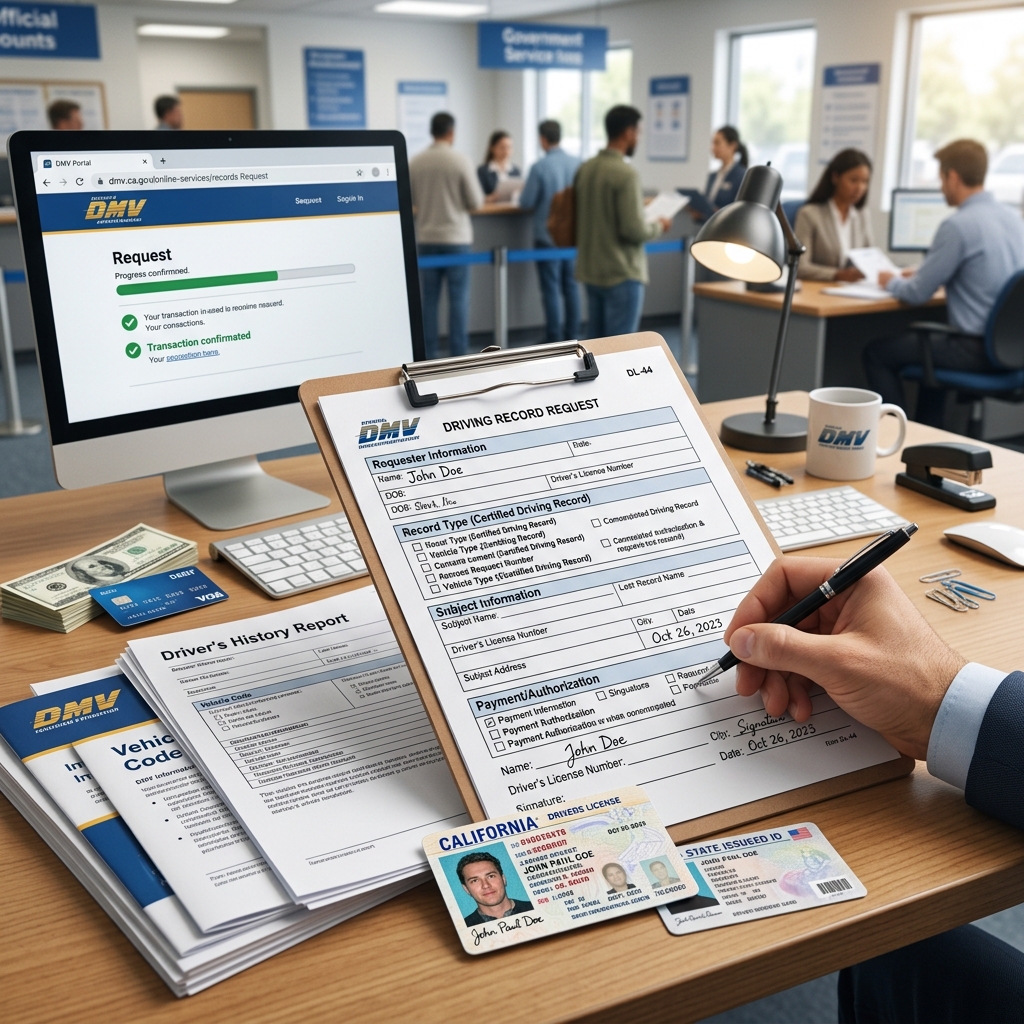
Driving records are official documents maintained by state motor vehicle agencies that summarize a person’s license status and driving history. They are commonly used for employment screening, insurance underwriting, legal matters, and personal recordkeeping. Because each state runs its own system, the exact request process, fee, and delivery method can vary widely.
If you need a copy of a driving record, the first step is usually to identify the correct state agency and decide whether you are requesting your own record or someone else’s. In many states, your own record can be ordered online, while third-party requests often require a written form, proof of authority, or a mailed request. California and Washington, for example, both offer online or mail options for at least some types of record requests, but they use different forms, accounts, and fee structures.
What a Driving Record Typically Includes
A DMV driving record is not just a list of tickets. It often shows license class, status, restrictions, convictions, collisions, suspensions, and other administrative actions. Some records are limited summaries, while others are certified copies or more detailed abstracts intended for official use.
Depending on the state, the report may also show how long certain items remain on file. California’s DMV, for example, states that collisions, violations, and actions can remain on a record for different periods depending on the type of event and whether the driver holds a commercial license. That means the same record can have different retention periods for different entries, rather than one uniform expiration date.
- License status: active, suspended, revoked, expired, or restricted
- Traffic convictions: moving violations and point-related offenses
- Accidents: reportable collisions or crash history
- Administrative actions: suspensions, revocations, or reinstatements
- Commercial indicators: CDL-related items in some states
Why People Request Driving Records
Individuals and organizations request driving records for several practical reasons. Employers may review them before hiring a driver. Insurance companies may use them to assess risk. Attorneys may need them for litigation or settlement analysis. Drivers also request their own records to check for errors or verify that an old issue has been cleared.
In some situations, a record is needed as proof of licensing history when moving between states or resolving a discrepancy in a background check. A record can also help a driver confirm whether a past citation, suspension, or collision still appears in the official file.
How State Request Methods Usually Work
Although the details differ from state to state, most DMV systems use one or more of the same channels: online portals, mail-in forms, in-person service, or special request procedures for authorized third parties. The state’s official DMV or licensing department should always be the first place to check, because third-party sites can be outdated or incomplete.
California allows drivers to order certain records online through its DMV portal, but it also provides paper forms for mailed requests and separate procedures for requesting another person’s record. Washington, by contrast, lets residents order their own record online or by mail and also offers in-office purchase options. Those examples show the main pattern: the method exists, but the eligibility rules may differ depending on who is requesting the record and why.
| Request Method | Typical Use | Common Requirement |
|---|---|---|
| Online portal | Fast access to your own record | Account, identity verification, payment |
| Mail request | Certified copies or third-party requests | Completed form, signature, fee, mailing address |
| In person | Immediate pickup in some states | ID and payment at a field office |
| Special request process | Legal, privacy, or public records matters | Documentation showing authority or purpose |
What You Need Before Submitting a Request
Most agencies ask for enough identifying information to locate the correct record. That usually means the driver’s full name, date of birth, driver license number, and sometimes address history or a signed authorization. If the request is for someone else, the state may require a release form, proof of permissible use, or a notarized statement.
California’s DMV states that some requests require specific forms, including a request for your own record or a request for another person’s record. The agency also notes that mailed requests must include the completed form and applicable payment, along with required identifying details. In practice, that is typical of many states: the more sensitive the record, the more documentation is needed.
- Full legal name of the driver
- Driver license number, if known
- Date of birth
- Mailing address and contact information
- Authorization or legal basis, if requesting another person’s record
- Payment method accepted by the agency
Fees and Delivery Options
Costs vary substantially by state. Some agencies charge only a small administrative fee, while others charge a higher rate for certified copies or detailed abstracts. California’s online driver record request page states that a casual requester is charged $2 for an electronic request and $5 for a mailed request. Washington’s licensing department lists a $15 fee per copy for driving records. Illinois, meanwhile, charges $20 for a driving record abstract requested through its driver services process.[10]
The delivery format also matters. An online request may produce an immediately printable copy, while a mailed request may arrive later and sometimes include a certification seal or other authentication. If you need a record for court, licensing, or employment, check whether the receiving party requires a certified version rather than a simple informational copy.
Public Records and Special Access Rules
Not every driving-related file is requested the same way. Some materials are handled under ordinary DMV record procedures, while others fall under public records rules or separate agency channels. California notes that certain office or occupational license records must be requested through a Public Records Act process rather than a standard driver record request. That distinction matters because the correct route can affect timing, fees, and what the agency will release.
When a record request involves a third party, privacy laws usually become more important. States often limit access to records unless the requester has a proper purpose. In many cases, employers, insurers, lawyers, or investigators must show that the request fits a permitted category under state law or federal privacy standards.
How to Handle Errors in a Driving Record
If you find an error in your own record, do not assume the agency will correct it automatically. You may need to submit a correction form, provide supporting documents, or contact the office that created the erroneous entry. California specifically provides forms for reporting incorrect driver records or collision-related inaccuracies.
Common mistakes include a citation belonging to the wrong person, a conviction that should have been removed, or a status change that never updated after reinstatement. The faster you identify the issue, the easier it is to prevent problems with insurance, employment, or future licensing applications.
- Compare the record against court or DMV paperwork
- Keep copies of tickets, dismissals, and reinstatement notices
- Use the agency’s designated correction form when available
- Follow up if the record remains incorrect after submission
Practical Tips for Choosing the Right Request Path
The easiest way to avoid delays is to start with the official state DMV page and read the request instructions carefully. The record type you need determines the correct route. For example, a personal license history may be available online, while a certified abstract for legal use may need a mailed form or office visit. A request for another person’s record may also require written authorization or a legally recognized reason.
It is also wise to confirm whether the agency accepts electronic payment, personal checks, money orders, or only specific payment methods. Some DMVs process requests faster online, but that option may be limited to residents or to requests for your own record only, as Washington’s licensing department indicates for its online option.
Common Mistakes That Delay Requests
Simple errors can slow the process considerably. Missing signatures, incomplete forms, wrong fees, and incorrect mailing addresses are frequent causes of delay. Another common problem is requesting the wrong type of record. A driver may want a certified abstract for court but submit a request for an informal copy, which can force a second filing.
To reduce delays, review the instructions line by line and make sure every required field is filled in. If the agency provides a checklist, use it. If the agency offers an online account, save the confirmation number or receipt so you can track the request later.
Frequently Asked Questions
Can I get my driving record from any state?
Yes, but you usually must request it from the specific state that issued the license or maintains the record. State procedures are not interchangeable, so each DMV sets its own forms, fees, and eligibility rules.
Can I order someone else’s driving record?
Sometimes, but only if the state allows it and you meet its legal requirements. Many agencies require a signed release, a stated purpose, or another form of authorization.
How quickly can I receive a record?
Online requests may be available immediately or within a short time, while mailed requests usually take longer. The exact turnaround depends on the state and the type of record requested.
Do all driving records show the same information?
No. Some records are basic abstracts, while others include more detailed history, certification, or retention information. California, for example, lists different retention periods for collisions and violations depending on the event type.
What if I need proof for court or employment?
Ask whether the receiving party needs a certified copy. Some agencies offer certified versions by mail or in person, and a simple online printout may not be enough for formal use.
State Resources Matter More Than Generic Advice
Driving record rules are highly state-specific, so broad summaries can only go so far. The safest approach is to use the DMV or licensing department for the state that controls the record. National tools can help you locate the correct agency, but they do not replace the state’s own request instructions. When in doubt, rely on the official source for the fee amount, form name, mailing address, and identity requirements.
That approach is especially important if your request involves a commercial license, a certified report, or a correction to an inaccurate entry. Those requests often have extra steps and may require forms that are not obvious from a generic search result.
References
- Request Your Driver’s Record — California Department of Motor Vehicles. 2026-07-10. https://www.dmv.ca.gov/portal/customer-service/request-vehicle-or-driver-records/online-driver-record-request/
- How to Request DMV Driving Records in All Fifty States — Rocket Lawyer. 2026-07-10. https://www.rocketlawyer.com/family-and-personal/general-legal-matters/information-requests/legal-guide/how-to-request-dmv-driving-records-in-all-fifty-states
- Records Requests — California Department of Motor Vehicles. 2026-07-10. https://www.dmv.ca.gov/portal/customer-service/request-vehicle-or-driver-records/
- Get your driving record — Washington State Department of Licensing. 2026-07-10. https://dol.wa.gov/driver-licenses-and-permits/driving-records/get-your-driving-record
- State motor vehicle services — USAGov. 2026-07-10. https://www.usa.gov/state-motor-vehicle-services
- Driving Record Abstracts — Illinois Secretary of State. 2026-07-10. https://www.ilsos.gov/departments/drivers/drivers-license/purchaseabstract.html
Similar Articles








Read full bio of medha deb


