
Navigating the Legal Battleground of Reproductive Rights
Understanding state politics and the fight for abortion access.
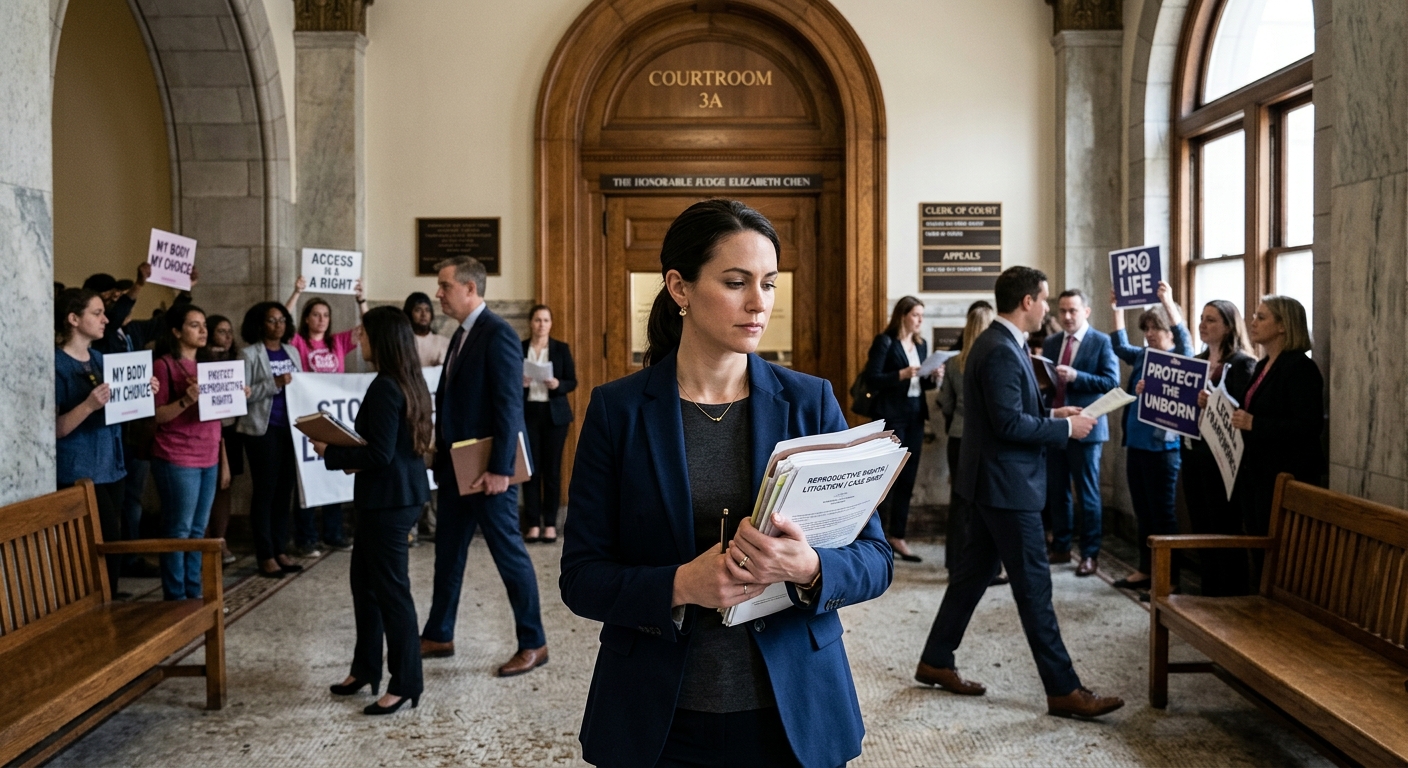
The struggle for reproductive freedom in the United States extends far beyond the most publicized Supreme Court decisions; it is an ongoing, labyrinthine war fought in the procedural trenches of the federal judiciary. While outright abortion bans and sweeping reversals of established precedent dominate the headlines, a quieter but equally devastating strategy is frequently deployed by state lawmakers and politically motivated officials. This strategy involves utilizing obscure procedural maneuvers and targeted medical restrictions to systematically dismantle abortion access over time. By exploring the complex interplay between state-level legal interventions, legislative bans on specific medical procedures, and the socioeconomic fallout of these policies, we can better understand the precarious nature of reproductive rights today. The courts have become a theater for exhausting legal battles where the goal is often to keep restrictive laws alive in litigation for as long as possible, draining the resources of healthcare providers and delaying critical care for patients.
The Procedural Battlefield: How Legal Interventions Prolong Unconstitutional Laws
One of the most glaring examples of these legal gymnastics is the procedural concept of “intervention.” In the context of constitutional challenges to abortion restrictions, a lawsuit typically begins when a clinic or healthcare provider sues the state officials responsible for enforcing the law. Frequently, after rigorous examination of the evidence and medical standards, lower federal courts and appellate courts will rightfully declare these bans unconstitutional, recognizing the severe undue burden they place on patients seeking care. In a standard, good-faith legal process, when the primary state officials—such as a governor or health secretary—accept the court’s well-reasoned ruling and decline to appeal the decision further, the case should rightfully conclude, and the unconstitutional law should be permanently enjoined.
However, anti-abortion politicians have increasingly sought to bypass this finality to keep restrictive laws on the books. Ambitious state attorneys general or outside legislators often file legal motions to intervene at the eleventh hour, demanding the right to step into the shoes of the original defendants and resurrect the defense of a law that multiple judges have already deemed medically unsound. When the judicial system, all the way up to the Supreme Court, permits these late-stage interventions—as seen in high-profile procedural disputes involving state abortion bans—it sends a dangerous signal. It suggests that the rules of litigation can be bent to accommodate politically motivated efforts to restrict bodily autonomy. This endless cycle of appeals creates a chilling environment of legal uncertainty. Clinics are forced to continuously divert their already limited resources away from patient care and toward perpetual legal defense, while patients are left in a state of agonizing anxiety regarding the legality and availability of their essential healthcare.
The Ripple Effect: Criminalizing Safe Medical Procedures
The laws that are fought over in these procedural battles are rarely straightforward bans on the broad concept of abortion itself; rather, they are often insidious, targeted attacks on standard, evidence-based medical procedures. One of the most common legislative tactics in recent years is the attempt by state governments to criminalize Dilation and Evacuation (D&E). In the medical community, D&E is universally recognized and supported by major medical associations as the safest, most common, and most effective standard of care for a surgical abortion during the second trimester.
By banning this specific procedure, state legislatures effectively enact a stealth, de facto ban on abortion after 15 weeks of pregnancy. The underlying legislative strategy is transparent: lawmakers substitute their own ideological agendas for evidence-based medical science, attempting to force physicians to either utilize riskier, less established alternative procedures or stop providing care altogether under the looming threat of severe criminal penalties, loss of medical licenses, and massive fines. When doctors are legally barred from using the safest techniques, the ultimate victim is always the patient. Banning D&E does not eliminate the pressing need for second-trimester abortions—which are often sought due to severe fetal anomalies discovered late in pregnancy, sudden and life-threatening risks to the pregnant person’s health, or unavoidable systemic delays in accessing earlier care—it simply makes obtaining that necessary care exponentially more dangerous, expensive, and legally perilous.
Who Bears the Burden? The Socioeconomic Reality of Abortion Bans
The burden of these convoluted legal battles and restrictive state laws does not fall equally upon all populations. Reproductive justice advocates, economists, and public health researchers consistently demonstrate that abortion restrictions disproportionately devastate the most vulnerable and marginalized members of society. For affluent individuals with flexible employment, robust health insurance, and disposable income, an abortion ban in their home state represents a logistical inconvenience; they can simply book a flight, secure a hotel room, and receive care in a haven state that respects reproductive rights.
However, for low-income individuals, people living in rural and medically underserved communities, undocumented immigrants, and marginalized women of color, these bans function as insurmountable walls blocking access to healthcare. The compounding costs of interstate travel, securing last-minute childcare, paying entirely out-of-pocket for medical services, and sacrificing days of lost wages transform what should be a constitutionally protected right into a luxury privilege available only to the wealthy. When standard procedures are banned and clinics are forced to close due to legal harassment, patients are often forced to carry a pregnancy to term against their will. This subjects them to the severe systemic risks of a worsening maternal mortality crisis—a crisis that already disproportionately claims the lives of Black and Indigenous women—and plunges families deeper into cycles of generational poverty. The cruelty of these restrictions is not a byproduct of the legislation; it is the intended feature.
The Maze of Restrictions: A Coordinated Assault on Access
The assault on reproductive autonomy is rarely limited to a single ban; instead, it is reinforced by an intricate, overlapping web of supplementary state-level restrictions. Even when abortion remains technically legal in a jurisdiction, state legislatures have engineered an environment designed to make accessing care as humiliating, expensive, and difficult as possible.
| Restriction Type | Mechanism of Action | Impact on Patient Access |
|---|---|---|
| Mandatory Waiting Periods | Requires patients to receive state-mandated counseling and then wait 24 to 72 hours before the procedure can be performed. | Forces patients to make two separate trips to a clinic, doubling travel expenses, childcare costs, and time off work. |
| Targeted Regulation of Abortion Providers (TRAP) | Imposes medically unnecessary physical plant requirements (e.g., hallway widths) and hospital admitting privilege mandates on clinics. | Forces safe, functioning clinics to shut down because they cannot afford million-dollar renovations, creating massive abortion deserts. |
| Parental Involvement Mandates | Requires minors to obtain parental consent or notification before receiving abortion care, often requiring a complex judicial bypass. | Endangers youth living in abusive households and delays care while minors navigate the intimidating court system to secure permission. |
| Telehealth Bans | Prohibits healthcare providers from prescribing safe medication abortion via telemedicine consultations. | Severely restricts access for rural patients who live hundreds of miles from the nearest brick-and-mortar reproductive health clinic. |
These restrictions operate synergistically. A low-income patient may struggle to afford travel to the state’s only remaining clinic, only to discover that their state requires a mandatory 72-hour waiting period with in-person counseling. This transforms a single, simple medical appointment into a multi-day ordeal. This “death by a thousand cuts” legislative approach is deliberately designed to exhaust the patient’s financial and emotional resources until accessing an abortion becomes practically impossible.
The Legislative Shield: The Push for the Women’s Health Protection Act
Recognizing the severe limitations and inherent risks of fighting defensive, state-by-state battles in an increasingly hostile judicial environment, advocates and progressive lawmakers have pivoted toward comprehensive federal solutions. The most prominent legislative effort to counteract this patchwork of state restrictions is the Women’s Health Protection Act (WHPA).
Introduced in Congress to address the escalating crisis of abortion access, the WHPA was designed to establish a clear, overriding statutory right for healthcare professionals to provide abortion care, and for patients to receive that care, free from medically unnecessary state-level bans and restrictions. Unlike previous legal frameworks that relied on precarious and shifting judicial interpretations of constitutional privacy rights, the WHPA aims to codify reproductive freedom directly into federal law. The legislation specifically targets the insidious tactics utilized by state lawmakers—expressly prohibiting states from enacting mandatory waiting periods, banning specific medical procedures like D&E, or imposing TRAP laws that single out abortion providers for burdensome regulations that do not apply to similar medical practices.
Although the WHPA has faced insurmountable partisan hurdles in the Senate, the ongoing push for its passage underscores a critical shift in the reproductive rights movement. There is a growing recognition that relying solely on the federal courts is insufficient to protect vulnerable patients. Advocates argue that robust, proactive federal legislation is the only definitive way to guarantee equal access to healthcare for all individuals, ensuring that fundamental rights are not dictated by a person’s zip code.
Conclusion: The Ongoing Fight for Autonomy
The battle for reproductive freedom is being fought on multiple fronts simultaneously. While high-profile Supreme Court decisions dominate public discourse, the day-to-step reality of abortion access is heavily dictated by state-level procedural maneuvers, targeted procedure bans, and a web of compounding logistical restrictions designed to punish patients. State officials will likely continue to exploit legal loopholes to intervene and defend unconstitutional laws, forcing clinics into endless and expensive litigation. In the face of this relentless legislative hostility, the push for a federal solution like the Women’s Health Protection Act remains more vital than ever. Until reproductive autonomy is codified and protected on a national scale, the rights and health of patients will remain contingent on their geography, economic status, and the political whims of state legislators.
Frequently Asked Questions (FAQs)
- What does it mean for a state official to “intervene” in a legal case?
Intervention is a procedural move where a third party, such as a state attorney general, asks a court for permission to join an ongoing lawsuit. In reproductive rights cases, this often happens when the original state defendants drop their defense of an unconstitutional abortion ban, and another official steps in to keep the law alive and force further appeals. - Why do states specifically target the D&E abortion procedure?
Dilation and Evacuation (D&E) is the standard, safest medical procedure for second-trimester abortions. By banning the procedure itself, lawmakers can effectively ban second-trimester abortions without explicitly writing a gestational ban, forcing doctors to choose between providing safe care and facing criminal prosecution. - What is the Women’s Health Protection Act (WHPA)?
The WHPA is proposed federal legislation designed to protect the right to access and provide abortion care nationwide. It aims to preempt and invalidate state-level restrictions, such as mandatory waiting periods, TRAP laws, and procedure bans, establishing a unified federal standard for reproductive healthcare. - How do mandatory waiting periods effectively function as abortion barriers?
Waiting periods require patients to wait a specific amount of time (often 24-72 hours) between an initial counseling appointment and the actual procedure. For patients traveling long distances, this requires multiple trips or extended hotel stays, making the procedure unaffordable and logistically impossible for many low-income earners. - Why are the socioeconomic impacts of abortion restrictions so severe?
Abortion bans do not eliminate the need for care; they simply force patients to travel out of state. The costs associated with travel, lodging, childcare, and lost wages disproportionately prevent low-income individuals and marginalized communities of color from accessing the care they need, forcing them to carry pregnancies to term against their will.
References
- Cameron v. EMW Women’s Surgical Center, P. S. C., 595 U.S. 267 (2022) — Justia Supreme Court Center. 2022-03-03. https://supreme.justia.com/cases/federal/us/595/20-601/
- H.R.3755 – Women’s Health Protection Act of 2021 — Congress.gov. 2021-09-24. https://www.congress.gov/bill/117th-congress/house-bill/3755
- State Policy Trends 2022: In a Devastating Year, US Supreme Court’s Decision to Overturn Roe Leads to Bans, Confusion and Chaos — Guttmacher Institute. 2022-12-19. https://www.guttmacher.org/article/2022/12/state-policy-trends-2022-devastating-year-us-supreme-courts-decision-overturn-roe
Similar Articles








Read full bio of Sneha Tete


