
Reporting Price Gouging: A Practical Guide for Consumers
Learn how to recognize unlawful price spikes during emergencies and file effective complaints to stop price gouging in your state.
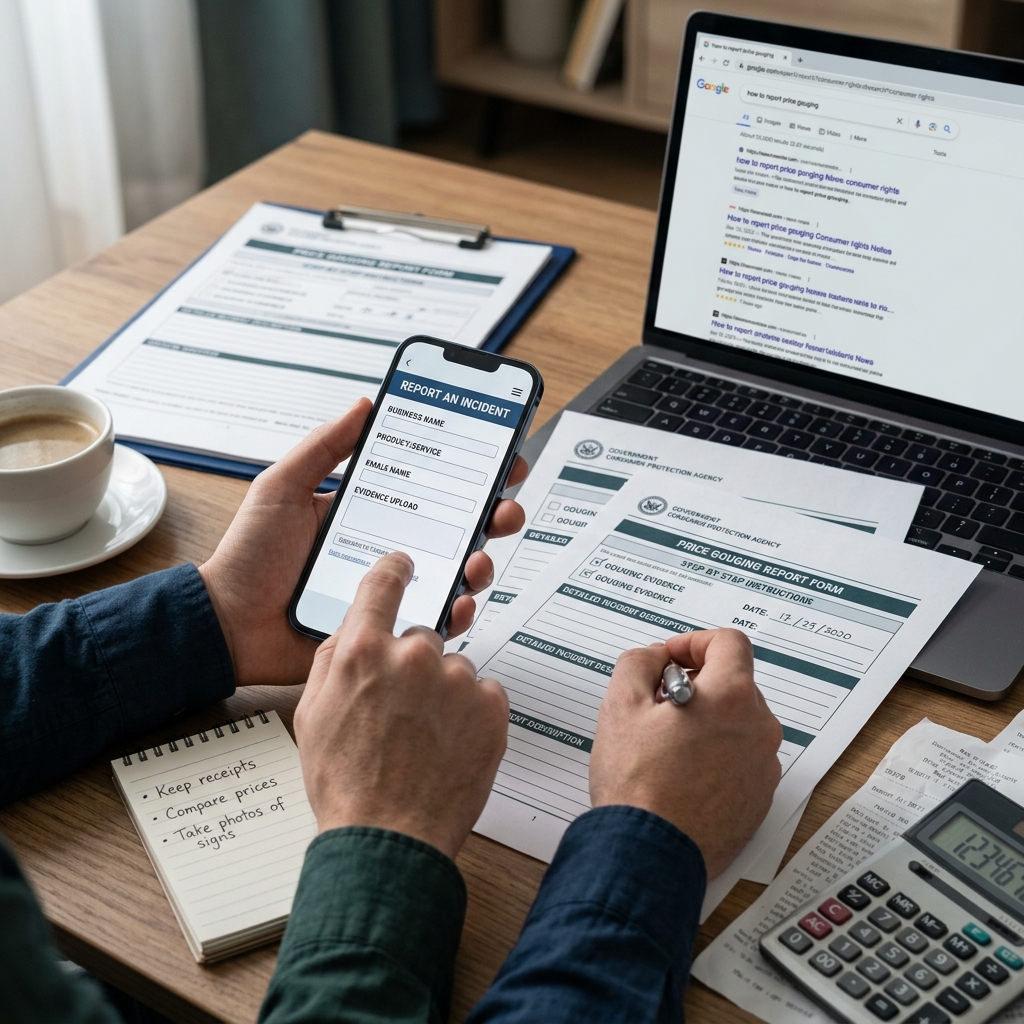
When disasters or emergencies strike, most businesses continue to serve their communities responsibly. A small number, however, exploit the situation by dramatically raising prices on essential goods and services. This practice, commonly known as price gouging, is illegal in many circumstances and can be reported to authorities for investigation and enforcement.
This guide explains what price gouging is, how state emergency laws typically work, what evidence you should gather, and the steps to file a complaint so regulators can act quickly.
Understanding Price Gouging and Emergency Protections
In most states, price gouging laws are triggered during a declared emergency, such as a hurricane, pandemic, wildfire, or other disaster. These laws are designed to prevent sellers from taking unfair advantage of consumers when they have fewer options and urgent needs.
What Counts as Price Gouging?
While definitions vary by state, price gouging generally refers to charging excessive or unconscionable prices for essential goods and services during a declared emergency compared with prices just before the crisis.
- Many states focus on necessities such as food, fuel, medicine, lodging, building materials, and emergency supplies.
- Some laws use a percentage threshold (for example, bans on raising prices more than a fixed percentage above pre‑emergency levels).
- Others use a “gross disparity” or “unconscionable” standard, comparing the new price to the seller’s prior price or typical prices in the area.
Importantly, high prices alone do not automatically mean price gouging. If a seller can justify increases based on higher wholesale costs, supply chain disruptions, or other legitimate market changes, the pricing may be legal even during an emergency.
When Do Price Gouging Laws Apply?
State laws are usually triggered only after an official emergency declaration:
- A governor declares a statewide or regional emergency.
- The president declares a federal disaster covering the affected area.
- In some states, a legislature or local government can also declare an emergency or “abnormal market disruption” that activates the law.
Once activated, protections typically last for a defined period, such as 30 days following the declaration, although extensions are sometimes granted for prolonged crises.
Common Examples of Price Gouging
Based on state enforcement guidance, goods and services most often covered include:
- Gasoline and other motor fuel
- Bottled water, ice, food, and basic household supplies
- Prescription drugs and over‑the‑counter medicine
- Hotel rooms and temporary housing
- Lumber, generators, construction tools, and tree removal or repair services
Luxury items like alcohol or tobacco products are often excluded from emergency price gouging protections.
How Price Gouging Laws Differ by State
All states approach price gouging differently. Some have detailed statutes with explicit thresholds and civil penalties. Others rely on general consumer fraud laws and treat excessive emergency pricing as a deceptive trade practice.
| State (Example) | Trigger | Scope of Goods/Services | Key Standard |
|---|---|---|---|
| Texas | Governor or President declares disaster. | Fuel, food, medicine, lodging, building materials, construction tools, other necessities. | “Exorbitant or excessive” prices to take advantage of a disaster. |
| Florida | Governor declares state of emergency. | Essential commodities and lodging; excludes non‑essential luxury goods. | “Unconscionable” price increases and “gross disparity” with prior prices. |
| Virginia | Governor or President declares state of emergency. | “Necessary goods and services” with increased demand due to disaster. | Price that “grossly exceeds” pre‑disaster prices in the same area. |
| North Carolina | State of emergency or abnormal market disruption declared. | Critical goods and services affected by disaster or disruption. | Charging too much in times of crisis under price gouging statute. |
To understand the rules where you live, consult your state attorney general or consumer protection office. Many provide online explanations and complaint forms specifically addressing price gouging.
Preparing to Report Price Gouging
Effective complaints rely on solid documentation. Before contacting authorities, carefully record what you saw and gather supporting materials to show the timing and amount of the price increase.
Information You Should Collect
Consumer protection agencies frequently request the following details when reviewing price gouging complaints:
- Seller information: Business name, physical address, phone number, and website or online marketplace profile.
- Product or service details: Exact item or service, brand, size, quantity, and any identifying numbers (such as SKU or product codes).
- Price information: Current price, any previous price you know or can document, and date and time of the purchase or observation.
- Location and context: City, state, and whether the transaction occurred in‑store, online, or by phone.
- Evidence: Receipts, invoices, screenshots, photographs of price tags or signs, and advertisements.
- Emergency details: The specific declared emergency (e.g., named hurricane, pandemic, wildfire) and when it was declared.
Clear, specific information makes it easier for investigators to verify whether the pricing meets the legal definition of price gouging in your state.
Protecting Yourself While Gathering Evidence
If you believe a price is unlawfully high, you do not need to purchase the product to file a complaint. Photographs, written notes, and screenshots can be enough to document the issue. If you do buy the item because you have no alternative, be sure to keep:
- The receipt or invoice
- Any warranty or contract paperwork
- Copies of advertisements or online listings showing the price
Never put yourself at risk or become confrontational with staff. Your safety should always come first; reporting can be done later through official channels.
Where and How to Report Price Gouging
In nearly all states, the primary agency for price gouging complaints is the state attorney general. Some states also involve other regulators, especially for motor fuel or specific industries.
Reporting to Your State Attorney General
Most attorney general offices offer multiple ways to report suspected price gouging:
- Online complaint forms dedicated to price gouging or general consumer complaints.
- Telephone hotlines where staff can take your information or guide you to the appropriate form.
- Mail‑in forms for consumers who prefer paper submissions or lack internet access.
Some offices, like those in North Carolina and Virginia, provide toll‑free numbers specifically for consumer protection questions, including price gouging.
Special Channels for Fuel and Other Regulated Goods
In certain states, complaints about fuel prices or other regulated commodities are handled by specific agencies. For example, Virginia directs motor fuel price complaints to its Department of Agriculture and Consumer Services, Office of Weights and Measures. Other states may use similar specialized offices.
Review your state’s consumer protection website or emergency guidance to determine whether your complaint should go to the attorney general, a different regulatory agency, or both.
National and Multi‑State Resources
National advocacy organizations and industry groups sometimes maintain lists of links to state offices where consumers can report price gouging in all 50 states. These resources can help you quickly find the correct agency and complaint form, especially if you are traveling or temporarily living outside your home state.
Step‑by‑Step: Filing a Price Gouging Complaint
Once you have collected your information and identified the proper agency, you are ready to file. The process is usually straightforward, and you can complete most complaints in under 15–20 minutes.
1. Confirm That an Emergency Is in Effect
Check your state government’s website, emergency management agency, or attorney general’s alerts to confirm that an emergency declaration is in effect and that price gouging protections apply.
- Look for the date the emergency was declared.
- Confirm the area covered (statewide or specific counties).
- Note any end date or extensions.
2. Access the Correct Complaint Form or Hotline
Navigate to your state attorney general or consumer protection website. Look for:
- Links labeled “price gouging” or “disaster and emergency scams.”
- Specific online complaint forms for price gouging.
- General consumer complaint forms where you can select price gouging as the issue.
- Phone numbers for consumer hotlines or disaster fraud reporting.
3. Provide Detailed and Accurate Information
Complete all mandatory fields and, if possible, add optional details to strengthen your complaint. Be clear and factual:
- Describe what happened, including dates, times, and how you discovered the price.
- Explain why you believe the price is excessive compared with pre‑emergency pricing.
- Attach or upload copies of receipts, screenshots, and photos.
Avoid exaggeration; state only what you observed or can document. Investigators will compare your information with market data, the seller’s prior prices, and other complaints.
4. Submit and Retain Copies
After submitting your complaint:
- Save any confirmation number or email you receive.
- Keep copies of your complaint and supporting documents.
- Record the date you filed, in case you need to follow up later.
You generally are not required to contact the business directly before filing a complaint, although some consumers choose to raise concerns with the seller and see if the issue can be resolved voluntarily.
What Happens After You Report Price Gouging?
Submitting a complaint does not guarantee immediate enforcement action, but it provides crucial information that agencies use to identify patterns and misconduct.
Investigation and Enforcement
Depending on the facts and the number of complaints received, authorities may:
- Contact the business to request an explanation for pricing changes.
- Review receipts, market data, and supply chain information.
- Issue warnings or advisory letters reminding businesses of legal obligations.
- Seek civil penalties, injunctions, or restitution for consumers when violations are found.
For example, some statutes authorize fines for each violation and higher total penalties when multiple violations occur within a short time frame. In serious or repeated cases, authorities may seek court orders to stop unlawful practices or recover funds for affected consumers.
Your Role as a Consumer
Once you file a complaint, your main responsibility is to respond if investigators request additional information. You may be asked for:
- Clarification about dates, prices, or product details
- Copies of documents or higher‑resolution images
- Permission to use your complaint as part of a public enforcement action
Even if your individual case is not pursued, your report may still help authorities spot broader trends and protect other consumers from harm.
FAQs About Reporting Price Gouging
Is every high price during a disaster illegal?
No. Many businesses face higher costs for supplies, transportation, and labor during emergencies. If a seller can reasonably justify a price increase based on these factors, it may be legal even if the price feels high.
Do I have to live in the state where the price gouging occurred?
You can generally report price gouging to the attorney general or consumer agency in the state where the business is located, regardless of your residence. If you are unsure, contact the consumer hotline and ask which office should receive your complaint.
Can online sellers be investigated for price gouging?
Yes. Many states apply price gouging laws to online marketplaces and remote sellers if the transaction affects consumers in the state during an emergency. Document website addresses, seller names, and screenshots.
What if there is no declared emergency?
When no emergency is in effect, price gouging statutes usually do not apply. However, you may still report questionable practices as general consumer complaints if you believe a business is misleading customers or engaging in unfair conduct.
Will my complaint be anonymous?
Policies vary. Some agencies allow you to file anonymously or with limited personal information, while others require contact details to follow up. Check your state’s guidance or ask when calling the hotline.
Key Takeaways for Consumers
- Price gouging laws are typically activated by official emergency declarations and focus on essential goods and services.
- Not all price increases are illegal; investigators consider market conditions and the seller’s costs.
- Collect detailed information and documentation before filing a complaint.
- Report suspected violations to your state attorney general or designated consumer protection agency using official forms or hotlines.
- Your complaint can help authorities protect your community and deter future misconduct.
References
- How to Spot and Report Price Gouging — Office of the Attorney General of Texas. 2023-09-21. https://www.texasattorneygeneral.gov/consumer-protection/disaster-and-emergency-scams/how-spot-and-report-price-gouging
- Price Gouging — Florida Office of the Attorney General (My Florida Legal). 2023-08-10. https://www.myfloridalegal.com/consumer-protection/price-gouging
- Price Gouging Complaint — North Carolina Department of Justice. 2023-07-15. https://ncdoj.gov/file-a-complaint/price-gouging/
- Price Gouging — Office of the Attorney General of Virginia. 2022-06-01. https://www.oag.state.va.us/consumer-protection/index.php/file-a-complaint?view=article&id=181:price-gouging-2&catid=8
- How to Report Price Gouging in all 50 States — Consumer Brands Association. 2020-04-02. https://consumerbrandsassociation.org/blog/how-to-report-price-gouging-in-all-50-states/
- How to Identify and Report Price Gouging — U.S. PIRG Education Fund. 2020-03-20. https://pirg.org/edfund/resources/how-to-identify-and-report-price-gouging/
- Help Stop Price Gouging — Public Health Advocates. 2020-03-05. https://phadvocates.org/help-stop-price-gouging/
Similar Articles








Read full bio of Sneha Tete


