
Reporting DOJ Waste, Fraud, Abuse and Misconduct
Learn when and how to report waste, fraud, abuse, misconduct or whistleblower retaliation related to U.S. Department of Justice employees, programs or funds.
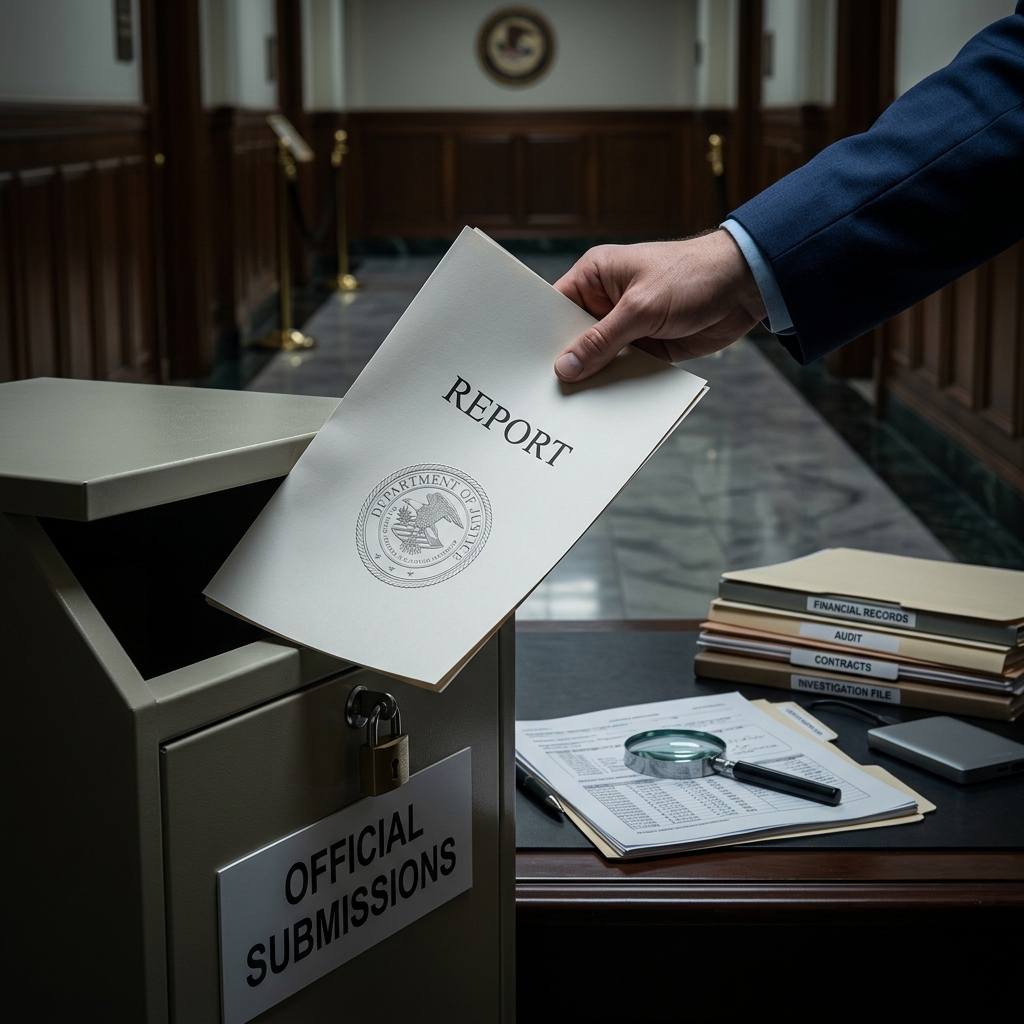
The U.S. Department of Justice (DOJ) relies on employees, contractors, grantees, and members of the public to help identify and stop waste, fraud, abuse, misconduct, and whistleblower retaliation involving DOJ programs, personnel, contracts, and grants. The DOJ Office of the Inspector General (OIG) operates an official Hotline to receive these complaints and determine whether an investigation or other action is appropriate.
This article explains what the DOJ OIG Hotline is, when it should be used, what information to include, how complaints are handled, and how it fits within the broader federal oversight system.
Understanding the DOJ Office of Inspector General Hotline
The DOJ OIG is an independent oversight office within the Department of Justice, responsible for detecting and deterring waste, fraud, abuse, and misconduct, and for promoting efficiency and integrity in DOJ operations. To support this mission, the OIG maintains a dedicated Hotline that accepts complaints from:
- DOJ employees at all levels
- Contractors and grantees working with DOJ funding
- Members of the public who encounter DOJ programs or personnel
- Whistleblowers alleging retaliation for protected disclosures
If you are aware of serious wrongdoing related to DOJ activities, the OIG Hotline is the proper channel to report it.
What Types of Allegations the DOJ OIG Hotline Handles
The DOJ OIG Hotline focuses on allegations that involve misuse of DOJ resources, violations of law or policy by DOJ personnel, or harm to the integrity of DOJ programs. Examples include, but are not limited to:
- Fraud involving DOJ funds
Such as false billing, fraudulent grant reports, or deceptive contract performance. - Waste or gross mismanagement
Serious, systemic misuses of resources, not minor disagreements over policy or management decisions. - Abuse of authority by DOJ employees
Including improper use of law enforcement powers, retaliation against subordinates, or serious policy violations. - Criminal misconduct by DOJ personnel
Bribery, theft of government property, or other crimes related to DOJ work. - Whistleblower retaliation
Adverse actions taken against employees or contractors because they made protected disclosures. - Improper profiling or bias
Allegations of unlawful profiling or bias by DOJ law enforcement or task force officers may also be reported.
The key common feature is that the allegation must relate to a DOJ employee, program, contract, grant, or other DOJ-funded activity.
Issues Generally Not Investigated by DOJ OIG
Not every complaint about DOJ or government activity is appropriate for the OIG Hotline. Certain matters are generally outside the scope of DOJ OIG investigations and are handled through other channels.
| Issue Type | Why It Is Out of Scope | Typical Alternative Channel |
|---|---|---|
| 911 emergencies | Immediate threats to life or safety require rapid response, not OIG review. | Call local emergency services (usually 911). |
| Equal Employment Opportunity (EEO) complaints | Workplace discrimination and harassment claims are handled through formal EEO processes. | Agency EEO office or Equal Employment Opportunity Commission. |
| Routine HR disputes | Performance disagreements or routine supervisory issues usually do not involve waste, fraud or abuse. | Agency human resources or internal grievance mechanisms. |
| Matters unrelated to DOJ | OIG jurisdiction is limited to DOJ programs, personnel and funds. | Relevant agency OIG (e.g., HHS OIG, Education OIG, Treasury OIG). |
If your concern does not involve DOJ but another federal department, you should contact the appropriate OIG Hotline for that agency, such as the Departments of Health and Human Services, Education, Housing and Urban Development, or Treasury.
How to Prepare an Effective Complaint
Across federal OIG hotlines, investigations are more successful when complaints include specific, detailed information about the alleged wrongdoing. Although each office has its own procedures, the following information is consistently valuable:
- Who
Names, titles, and contact information of individuals or entities involved in the allegation. - What
A clear description of the misconduct, including what rule, law, contract, or policy appears to have been violated. - When
Dates, times, and frequency of the incidents.
This helps determine timeliness and whether the issue is ongoing. - Where
Location of the events (facility, city, state, program or office). - How
The method or scheme used to commit fraud or abuse, including any relevant technical or financial details. - Why
Apparent motive or benefit gained, such as financial profit or personal advantage. - Supporting evidence
Documents, emails, billing records, photographs, or other materials that corroborate your statements. - Witnesses
Names and contact information of others who may confirm the facts.
Information that is too vague or speculative can result in a closed report with no further action. Taking time to assemble clear facts and documentation before you submit your complaint helps the OIG determine whether an investigation is appropriate.
Submitting a Complaint to the DOJ OIG Hotline
The DOJ OIG encourages individuals to report allegations of waste, fraud, abuse, misconduct, or whistleblower retaliation relating to DOJ employees, programs, contracts, or grants. While specific submission methods are described on the official DOJ OIG Hotline webpage, common options across federal OIG offices include:
- Online complaint form
A secure web form that guides you through the required information. - Telephone Hotline
Toll-free numbers allow you to speak with Hotline staff or leave a message. - Mail
Written complaints sent to the OIG investigative office listed on the official site.
For the DOJ OIG specifically, you begin the process by using the official online complaint submission system linked from the DOJ OIG Hotline page. The system will ask for essential information about your allegation and any supporting materials you can provide.
Anonymous and Confidential Reporting
Individuals who report allegations to the DOJ OIG Hotline are not required to identify themselves. You may choose to submit your complaint anonymously if you fear retaliation or other consequences.
However, the OIG encourages complainants to provide contact details when possible, because this:
- Allows investigators to seek clarification or additional information
- Helps confirm facts and evaluate credibility
- Improves the likelihood that an investigation can be pursued effectively
Some OIGs also offer to handle complaints confidentially, meaning your identity is known to the OIG but not disclosed outside the investigative need-to-know chain without consent, subject to legal requirements. When you choose anonymity, be aware that the OIG may have limited ability to follow up or to keep you informed about outcomes.
Handling Classified or Sensitive Information
Most federal OIG hotlines accept only unclassified complaints through their online portals. Classified information must be handled through secure channels to protect national security and comply with legal requirements.
If your allegation involves classified material or sensitive national security information:
- Do not submit classified details through an online complaint form.
- Contact the appropriate OIG investigative office directly by phone or in person to receive instructions.
The DOJ OIG follows similar restrictions regarding classified information, consistent with practices across federal OIG offices.
What Happens After You File a Complaint
Once your complaint is submitted to the DOJ OIG Hotline, staff review the information to determine the appropriate response. Typical steps, which are similar across federal OIGs, may include:
- Initial screening
Hotline staff assess whether the allegation falls within DOJ OIG jurisdiction and whether it appears to involve waste, fraud, abuse, misconduct, or retaliation. - Referral or closure
Complaints outside DOJ scope may be referred to the proper agency or closed if no viable action can be taken. - Preliminary inquiry
For matters within scope, OIG personnel may conduct limited fact-finding to assess seriousness and credibility. - Full investigation
Serious allegations may lead to a formal investigation, audit, or inspection. - Corrective action
Investigations can result in referrals for criminal prosecution, administrative discipline, or recommendations to improve policies and systems.
Due to federal law governing law enforcement records, OIG offices generally cannot disclose detailed information about ongoing investigations, including to the individual who filed the complaint. You may, however, request certain information later through a Freedom of Information Act (FOIA) request, subject to legal exemptions.
The DOJ OIG Hotline in the Broader Oversight System
The DOJ OIG Hotline is part of a government-wide network of Inspector General offices that protect public funds and ensure accountability across federal agencies.[10] Each major department, including Justice, Health and Human Services, Education, Housing and Urban Development, and Treasury, maintains its own OIG Hotline.
These hotlines collectively:
- Encourage reporting of fraud, waste, abuse, and misconduct in federal programs[10]
- Provide whistleblower protections for employees and contractors who make lawful disclosures[10]
- Support audits, inspections, and investigations that improve program integrity[10]
- Reinforce public confidence in government operations
If your concern involves more than one agency, you may need to contact multiple OIG offices. For example, allegations involving DOJ and another department’s funds should be reported to both relevant OIG hotlines.
Best Practices for Whistleblowers and Complainants
Whether you are a DOJ employee, contractor, grantee, or member of the public, several best practices can help you submit a strong, responsible complaint to the DOJ OIG Hotline:
- Document facts promptly
Record dates, participants, and events as soon as possible, while memories are fresh. - Avoid speculation
Stick to verifiable facts and clearly separate evidence from opinion. - Protect sensitive information
Handle classified or personal data carefully and use the secure channels recommended by the OIG. - Understand your rights
Employees and certain contractors may have specific whistleblower protections under federal law when they report wrongdoing.[10] - Use the correct OIG
Ensure your complaint is sent to the OIG with jurisdiction over the relevant agency programs.
These practices help OIG staff focus on serious, well-supported allegations that can lead to meaningful corrective action.
Frequently Asked Questions
Do I have to be a DOJ employee to use the DOJ OIG Hotline?
No. The DOJ OIG Hotline accepts complaints from DOJ employees, contractors, grantees, and members of the public who know of or suspect waste, fraud, abuse, misconduct, or whistleblower retaliation involving DOJ programs or personnel.
Can I file a complaint anonymously?
Yes. Individuals are not required to provide their identity to the DOJ OIG when reporting allegations. However, providing contact information can help investigators obtain more detail and assess the complaint more fully.
Will I be informed about the results of the investigation?
In general, OIG offices cannot disclose detailed information about law enforcement investigations, including case status, because federal regulations restrict access to such records. Some information may later be available through FOIA requests, subject to legal exemptions.
What should I do if my issue involves another federal agency, not DOJ?
If your complaint concerns programs, employees, or funds from another department (such as Health and Human Services, Education, HUD, or Treasury), you should contact that agency’s OIG Hotline. Each OIG is responsible for its own agency’s oversight.
Can I report routine workplace disagreements to the DOJ OIG?
Routine personnel disputes, performance disagreements, and standard management issues are usually addressed through human resources or internal grievance processes, not the OIG Hotline. The Hotline is intended for serious allegations of waste, fraud, abuse, misconduct, or whistleblower retaliation involving DOJ activities.
References
- Hotline – U.S. Department of Justice Office of the Inspector General — U.S. Department of Justice OIG. 2024-03-01. https://oig.justice.gov/hotline
- Submitting a Complaint — U.S. Department of Justice OIG. 2024-03-01. https://oig.justice.gov/hotline/submit_complaint
- OIG Hotline — U.S. Department of Education OIG. 2023-11-15. https://oig.ed.gov/oig-hotline
- Report Fraud, Waste, and Abuse — U.S. Department of Health and Human Services OIG. 2024-05-10. https://oig.hhs.gov/fraud/report-fraud/
- Report Fraud — Office of Inspector General, U.S. Department of Housing and Urban Development. 2023-06-30. https://www.hudoig.gov/hotline/report-fraud
- Report Fraud, Waste, and Abuse — U.S. Department of the Treasury OIG. 2024-02-20. https://oig.treasury.gov/report-fraud-waste-and-abuse
- Department of Justice OIG — Oversight.gov. 2024-01-05. https://www.oversight.gov/inspectors-general/department-justice-oig
Similar Articles








Read full bio of medha deb


