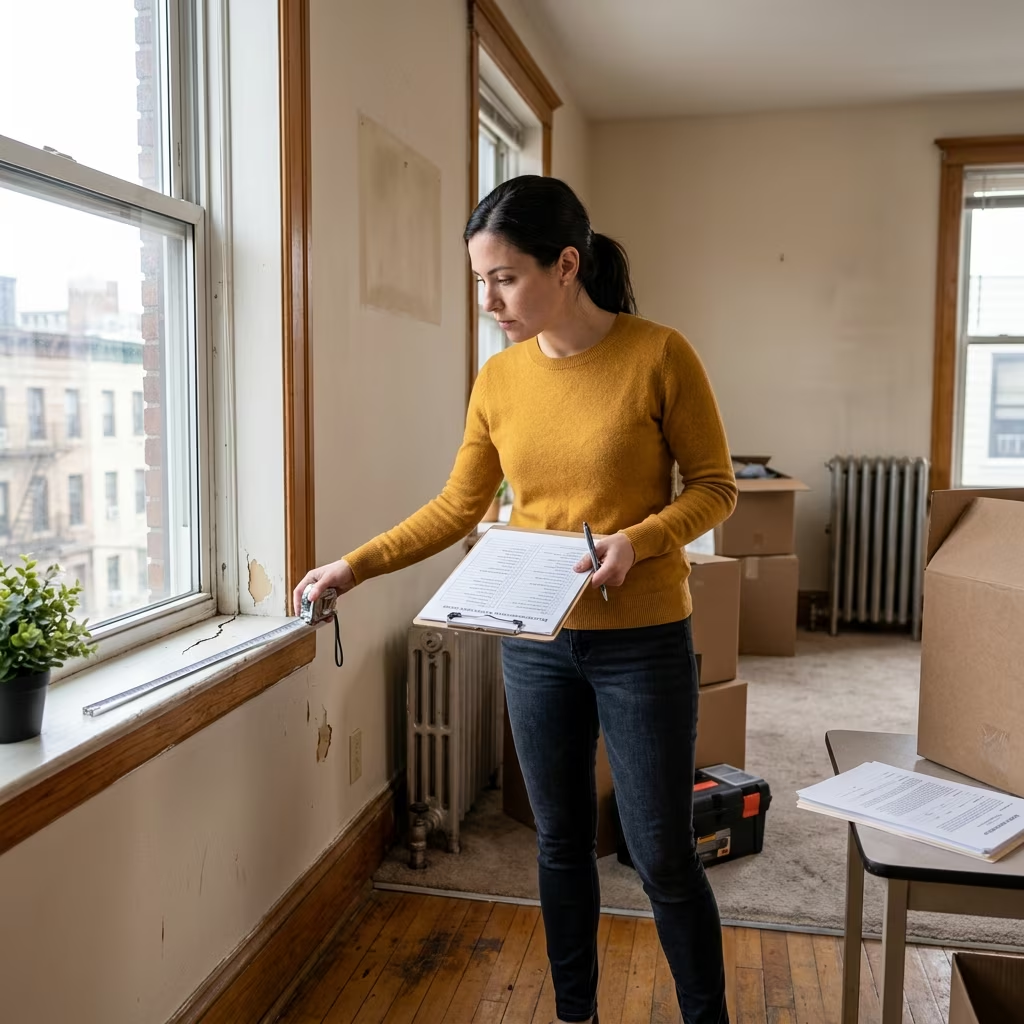
Rental listings that advertise a home or apartment being offered “as is” can be confusing, and sometimes intimidating, for prospective tenants. The phrase sounds like it means you must accept every flaw, from peeling paint to broken appliances, with no right to complain later. In reality, your legal rights as a tenant do not disappear because a landlord uses this label in an ad or lease.
This guide explains what an “as is” rental usually means, how it interacts with habitability laws, which repairs landlords typically must make, and how tenants can protect themselves before signing and after moving in.
What Does “As Is” Mean in a Rental Listing?
Unlike in some real estate sales transactions, the phrase “as is” in a residential rental does not override basic housing laws. Instead, it usually signals that the landlord is:
- Trying to avoid making cosmetic improvements before you move in
- Emphasizing that the unit is older or has visible wear and tear
- Discouraging tenants from demanding upgrades that exceed legal requirements
Even if a lease says the unit is accepted “as is,” most states still require landlords to provide a home that is safe, clean, and habitable under local building, housing, and health codes. An “as is” clause cannot legally excuse serious hazards or code violations.
Common Misunderstandings About “As Is” Rentals
- Misconception: Tenants have no right to repairs after moving in.
Reality: Landlords typically must maintain basic habitability throughout the tenancy, including making repairs when essential systems fail. - Misconception: “As is” lets landlords ignore health and safety codes.
Reality: Codes and statutes apply regardless of any lease language. A landlord cannot contract out of those obligations. - Misconception: Tenants must accept dangerous conditions if they sign anyway.
Reality: In many jurisdictions, renting a clearly uninhabitable unit may violate the law, and tenants could have remedies such as ending the lease or seeking court orders for repair.
Habitability: The Floor Beneath Any “As Is” Clause
Modern landlord-tenant law in most U.S. states includes an implied warranty of habitability. This is a legal promise that every residential rental is fit for human habitation and compliant with basic health and safety standards. Even if the lease does not mention habitability, the law inserts this guarantee.
Typical Elements of a Habitable Rental
Specific requirements vary by state and city, but official guidance commonly identifies the following features as part of a habitable home:
- Structural integrity (roof, walls, floors reasonably sound)
- Weatherproofing to keep out rain and extreme temperatures
- Safe electrical wiring and outlets
- Working plumbing and sanitary facilities, including toilets and sinks
- Access to hot and cold running water
- Heating (and cooling where required or promised) sufficient for local climate
- Freedom from significant infestations of pests such as rodents or insects
- Functional smoke detectors and sometimes carbon monoxide detectors
States and cities may add extra protections. For example, Maryland’s Tenant Safety Act treats every offered rental unit as presumed fit for human habitation, reinforcing the idea that a landlord cannot advertise an unlivable space as acceptable. Similarly, Arizona materials emphasize the duty to meet local building and health codes and to maintain a fit and habitable condition throughout the tenancy.
What “As Is” Cannot Cover
An “as is” clause generally cannot be used to avoid:
- Fixing critical systems like heat, plumbing, or electricity when they fail
- Addressing dangerous structural problems, such as collapsing ceilings or stairs
- Remedying serious leaks, mold, or unsanitary conditions that violate health codes
- Complying with fire safety requirements, including smoke detectors
- Following anti-discrimination and accessibility laws, such as the duty to reasonably accommodate tenants with disabilities.
Distinguishing Cosmetic Issues from Legal Problems
Tenants often encounter imperfections that are annoying but not legally serious. Understanding the difference helps you decide when “as is” simply means accepting minor flaws—and when it’s a red flag requiring further action.
| Type of Issue | Example | Likely Category | Landlord Obligation (Typical) |
|---|---|---|---|
| Cosmetic wear | Scuffed paint, worn carpet, dated fixtures | Non-habitability | Often optional to fix; may be part of “as is” condition |
| Minor nuisance | Loose cabinet door, small cracks in tile | Low-level defect | May be addressed as routine maintenance; not always legally required |
| Essential system failure | No heat in winter, nonfunctional toilet, no running water | Habitability issue | Landlord usually must repair promptly to maintain legal standards |
| Health or safety hazard | Exposed wiring, severe mold, structural instability | Code violation | Landlord typically must remedy and may face enforcement actions |
| Legal access issue | Locks changed to bar entry, doors removed | Illegal self-help | Landlord may be violating law by denying access without court order. |
Examining an “As Is” Rental Before You Sign
Because ads and lease language are only part of the story, your own inspection and documentation are essential. Many legal aid organizations advise tenants to look carefully at both the interior and exterior of a home before renting. Here are practical steps:
Inspection Checklist for Prospective Tenants
- Walk through every room and test lights, faucets, toilets, windows, and doors.
- Check safety features, including smoke detectors, railings, locks, and any visible wiring.
- Look for signs of water damage or mold around ceilings, windows, and bathrooms.
- Observe heating and cooling equipment, especially in climates where functional systems are crucial.
- Note any pest activity such as droppings, nests, or live insects.
- Ask about code history: some legal guides suggest checking with the local building department to see if the unit has been cited for violations.
- Speak to existing tenants in the building, if possible, to learn about recurring issues.
Negotiating Repairs in Advance
If you notice problems, you can often negotiate with the landlord before signing. Consider:
- Requesting that serious defects be fixed before you move in
- Asking for a written promise that specific repairs will be completed by a certain date
- Clarifying which appliances and systems are included in the rent (for instance, who maintains air conditioning or special equipment)
- Discussing rent concessions if you agree to take on minor repairs yourself, while still keeping habitability responsibilities with the landlord
Any agreement about repairs should be written into the lease or an attached addendum. Verbal promises are harder to enforce.
Tenant Responsibilities in an “As Is” Rental
Habitability is not one-sided. Tenants also have duties that affect the condition of the property. Guides from several states emphasize that tenants must keep the home reasonably clean, use systems in a reasonable manner, and avoid damaging the premises.
Basic Tenant Duties
- Pay rent on time and in full
- Comply with applicable health and housing codes affecting tenants
- Keep the home reasonably clean and sanitary
- Not deface, damage, or remove any part of the property
- Use electrical, plumbing, and other systems reasonably; avoid overloading or misuse
- Follow reasonable rules and regulations in the lease, including smoking and pet policies
- Maintain smoke detectors by not disabling them and replacing batteries when needed.
Failure to meet these responsibilities can make you liable for repair costs and, in serious cases, give the landlord grounds to seek eviction. An “as is” agreement does not excuse tenant-caused damage.
Requesting Repairs After You Move In
Even in an “as is” rental, things break or wear out over time. The way you document and communicate repair needs can influence how quickly they’re addressed and how strong your legal position is if the landlord refuses to act.
Steps for Reporting Problems
- Notify the landlord in writing as soon as you notice a serious issue. Some tenant rights materials recommend dating the notice and keeping a copy.
- Describe the problem clearly, including how it affects habitability (for example, “no hot water in the bathroom for a week”).
- Allow reasonable access to the unit for inspection and repairs, as most laws require tenants to permit entry for this purpose.
- Take photos or videos that show the condition, especially if you suspect a health or safety violation.
- Follow up if repairs are delayed, and keep a record of communication.
In many places, landlords must make needed repairs within a reasonable time after receiving notice. What counts as reasonable depends on the severity of the problem and local law; a failed heating system in winter usually requires faster action than a cosmetic issue.
When Landlords Do Not Fix Serious Problems
If a landlord ignores significant habitability issues, tenants may have options. Depending on the jurisdiction and following proper procedures, these may include:
- Contacting local health or code enforcement authorities to report conditions
- Seeking a court order requiring repairs and potentially damages or attorney’s fees
- Withholding rent or repairing and deducting costs, where explicitly allowed by statute or case law
- Ending the lease due to the landlord’s failure to meet legal obligations, especially for severe or persistent violations.
These remedies often require strict compliance with local procedures. Tenants should check state-specific guidance or consult legal assistance before taking steps like withholding rent, to avoid unintended consequences.
Legal Limits on “As Is” Clauses
Rental agreements are contracts, but they operate within a framework of public policy. Certain terms—especially those that attempt to waive fundamental protections—may be unenforceable.
Examples of Potentially Invalid Lease Terms
- A clause stating the tenant waives all rights under building, housing, or health codes
- A clause allowing the landlord to deny access to the property without a court order, such as by changing locks or removing doors
- Language that attempts to pre-authorize unlawful evictions or self-help lockouts
- Terms that conflict with rent control, tenant protection acts, or anti-discrimination laws
- Provisions that broadly prohibit reasonable accommodations for tenants with disabilities.
Even if these terms appear in an “as is” lease, courts and agencies may refuse to enforce them. For instance, California’s Tenant Protection Act restricts certain rent increases and sets rules for just-cause evictions, regardless of lease wording. Likewise, federal fair housing law and state civil rights statutes protect tenants from discrimination and often require reasonable accommodations for disabilities.
Fair Housing and Accessibility in “As Is” Rentals
“As is” language must also be viewed through the lens of fair housing and disability rights. Landlords cannot use the condition of the property or the label “as is” to justify discrimination or refusal to accommodate.
Key Points on Fair Housing and Disability Accommodation
- Landlords generally may not refuse to rent or impose different terms based on race, color, religion, sex, disability, familial status, or national origin.
- Reasonable accommodations may be required to allow tenants with disabilities full use and enjoyment of the premises, such as changes in rules or policies.
- Reasonable physical modifications—like grab bars or ramp installations—may be allowed, with tenants often bearing the cost but landlords permitting the changes.
- Labeling a property “as is” does not excuse the landlord from considering and providing lawful accommodations.
FAQs About “As Is” Rental Properties
1. Does “as is” mean the landlord never has to fix anything?
No. Most landlords remain legally responsible for keeping the home habitable and compliant with health and safety codes. They typically must repair essential systems such as heat, plumbing, and electricity within a reasonable time after notice, regardless of “as is” language.
2. Can I be forced to accept a property with obvious health hazards?
You can choose not to rent such a property, and landlords may be violating law if they offer units that clearly fail basic habitability standards. In some states, serious code violations may give tenants who already moved in the right to end the lease or pursue remedies in court.
3. What if I signed an “as is” lease and later discover serious problems?
Document the issues, notify the landlord in writing, and allow access for repairs. If the problems involve habitability, you may still have rights to enforcement, including reporting to authorities, seeking court orders, or using statutory remedies like repair-and-deduct where available.
4. Are cosmetic issues ever the landlord’s responsibility?
Not usually as a matter of law. Cosmetic flaws like worn paint or old flooring are often part of the “as is” condition. However, landlords sometimes agree to cosmetic improvements as a business decision or as part of negotiation with tenants.
5. Should I accept a lower rent in exchange for taking a unit “as is”?
This can be reasonable if the defects are minor and do not affect habitability. Make sure you understand which issues you are accepting, confirm that safety and basic systems work, and never agree to live in conditions that violate building or health codes.
6. Do my responsibilities as a tenant change in an “as is” rental?
Your core duties—paying rent, keeping the home clean, avoiding damage, and following the lease—remain the same. You may agree to handle minor repairs, but you do not take on the landlord’s legal obligation to keep the property habitable.
Practical Tips for Tenants Considering an “As Is” Rental
- Know your local law: Check reliable state or city tenant guides to understand specific habitability rules in your area.
- Inspect thoroughly: Treat the viewing like a detailed home inspection, taking notes and photos.
- Distinguish minor from major issues: Be willing to accept wear and tear, but be cautious about anything affecting safety or essential systems.
- Negotiate in writing: If you want repairs or upgrades, secure written commitments before signing.
- Document from day one: Keep records of the initial condition and all communications about maintenance.
- Seek help when needed: If serious problems arise and the landlord is unresponsive, consult legal aid, tenant organizations, or government housing agencies for guidance.
References
- Arizona Tenants’ Rights & Responsibilities Handbook — Community Legal Services, Inc. 2019-10-05. https://clsaz.org/wp-content/uploads/2019/10/az-tenants-english-191005.pdf
- What Are Tenant Rights in Indiana? — Housing4Hoosiers. 2019-08-01. https://housing4hoosiers.org/know-your-rights/your-rental-rights/what-are-tenant-rights-in-indiana/
- Tenant Rights and Responsibilities — Michigan Legal Help. 2024-05-01. https://michiganlegalhelp.org/resources/housing/tenant-rights-and-responsibilities
- Landlord-Tenant Issues — California Department of Justice. 2024-04-01. https://oag.ca.gov/tenants
- Landlord – Tenant — Maryland People’s Law Library. 2024-06-01. https://www.peoples-law.org/cat/landlord-tenant