
Religious Freedom and Hate Crime Protections in the United States
How U.S. law protects both the free exercise of religion and people targeted by bias‑motivated violence and intimidation.
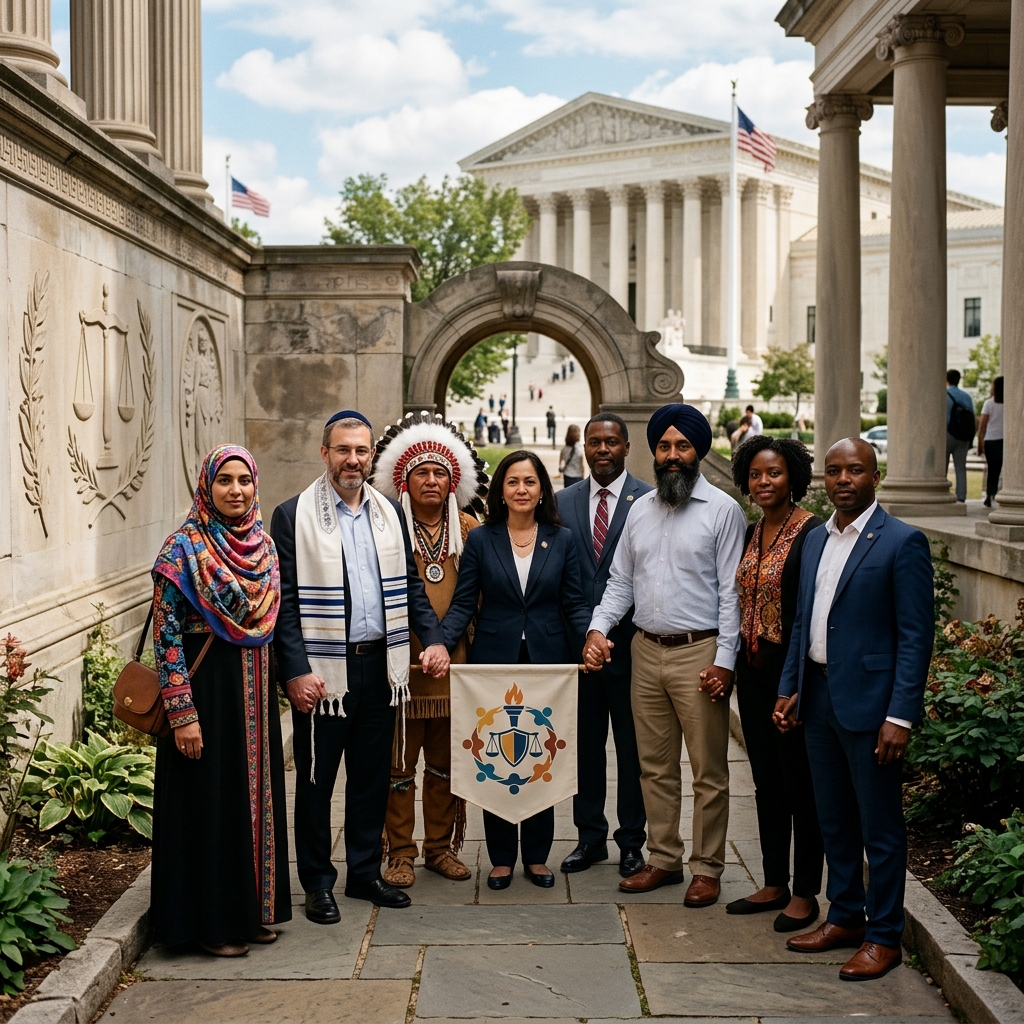
The United States legal system is built on two closely related commitments: the protection of religious freedom and the prevention of hate crimes that target people because of their faith or lack of faith.
Understanding how these commitments work together is essential for faith communities, civil society organizations, and individual believers who want both safety and liberty.
Religious Freedom: A Constitutional Foundation
In the United States, religious freedom is primarily rooted in the First Amendment, which protects both the free exercise of religion and prohibits government establishment of religion.
These protections mean that individuals and communities have wide latitude to hold religious beliefs, worship, gather, teach, and share their views, including controversial or unpopular ones, without government interference.
- Free exercise safeguards religious practices, rituals, and observances.
- Freedom of expression allows people to speak and write about religion, including expressing moral disagreement with other beliefs or lifestyles.
- Freedom of association protects the ability to join and form religious organizations.
Courts have repeatedly affirmed that even offensive religious speech is protected, so long as it does not cross the line into direct incitement of imminent lawless action or true threats.
What Is a Hate Crime?
Federal agencies define hate crimes as crimes against persons or property motivated in part or in whole by bias against characteristics such as race, religion, disability, sexual orientation, ethnicity, gender, or gender identity.
A key point is that hate crimes are criminal acts, not merely speech or opinion. They involve behaviors that are already illegal—such as assault, arson, vandalism or threats—combined with a bias motive.
| Element | Hate Crime | Protected Expression |
|---|---|---|
| Action | Criminal conduct (e.g., violence, property damage). | Speech, belief, or advocacy without criminal conduct. |
| Motive | Bias against protected characteristics (including religion). | May include bias or hostility, but no crime is committed. |
| Legal treatment | Can be prosecuted and penalized as a hate crime under specific statutes. | Generally protected by the First Amendment unless it meets narrow exceptions. |
This distinction between speech and criminal conduct is at the heart of how U.S. law preserves religious freedom while confronting violence and intimidation motivated by religious bias.
Hate Crimes Targeting Religion
Religion-based hate crimes can affect any faith community, whether members belong to majority or minority traditions.
Research and monitoring indicate that bias-motivated attacks can take many forms, including physical assault, destruction of religious property, and threats intended to frighten entire communities.
- Graffiti or vandalism directed at places of worship and religious schools.
- Desecration of cemeteries and religious symbols.
- Arson or other attacks on churches, mosques, synagogues, temples, or meeting houses.
- Assaults or harassment targeting individuals because of their religious dress, rituals, or identity.
- Threats meant to intimidate a whole congregation or faith group rather than just one person.
Such crimes do not only harm individual victims. They send a message of fear and exclusion to entire communities, undermining social cohesion and trust.
Federal Hate Crime Laws and Religious Protection
The U.S. Department of Justice enforces a set of federal hate crime laws that address bias-motivated offenses, including those based on religion.
These statutes do not restrict religious belief or worship. Instead, they focus on acts of violence, threats, or interference with key rights.
Key Federal Statutes Covering Religion
- Matthew Shepard and James Byrd, Jr. Hate Crimes Prevention Act
This law makes it a federal crime to willfully cause bodily injury, or attempt to do so with a dangerous weapon, because of a victim’s actual or perceived religion, among other protected characteristics. - Statutes protecting religious real property and worship
Federal law prohibits intentional defacement, damage, or destruction of religious real property when the crime is motivated by the religious nature of the property, and it criminalizes using force or threats to obstruct a person’s free exercise of religious beliefs. - Civil rights statutes related to federally protected activities
Certain laws make it a crime to use or threaten force to interfere with participation in federally protected activities—such as education, employment, jury service, travel, or public accommodations—because of religion or other protected traits.
These provisions reflect a broader civil rights framework under which religion is one of several characteristics explicitly protected from discriminatory violence and interference.
Do Hate Crime Laws Limit Religious Speech?
Many people worry that hate crime laws might penalize religious leaders or believers for expressing traditional teachings, particularly on controversial moral topics. Under current U.S. law, that concern is misplaced.
Hate crime statutes target conduct, not sermons, doctrinal statements, or religious discussion. No federal hate crime law criminalizes pastors, rabbis, imams, or other faith leaders for preaching their beliefs.
The First Amendment ensures broad protection for religious expression, including speech that criticizes other beliefs or practices. Only in narrow circumstances—such as direct incitement of imminent criminal activity or specific, credible threats—can expression be punished.
In practice, this means that a religious figure may:
- Teach doctrines that define right and wrong according to their faith tradition.
- Express moral disagreement with other religious views or lifestyles.
- Advocate for changes in law and policy aligned with their religious convictions.
However, neither religious conviction nor free speech rights permit someone to commit, plan, or threaten violence against others. When criminal acts occur and evidence shows bias against a religious group, hate crime laws can apply.
Impact of Religion-Based Hate Crime on Communities
Religion-based hate crimes can have long-lasting effects on individuals and communities. Victims may experience physical injury, psychological trauma, and a sense of being unsafe in spaces that are supposed to be sacred or welcoming.
A systematic review of youth experiences with religion-targeted hate crime victimization highlights the seriousness of the problem, demonstrating that both formal and informal measures are needed to reduce risks and support survivors.
- Individual impact: Fear, anxiety, disrupted sense of belonging, and changes in religious practice.
- Community impact: Reduced attendance at religious services, increased security costs, and strained interfaith relations.
- Societal impact: Damage to pluralism, increased polarization, and reduced trust in institutions.
Preventing and Responding to Religion-Based Hate Crimes
Prevention requires action at multiple levels: individual, community, and institutional. Research on youth victimization suggests a range of strategies to reduce risk and build resilience.
Informal Measures by Individuals
Individuals sometimes adopt informal coping strategies to protect themselves from religion-based victimization. Although these measures may reduce immediate risk, they can carry costs if they require hiding core aspects of identity.
- Changing routes or schedules to avoid hostile environments.
- Concealing religious symbols or dress to avoid being targeted.
- Limiting social media activity related to religious identity.
- Seeking support from family, friends, or faith leaders for emotional resilience.
Collective and Community-Level Strategies
Communities, schools, and religious institutions use collective strategies to prevent and respond to hate crimes, aiming to strengthen safety while affirming religious identity.
- Community resilience: Organizing mutual aid, support networks, and community watch initiatives to respond quickly to threats and incidents.
- Stereotype reduction: Educational programs, dialogues, and interfaith activities that address misinformation and negative stereotypes about religious groups.
- Place-based prevention: Enhancing lighting, installing cameras, coordinating with local law enforcement, and securing entrances at religious facilities.
- School-based prevention: Anti-bullying policies, curriculum on religious diversity, and staff training to recognize and address religion-based harassment.
- Positive intergroup contact: Joint service projects, interfaith events, and shared community spaces that build relationships across religious lines.
Institutional and Government Measures
Governments and institutions play a central role in combating religion-based hate crime by enforcing laws, collecting data, and supporting victims.
- Federal enforcement of hate crime statutes when jurisdictional requirements are met.
- Data collection and reporting of hate crimes to track trends and inform policy.
- Guidance and resources for local authorities and community organizations on responding to incidents.
- Public statements and initiatives against religious hatred to reinforce norms of equality and respect.
Reporting Religion-Based Hate Crimes
Timely reporting is vital for effective enforcement and prevention. Individuals and organizations who experience or witness potential hate crimes are encouraged to contact law enforcement.
- Contact local police if you are in immediate danger or if an incident has just occurred.
- Use national reporting channels, such as federal tip lines, for serious or ongoing threats.
- Document incidents with dates, times, locations, and any evidence (such as messages or photos), which can assist investigations.
- Reach out to community or advocacy organizations that provide support for victims of religious hate crime.
Reporting even relatively minor incidents helps build a clearer picture of patterns of religiously motivated harassment or violence, enabling more informed policy responses.
Balancing Religious Freedom and Public Safety
The coexistence of robust religious freedom and strong hate crime protections can be misunderstood as a legal contradiction. In practice, however, they form a complementary framework.
On one side, the First Amendment ensures that individuals and communities can practice and express their beliefs freely, including speech that others may find disturbing or offensive.
On the other side, hate crime laws and civil rights statutes establish boundaries against violence, threats, and intimidation based on religious identity or other protected characteristics.
Together, these principles support a society in which:
- People are free to worship or not worship according to conscience.
- Religious leaders can teach and advocate without fear of criminal liability for their beliefs.
- Victims of religion-based violence and intimidation have legal recourse and protection.
- Communities can work collaboratively to reduce hate and protect pluralism.
Frequently Asked Questions
Does criticizing another religion count as a hate crime?
No. Criticizing religious beliefs, doctrines, or practices is generally protected speech, even when it is harsh. It becomes a potential hate crime only when accompanied by criminal conduct—such as violence, property damage, or true threats—motivated by bias against a religious group.
Can religious leaders be prosecuted for sermons under hate crime laws?
Under current U.S. law, sermons and other religious teachings are protected by the First Amendment. Hate crime laws do not criminalize preaching or theological statements. Prosecution would involve criminal acts, not religious expression.
Are atheists and non-believers covered by religion-based hate crime protections?
Yes. Hate crime frameworks that protect people based on religion generally also cover hostility directed at someone because of their lack of religious belief or different theological stance.
What should a victim of a religion-based hate crime do first?
The first step is to ensure safety by contacting local law enforcement in an emergency. Once safe, victims should consider documenting the incident, seeking support from community or advocacy organizations, and reporting through official channels to help authorities respond and track patterns.
How do hate crime laws affect religious property, such as churches or mosques?
Federal statutes specifically protect religious real property from defacement, damage, or destruction when motivated by religious bias. They also criminalize the use of force or threats to obstruct a person’s free exercise of religious beliefs in such spaces.
References
- Hate Crimes: Laws and Policies — U.S. Department of Justice. 2024-03-15. https://www.justice.gov/hatecrimes/laws-and-policies
- Hate Crimes — Federal Bureau of Investigation. 2024-02-10. https://www.fbi.gov/investigate/civil-rights/hate-crimes
- Hate Speech and Hate Crime — American Library Association, Office for Intellectual Freedom. 2022-06-01. https://www.ala.org/advocacy/intfreedom/hate
- Inclusive Hate Crimes Laws — Movement Advancement Project. 2010-05-01. https://www.mapresearch.org/file/talking-about-inclusive-hate-crime-laws.pdf
- Preventing Religion-Based Hate Crime Victimization Among Youth — Sjödin, K., et al., Journal of Interpersonal Violence. 2023-06-30. https://pmc.ncbi.nlm.nih.gov/articles/PMC11545204/
- Hate Crime Against Christians and Members of Other Religions — OSCE Office for Democratic Institutions and Human Rights. 2021-11-01. https://hatecrime.osce.org/hate-crime-against-christians-and-members-other-religions
- Combating Religious Hatred and Violence Against Faith Groups — UN Office of the High Commissioner for Human Rights. 2026-05-17. https://www.ohchr.org/en/stories/2026/05/combating-religious-hatred-and-violence-against-faith-groups
Similar Articles








Read full bio of Sneha Tete


