
Refusing a DUI Breath Test: Risks, Rights, and Real-World Consequences
Understand how saying no to a DUI breath test can trigger license suspensions, criminal charges, and courtroom challenges long before your case is decided.
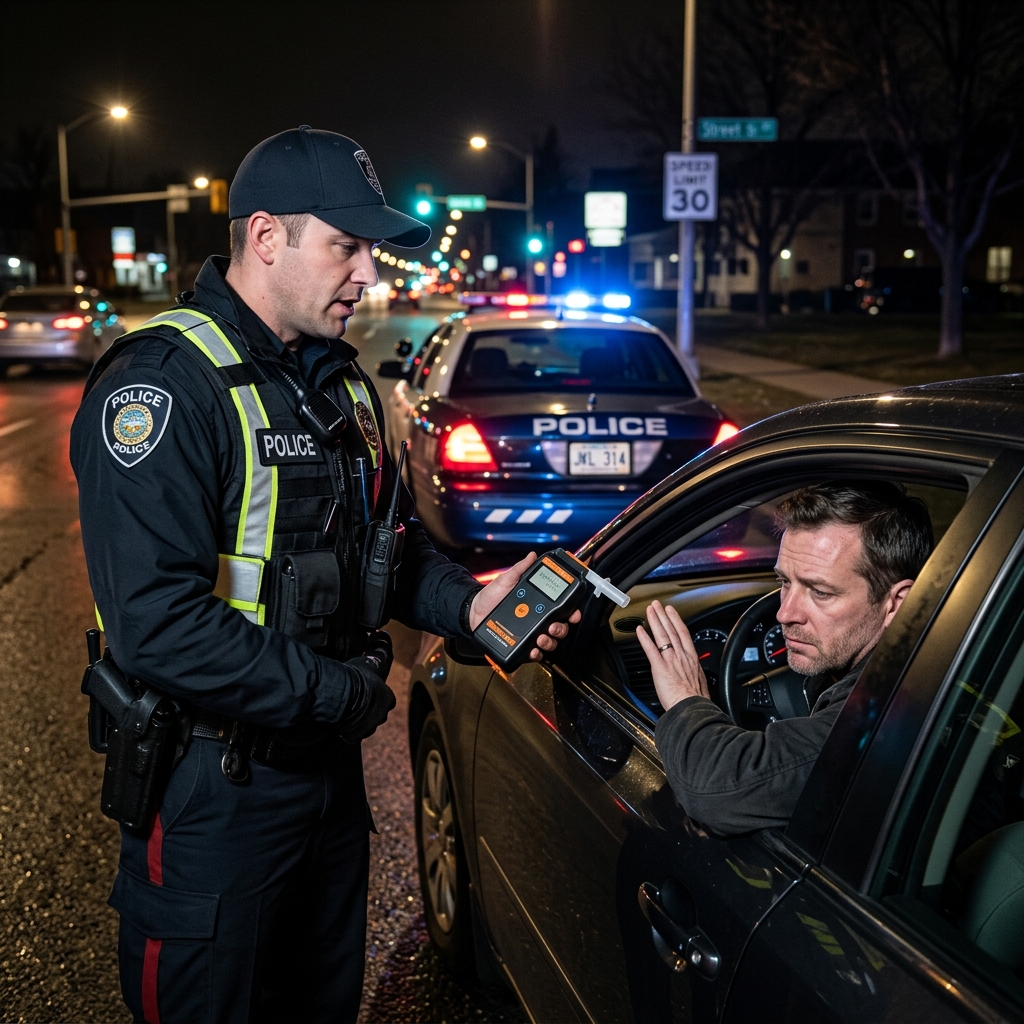
When a driver is stopped on suspicion of drunk driving, one of the most critical moments occurs when the officer asks for a breath test to measure blood alcohol concentration (BAC). Saying no may feel like a way to protect yourself, but in most parts of the United States, refusing a chemical test can trigger automatic penalties separate from any eventual DUI conviction. Understanding these rules is essential before you make a decision in a high-pressure roadside encounter.
Why Breath Test Refusal Is Treated So Seriously
Modern DUI enforcement is built around the idea that licensed drivers have already agreed to cooperate with chemical testing when they get behind the wheel. This principle, known as implied consent, exists in every state and allows authorities to impose penalties when a driver declines a lawful request for a BAC test.
Legislatures and traffic safety agencies view test refusal as a direct threat to DUI enforcement because it can deprive prosecutors of strong numerical evidence of intoxication. As a result, nearly all states impose penalties for refusal, such as:
- Administrative license suspension or revocation, imposed by a motor vehicle agency
- Fines and mandatory fees
- Additional jail exposure or enhanced sentencing if later convicted of DUI
- Use of the refusal itself as evidence in court to suggest awareness of guilt
In some jurisdictions, refusing a test is now treated as its own criminal offense rather than just an administrative violation, making the decision even more consequential.
Implied Consent in Practice: What You Have Agreed To
Implied consent laws are usually triggered once an officer has probable cause or at least reasonable suspicion that a driver is impaired. At that point, the officer can lawfully demand a chemical test, commonly a breath, blood, or sometimes urine test.
While the details differ by state, implied consent statutes typically share several core features:
- Condition of driving privileges: By obtaining a driver’s license, you agree in advance to submit to chemical testing when lawfully requested.
- Civil, not necessarily criminal, penalties: Many states begin with administrative sanctions, such as license suspension, handled by a state motor vehicle department.
- Separate from the court case: The administrative process runs independently from any DUI prosecution. You can lose your license even if the DUI charge is dismissed.
- Limited timelines to contest: Drivers often have only a short window—sometimes as little as 15 days—to request a hearing to challenge the suspension.
These laws are designed to discourage refusal and maintain a steady flow of reliable evidence for DUI cases.
Immediate Administrative Consequences: Your License and Beyond
Across the country, refusal typically leads to swift administrative action against your driving privileges. Motor vehicle agencies can act quickly, often before any court date is set.
| Jurisdiction Example | First Refusal Penalty | Repeat Refusal Penalty |
|---|---|---|
| Texas | Minimum 180 days license suspension | Minimum 2 years suspension for a second or later refusal within 10 years |
| Arizona | 1-year suspension for first refusal | 2-year suspension for second refusal within about 7 years |
| New York | 1-year revocation and civil fine around $500 | 18-month revocation and higher fine for prior DUI or refusal within 5 years |
| California | 1-year license suspension for first refusal, separate from DUI penalties | 2–3 years suspension for subsequent refusals, depending on history |
Although specific time frames vary, several patterns emerge:
- Suspensions for refusal are often longer than for a first-time DUI conviction.
- Repeat refusals or prior DUI convictions usually trigger escalating penalties with longer suspensions and higher fines.
- In many states, drivers must surrender their license at the stop and are given a temporary permit valid only for a short period.
For many people, the loss of driving privileges—for commuting, childcare, or medical appointments—is the most disruptive and costly consequence of refusing a breath test.
Criminal Exposure: When Refusal Becomes a Crime
Historically, refusal penalties were administrative only. However, traffic safety research and policy discussions have led some states to criminalize BAC test refusal in order to reduce refusal rates and increase DUI convictions.
In states that criminalize refusal, such as Florida, saying no can lead to:
- A separate misdemeanor charge, often a second-degree misdemeanor
- Mandatory adjudication of guilt, meaning courts are barred from withholding a conviction
- Additional fines and potential jail time independent of the underlying DUI case
This means a driver may face two layers of penalties for the same incident: an administrative license suspension and a criminal record solely for refusing. Research by federal safety agencies indicates that criminalizing refusal can be an effective countermeasure, which explains why many states have chosen to adopt such statutes.
How Refusal Affects Your DUI Case in Court
Some drivers refuse a breath test because they believe denying a BAC reading will make it harder for prosecutors to prove DUI. While refusal does remove one piece of evidence, it also creates new problems in the courtroom.
Key litigation impacts include:
- Refusal as evidence: In many jurisdictions, prosecutors can introduce refusal as evidence and argue it shows consciousness of guilt—you knew you were impaired and tried to avoid proof.
- Alternative evidence: Officers can rely on field sobriety tests, dashcam footage, witness testimony, and driving behavior to build a case even without a BAC number.
- Enhanced penalties if convicted: Courts may treat refusal as an aggravating factor and impose longer license suspensions, mandatory programs, or additional jail time for a DUI conviction.
In some states, prosecutors follow specific policies on refusals. For example, district attorneys may request a minimum period of incarceration when a DUI conviction includes a test refusal, regardless of other circumstances. That can make plea negotiations more difficult and increase the stakes of going to trial.
Police Options After You Say No
Refusing a breath test does not necessarily stop the government from collecting chemical evidence. Officers and prosecutors often have additional tools, including:
- Search warrants for blood or other tests: In states like Arizona, officers who have probable cause may seek a warrant to obtain blood or other samples even after a driver refuses.
- Proceeding based on existing evidence: If officers feel they already have enough indicators of impairment—such as poor driving, failed field sobriety tests, or slurred speech—they may arrest and charge the driver without a completed chemical test.
- Treating incomplete tests as refusals: In some jurisdictions, being unable or unwilling to finish a test for any reason may be legally treated as a refusal, triggering the same administrative consequences.
These options underline a key point: refusing a breath test rarely shuts down the investigation. Instead, it often adds penalties while leaving most of the government’s case intact.
Long-Term Impact on Driving, Insurance, and Daily Life
The consequences of refusing a DUI breath test extend far beyond the initial stop. The ripple effects can touch many aspects of life:
- Extended inability to drive: Some states impose “hard” suspensions after a refusal, during which drivers cannot obtain even restricted or hardship licenses to drive for work or essential needs.
- Mandatory treatment or education: After serving a suspension, drivers may be required to complete alcohol or drug screening and education programs to reinstate their license.
- Insurance consequences: A license suspension or criminal conviction related to refusal can increase auto insurance premiums or lead to cancellation.
- Permanent criminal record: Where refusal is a crime and adjudication cannot be withheld, drivers may carry a lasting record even if the DUI charge is later reduced or dismissed.
For many people, these long-term burdens prove more disruptive than the immediate fines or court appearances.
Strategic Considerations: Weighing the Pros and Cons
Because refusal carries significant and often automatic consequences, lawyers commonly advise that the decision should be made with a clear understanding of the trade-offs, which differ by state and by personal circumstances.
Potential perceived advantages of refusing:
- No direct BAC number available to the prosecution
- Occasional leverage in plea bargaining if the state’s evidence is otherwise weak
Major disadvantages of refusing:
- Automatic license suspension or revocation, often for longer periods than a first-offense DUI conviction
- Risk of an additional criminal charge in states that criminalize refusal
- Refusal used as evidence of guilt and an aggravating factor at sentencing
- Possibility that officers will still obtain chemical evidence via a warrant
Because of these complexities, the same choice can carry very different consequences depending on where the stop occurs and the driver’s record. Consulting with a qualified defense attorney in your state is crucial for tailored advice.
Frequently Asked Questions About DUI Breath Test Refusals
Can I refuse a roadside breath test but agree to one at the station?
In many states, field breath tests and field sobriety exercises are voluntary, while official chemical tests requested after arrest fall under implied consent laws. Refusing a preliminary roadside test may not trigger the same automatic administrative penalties, but refusing the official post-arrest test typically will. The distinction depends heavily on state law, so local legal advice is essential.
Will I lose my license even if I am not convicted of DUI?
Yes, in many jurisdictions you can face an administrative license suspension simply for refusing a lawful test, regardless of the outcome of the criminal DUI case. The motor vehicle agency’s decision is independent from the criminal court’s verdict.
Is remaining silent during the test request a safe workaround?
No. Courts and agencies often treat doing nothing—standing silent without cooperating—as a refusal. The key question is whether you complied with the lawful request for testing, not whether you spoke.
Can I challenge a refusal-based suspension?
In many states you can request an administrative hearing to contest the suspension. However, deadlines are strict, and the issues are limited to whether the officer had the required legal basis and followed proper procedures. Missing the deadline usually means automatic suspension for the full period.
Does a prior DUI affect penalties for refusing?
Yes. Repeat offenders almost always face longer license suspensions and higher fines when they refuse, sometimes doubling or tripling the length of the suspension. Those with prior refusals or DUI convictions should be especially cautious, as penalties escalate quickly.
Key Takeaways for Drivers
Refusing a DUI breath test is not a simple way to avoid consequences. Instead, it triggers a separate set of penalties that can be severe and long-lasting. Because the rules vary so widely and change over time, the most important steps are:
- Learn the basics of implied consent and refusal penalties in your state before an incident occurs.
- Understand that license suspension for refusal is often automatic and may exceed the suspension for a first DUI.
- Recognize that refusal can be used as evidence against you and may lead to criminal charges in some jurisdictions.
- Seek prompt legal counsel after any DUI stop, especially if you declined testing.
With informed planning and professional guidance, drivers can better navigate the legal landscape around DUI breath tests and avoid turning a difficult situation into a long-term personal and financial crisis.
References
- BAC Test Refusal Penalties — National Highway Traffic Safety Administration. 2023-01-01. https://www.nhtsa.gov/book/countermeasures-that-work/alcohol-impaired-driving/countermeasures/legislation-and-licensing-2
- The Consequences of Refusing a Breathalyzer Test — Zachary McCready Law. 2022-05-01. https://zacharymccreadylaw.com/blog/the-consequences-of-refusing-a-breathalyzer-test/
- What Happens If You Refuse a Breathalyzer Test in California? — Hart Levin. 2023-03-01. https://hartlevin.com/practice-areas/dui/what-happens-if-you-refuse-a-breathalyzer-test/
- Failing or Refusing a DWI Test in Texas — Ned Barnett, Houston DWI Lawyers. 2022-04-15. https://www.nedbarnett.com/practice-areas/dwi/houston-tx-breath-test-refusal/
- Implied Consent DUI Testing and Consequences of Refusal — Arizona Criminal Defense Lawyer. 2022-06-10. https://www.arizonacriminaldefenselawyer.com/practice-areas/dui/dui-defense/implied-consent-dui-testing-and-consequences-of-refusual/
- Breath Test Refusal Laws in New York: The Basics — Aida & Aida Law. 2021-11-01. https://aidalalaw.com/breath-test-refusal-laws-in-new-york-the-basics-2/
- Refusing a Breathalyzer Test in Florida Has New Consequences — The Ticket Clinic. 2022-09-20. https://www.theticketclinic.com/blog/refusing-a-breathalyzer-test-in-florida-has-new-consequences/
Similar Articles








Read full bio of Sneha Tete




