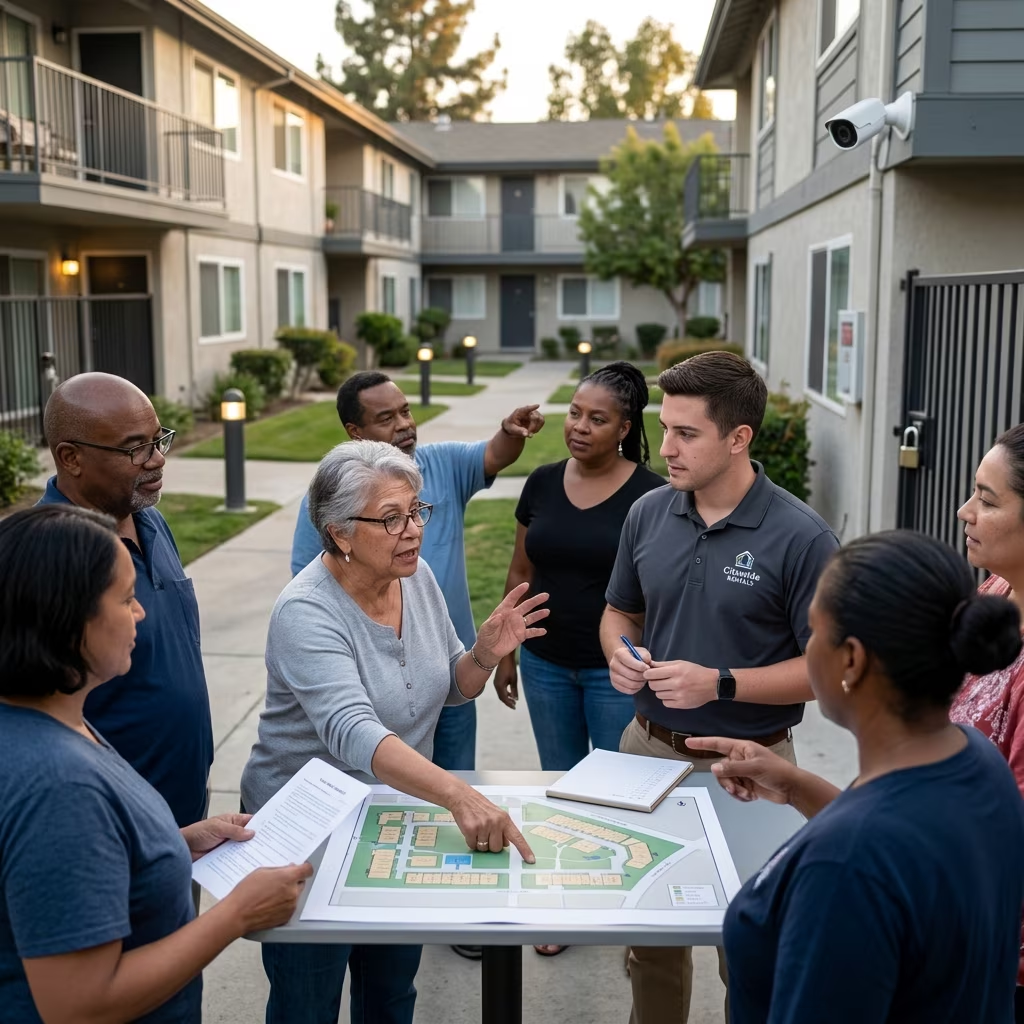
Crime in and around rental housing affects more than just individual tenants. It can erode neighborhood stability, increase costs for landlords, and expose property owners to potential legal liability when reasonable safety steps are not taken. This guide explains how landlords and property managers can proactively reduce crime risks using a combination of legal, environmental, and operational strategies informed by research and best practices.
Why Crime Prevention Matters for Landlords
Landlords are not guarantors of absolute safety, but they often have a duty to take reasonable steps to protect tenants and visitors from foreseeable criminal acts on or near the property. Courts and legislatures increasingly expect rental housing providers to consider crime when making decisions about design, management, and maintenance. Failing to address obvious risks can lead to higher vacancy rates, property damage, and, in some cases, lawsuits alleging negligent security.
Effective crime prevention is also good business. Safer properties tend to attract more stable tenants, reduce turnover, and limit losses from vandalism and theft. Research on place-based crime prevention shows that changes in how properties are designed and managed can significantly reduce offending in and around rental housing.
- Lower operating costs due to reduced damage, theft, and insurance claims.
- Improved tenant satisfaction, leading to longer tenancies and fewer vacancies.
- Reduced legal exposure when owners can show they implemented reasonable, evidence-based safety measures.
Understanding Crime Risks in Rental Housing
Not all rental properties face the same crime risks. Crime patterns vary by neighborhood, property type, and tenant mix. Evidence from place management research shows that crime tends to concentrate in relatively small areas known as “hot spots,” including particular buildings or complexes.
Before investing in security upgrades, landlords should systematically assess crime risks. Public data, police records, and routine property inspections can reveal where and when incidents tend to occur.
Common Crime Issues Around Rental Properties
- Drug activity in or around units or parking areas.
- Assaults or robberies near entrances, hallways, or laundry rooms.
- Burglary or theft facilitated by weak doors, windows, and lighting.
- Vandalism and property damage in poorly supervised common areas.
- Vehicle break-ins in large, dark parking lots.
Basic Crime Risk Assessment Checklist
Landlords and managers can use a simple checklist when evaluating their properties.
- Review recent incident reports with local police to identify recurring problems.
- Walk the grounds during the day and at night to identify blind spots and unsafe conditions.
- Inspect doors, windows, locks, lighting, and cameras for damage or malfunction.
- Document complaints from tenants about suspicious activity, loitering, or noise.
- Note design features that may encourage hiding or unauthorized access (overgrown landscaping, cut-through paths, unsecured gates).
Legal Tools and Responsibilities in Crime Prevention
Legal frameworks influence what landlords can and must do to address crime on their properties. While specifics vary by jurisdiction, several common elements recur in statutes, case law, and crime prevention programs.
Duty to Provide Reasonably Safe Premises
Many jurisdictions impose a duty on landlords to maintain reasonably safe conditions, which can include taking steps to reduce foreseeable crime risks. Factors that may shape what is considered “reasonable” include:
- Known history of crime at the property or in the immediate area.
- Prior incidents involving the same tenants or guests.
- Obvious physical conditions that facilitate crime, such as broken locks and dark stairwells.
- Industry standards or local programs that define basic crime-prevention practices, such as crime-free housing initiatives.
Lease Provisions Addressing Crime and Nuisance
Thoughtful lease drafting can support crime prevention by clearly prohibiting criminal and nuisance behavior and explaining consequences.
- Include clauses banning illegal activity, drug use, and gang-related conduct on the premises.
- Define nuisance behaviors, such as repeated disturbances, that may trigger warnings or termination.
- Require tenants to cooperate with lawful investigations and allow access for safety inspections.
- Consider a separate crime-free addendum that outlines specific rules and education components, consistent with local crime-free rental programs.[10]
Nuisance Abatement and Government Enforcement
Research indicates that nuisance abatement actions targeting landlords who ignore drug dealing and similar problems can reduce crime in rental housing. Municipalities may issue warnings, fines, or civil suits when owners fail to address chronic criminal activity on their properties.
| Tool | Purpose | Implications for Landlords |
|---|---|---|
| Nuisance abatement orders | Compel landlords to address drug markets or chronic disturbances. | Failure to act may lead to fines or civil liability; cooperation can reduce crime. |
| Minimum security codes | Set basic standards for lighting, locks, and access control. | Non-compliance can result in citations and increased liability exposure. |
| Crime-free rental housing programs[10] | Provide training and model policies for safer property management. | Participation may reduce crime and signal commitment to safety. |
Designing Safer Rental Properties (CPTED Principles)
Crime Prevention Through Environmental Design (CPTED) is an evidence-based approach that uses physical design to reduce opportunities for crime. Police and planners use CPTED to guide improvements to lighting, access, visibility, and territorial control.
Key Environmental Design Strategies
- Natural surveillance: Arrange doors, windows, and common areas so that residents and staff can easily observe activity, reducing hiding places for offenders.
- Access control: Use gates, fences, locks, and clearly defined paths to guide legitimate movement and discourage unauthorized entry.
- Territorial reinforcement: Mark boundaries with landscaping, signage, and maintenance that signal active ownership and discourage trespassing.
- Maintenance: Keep buildings and grounds in good condition; neglected properties are more likely to attract crime and disorder.
Practical Property Improvements
Landlords can apply CPTED principles through relatively modest changes.
- Position main entrances facing the street or primary walkway so activity is visible.
- Trim shrubs and trees around windows and walkways to improve sightlines.
- Add lighting to parking lots, stairwells, laundry rooms, and mail areas to reduce dark corners.
- Use fencing or landscaping to divide shared spaces into individual yards or clearly defined zones.
- Eliminate unnecessary cut-through paths that invite trespassing and provide escape routes for offenders.
- Install moderate mechanical security (deadbolts, door viewers, access controls) without creating a fortress feel that alienates residents.
Security Measures and Technology That Support Crime Prevention
Environmental design should be complemented by practical security hardware and, where appropriate, technology. Research and practice point to several commonly used measures.
Core Physical Security Elements
- Doors and locks: Solid-core doors, deadbolts, and reinforced strike plates on unit and common-area doors to resist forced entry.
- Windows: Functional locks and secure latches on ground floor windows and sliding doors.
- Lighting: Energy-efficient fixtures at entrances, parking areas, walkways, and trash enclosures.
- Perimeter barriers: Fencing, gates, and controlled vehicle access where appropriate.
Security Technology Options
Technology can extend guardianship and improve evidence gathering, but landlords should balance benefits with privacy and legal compliance.
- Surveillance cameras: Strategically placed cameras at entrances and common areas can deter crime and assist investigations.
- Alarm systems: Burglar alarms or access alarms for common rooms, integrated with monitoring services.
- Electronic access control: Keyless entry systems, smart locks, or card readers to limit unauthorized access.
- Security personnel: Guards or mobile patrols in higher-risk properties, often coordinated with local police.
Tenant Screening, Leases, and Enforcement Practices
Operational decisions about whom to rent to and how to enforce rules are central to crime prevention. The goal is to balance fair housing obligations with legitimate safety concerns.
Responsible Tenant Screening
Landlords should adopt consistent, lawful criteria for screening applicants, focusing on relevant history while avoiding discrimination.
- Use written screening policies that apply equally to all applicants.
- Review past rental history, including evictions or documented serious lease violations, where permitted by law.
- Consider criminal background checks only in ways consistent with fair housing guidance and local regulations.
- Explain screening criteria in advance so applicants understand expectations.
Enforcement of Crime-Related Lease Terms
Crime prevention requires clear follow-through when serious lease violations occur.
- Respond promptly to credible reports of criminal or dangerous behavior.
- Document complaints, inspections, and communications with tenants in writing.
- Issue written warnings where appropriate, citing specific lease provisions.
- Use eviction or lease termination in serious or repeated cases, consistent with local law and procedural requirements.
Working With Police and Community Crime Prevention Programs
Police agencies increasingly partner with landlords to reduce crime in rental housing through training, joint problem-solving, and formal programs.[10]
Crime-Free and Landlord Training Programs
Crime-free rental housing programs offer workshops covering crime prevention, crime-free lease addenda, and eviction processes.[10] These programs help landlords understand how to:
- Identify and respond to crime-related problems on their properties.
- Draft and apply leases that prohibit criminal activity.[10]
- Coordinate with police to share information and plan interventions.
Collaborative Problem-Solving With Police
Police can support landlords by providing crime data, advising on CPTED improvements, and participating in property walk-throughs.[10]
- Request incident summaries or calls-for-service data for your property.
- Invite officers trained in CPTED to review environmental design and suggest changes.
- Develop contact points for rapid communication when serious incidents occur.[10]
Engaging Tenants as Partners in Safety
Tenants are present on the property every day, and their participation can significantly strengthen crime prevention.
Building a Safety-Oriented Community
- Host periodic meetings to share crime prevention information and discuss concerns.
- Encourage informal watchfulness and reporting of suspicious activities.
- Organize community clean-ups and events that reinforce pride of place.
- Use newsletters or online forums to inform tenants about safety updates and local crime trends.
Communicating About Crime Issues
When chronic crime problems exist, landlords should notify residents and explain steps being taken to address them.
- Describe the nature of the problem in clear, factual terms.
- Outline property-level responses, such as enhanced security, rule enforcement, or design changes.
- Offer guidance on personal safety and how to report incidents.
Monitoring, Documentation, and Continuous Improvement
Crime prevention is an ongoing process. Evidence-based place management stresses the importance of data collection, monitoring, and adjustment.
Tracking Crime and Disorder
- Maintain logs of incidents, complaints, and police calls related to your property.
- Analyze patterns to identify specific hot spots, times, or behaviors that require targeted solutions.
- Evaluate whether implemented measures (lighting upgrades, access controls, new policies) correspond with declines in incidents over time.
Policy and Design Reviews
Landlords should periodically review design and policies to adapt to changing conditions.
- Update leases and addenda to reflect new legal requirements and crime trends.
- Reassess tenant screening criteria for clarity and fairness.
- Plan capital improvements to gradually address structural problems that contribute to crime.
Frequently Asked Questions About Crime Prevention in Rental Property
Do landlords have to guarantee that no crime will occur on their property?
No. Landlords generally are not absolute guarantors of safety, but they may have a duty to take reasonable steps to reduce foreseeable crime risks, such as fixing broken locks, improving lighting, and enforcing leases against serious criminal behavior.
What is CPTED and why should landlords care?
CPTED (Crime Prevention Through Environmental Design) is a framework that uses physical design features—like visibility, access control, and territorial reinforcement—to reduce opportunities for crime. Police and housing authorities often recommend CPTED-based improvements because they are relatively cost-effective and supported by research.
Can landlords use criminal history when screening tenants?
In many jurisdictions, landlords may consider certain aspects of an applicant’s criminal history, but they must follow fair housing laws and local regulations. Screening practices should be consistent, focused on relevant conduct, and avoid blanket exclusions that could be discriminatory.
How can landlords work productively with local police?
Landlords can attend or host police-led training programs, share information about recurring problems, invite officers to evaluate property design, and participate in crime-free housing initiatives where available.[10]
Are security cameras always necessary?
No. Cameras can deter crime and assist investigations, but they are only one tool among many. In some properties, improvements to lighting, locks, and community engagement may be more cost-effective. If cameras are used, landlords must maintain them, respect privacy laws, and ensure footage is handled appropriately.
References
- Remedial Action Plan Manual: A Guide to Managing Rental Housing — Charlotte-Mecklenburg Police Department. 2007-01-01. https://www.charlottenc.gov/files/assets/police/v/2/documents/supportdocs/remedial_action_plan.pdf
- Preventing Crime: What Works, What Doesn’t, What’s Promising — Sherman et al., National Institute of Justice (US DOJ). 1997-07-01. https://www.ojp.gov/pdffiles/171676.pdf
- Preventing Crime in Multifamily Housing — FMJ Magazine, International Facility Management Association. 2021-06-01. https://fmj.ifma.org/preventing-crime-in-multifamily-housing
- Crime Free Rental Housing Program — Crime Free Association. 2019-01-01. http://www.crime-free-association.org/rental_housing.htm
- Solving Crime Problems in Residential Neighborhoods: Comprehensive Changes in Design, Management, and Use — Houston Police Department CPTED Resources. 2003-01-01. https://www.houstontx.gov/police/cpted/CPTED_resources_for_specific_property_types/Solving_Crime_Problems_in_Residential_Neighborhoods-Comprehensive_Changes_in_Design_Management_and_Use.pdf
- Extractive landlord strategies: How the private rental market creates and amplifies neighborhood crime — Desmond & Wilmers, American Society of Criminology. 2019-03-01. https://onlinelibrary.wiley.com/doi/full/10.1111/1745-9125.12332
- Landlord Safety Training — Richland Police Department. 2017-05-01. https://www.facebook.com/RichlandPolice/posts/1142176411287936