
REDDI Reports and Traffic Stops: How Citizen Tips Shape DUI Enforcement
Understanding when citizen drunk‑driving reports give police lawful grounds to stop, detain, and investigate drivers on the road.
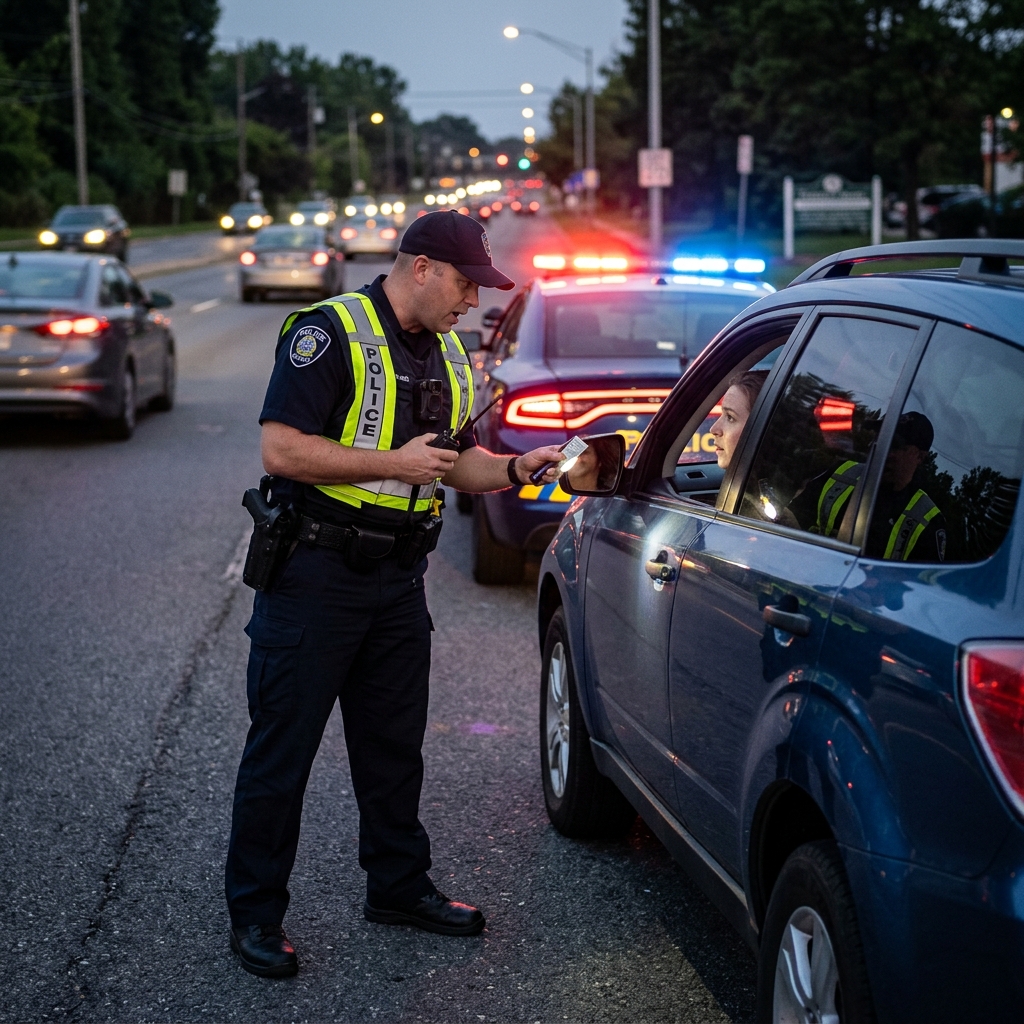
Across the United States, drunk and impaired driving remains a major public safety concern. In response, many jurisdictions encourage motorists to report suspected impaired drivers through programs commonly known as REDDI—often short for Report Every Drunk (or Dangerous) Driver Immediately. These citizen tips can play a critical role in preventing crashes, but they also raise important questions about the limits of police authority and driver rights.
This article explains how REDDI-style reports interact with constitutional law on traffic stops, when they can provide a lawful basis for police intervention, and what drivers should know about their rights when a stop is based on a tip rather than the officer’s own observations.
What Is a REDDI Report?
A REDDI report is typically a telephone or electronic tip from a citizen who has observed driving that appears impaired, dangerous, or erratic. The caller usually contacts emergency services (such as 9‑1‑1) or a designated hotline and provides information that helps law enforcement locate and identify the vehicle.
Typical Information Included in a REDDI Tip
- Location of the vehicle (roadway, direction of travel, nearby landmarks).
- Description of the vehicle (make, model, color, license plate, unique features).
- Observed driving behavior (weaving between lanes, driving far below or above the speed limit, erratic braking, nearly causing collisions).
- Whether the caller can identify themselves or remains anonymous.
Public agencies promote these reports as a way to involve citizens directly in road safety, particularly in cases where a drunk driver might cause immediate harm. At the same time, courts have developed standards for when a tip is specific and reliable enough to justify a constitutional seizure of a driver.
Legal Foundations: Reasonable Suspicion, Probable Cause, and the Fourth Amendment
To understand how REDDI reports fit into traffic-stop law, it is important to distinguish two key concepts: reasonable suspicion and probable cause. Both arise under the Fourth Amendment, which protects people from unreasonable searches and seizures.
| Standard | What it Allows | Typical Use in Driving Cases |
|---|---|---|
| Reasonable suspicion | Brief stop or detention to investigate possible law violation. | Initial traffic stop or short roadside investigation. |
| Probable cause | Arrest or search where evidence of a crime is likely present. | DUI arrest, vehicle search when evidence of a crime is expected. |
For a traffic stop to be lawful, an officer usually must have either reasonable suspicion of a traffic or criminal offense, or probable cause that a crime has occurred. Once the vehicle is stopped, any further detention and investigation must stay reasonably tied to the original purpose of the stop unless new evidence develops.
How Citizen Reports Can Justify a Traffic Stop
Courts have long acknowledged that an officer may rely on information from others rather than personal observation to form reasonable suspicion. This can include reports from other officers, dispatch records, or citizen tips. The key question is whether the information, taken together, gives the officer enough specific, articulable facts to reasonably suspect a law violation.
When a REDDI Report May Support Reasonable Suspicion
A REDDI report can help establish reasonable suspicion if it includes concrete details and appears sufficiently reliable. Factors that often matter include:
- Caller credibility: whether the caller identifies themselves, gives contact information, or has some basis for observing the driver (for example, driving directly behind them).
- Specific facts: description of dangerous maneuvers or signs of impairment instead of bare conclusions like “the driver seems drunk.”
- Consistency: the officer finds a vehicle matching the description at the reported location and observes some behavior consistent with the tip.
- Urgency and risk: suspected drunk driving involves an immediate threat, which courts sometimes weigh heavily when evaluating the reasonableness of a stop.
In many jurisdictions, if a citizen who identifies themselves reports a specific vehicle as driven by a possibly impaired person, police may stop that vehicle even if they have not yet witnessed a separate traffic violation. Such a stop is framed as a brief investigative detention to confirm or dispel the suspicion of impairment.
Anonymous Tips: Additional Caution Required
Anonymous tips present more difficulty. Because the officer cannot easily assess the informant’s credibility or motives, courts usually demand more detail and corroboration before allowing an anonymous report to justify a stop.
Common judicial concerns with anonymous calls include:
- Whether the caller provides predictive information that officers can independently verify.
- Whether the tip describes specific, unusual driving behavior rather than general allegations.
- Whether officers verify some risk or abnormality upon locating the vehicle.
Some courts have found that an anonymous report containing only conclusory statements—such as “a drunk driver in a blue car”—without further detail did not create reasonable suspicion for a stop. Others have allowed stops where the anonymous tip was detailed and officers quickly confirmed elements of the report before intervening.
Limits on REDDI-Based Stops: Mistakes, Reliability, and Detail
Even when a REDDI report appears credible, the constitutional limits on traffic stops still apply. An officer may act on what they reasonably believe to be true, but the stop must be supported by sufficiently specific information, and the detention cannot be extended beyond its lawful purpose without new evidence.
Reasonable Mistakes Still Require Reasonable Bases
Court decisions in several states show that a stop may remain lawful even if certain facts later turn out to be wrong, so long as the officer’s belief was objectively reasonable at the time. For example, if an officer relies on dispatch information or registration records that later prove outdated or inaccurate, the stop can still be valid if the information appeared trustworthy when used.
However, the officer must be able to articulate specific facts that supported the suspicion. A general hunch based solely on vague or unreliable information will not suffice.
Insufficient Detail in 9‑1‑1 or REDDI Calls
Courts have sometimes suppressed evidence when the underlying tip lacked meaningful detail. When a caller simply asserts that a driver is drunk or dangerous without explaining what they saw, judges may conclude that the officer did not have enough factual basis to conduct a stop.
In such cases, the key problems include:
- Conclusions without facts, such as “the driver is drunk,” without description of swerving, collisions, or erratic behavior.
- Minimal vehicle description, making misidentification likely.
- No corroboration from the officer’s own observations before initiating the stop.
Because traffic stops are considered seizures under the Fourth Amendment, courts require more than bare accusations—especially when the tipster remains anonymous.
From Stop to Arrest: What a REDDI Report Can and Cannot Do
Importantly, the legal standards for a traffic stop are different from those required to arrest a driver or conduct a search of the vehicle. A REDDI report may justify a brief investigative stop, but it does not automatically furnish probable cause for arrest or search.
Role of REDDI Reports in the Investigative Phase
Once an officer lawfully stops a vehicle based in part on a citizen tip, they typically proceed with standard investigative steps. These may include:
- Requesting license, registration, and proof of insurance.
- Observing the driver’s physical condition (speech, coordination, eyes, odor).
- Looking for signs of contraband or open containers in plain view.
- Asking limited questions relevant to the suspected offense.
- Deciding whether to request field sobriety tests or chemical tests under applicable implied-consent laws.
Evidence gathered during this phase—such as clear signs of impairment, admissions of drinking, or failed sobriety tests—can provide probable cause for a DUI arrest independent of the original REDDI report.
Probable Cause for Search and Arrest
For a full vehicle search or arrest, the officer must have probable cause that a crime has been or is being committed. In the context of suspected drunk driving, probable cause may arise from:
- Strong odor of alcohol or illegal drugs from the driver or vehicle.
- Slurred speech, inability to perform simple tasks, or extreme confusion.
- Poor performance on standardized field sobriety tests.
- Breath or blood test results above the legal limit.
While the REDDI report can help explain why the officer initiated the stop, courts generally look to the officer’s own observations and test results when evaluating whether probable cause existed for arrest and search.
Duration and Scope of a REDDI-Based Traffic Stop
Even when a stop is valid at the outset, it can become unlawful if the detention lasts longer than necessary to carry out the mission of the stop. The U.S. Supreme Court has held that a traffic stop may not be prolonged beyond the time reasonably required to complete the tasks related to the traffic offense or investigation, unless new evidence justifies continued detention.
Reasonable Time Limits
There is no precise national time limit, but courts typically examine whether the officer diligently pursued the investigation related to the suspected offense. For a REDDI-based DUI investigation, this might include:
- Quickly explaining the reason for the stop.
- Obtaining identification and vehicle documents.
- Conducting a brief impairment assessment.
- Deciding promptly whether additional testing is needed.
If the officer finishes these tasks and finds no evidence of impairment or other crimes, continued detention may be unlawful. On the other hand, if new evidence emerges during the stop—for instance, clear signs of intoxication or contraband in plain view—the officer may lawfully prolong the encounter to address the new concerns.
Driver Rights During a REDDI-Triggered Stop
Drivers stopped on the basis of a citizen tip retain the same constitutional protections as in any other traffic stop. Understanding these rights can help motorists respond appropriately and protect their legal interests.
Key Rights Commonly Recognized
- Right to be free from unreasonable searches and seizures: Police must have a legal basis—reasonable suspicion or probable cause—to stop and search your vehicle.
- Right to remain silent: You generally do not have to answer questions beyond basic identification requirements.
- Right to refuse consent to search: Absent probable cause or another legal exception, officers cannot search your vehicle without your consent.
- Right to counsel: If you are arrested or subjected to custodial interrogation, you may request an attorney and decline to answer questions until counsel is present.
State laws vary regarding breath and blood tests, implied consent, and the consequences of refusing chemical testing. Many jurisdictions treat refusal as a separate violation that can result in license suspension or enhanced penalties.
Practical Guidance for Citizens and Drivers
Both callers and drivers have roles to play in making sure REDDI reports contribute to safety without eroding constitutional protections. The following practical guidance highlights how to navigate these situations.
If You Are Considering Making a REDDI Report
- Provide specific observations, such as lane departures, near collisions, or drivers asleep at the wheel.
- Offer a clear vehicle description and location to minimize misidentification.
- If safe, give your name and contact information to increase the reliability of the report.
- Do not attempt to follow or confront the driver; your role is to report, not to intervene.
If You Are the Driver Being Stopped
- Remain calm, pull over safely, and keep your hands visible.
- Provide required documents (license, registration, insurance) when requested.
- Politely exercise your right to remain silent beyond required identification if you choose.
- Decline consent to a vehicle search if you do not wish to allow one, unless the officer indicates they already have legal grounds.
- Ask whether you are free to go once the officer’s tasks appear complete.
- Consult a qualified attorney promptly if you are arrested or believe your rights were violated.
FAQs About REDDI Reports and Traffic Stops
Can an officer stop my car based only on a REDDI report?
Yes, in many jurisdictions a sufficiently detailed and reliable citizen tip can support reasonable suspicion for an investigative traffic stop, even if the officer has not personally witnessed a separate violation. Courts closely examine the reliability and specificity of the tip, especially when it is anonymous.
Does a REDDI report automatically mean I will be arrested?
No. A REDDI report may justify a brief investigation, but arrest requires probable cause that you were driving under the influence or committed another crime. Probable cause typically arises from what the officer observes and any test results obtained after the stop.
What happens if the REDDI report turns out to be wrong?
A stop can still be lawful if the officer relied on information that was reasonably trustworthy at the time, even if it later proves inaccurate. However, if the tip was too vague or unreliable, courts may find that the officer lacked reasonable suspicion and suppress resulting evidence.
Can I find out who reported me?
In some cases, the identity of the caller becomes part of the record, especially if they testified or provided a formal statement. In other situations—particularly with anonymous tips—the caller’s identity may remain unknown. Access to such information depends on local laws, discovery rules, and court orders.
Is refusing field sobriety or chemical tests allowed?
Rules on refusing tests vary by state. Many jurisdictions have implied-consent laws under which drivers are deemed to consent to chemical testing as a condition of driving, and refusal can lead to administrative penalties such as license suspension. Legal advice specific to the jurisdiction is essential in deciding how to respond.
References
- What’s a REDDI Report & How Does It Work? — Bresee & Finley, P.C. 2020-10-01. https://www.bresee.com/blog/2020/october/what-s-a-reddi-report-how-does-it-work-/
- V. Basis for Vehicle Stop – Legal Standard — Texas District & County Attorneys Association. 2019-01-01. https://www.tdcaa.com/resources/dwi/jessica-fraziers-dwi-case-law/v-basis-for-vehicle-stop-legal-standard/
- Legal Basis for Traffic Stop — ArborYpsi Law. 2018-05-01. https://www.arborypsilaw.com/practice-areas/dui/legal-basis-for-traffic-stop/
- Drivers’ Rights During Traffic Stops — GRGB Law. 2021-04-15. https://www.grgblaw.com/wisconsin-trial-lawyers/drivers-rights-traffic-stops
- How Long Is Too Long for a Traffic Stop? — FindLaw. 2019-07-23. https://www.findlaw.com/legalblogs/criminal-defense/how-long-is-too-long-for-a-traffic-stop/
- Know Your Rights During a Traffic Stop — Nicholson Goetz & Otis, S.C. 2020-03-12. https://nglawyers.com/blog/2020/03/know-your-rights-during-a-traffic-stop/
- Wisconsin Statutes & Annotations – Traffic Stops and Mistakes of Law — Wisconsin Legislature. 2015-02-13. https://docs.legis.wisconsin.gov/constitution/wi/000230/000027/000238?up=1
Similar Articles








Read full bio of medha deb




