
Recognizing and Avoiding Red Light Ticket Phone Scams
Learn how to spot fake red light ticket calls, texts, and emails before scammers get your money or personal information.
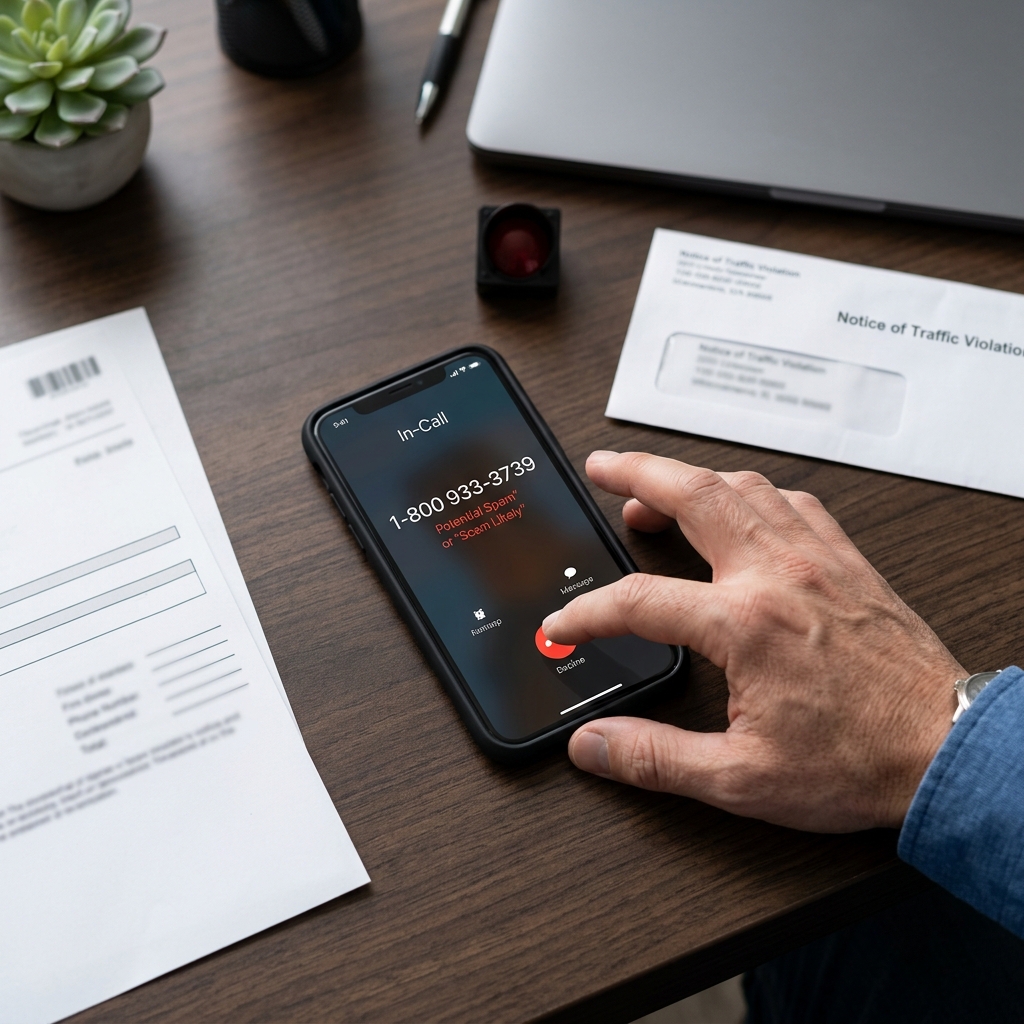
Red light cameras and automated traffic enforcement have become common across the United States, and scammers are exploiting this reality by sending fake tickets, texts, calls, and emails that look official but are designed to steal money and personal information. These scams often imitate government agencies, courts, or police departments and rely on fear and urgency to pressure people into paying quickly or sharing sensitive data.
This article explains how red light ticket phone scams typically work, the key warning signs to watch for, how to confirm whether a ticket or notice is genuine, and what to do if you suspect or discover that you have been targeted.
Why Red Light Ticket Scams Are So Convincing
Scammers carefully design fake red light ticket notices to mimic real traffic citations. They often use official-looking seals, case numbers, and language similar to what you would see from a court or state agency. Because many cities and states now issue genuine tickets based on camera footage, a sudden notice about a violation can feel believable—especially if it includes a specific date, time, or location.
Fraudsters also exploit common concerns:
- Fear of fines, license suspension, or arrest.
- Confusion about how camera enforcement works.
- Limited time to respond to a notice or court date.
- Trust in official logos, seals, and government language.
When combined with aggressive messages or threats, these elements can push people to act before they have a chance to verify the claim.
Common Types of Red Light Ticket Phone Scams
While details vary by region, most red light ticket scams follow a few predictable patterns. Understanding these patterns makes it easier to recognize fraudulent contact quickly.
1. Text Messages with Links or QR Codes
One growing tactic involves text messages claiming you have an unpaid traffic violation or upcoming court date. The message may include a QR code or a shortened link that directs you to a payment page.
- The text may display a state seal or court logo to appear official.
- It often mentions a case number and a specific hearing date and time.
- The message threatens default judgments, additional fines, or enforcement actions if you do not respond quickly.
- It instructs you to scan a QR code or click a link to “settle” the violation.
These links or codes can lead to fake websites that collect Social Security numbers, driver’s license numbers, and payment card information or install malware on your device.
2. Phone Calls Pretending to Be Police or DMV
Scammers may call directly, claiming to be from a police department, a municipal court, or a department of motor vehicles. In some cases, they use spoofed caller ID to display the name of a real agency.
- They tell you you ignored a red light camera ticket and now owe additional fees.
- They may claim your license will be suspended or a warrant will be issued if you do not pay immediately.
- Payment is often requested through unconventional methods such as gift cards, wire transfers, or cryptocurrency.
- They may pressure you not to hang up or check with anyone else.
Legitimate agencies rarely demand payment immediately over the phone and typically do not ask for non-standard payment methods like gift cards or crypto.
3. Fake Emails and Online Portals
Another approach uses email notices or pop-up notifications that appear to come from a city traffic department or toll authority. These communications may reference camera footage and offer a link to “view your violation.”
- The website design may imitate official traffic or court portals.
- The URL often contains unusual subdomains or misspellings that differ from an official government domain.
- The page may ask for extensive personal details beyond what is typical for paying a citation.
Because many legitimate agencies now offer online payment portals, scam sites take advantage of this expectation. Always verify the domain independently before entering information.
Warning Signs That a Red Light Ticket Notice Is Fake
Genuine traffic citations follow strict legal and procedural requirements. Fake notices often miss key details or introduce elements that should raise immediate suspicion. Several warning signs are consistently highlighted by consumer protection agencies and law enforcement.
Suspicious Communication Channel
- Text message or social media DM claiming to be an official citation.
- Unexpected call requesting on-the-spot payment for a camera ticket.
- Email from a domain that is not clearly associated with a government agency or court.
Many municipal courts and police departments emphasize that they do not send traffic citations via text message, and they urge residents to independently verify any such messages.
Unusual Payment Requests
- Demand for payment using gift cards, cryptocurrency, wire transfers, or peer-to-peer apps.
- Instructions to pay through a URL that does not match the official state or city website.
- No option to dispute the ticket or schedule a hearing—only payment.
Real traffic violations typically can be paid through court-approved methods and often provide information on contesting the citation.
Missing or Incorrect Ticket Information
- Generic references such as “owner of vehicle” instead of your full legal name.
- No license plate number, vehicle description, or clear violation date.
- Inaccurate details about your location, car, or driving history.
- Absence of a case number that can be verified through court records.
Scam notices may rely on vague language so they can be reused for many victims. In contrast, genuine citations usually reference specific details linked to an incident.
Pressure, Threats, and Urgency
- Statements that you will be arrested or immediately lose your license if you do not pay at once.
- Claims that you must respond within hours and cannot contact anyone else.
- Repeated insistence that the quickest way to avoid more trouble is to use the provided link or payment method.
Consumer protection agencies consistently warn that scammers rely on urgency to stop you from verifying the information.
How to Verify a Red Light Ticket or Traffic Violation
If you receive any notice about a red light camera ticket—by mail, phone, text, or email—the safest approach is to verify it independently before taking action. Several steps are recommended by legal service providers and government agencies.
Step-by-Step Verification Checklist
- Do not click links or scan codes right away. Avoid interacting with any embedded links or QR codes until you verify the message independently.
- Locate the official agency website. Use a search engine or a known government URL to find the court, city, or state traffic enforcement page.
- Contact the agency using trusted information. Call the phone number or use the online portal listed on the official website, not the contact info in the message.
- Check your record for outstanding tickets. Many states provide online systems for checking traffic or toll violations linked to your license plate or driver’s license.
- Confirm any case number. If the notice includes a case number, ask the court or agency if it is legitimate and associated with you.
Comparing Real vs. Fake Notices
| Feature | Genuine Citation | Likely Scam |
|---|---|---|
| Delivery Method | Mail, official portal, or in-person service | Text message, unsolicited phone call, generic email |
| Payment Options | Standard methods (card, check) via court or government site | Gift cards, crypto, wire transfer, unfamiliar websites |
| Identification | Includes full name, plate number, violation details | Generic labels, missing or incorrect personal details |
| Language & Tone | Formal, includes rights and procedures | Threatening, urgent, limited to “pay now” instructions |
| Verification | Case appears in official court or agency system | No record when checked independently |
What to Do If You Receive a Suspicious Red Light Ticket Notice
If you suspect a scam, the priority is to protect your information and report the incident so others are not targeted. Several organizations outline clear steps for responding to suspicious traffic ticket messages.
Immediate Protective Actions
- Do not pay or share data. Avoid sending money, card details, Social Security numbers, or photos of IDs.
- Preserve the message. Take screenshots or save the text, email, or mail notice for reporting.
- Delete malicious links. Once you have recorded the information you need, delete the message to prevent accidental clicks.
Report the Scam
- File a complaint with the Federal Trade Commission via its fraud reporting website.
- Contact your local police department to notify them about the scam, especially if their name or logo was used.
- If the scam references a specific court or state agency, let that organization know so it can issue alerts to the public.
If You Already Paid or Shared Information
Discovering that you have responded to a scam can be stressful, but prompt action may limit the damage. Consumer protection guidance recommends several steps.
- Contact your bank or card issuer. Immediately report the transaction, request a dispute, and consider replacing any compromised card.
- Monitor financial accounts. Watch for unauthorized charges or transfers and set up alerts when possible.
- Place a fraud alert or credit freeze. Notify major credit bureaus if you shared sensitive identity information such as Social Security numbers.
- Run security scans on your devices. If you clicked on suspicious links or scanned QR codes, use reputable security tools to check for malware.
Legitimate Red Light Camera Enforcement: What to Expect
Understanding how authentic red light camera tickets are typically issued can make it easier to differentiate them from scams. While specifics vary by jurisdiction, certain patterns are common.
- Tickets for camera violations are usually sent by mail to the registered vehicle owner.
- The notice typically includes the date, time, and location of the alleged violation, often with photos or video stills.
- There are clear instructions for how to pay or contest the ticket through official channels.
- Contact information for the court or traffic enforcement office is included and can be verified independently.
Some municipalities publicly remind residents that citations are not sent by text message and encourage them to contact law enforcement directly if they receive suspicious communications.
Practical Tips to Stay Ahead of Red Light Ticket Scammers
Preventing fraud is easier when you treat every unexpected request for payment or personal information with caution. Consider adopting the following habits to reduce your risk:
- Maintain skepticism about unsolicited messages. If you did not expect a contact, verify it independently before responding.
- Bookmark official government portals. Use saved links for your state DMV, local courts, or city services so you do not rely on links in messages.
- Educate family members. Talk with relatives, especially older adults and new drivers, about how traffic ticket scams operate.
- Regularly review traffic and toll accounts. Checking official portals periodically makes it easier to spot discrepancies.
Frequently Asked Questions (FAQs)
Can a real red light ticket be sent by text message?
In many jurisdictions, courts and police departments state that they do not send official traffic citations via text messages and instead rely on mail or official portals. If you receive a ticket notice by text, treat it as suspicious and verify through the court or agency directly.
How do I know which website is safe for paying a traffic ticket?
Use a search engine or government directory to find the official domain of your city, county, or state court or traffic agency. Confirm that the URL belongs to a recognized government entity (often ending in .gov) or a known official portal. Avoid paying through links provided in unsolicited messages.
What if the ticket includes my license plate and looks very real?
Some scammers may incorporate real or guessed plate numbers to make tickets appear more credible. Even if the notice looks authentic, you should still check directly with the issuing agency through its official channels. If the agency has no record of the citation, it is likely fraudulent.
Who should I contact if I think I received a scam traffic ticket?
You can report suspected scams to the Federal Trade Commission using its fraud reporting system. It is also advisable to contact your local police department and, if applicable, the court or state agency named in the message, using contact information from official sources rather than the message itself.
What happens if I ignore a scam message?
If the message is fraudulent, ignoring it typically has no legal consequence. Scammers may send additional messages or try different tactics, but they do not have authority to issue warrants or suspend licenses. However, it is helpful to report the scam so authorities can warn others and potentially identify patterns.
References
- That text about a traffic violation is probably a scam — Federal Trade Commission. 2026-04-24. https://consumer.ftc.gov/consumer-alerts/2026/04/text-about-traffic-violation-probably-scam
- Avoid Falling Victim to Traffic and Parking Ticket Scams — LegalShield. 2023-09-06. https://www.legalshield.com/blog/parking-ticket-scams
- SCAM ALERT: Fake Traffic Violation Texts — Glenview Police Department. 2024-03-15. https://www.facebook.com/GlenviewPoliceDepartment/posts/1242150581421836
- Beware of Red Light Camera Scams — Miami Springs Police Department. 2022-07-12. https://www.miamisprings-fl.gov/police/page/beware-red-light-camera-scams
- Warning – Do Not Fall For This Red Light Camera Ticket Scam — The Ticket Clinic. 2019-08-01. https://www.theticketclinic.com/blog/warning-do-not-fail-for-this-red-light-camera-ticket-scam/
Similar Articles








Read full bio of medha deb


