
Recognizing and Responding to Power of Attorney Abuse
Learn how to spot warning signs of power of attorney misuse, protect vulnerable adults, and take effective legal steps to stop financial exploitation.
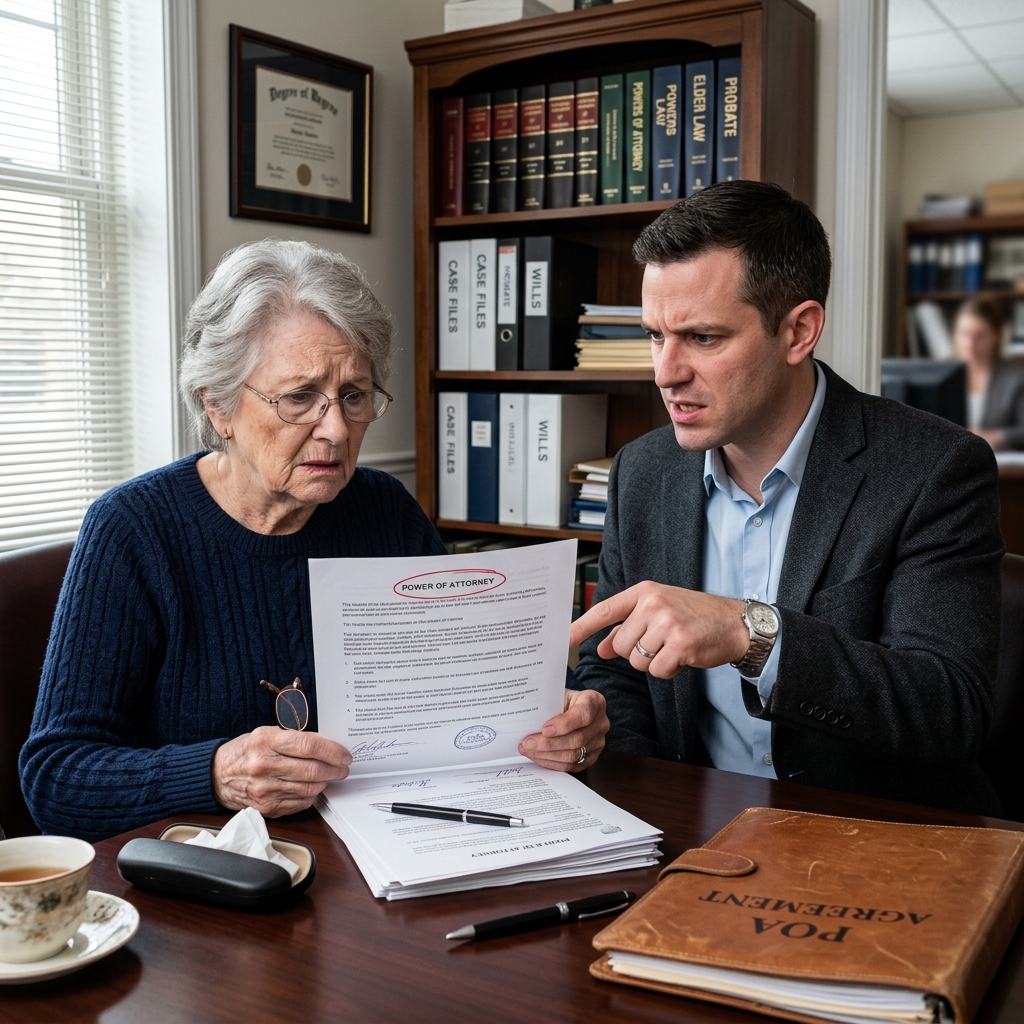
Power of attorney is a powerful estate planning tool that allows one person (the principal) to authorize another person (the agent, sometimes called attorney-in-fact) to make decisions on the principal’s behalf. Used properly, it helps families manage finances and health care when someone becomes ill, disabled, or unable to handle complex decisions. Used improperly, it can become a vehicle for serious financial exploitation and loss of autonomy, especially for older adults.
This guide explains what power of attorney abuse is, how to recognize early warning signs, practical steps to prevent misuse, and what you can do if you suspect an agent is violating their legal duties. The focus is on protecting vulnerable adults and their assets while preserving the legitimate benefits of a well-drafted power of attorney.
Understanding Power of Attorney and Fiduciary Duties
A power of attorney (POA) is a legal document that grants an agent authority to act on behalf of the principal in specified areas, such as handling bank accounts, paying bills, managing real estate, or making health care decisions. The scope of authority can be narrow (limited to a particular task) or broad (general financial and legal decision-making). Because of this authority, the agent occupies a fiduciary role, meaning they must act in the principal’s best interests and within the limits of the document and applicable law.
Core fiduciary obligations typically include:
- Loyalty – placing the principal’s interests ahead of the agent’s personal interests.
- Care – managing assets prudently and keeping accurate records of transactions.
- Obedience – following the principal’s instructions and the terms of the POA document.
- Transparency – providing information or accountings when required by law or ordered by a court.
Abuse occurs when an agent deviates from these duties, acts outside the authority granted, or uses the principal’s assets for personal gain without valid consent.
What Constitutes Power of Attorney Abuse?
Power of attorney abuse is any misuse of authority where the agent acts contrary to the principal’s interests or instructions. This frequently involves financial misconduct, but can also include improper health care decisions or exploitation of the principal’s social isolation. Typical abusive behaviors include:
- Using the principal’s funds to pay the agent’s personal expenses.
- Transferring property or accounts to the agent or their relatives without genuine consent.
- Refusing to pay the principal’s necessary expenses (such as housing or care) despite available resources.
- Making decisions or signing contracts without consulting the principal when the principal has capacity to decide.
- Concealing financial records or preventing family from learning about major transactions.
In legal terms, misuse of power of attorney can amount to conversion
Common Warning Signs of Power of Attorney Abuse
Abuse often unfolds gradually and may be hidden behind complex financial arrangements or emotional manipulation. Recognizing early red flags allows families and professionals to intervene before substantial losses occur. Warning signs can emerge in three main areas: finances, property and documents, and patterns of control or isolation.
Financial Irregularities
- Unexplained withdrawals or transfers from bank or investment accounts.
- Missing money or a sudden decline in account balances without a clear reason.
- Bills going unpaid, utilities being disconnected, or care providers complaining of nonpayment, even though the principal has sufficient funds.
- Unusual loans, gifts, or purchases that appear to benefit the agent rather than the principal.
- Erratic banking activity, such as frequent ATM withdrawals or transfers inconsistent with past patterns.
Property and Legal Document Concerns
- New deeds, title changes, or account ownership changes placing assets in the agent’s name or joint ownership without explanation.
- Sudden changes to wills, trusts, or beneficiary designations, especially if they favor the agent or exclude long-standing heirs.
- Documents or medical records suggesting the principal lacked capacity at the time the POA was signed.
- Pressure on the principal to sign unfamiliar or unexplained legal forms or financial contracts.
Control, Isolation, and Living Conditions
- The agent becomes secretive, refuses to share basic financial information, or insists on making decisions alone.
- Family and friends suddenly lose access to the principal, or visits are tightly controlled by the agent.
- The principal appears fearful, confused about their finances, or uncertain who is in charge.
- The senior’s home or personal appearance deteriorates, even though resources are available to cover adequate care and amenities.
- The principal is placed in a lower-quality facility than they can reasonably afford, or is forced to sell property under questionable circumstances.
Any combination of these warning signs warrants closer examination of the POA and the agent’s activities.
How Abuse Typically Occurs: Key Risk Factors
While each case is unique, certain patterns recur in power of attorney abuse scenarios. Being aware of these risk factors can help families structure their planning more safely.
| Risk Factor | How It Contributes to Abuse |
|---|---|
| Limited oversight | An agent may control all accounts and decisions with little independent review, making it easier to hide questionable transactions. |
| Social isolation | When a principal has minimal contact with others, the agent can dominate communications and suppress complaints. |
| Cognitive decline | Memory problems or dementia reduce the principal’s ability to monitor their own finances or detect exploitation. |
| Broad, unrestricted POA | General powers with gifting authority and no checks can enable self-dealing by unscrupulous agents. |
| Family conflict | Disputes among relatives may create incentives for one person to secure financial advantage via the POA. |
Documenting Suspected Abuse: First Practical Steps
If you suspect that an agent is misusing a power of attorney, quick and careful documentation is essential. Courts and protective agencies rely heavily on records to determine whether a fiduciary breach has occurred.
Preserve Financial and Legal Records
- Collect bank statements, canceled checks, wire transfer records, and credit card statements covering the relevant period.
- Obtain copies of deeds, titles, beneficiary designation forms, and any recent changes to estate planning documents.
- Keep emails, text messages, and written notes concerning major financial decisions or disagreements.
- Secure medical records or capacity evaluations if mental status at the time of signing the POA is in question.
Track Behavioral Changes
- Make a contemporaneous log of dates when the principal became more isolated or when family access changed.
- Note occasions where the agent refused to provide information or discouraged the principal from speaking independently.
- Record observations about living conditions, missed bill payments, or unexplained moves or facility changes.
Accurate, organized documentation strengthens any future legal or protective action and can help professionals quickly assess the situation.
Legal and Protective Options When Abuse Is Suspected
Once you have preliminary evidence of possible abuse, engaging with legal and protective systems is the next step. Depending on the principal’s capacity and the severity of harm, options may include revoking the POA, seeking guardianship, demanding an accounting, or pursuing civil or criminal remedies.
Consult an Experienced Attorney
Legal advice is critical in power of attorney abuse cases. An attorney can review the POA document, evaluate whether the agent exceeded their authority, and recommend appropriate actions. Common legal responses include:
- Demanding a formal accounting of all transactions conducted under the POA.
- Petitioning the court to suspend or revoke the agent’s authority.
- Filing a civil lawsuit for breach of fiduciary duty, conversion, or fraud to recover misused assets.
- Requesting appointment of a guardian or conservator if the principal is incapacitated and needs ongoing protection.
Engage Adult Protective Services and Law Enforcement
Financial exploitation of older adults is widely recognized as a form of elder abuse. Many jurisdictions have specialized units or hotlines for reporting suspected exploitation.
- Contact your local Adult Protective Services agency to report concerns and request an investigation.
- File a report with the police department where the suspected crime occurred if you believe theft or fraud has taken place.
- In some states, specific departments on aging or elder justice programs provide additional resources and guidance.
These agencies can help gather evidence, coordinate with prosecutors, and implement safety measures for the principal.
Preventing Power of Attorney Abuse Before It Starts
Although no plan can eliminate risk entirely, careful design of your power of attorney and thoughtful selection of agents can significantly reduce the likelihood of abuse. Prevention should be considered an integral part of estate planning.
Choose Agents With Proven Integrity
- Select individuals who have a demonstrated history of honesty, reliability, and sound judgment.
- Consider whether the prospective agent has any financial pressures or conflicts of interest that could tempt misuse.
- Discuss expectations openly, including the duty to keep records and share information with designated family members or professionals.
Limit and Structure the Authority
- Use limited powers where appropriate, authorizing only specific tasks (e.g., selling a particular property) rather than broad control.
- Think carefully before granting unrestricted gifting authority; consider limiting gift size or requiring a co-agent’s signature for large transfers.
- Establish oversight mechanisms, such as requiring periodic accountings to a trusted third party or permitting another family member to review statements.
Update Documents and Communicate Plans
- Review powers of attorney regularly to ensure they still reflect your wishes and your trust in the chosen agent.
- Inform key family members or advisors of who your agent is and the general scope of their authority, so that sudden unexplained changes raise questions.
- Document your financial and personal care preferences clearly, so that deviations from those preferences are easier to recognize and challenge.
Proactive planning not only reduces the risk of exploitation but also gives responsible agents clearer guidance and protection when performing their duties.
Frequently Asked Questions About Power of Attorney Abuse
How is power of attorney abuse different from ordinary family disputes?
Family members may disagree about how money should be spent or how care should be arranged. Power of attorney abuse goes beyond disagreement: it involves an agent using legal authority to act outside their powers or contrary to the principal’s interests, often for personal gain. Evidence of unauthorized transfers, concealment of records, or ignoring the principal’s known wishes are hallmarks of abuse rather than mere conflict.
Can an agent be sued for misusing a power of attorney?
Yes. The person serving as agent can typically be sued for breach of fiduciary duty or related claims if they misuse their authority. Courts may remove the agent, appoint a replacement decision-maker, and order repayment of misappropriated funds or property.
What if the principal is no longer mentally capable of revoking the power of attorney?
If the principal lacks capacity, concerned relatives or professionals can usually petition a court to appoint a guardian or conservator. The court can then revoke or limit the agent’s authority and place protective measures around the principal’s finances and care.
Is every unusual transaction evidence of abuse?
Not necessarily. Sometimes large transfers or changes to estate plans reflect the principal’s genuine preferences, such as charitable giving or helping a particular family member. The key questions are whether the transaction aligns with the principal’s documented wishes, whether the agent had proper authority, and whether the principal understood and consented to the decision. A legal review of the records and circumstances is often needed to distinguish legitimate actions from exploitation.
Where can families go for help in suspected elder financial exploitation?
In addition to consulting with a private attorney, families can contact Adult Protective Services, local law enforcement, and state or national elder justice resources. For example, professional organizations such as the National Adult Protective Services Association highlight best practices for investigating POA-related scams and coordinating with prosecutors to seek restitution.
References
- Identifying and Prosecuting Power of Attorney Abuse — U.S. Department of Justice, Elder Justice Initiative. 2016-05-19. https://www.justice.gov/elderjustice/video/identifying-and-prosecuting-power-attorney-abuse
- Senior Financial Abuse: Power of Attorney Scams — National Adult Protective Services Association (NAPSA). 2016-11-01. https://www.napsa-now.org/wp-content/uploads/2016/11/senior-scams-power-of-attorney-2016.pdf
- Power of Attorney Abuse in Ohio: Signs, Proof & Legal Options — Heban, Murphree & Lewandowski, LLC. 2023-08-01. https://www.hml-law.net/power-of-attorney-abuse/
- California Power of Attorney Fraud Lawyer — Evans Law Firm, Inc. 2022-10-10. https://www.evanslaw.com/practice-areas/financial-elder-abuse/power-of-attorney-fraud/
- Abuse of Power of Attorney: Key Things to Know — Di Pietro Partners, PLLC. 2023-06-15. https://ddpalaw.com/blog/probate/penalty-for-abuse-of-power-of-attorney/
- Best Ways to Approach Power of Attorney Abuse — Peck Ritchey, LLC. 2022-04-05. https://www.peckritchey.com/community/best-ways-to-approach-power-of-attorney-abuse/
- Power of Attorney Abuse with the Elderly — Smith Strong, PLC. 2021-09-20. https://www.smithstrong.com/library/power-of-attorney-abuse-with-the-elderly.cfm
Similar Articles








Read full bio of Sneha Tete


