
Recognizing and Avoiding Government Impersonation Scams
Learn how to spot fake calls, emails and texts from scammers posing as law enforcement or government officials and protect your money.
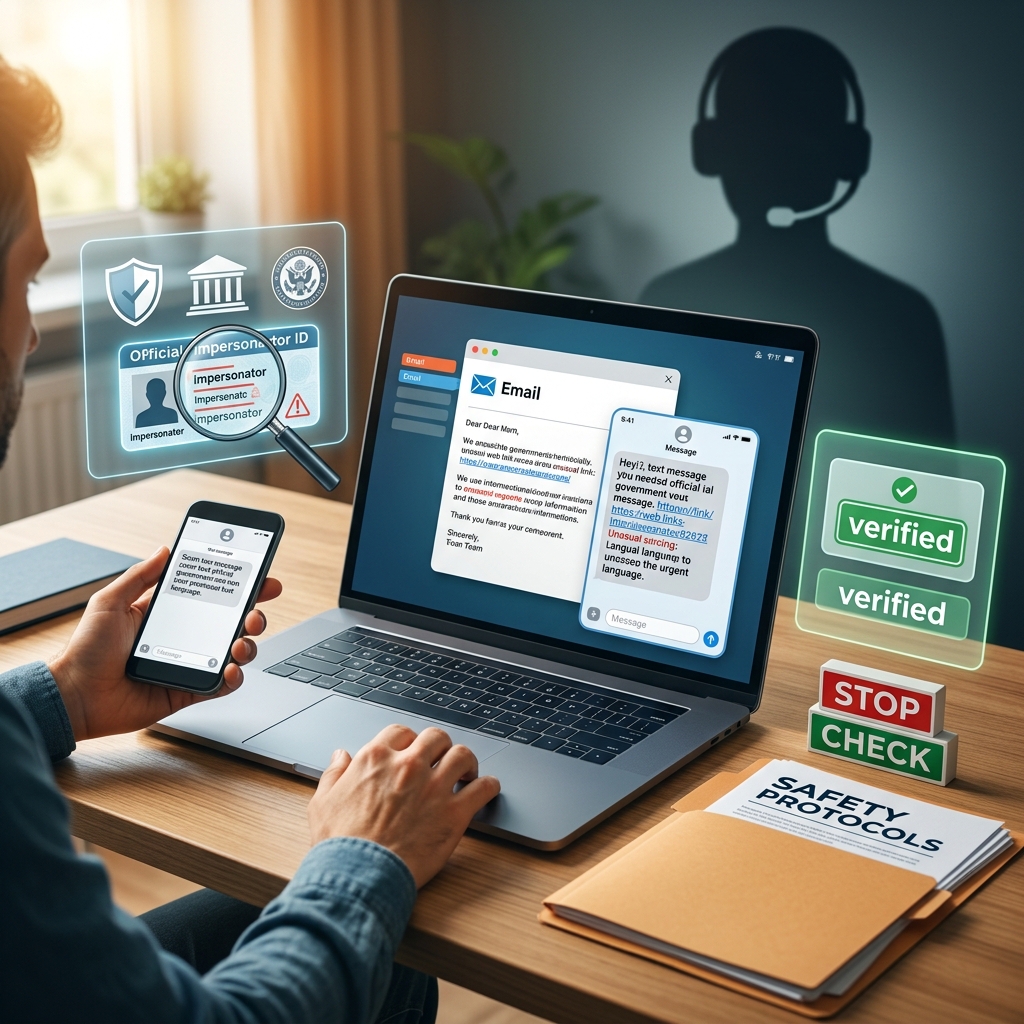
Across the United States, scammers are increasingly posing as law enforcement agents, court officials, and tax authorities to pressure people into paying fake debts or handing over sensitive personal information. These schemes often begin with a phone call, email, or text message that appears urgent and threatening. Understanding how these scams work, and how real government agencies actually communicate, is essential to protecting yourself and your family.
This guide explains common tactics used in government impersonation scams, key warning signs to watch for, and concrete steps you can take if you receive a suspicious message. It draws on guidance from federal and New Jersey authorities to provide practical, up-to-date advice.
What Are Government Impersonation Scams?
Government impersonation scams are fraudulent communications in which individuals pretend to be officials from agencies like the U.S. Department of Justice, tax authorities, courts, or law enforcement. Their goal is to pressure victims into paying non-existent debts, fees, or fines, or to collect personal data for identity theft.
These scams may take several forms:
- Debt collection calls claiming to represent a federal prosecutor or justice department office and demanding immediate payment.
- Fake tax notices sent by text or email, urging you to click a link to pay overdue state taxes or verify banking information.
- Jury duty threats that warn of arrest for failing to appear and demand payment to avoid prosecution.
- Telecommunications notices pretending to be from phone or internet companies about changed terms or unpaid bills, used to harvest passwords and account information.
Although the exact storyline varies, these scams share a core method: they exploit fear and urgency to override a victim’s normal caution. By claiming official authority, scammers hope you will comply before you have time to verify their identity.
How Real Government Agencies Communicate
A key defense against these scams is knowing how legitimate agencies work. Official guidance from justice, tax, and court authorities stresses that genuine government employees do not behave the way scammers do.
| Situation | What Real Agencies Do | What Scammers Do |
|---|---|---|
| Unpaid debts or fines | Send written notices and provide official contact information; they do not demand immediate payment by phone or email. | Call or email unexpectedly, insist you must pay at once, and threaten arrest or legal action. |
| Jury duty issues | Contact jurors to assist with scheduling or service; they do not charge money to avoid arrest or ask for bank or card numbers. | Claim you missed jury duty and must pay a fine immediately via wire transfer or app to avoid jail. |
| Tax communication | Use secure channels and official mail; may direct you to their website or phone numbers published by the agency. | Send texts or emails with links asking you to verify bank details or check refunds, often from unfamiliar numbers. |
In particular, authorities emphasize that legitimate agents:
- Do not threaten arrest or prosecution over the phone or in unsolicited emails.
- Do not request payment through money-transfer apps, gift cards, or pre-paid debit cards.
- Do not ask for confidential identifiers such as full Social Security numbers, bank accounts, or credit card numbers in random calls or texts.
If someone contacting you claims to be from a government agency but uses any of these tactics, you should assume it may be a scam until you have independently verified the communication through official channels.
Common Tactics Used in Phone and Email Scams
Although scammers constantly adjust their approaches, several techniques appear over and over in fraud alerts from law enforcement and consumer protection agencies.
1. Urgent Threats and Intimidation
Many scams rely on fear. Callers may claim you will be arrested, your bank accounts frozen, or your license revoked if you do not pay immediately. In jury duty scams, for example, victims are told they face arrest for missing a court appearance unless they send money at once.
- Use harsh or authoritative language.
- Discourage you from hanging up or calling anyone else.
- Insist that the situation is confidential and must be handled privately.
Legitimate officials typically encourage questions and provide ways to verify information. If a caller tries to shut down your ability to check their story, that is a serious warning sign.
2. Demands for Immediate Payment
Scammers often insist you pay a supposed fine or debt right away, without any written documentation, using methods that are difficult to trace or reverse.
Common payment methods requested include:
- Wire transfers or cash transfers.
- Purchase of gift cards and reading the numbers over the phone.
- Use of money-transfer apps, such as popular peer-to-peer payment services.
Tax and court authorities explicitly warn that any communication demanding payment via gift cards or similar instruments is a strong indicator of fraud. Genuine agencies use established billing and payment systems and allow time to respond.
3. Requests for Sensitive Personal Information
Some scammers focus less on immediate payment and more on identity theft. They may ask for information that could be used to open accounts or access existing ones, such as:
- Social Security numbers.
- Bank account or credit card numbers.
- Driver’s license or passport numbers.
Authorities note that legitimate government communications do not seek these details through unsolicited calls, texts, or emails, beyond limited information like date of birth and address for juror verification. Any unexpected request for full personal identifiers should be treated with suspicion.
4. Fake Links and Look-Alike Websites
In text and email scams, perpetrators frequently include links to websites that closely resemble official pages but contain subtle differences, such as misspellings or unusual domain endings.
- Links may promise account credits, refunds, or urgent notifications about service changes.
- The site may ask you to log in with existing passwords or enter banking details.
- Clicking may install malicious software or send your data directly to scammers.
Telecommunications and tax authorities both warn never to click on links in suspicious messages, and instead advise accessing accounts only through known apps or official websites you navigate to yourself.
How to Protect Yourself from Phone, Email, and Text Scams
Preventing fraud starts with cautious habits. State and federal agencies offer several practical steps you can take to reduce your risk.
Key Protective Measures
- Do not share personal information with unexpected callers or send it in response to unsolicited texts or emails.
- Do not click on links in suspicious messages, even if they appear to come from a government or major company.
- Use official contact channels listed on government websites to verify any communication before acting.
- Enable two-step verification on important accounts so that stolen passwords alone cannot grant access.
- Block and report numbers or addresses used in scam attempts, after saving any evidence you may need.
These habits make it much harder for scammers to succeed, even if they obtain your phone number or email address from data breaches or other sources.
Verifying Suspicious Communications
If you receive a call or message that sounds threatening or unusual, you should verify it before taking any action:
- End the conversation politely, especially if the caller refuses to give you time to check the information.
- Look up the official website of the agency or company named in the call using a search engine or known address, not the link provided by the caller.
- Call or email using contact details found on that official site to ask whether they have tried to reach you.
- Compare any written notice you receive with mailing addresses and formats listed by the agency, and contact them if there are discrepancies.
Consumer affairs offices emphasize that you should never rely on a phone number or email address given by the suspicious message itself, as these are easily controlled by the scammer.
Reporting Scams and Seeking Help
If you believe you have been targeted by a government impersonation scam, or if you have already provided money or data, reporting the incident can help protect you and others.
Who to Contact
- Local law enforcement for immediate assistance, especially if you feel at risk.
- Relevant government agency (such as a tax division, court office, or consumer affairs department) using official numbers published on their website.
- Federal Trade Commission to report fraud and phishing attempts through its online reporting system, which helps track nationwide patterns.
Some organizations also maintain dedicated email addresses or hotlines for reporting scam texts and calls. For example, consumer groups may invite you to forward suspicious messages for analysis and follow-up.
Steps After You Have Shared Information or Paid
If you realize you have already given information or made a payment to a scammer, consider taking these actions as quickly as possible:
- Contact your bank or card issuer to report unauthorized transactions and request account monitoring or changes.
- Change passwords on any accounts that may have been exposed, and enable multi-factor authentication where available.
- Place alerts or security freezes with credit reporting agencies if you believe your identity is at risk.
- File a report with law enforcement and consumer protection authorities, providing any emails, texts, or call logs as evidence.
While recovering funds from scams is often difficult, prompt action can limit further harm and assist investigators in identifying patterns that may prevent additional victims.
Frequently Asked Questions
How can I tell if a call claiming to be from a prosecutor or law enforcement is fake?
Calls from supposed prosecutors or law enforcement that threaten arrest over unpaid debts or fines, demand immediate payment, or ask for sensitive personal information are almost certainly fraudulent. Real officials do not collect debts in this way and encourage you to verify their identity through official office numbers.
Is it safe to respond to text messages about tax refunds or credits?
Tax authorities warn against responding to unsolicited texts that claim to be from their office, especially if they contain links asking you to verify bank details or check refunds. Instead, you should access your tax account directly through the agency’s website or contact them using published numbers.
Can courts ask for payment over the phone to resolve jury duty issues?
Court systems may contact jurors by phone, text, or email to assist with scheduling, but they do not request payment to avoid arrest or seek confidential identifiers like bank account numbers. Any such demand is a strong indicator of a jury duty scam.
What should I do with a suspicious text message?
You should not reply or click on links in suspicious texts. Consumer protection guidance recommends forwarding spam texts to your wireless carrier’s reporting number, saving a screenshot, and then blocking the sender, as well as reporting the message to federal fraud reporting systems.
Why do scammers sometimes know my Social Security number or other details?
Some scammers may have obtained personal information through prior data breaches or illegal trading of records, which they use to appear more credible. Even if a caller knows some of your details, you should still verify their identity through official contact channels before providing any further information or payments.
References
- Email & Telephone Scam Alert — U.S. Attorney’s Office, District of New Jersey. 2014-11-18. https://www.justice.gov/usao-nj/email-telephone-scam-alert
- Scam alert: protect your phone — New Jersey Education Association. 2022-08-10. https://www.njea.org/scam-alert-protect-your-phone/
- FRAUD ALERT: TELECOMMUNICATIONS SCAM — Middlesex County, New Jersey. 2023-03-09. https://www.middlesexcountynj.gov/Home/Components/News/News/1896/
- Scam Alert — NJ Division of Taxation, Office of Criminal Investigation. 2023-09-01. https://www.nj.gov/treasury/taxation/scamalert.shtml
- Protect Yourself Against Jury Duty Scams — New Jersey Courts. 2022-05-12. https://www.njcourts.gov/jurors/protect-yourself-against-jury-duty-scams
- Fighting Fraud — New Jersey Division of Consumer Affairs. 2021-11-01. https://www.njconsumeraffairs.gov/fraud/pages/default.aspx
Similar Articles








Read full bio of medha deb




