
Recognizing and Avoiding Email “Stranded” Scams
Learn how email stranded scams work, why they’re so effective, and the practical steps you can take to protect yourself and your loved ones.
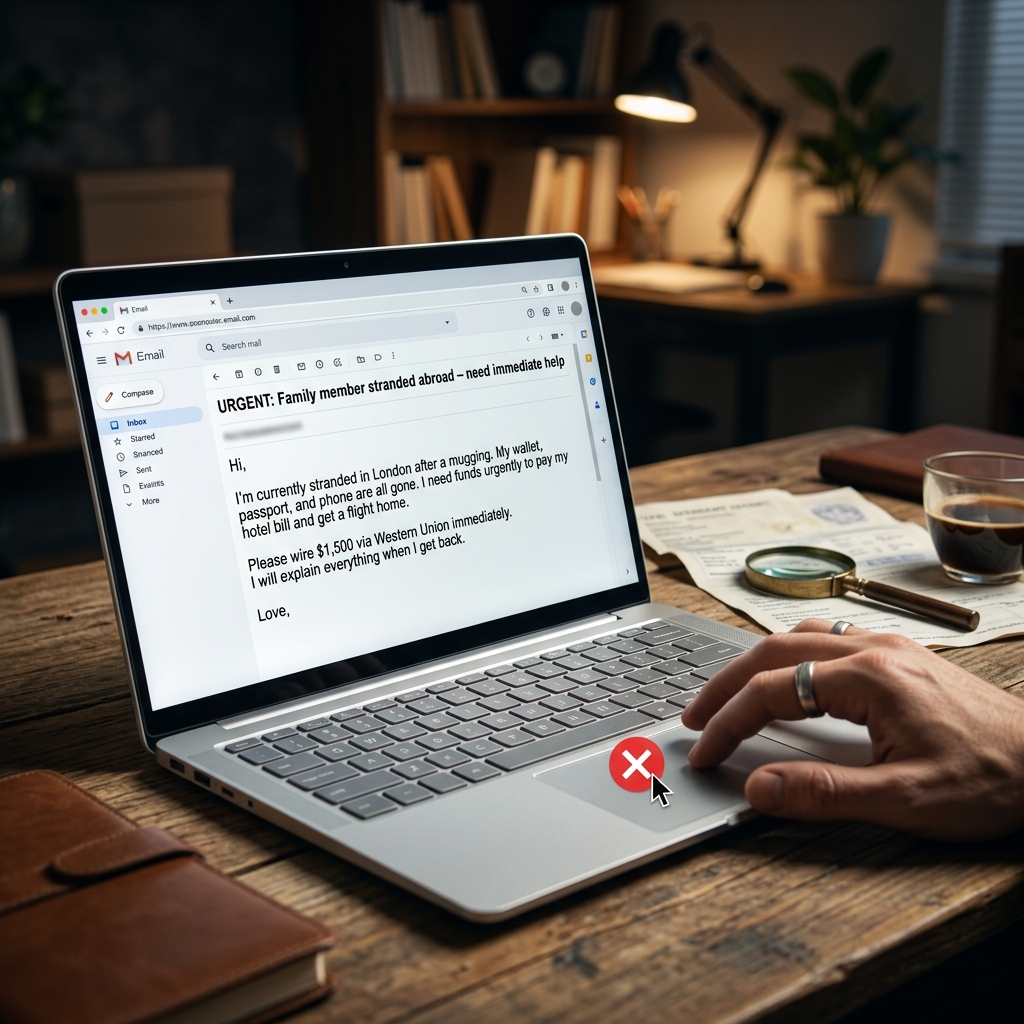
“Stranded” email scams are a striking example of how cybercriminals exploit trust and urgency to steal money and personal information. These schemes typically involve a message that appears to come from someone you know or from a trusted organization, claiming the sender is in immediate danger or trapped abroad and needs money right away. While the basic story may sound dramatic, the techniques behind it are subtle, carefully designed, and increasingly common.
This article explains how these scams work, why victims fall for them, and what you can do to recognize, avoid, and report them. It draws on guidance from law enforcement and cybersecurity authorities to help you respond calmly and safely when a suspicious plea arrives in your inbox.
What Is an Email “Stranded” Scam?
An email “stranded” scam is a form of phishing and social engineering in which a scammer pretends to be someone in distress who urgently needs your financial help. The person may claim to have been robbed, to have lost their passport, or to be stuck in a foreign country with no access to funds. The scammer may impersonate:
- A friend or relative whose email account has been compromised
- A business contact or colleague
- A law enforcement or government official contacting you on someone else’s behalf
In many cases, the scammer uses a real email account that has been hacked, making the message appear genuine. In others, they create a look‑alike email address or domain that closely matches the victim’s usual contact.
How These Scams Typically Unfold
While details vary, most stranded email scams follow a recognizable pattern. Understanding these stages helps you identify suspicious messages early.
1. Initial Contact and Emotional Hook
The first email usually arrives unexpectedly and contains a dramatic story designed to trigger an immediate emotional response. Common themes include:
- Robbed while traveling and now without money, phone, or ID
- Serious medical emergency abroad requiring urgent payment
- Detention or legal trouble in a foreign country
The message may be written in a rushed, panicked tone. It often emphasizes that there is no time to verify the story or contact others, aiming to push you straight into action.
2. Request for Immediate Payment
Once your sympathy is engaged, the email usually pivots quickly to a specific request for money. Typical instructions include:
- Sending funds via wire transfer or money service (e.g., international remittance)
- Purchasing gift cards and emailing the codes
- Transferring cryptocurrency to a wallet address
Law enforcement agencies consistently warn that scammers rely heavily on payment methods that are fast, difficult to reverse, and often anonymous. Any urgent demand for such payments from an email should raise suspicion.
3. Pressure to Bypass Normal Checks
To prevent you from thinking too carefully, scammers apply psychological pressure. Common tactics include:
- Insisting that “no one else can help” and you are the only one they trust
- Claiming that phone access is impossible, so you cannot call to verify
- Warning that delay could lead to arrest, harm, or another severe consequence
This pressure is deliberate: it aims to short‑circuit your normal skepticism and get you to act purely on emotion.
Key Warning Signs to Watch For
Although stranded scam emails are written to feel personal and urgent, they often contain technical or logical clues that something is wrong. Here are the most important red flags.
Suspicious Technical Details
- Unusual sender address: The email may come from an address that looks similar to your contact’s but includes extra characters, misspelled names, or a different domain.
- Reply‑to mismatch: The visible “From” address may be familiar, but the reply‑to field leads somewhere else.
- Inconsistent history: The email appears in a conversation thread, but previous messages were written in a different style or language.
Content and Tone Inconsistencies
- Uncharacteristic writing style: Grammar, punctuation, or vocabulary seems unlike your friend or colleague.
- Generic personal details: The message avoids specific names, locations, or past experiences you share.
- Overly dramatic language: Heavy use of fear and urgency without clear, verifiable facts.
Payment Requests That Break Normal Patterns
- Asking for gift cards, cryptocurrency, or wire transfers despite never using those payment methods before
- Insisting that you do not contact family, employers, or authorities
- Refusing video calls or voice calls even when they claim to have access to internet
According to official guidance, any unsolicited request for payment via untraceable or hard‑to‑reverse methods should be treated as a major warning sign.
Why People Fall for Stranded Scams
These scams are effective not because people are careless, but because they target normal human reactions. Understanding the psychology involved can help you stay calm if you receive such a message.
| Psychological Trigger | How Scammers Exploit It |
|---|---|
| Empathy and concern | They present a story of danger or hardship, trusting that you will want to help quickly. |
| Sense of responsibility | By saying you are the “only one” they can reach, they create pressure and guilt. |
| Fear of consequences | References to legal trouble, hospital bills, or physical harm encourage rushed decisions. |
| Trust in familiar names | Using compromised accounts or impersonating known organizations lowers your guard. |
Recognizing these triggers does not mean ignoring genuine emergencies. Rather, it means verifying the situation using independent channels before taking action.
Practical Steps to Stay Safe
When you receive an email that appears to be a stranded scam, the most important step is to slow down. Do not click links, do not send money, and do not provide personal data until you have verified what is happening.
1. Verify Using Independent Contact Methods
- Call or message the person using a phone number or messaging app you already trust.
- If they claim to be abroad, reach out to mutual contacts or family members to confirm the situation.
- For emails claiming to be from law enforcement or government, contact the agency directly using official phone numbers or websites, not the contact details in the email.
If the person cannot be reached through any other channel, treat the email with caution and proceed to further checks.
2. Inspect the Email Carefully
- Check the full sender address and reply‑to field.
- Look at email headers if possible, which can reveal unusual sending servers or domains.
- Search for exact phrases from the email online; scammers often reuse text across many victims.
3. Refuse Unusual Payment Requests
Law enforcement agencies emphasize that legitimate authorities will not demand payment through gift cards, cryptocurrency, or similar methods to resolve emergencies. To protect yourself:
- Decline any request to pay with gift cards or digital codes.
- Do not send cryptocurrency or use a wallet address provided by email.
- Avoid wire transfers unless you can confirm the recipient through independent means.
4. Protect Your Own Accounts
- Change passwords immediately if you suspect any of your email or social media accounts may be compromised.
- Enable multi‑factor authentication on critical accounts such as email, banking, and cloud storage.
- Review recent login history where available and sign out of sessions you do not recognize.
Reporting Stranded Scams to Authorities
Reporting suspicious emails not only protects you but also helps law enforcement track patterns and potentially prevent others from becoming victims. In the United States, the FBI’s Internet Crime Complaint Center (IC3) is the central point for reporting online fraud.
How to File a Report
- Go to the official IC3 website (ic3.gov) using your browser; do not follow links in the suspicious email.
- Gather relevant details before starting your report:
- Sender’s email address and any associated names
- Dates and times of messages or financial transactions
- Amount requested and any payment instructions received
- Copies or screenshots of emails, texts, and attachments
The FBI recommends providing as much detail as possible, including the methods of communication used and any accounts or institutions involved in the attempted fraud.
Victims Who Have Already Sent Money
If you realized too late that the email was fraudulent and have already sent funds:
- Contact your bank or payment provider immediately to attempt to stop or reverse the transaction.
- File a report with IC3, and, if necessary, contact local law enforcement to document the incident.
- Monitor your accounts for unusual activity and consider placing alerts on significant transactions.
Authorities also encourage older adults who need help reporting internet crime to use specialized hotlines and support resources.
How These Scams Relate to Other Online Fraud
Stranded email scams are part of a broader ecosystem of online fraud that includes business email compromise, romance scams, and impersonation of officials. Criminals often reuse tactics across these categories, making it useful to understand the overlaps.
Impersonation of Law Enforcement and Government Agencies
In some cases, scammers pretend to be representatives of law enforcement, including federal agencies, claiming to help a stranded victim or to resolve an investigation if you pay fees or fines. Official bulletins stress that legitimate agencies will not contact individuals to demand payment, nor will they ask for sensitive personal data or funds via informal channels like email, social media, or messaging apps.
To reduce confusion:
- Remember that genuine agencies use established processes, not sudden threats.
- Verify any unexpected contact by calling official phone numbers listed on government websites.
- Be skeptical of anyone who claims they can recover lost money in exchange for a fee.
Relationship to Phishing and Social Engineering
Stranded scams are a specific narrative applied to broader techniques known as phishing and social engineering. Phishing refers to fraudulent attempts to obtain sensitive information or money by disguising oneself as a trustworthy entity, typically via email or text. Social engineering involves manipulating human psychology rather than exploiting technical vulnerabilities.
Awareness programs run by government, academic, and industry organizations emphasize that training individuals to recognize these methods is as important as installing technical security measures.
Preventive Measures for Individuals and Families
Good security habits reduce the chance that your own accounts will be hijacked and used in a stranded scam, and they help you respond effectively if someone else’s account is compromised.
Strengthen Your Email Security
- Use long, unique passwords for each major account.
- Enable multi‑factor authentication wherever possible.
- Regularly review account recovery options to ensure phone numbers and backup email addresses are current.
Discuss Emergency Verification Plans
Families and close friends can reduce confusion by agreeing on how to handle real emergencies:
- Decide in advance which phone numbers or apps will be used for urgent contact.
- Agree that no one will ask for gift cards or cryptocurrency by email as a way to solve emergencies.
- Encourage relatives, particularly older adults, to pause and verify before sending any money based on an email or text.
Stay Informed About Emerging Scams
- Follow official announcements from law enforcement and consumer protection agencies.
- Participate in workplace or community training on cybersecurity and fraud awareness when available.
- Share credible information with family members who may not be as comfortable online.
FAQs About Email “Stranded” Scams
1. Are all emergency emails scams?
No. Genuine emergencies do occur, and people sometimes turn to email when other communication channels fail. The key is to verify the situation using independent methods such as phone calls, known social media accounts, or contact with mutual friends before sending money or sensitive information.
2. What should I do if I’m unsure whether an email is a scam?
If you are uncertain, do not send money, do not click links, and do not provide personal data. Instead:
- Contact the person through a channel you already trust.
- Ask specific questions that only the real person would easily answer.
- Consider consulting local law enforcement or reporting the email to IC3 if it contains suspicious elements.
3. Can scammers really hack my friend’s email?
Yes. Email account compromise is common and can result from weak passwords, reused credentials, or malware. Once inside an account, scammers can send messages that appear completely legitimate to all contacts. That is why verifying through separate channels is essential.
4. Will the FBI or other agencies email me to demand payment?
Authoritative guidance states that the FBI and similar agencies will not call or email individuals to demand payment or ask for gift cards, cryptocurrency, or other informal methods of transferring money. Any such request should be treated as fraudulent and reported.
5. Is it worth reporting if I did not lose money?
Yes. Reporting attempted scams helps authorities understand trends, track criminal activity, and launch awareness campaigns that may protect others. Even if you did not suffer financial loss, a detailed report can be valuable to investigators.
References
- FBI Warns of Scammers Impersonating the IC3 — Federal Bureau of Investigation. 2025-04-18. https://www.ic3.gov/PSA/2025/PSA250418
- Reporting Phishing Emails and Texts — FBI Internet Crime Complaint Center (IC3) via social media advisory. 2014-12-22. https://www.facebook.com/FBIWFO/posts/789487177477702
- Spotting and Reporting Scams Online — FBI Public Awareness Content. 2024-08-15. https://www.instagram.com/reel/DYkdIaVFBld/
- Scam Alert: The FBI Will Never Call You to Ask for Money — FBI San Juan Field Office. 2016-01-26. https://www.facebook.com/FBISanJuan/posts/912499038508208
Similar Articles








Read full bio of medha deb




