
How to Recognize and Avoid Social Security Scams
Learn how Social Security scams work, what they sound like, and how to protect your identity and benefits from fraudsters.
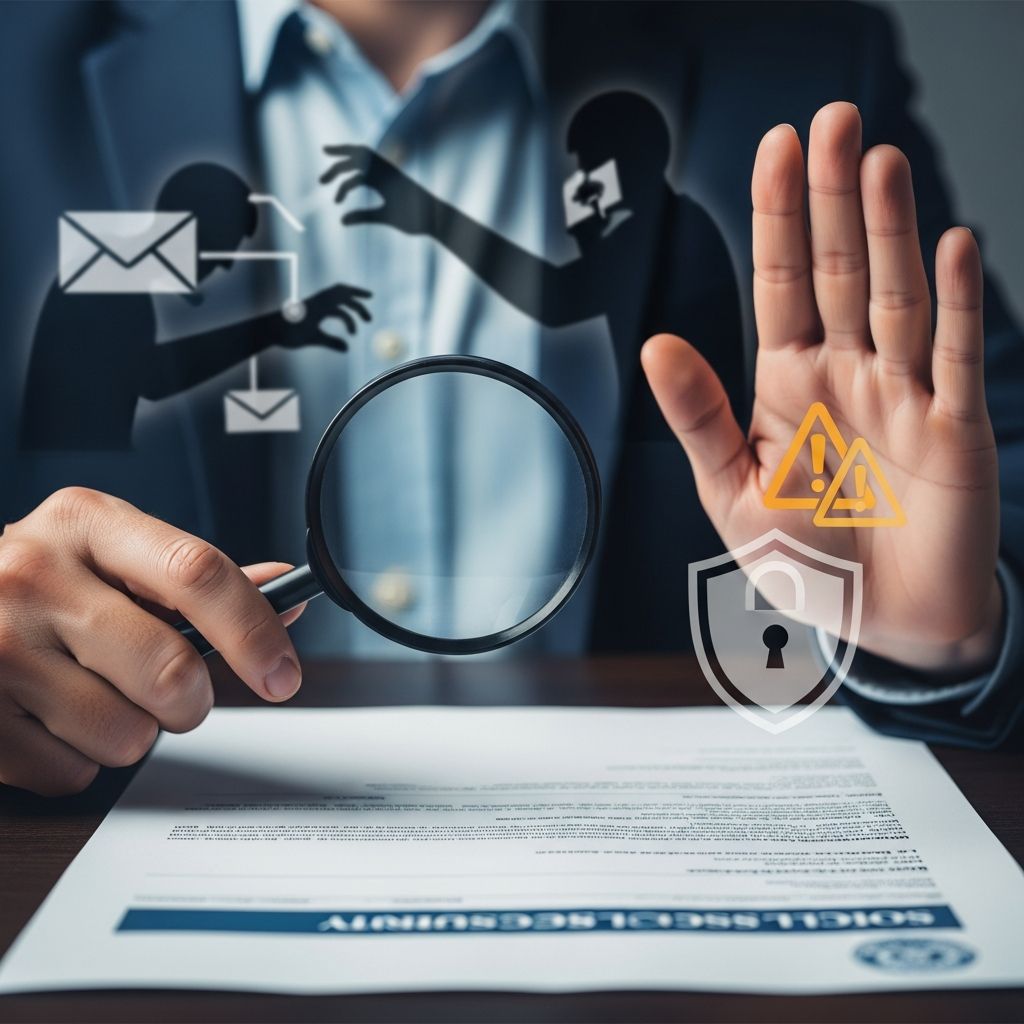
Scammers increasingly pretend to be from the Social Security Administration (SSA) to steal money and personal information. These schemes are sophisticated, often using spoofed phone numbers, fake documents, and high-pressure tactics to trick people of all ages, especially older adults. Understanding how these scams sound and operate is the first step to protecting your Social Security number (SSN), your benefits, and your identity.
Why Social Security Scams Are So Dangerous
Your Social Security number is a key that can unlock many parts of your financial life. Once criminals get it, they may open credit accounts, commit tax fraud, or claim benefits in your name. Repairing this damage can take months or years and may cost significant time and money.
Scammers know people rely on Social Security for critical income, so they use fear and urgency to push victims into quick decisions. By learning the patterns of these scams, you can pause, verify, and avoid becoming a target.
How Social Security Scams Usually Start
While each scammer may use different words, many Social Security scams follow a predictable pattern.
- Unexpected contact: You receive a surprise phone call, text, email, direct message, or letter claiming to be from SSA, law enforcement, or another government office.
- Threat or promise: The message says there is a serious problem or an exciting benefit related to your SSN or Social Security account.
- Urgent demand: You are pushed to act immediately—often told not to hang up or talk to anyone else.
- Request for information or payment: The scammer asks for personal details, bank numbers, or payment via unusual methods such as gift cards or cryptocurrency.
Any combination of surprise contact, pressure, and sensitive requests is a major warning sign.
Common Phrases Social Security Scammers Use
Even when the exact wording changes, many scams reuse the same basic messages to scare or lure victims.
| Typical Scam Message | What the Scammer Wants | Why It's Fake |
|---|---|---|
| “Your Social Security number has been suspended.” | To get your SSN and other personal data. | SSA does not suspend or deactivate SSNs. |
| “You owe the government money and must pay today.” | Immediate payment, often by gift card or wire transfer. | Real agencies do not demand instant payment by these methods. |
| “Your benefits will stop unless you verify your number.” | To obtain your SSN, bank details, or login credentials. | SSA will not threaten benefits over the phone or text like this. |
| “We can increase your benefit if you provide more information.” | To collect sensitive financial and identity data. | Benefit changes are not handled through unsolicited calls, texts, or DMs. |
| “Press 1 to speak to an officer or you will be arrested.” | To keep you on the phone and pressure you to pay. | SSA and legitimate law enforcement do not threaten arrest through robocalls. |
Major Types of Social Security Scams
Scammers use multiple channels to reach potential victims. Knowing the forms these scams take can help you respond safely.
1. Phone and Robocall Imposter Scams
Phone scams remain one of the most common forms of Social Security fraud.
- Calls may display a spoofed number that appears to be SSA, a local police department, or another agency.
- Automated messages may tell you to “press 1” to speak with an agent, or claim that legal action is underway.
- Live callers may use official-sounding titles and fake badge numbers to seem credible.
Legitimate SSA employees do not threaten arrest, demand secrecy, or insist on immediate payment to fix a problem.
2. Phishing Emails and Fake Letters
Email and letter scams try to look official enough to convince you to click or respond.
- Messages may use SSA logos, seals, or letterhead but come from non-government email domains (not ending in .gov).
- Links may lead to websites that imitate ssa.gov but collect your login information or SSN.
- Letters may claim you need to “update your record” or “confirm benefits” by calling a non-SSA phone number.
Always verify contact information using SSA's official website or a trusted directory, not from the suspicious message itself.
3. Text (SMS) and Messaging App Scams
Criminals also use text messages and instant messaging platforms to push fake alerts.
- Texts may say your SSN is locked, your benefits are on hold, or you must click a link to avoid suspension.
- Links may install malware or lead to phishing pages.
- Scammers may use social media direct messages to impersonate SSA or related programs.
SSA does not use text or social media to ask for personal or financial information or to threaten your benefits.
4. Fake SSA Websites and Online Portals
Fraudulent websites may look nearly identical to legitimate government sites but exist only to capture your information.
- Web addresses may be close to the real site but contain extra words, numbers, or unusual domain endings.
- Pages may ask you to “log in” or “verify” using your SSN, bank account, or credit card details.
- Some scams promote paid services claiming to speed up benefit approvals that are actually free through SSA.
Only enter personal information on official .gov sites that you navigate to yourself, not through unsolicited links.
5. In-Person and Hybrid Scams
Some schemes combine phone contact with in-person meetings, creating especially serious risks.
- Scammers may pose as SSA or Office of Inspector General (OIG) agents and ask to meet you to collect “fees” or “overpayments” in cash.
- You may be instructed to withdraw money and hand it over or to purchase and transfer the value of gift cards.
Real SSA and OIG personnel do not come to your home or meet you privately to collect payments in cash, gift cards, or cryptocurrency.
Key Warning Signs You're Dealing with a Scam
The Office of the Inspector General highlights specific behaviors that should immediately raise suspicion.
- Demands for payment by gift card, prepaid card, cryptocurrency, or mailed cash.
- Threats of arrest, deportation, bank account seizure, or benefit termination.
- Pressure to keep the call or request a secret from family or your bank.
- Requests for your full SSN, bank account, credit card, Medicare ID, or online login.
- Unsolicited promises to increase your benefits or fix a problem for a fee.
- Spelling mistakes, odd phrasing, or email addresses that are not from a .gov domain.
If multiple red flags appear at once, end the conversation and independently verify with SSA or another trusted source.
What SSA and OIG Will—and Will Not—Do
Understanding normal government practices makes it easier to spot fraud.
- SSA and OIG may contact you for legitimate reasons, such as about an existing claim or appointment.
- They will not:
- Threaten arrest or legal action for nonpayment over the phone.
- Demand payment using gift cards, wire transfers, internet currency, or mailed cash.
- Promise to increase your benefits in exchange for a fee.
- Ask you to confirm your full SSN or banking details through text, email, or social media.
- Request that you remain silent, secretive, or isolate yourself while you carry out their instructions.
If someone claiming to be from SSA does any of these things, assume it is a scam.
How to Respond Safely to a Suspicious Contact
You do not need to argue with scammers. A few simple steps are enough to protect yourself.
- Do not provide personal or financial information. Never confirm your SSN, bank details, or login credentials to someone who contacted you unexpectedly.
- Hang up or ignore. End suspicious calls immediately. Do not press buttons or respond to automated prompts.
- Do not click unknown links. Avoid links in emails, texts, or messages claiming to be from SSA. Navigate to official sites by typing the address yourself.
- Verify using official contact channels. If you are unsure, independently look up SSA's phone number or web address and contact them directly.
- Talk to someone you trust. Before acting on any urgent demand, consult a family member, friend, or financial professional.
If You Already Shared Information or Paid a Scammer
If you realize you have been caught in a Social Security scam, act quickly to reduce further harm.
- Contact your bank or card issuer. Ask to stop or reverse any payments if possible and flag the account for fraud monitoring.
- Monitor your credit and accounts. Watch for new credit lines, unfamiliar charges, or changes in your personal information.
- Consider fraud alerts or a credit freeze. You can place an alert or freeze with the major credit bureaus to make it harder for criminals to open new accounts.
- Change account passwords. If you entered information on a fake website, update your passwords and enable multi-factor authentication wherever possible.
How and Where to Report Social Security Scams
Reporting scams helps authorities track patterns and may prevent other people from losing money.
- Report SSA-related scams to the Office of the Inspector General (OIG). OIG collects reports of imposter calls, texts, emails, and fake documents involving SSA.
- Notify other relevant agencies if needed. Some scammers also impersonate other federal offices or the Department of Justice.
- Share information locally. Tell family, friends, and community groups so they can recognize similar schemes.
Even if you did not lose money, your report can still provide valuable data about new tactics and phone numbers used by fraudsters.
Practical Tips to Protect Your Social Security Number
Preventing fraud starts with limiting who has access to your SSN and related information.
- Keep your Social Security card secure. Do not carry it in your wallet unless absolutely necessary.
- Ask why your SSN is needed. Many businesses can identify you using alternative numbers or IDs.
- Review your statements. Check bank accounts, credit card bills, and, where applicable, your Social Security benefit statements for unusual activity.
- Use strong, unique passwords. Avoid reusing passwords for email, banking, and government portals such as online benefit accounts.
- Be selective online. Share minimal personal information on social media that criminals could use to guess security questions or impersonate you.
Frequently Asked Questions (FAQs)
Q1: Can my Social Security number really be suspended?
No. The Social Security Administration does not suspend, cancel, or deactivate Social Security numbers, even if there is suspected misuse. Any call or message claiming your number has been suspended is a scam.
Q2: Will SSA ever call me about a problem with my benefits?
SSA may contact you by phone in connection with an existing matter, but it will not threaten arrest, demand immediate payment, or ask you to provide your full SSN or bank information in response to an unexpected call.
Q3: Is it safe to pay Social Security-related fees with gift cards or cryptocurrency?
No. Government agencies do not require payment with gift cards, prepaid cards, cryptocurrency, or mailed cash. Any demand for these methods is a clear sign of fraud.
Q4: What should I do if I receive a robocall about my Social Security number?
Do not press any buttons or speak to the caller. Hang up immediately. If you are concerned, independently contact SSA using verified information, and consider reporting the scam to the Office of the Inspector General.
Q5: How can older adults and caregivers reduce scam risk?
Education and communication are critical. Discuss common Social Security scams, agree on a rule never to give personal information over the phone to unknown callers, and encourage checking with a trusted person before responding to any urgent request related to benefits.
References
- Identify the Scam — Office of the Inspector General, Social Security Administration. 2024-02-15. https://oig.ssa.gov/scam-awareness/identify-the-scam/
- Social Security Scams | Complete Safety Guide — OpenEDR. 2024-06-01. https://www.openedr.com/blog/social-security-scams/
- What Are Common Social Security Scams? A Guide for Older Adults — National Council on Aging (NCOA). 2023-11-10. https://www.ncoa.org/article/what-are-common-social-security-scams-a-guide-for-older-adults/
- Social Security Fraud: How to Detect and Report It — NortonLifeLock. 2023-05-22. https://lifelock.norton.com/learn/fraud/social-security-fraud
- Fraud Alert: Scammers Claiming to be with OVC or SSA — Office for Victims of Crime, U.S. Department of Justice. 2022-08-30. https://ovc.ojp.gov/news/announcements/fraud-alert-scammers-claiming-to-be-ovc
- Senior Scam Alert — Elder Justice Initiative, U.S. Department of Justice. 2023-02-14. https://www.justice.gov/elderjustice/senior-scam-alert
- Understanding and Avoiding Common Social Security Scams — Winder & Counsel. 2024-01-05. https://wkfirm.com/social-security-scams-and-how-to-avoid-them/
Similar Articles








Read full bio of Sneha Tete


