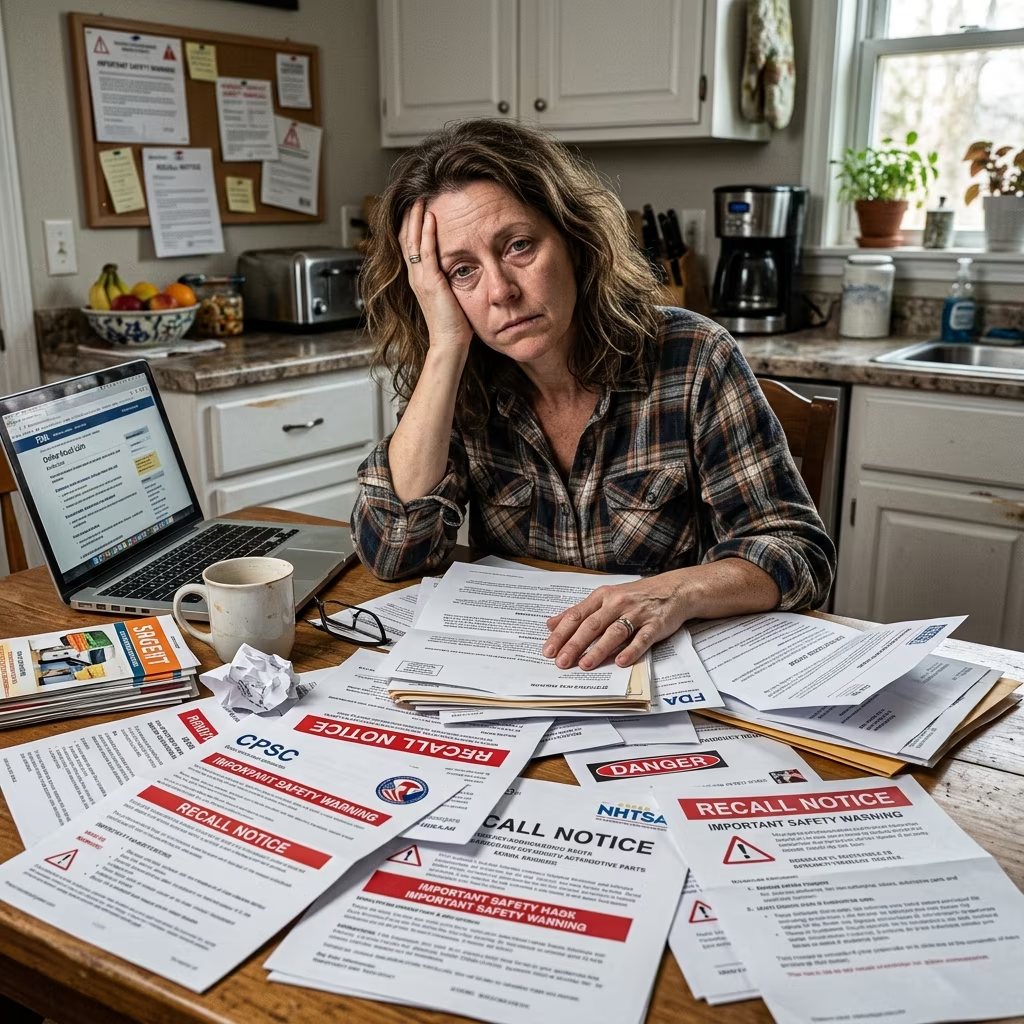
Product recalls are meant to protect the public from dangerous or defective goods. Yet the constant stream of alerts can overwhelm shoppers, turning lifesaving warnings into background noise. This growing phenomenon, often called recall fatigue, increases the chance that unsafe products remain in homes, garages and kitchens instead of being returned, repaired or discarded.
This article explores how recall fatigue develops, why it matters, and what both companies and consumers can do to ensure important safety messages are still heard.
Understanding Recall Fatigue
Recall fatigue describes a situation in which people become desensitized to frequent safety alerts, making them less likely to notice, believe or act on recall information. The concept has been discussed across industries including food, consumer products and vehicles, as recalls have become more common and more widely publicized.
In practice, recall fatigue may show up as:
- Ignoring messages about recalls or skimming them without reading details
- Assuming that most recalls are minor or irrelevant
- Feeling confused by technical language or conflicting news reports
- Delaying or skipping recommended actions such as returning, repairing or discarding products
While some experts argue that complacency rather than fatigue is the main danger, both terms describe the same core risk: when warnings become routine, people stop paying attention.
Why Product Recalls Matter
Recalls are not just administrative notices. They are formal acknowledgments that a product may be unsafe or non-compliant with laws or standards. Typical causes include safety defects, contamination, mislabeling, and regulatory violations.
| Type of Product | Common Recall Triggers | Possible Consequences |
|---|---|---|
| Food and beverages | Microbial contamination, undeclared allergens, foreign objects, mislabeling | Foodborne illness, severe allergic reactions, hospitalizations, death |
| Consumer goods (toys, appliances, electronics) | Fire hazards, choking risks, electrical shock, structural failure | Burns, injuries to children, property damage, electrocution |
| Motor vehicles | Defective air bags, braking problems, fuel leaks, steering issues | Crashes, serious injuries, fatalities, large-scale repair campaigns |
Given these potential outcomes, failing to respond to recalls because of fatigue can have serious consequences for both individuals and families.
How Recall Fatigue Develops
Recall fatigue does not appear overnight. It tends to build gradually as consumers encounter more and more alerts across different channels. Several factors contribute to the problem.
1. High Volume of Recalls
Modern supply chains are complex, and regulatory oversight has improved in many sectors. As a result, recalls are more likely to be detected, announced and widely reported. Retailers and manufacturers may issue multiple notices in a single year; news outlets and social media amplify those messages further.
When alerts become frequent, people start to treat them as routine rather than exceptional, reducing their sense of urgency.
2. Fragmented and Confusing Communication
Recall information may appear in a variety of formats:
- Press releases from companies or regulators
- News stories and online articles
- Social media posts and shares by friends
- Store signage, shelf tags or notices at checkout
Without a consistent structure, consumers may struggle to understand what a recall means, how serious it is and whether it affects products they own. Some messages focus on technical details, while others emphasize corporate reputations or legal aspects rather than practical instructions for shoppers.
3. Trust and Risk Perception
Research on food recalls shows that trust in food safety systems and institutions influences how consumers respond. When trust is high, people may assume that authorities have everything under control and therefore feel less urgency to take personal protective actions. Conversely, lower trust can increase risk perception and information seeking, but may also foster skepticism about official advice.
This dynamic feeds recall fatigue: if alerts are seen as overcautious or poorly explained, people may begin to dismiss them entirely.
4. Practical and Psychological Barriers
Responding to a recall usually requires effort. Consumers might need to:
- Locate the product and confirm specific codes or dates
- Visit a store or service center
- Arrange repairs or replacements
- Discard items without compensation in some cases
Busy schedules, transportation challenges and a perception that the risk is small can all reduce motivation. Over time, people who frequently encounter recalls but experience no immediate harm may begin to feel that responding is not worth the hassle.
Complacency vs. Fatigue: Are Consumers Really Overwhelmed?
Some analysts argue that the danger is not true “fatigue” but rather complacency—a belief that problems always affect other people, or that most recalls are minor. According to this view, the real challenge is convincing consumers that safety defects and contamination can have serious consequences, even if the odds seem low.
Regardless of the terminology, the practical effect is similar:
- Fewer people check whether recalls apply to their products
- Hazardous items remain in circulation longer than necessary
- Companies may underestimate the number of affected consumers
Distinguishing between fatigue and complacency can help regulators and businesses refine their communication strategies, but both concepts point to the need for clearer, more compelling messages.
Risks of Ignoring Recall Notices
When consumers ignore recall warnings, they may be exposed to risks that are invisible until something goes wrong. Key dangers include:
- Health risks: Eating contaminated food, or food containing undeclared allergens, can cause severe illness, hospitalizations, or in extreme cases, death.
- Injury and property damage: Defective appliances, electronics or toys can cause fires, shocks, choking incidents or structural failures.
- Vehicle safety problems: Ignoring automotive recalls can leave critical systems—air bags, brakes, steering—unrepaired, increasing the risk of crashes and injuries.
- Financial loss: Consumers may bear the cost of replacing damaged property or dealing with medical bills that could have been prevented.
From a societal perspective, widespread inaction can undermine the purpose of recall systems, which rely on both corporate responsibility and consumer participation.
How Companies and Retailers Can Reduce Recall Fatigue
Businesses and retailers have significant influence over how recall information is presented and how easy it is for customers to act. Several strategies can help reduce fatigue and increase compliance.
1. Make Messages Clear, Consistent and Action-Oriented
Recall notices should prioritize clarity over technical detail. Effective communication usually includes:
- A brief statement of the hazard (e.g., choking risk, bacterial contamination, fire hazard)
- Specific identifiers (product name, package size, lot or model numbers)
- Clear actions for consumers (stop using, return to store, schedule repair, discard)
- Contact information for questions or assistance
Consistent formatting across different recalls and channels makes it easier for consumers to recognize and process important information quickly.
2. Use Multiple Channels Strategically
Different shoppers rely on different sources of information. Companies and retailers can:
- Post in-store signage, especially near the affected products and at customer service desks
- Send direct notifications through loyalty programs, email lists, or mobile apps
- Use receipts or coupons at checkout to alert customers who previously bought recalled items
- Share concise, credible recall details through social media and company websites
Combining channels increases the chance that each affected consumer receives at least one message in a format they trust and understand.
3. Support Trust Through Transparency and Evidence
Studies of food recall communication suggest that sharing scientific evidence and clear explanations of risk can improve consumers’ perception of credibility and their willingness to take protective action. Companies can work with regulators and scientific experts to present data in accessible ways, explaining how hazards were identified and why specific steps are recommended.
At the same time, acknowledging uncertainty where appropriate—without exaggeration or minimization—helps build trust over the long term.
4. Make Compliance as Easy as Possible
Reducing the effort required to respond to recalls is critical. Businesses can:
- Offer straightforward return or repair processes with minimal paperwork
- Provide refunds, vouchers or free repairs where feasible
- Ensure staff are trained to answer recall questions quickly and accurately
- Coordinate with regulators to streamline large-scale campaigns
When it is simple and convenient to act, consumers are more likely to do so—even when they are busy or skeptical.
What Consumers Can Do to Protect Themselves
Individual consumers also play a crucial role in reducing recall-related risk. By adopting a few habits, shoppers can cut through the noise of frequent alerts and focus on what matters.
Practical Safety Habits
- Check official recall notices regularly: Visit government or regulator websites that maintain up-to-date recall lists for food, vehicles and consumer products.
- Pay attention to store notices: Look for recall signage near shelves, entrance areas and customer service counters when shopping.
- Review messages from loyalty or membership programs: Many retailers use purchase history to send targeted alerts if you bought an affected product.
- Keep product documentation: Save receipts and model numbers for major purchases, making it easier to confirm whether a recall applies.
- Act promptly: When a recall affects a product you own, stop using it and follow instructions immediately.
Managing Information Overload
To avoid feeling overwhelmed, consumers can prioritize recalls using simple criteria:
- Focus first on products that enter the body (food, medicine, cosmetics) and products used by children.
- Pay close attention to recalls involving critical safety systems such as vehicle brakes, air bags or electrical wiring.
- Set aside time once a week or once a month to scan recall lists, instead of reacting piecemeal to every headline.
These steps help turn recall monitoring into a routine safety practice rather than a constant source of anxiety.
FAQs About Recall Fatigue and Consumer Safety
What is recall fatigue in simple terms?
Recall fatigue is the tendency for people to become less responsive to product safety warnings when they are exposed to many recalls over time. As alerts become commonplace, consumers may ignore them, assuming they are not serious or not relevant.
Does recall fatigue mean recalls are unnecessary?
No. Recalls remain a critical tool for protecting public health and safety. The problem is not the existence of recalls but how they are communicated and how consumers respond. Better messaging and easier compliance can reduce fatigue without sacrificing safety.
Are food recalls more dangerous than other types?
Food recalls can be particularly serious because they involve products that people ingest, sometimes daily. Contamination or undeclared allergens can cause severe illness or allergic reactions, especially in vulnerable populations such as children or people with chronic conditions. However, defects in vehicles or electrical products can also be life-threatening.
How can I tell if a recall notice applies to my product?
Check the brand name, product description, package size, and any codes or dates listed in the recall notice. Compare them carefully with the labels on your product. If in doubt, contact the manufacturer or retailer; they can usually confirm whether your item is affected.
What should I do if I discover I have a recalled item?
Follow the instructions in the recall notice. Typical steps include stopping use immediately, returning the item to the store, scheduling repairs, or disposing of the product safely. If a recall involves food or potential illness, contact a healthcare professional if you experience symptoms and follow public health advice.
Toward More Effective Recall Communication
Recall fatigue is not inevitable. It emerges when high volumes of information meet limited time, uneven messaging and complex decision-making. By improving clarity, building trust and making it easier to act, companies, regulators and retailers can help consumers focus on the warnings that matter most.
For their part, consumers can adopt simple habits—checking official lists, paying attention to store signage, and responding promptly when recalls affect their household. When both sides work together, recalls can fulfill their purpose: removing dangerous products from use before they cause harm.
References
- Food recall fatigue: Do shoppers heed warnings or have they had enough? — Grocery Dive. 2018-06-20. https://www.grocerydive.com/news/grocery–food-recall-fatigue-do-shoppers-heed-warnings-or-have-they-had-enough/535212/
- Food Safety Trust, Risk Perception, and Consumers’ Response to a Food Recall Crisis — International Journal of Environmental Research and Public Health. 2020-02-28. https://pmc.ncbi.nlm.nih.gov/articles/PMC7068368/
- Consumers Risk Injuries: Recall Fatigue — Galfand Berger LLP. 2014-03-05. https://galfandberger.com/2014/03/05/consumers-risk-injuries-recall-fatigue/
- What Causes a Product Recall — Selective Insurance. 2022-05-10. https://www.selective.com/info-center/value-added-services/product-recall
- Complacency, Not Fatigue, The Only Real Recall Danger — Food Safety News. 2012-06-14. https://www.foodsafetynews.com/2012/06/complacency-not-fatigue-the-only-real-recall-danger/
- ‘Recall fatigue’ is no reason to let up on proper actions — Recall Masters. 2017-09-15. https://www.recallmasters.com/recall-fatigue-is-no-reason-to-let-up-on-proper-actions/
- What happens when a product is recalled? — Food Standards Agency (UK). 2017-01-30. https://www.facebook.com/FoodStandardsAgency/posts/1471282428370396/