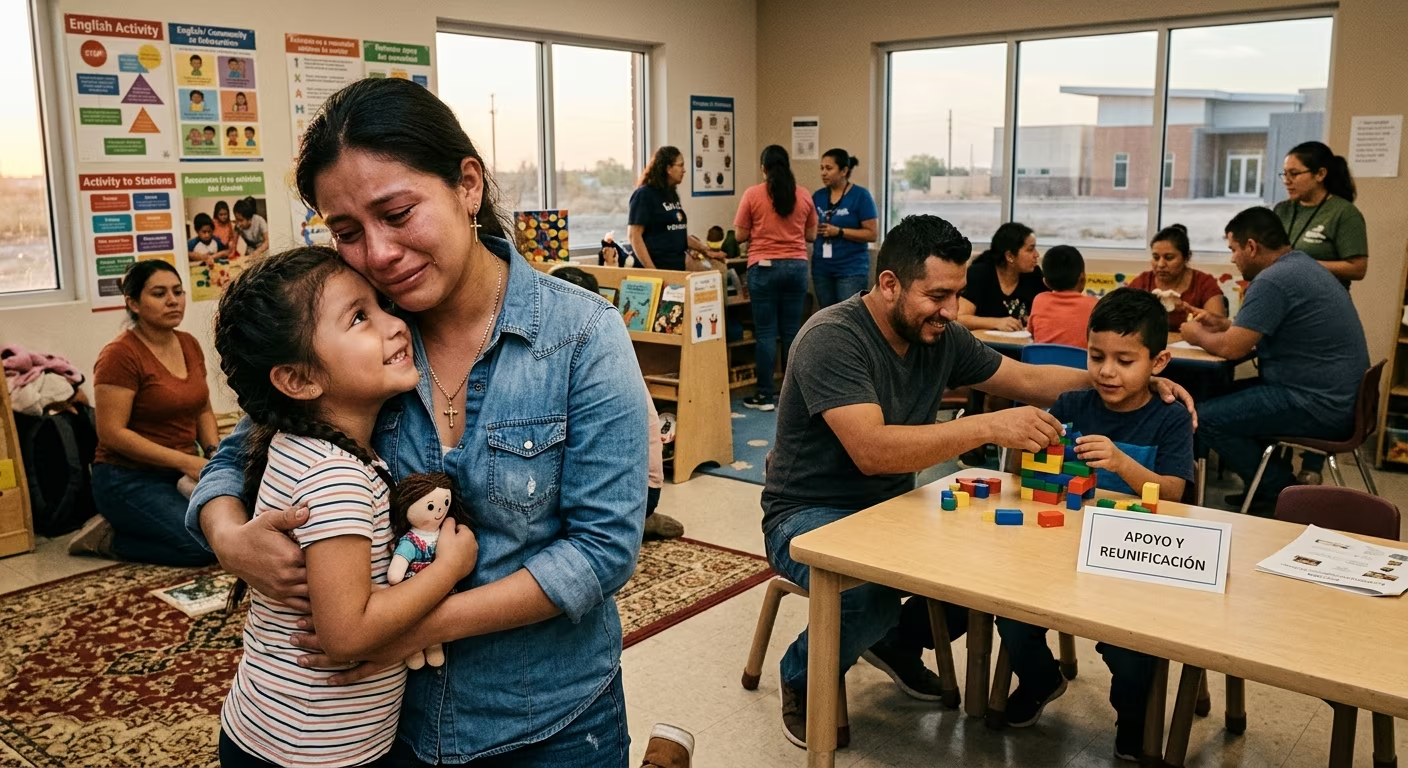
The implementation of sweeping immigration enforcement policies at international borders has frequently ignited intense debate regarding the balance between national security and fundamental human rights. Among the most controversial of these modern enforcement mechanisms was the systemic separation of migrant families. This practice fundamentally shifted the landscape of immigration policy, transforming unauthorized border crossings from administrative violations into a full-scale humanitarian crisis. The sheer scale of the separations left an indelible mark on the lives of thousands, sparking international outrage and prompting an unprecedented legal and logistical mobilization to repair the damage.
While policies have since shifted and formal separations as a blanket deterrent have been halted, the aftershocks of these actions continue to reverberate. Rebuilding the shattered lives of these families is not merely a matter of physical reunification; it is a complex, multi-layered process involving intense psychological healing, prolonged legal battles, and sweeping policy reforms designed to ensure such systemic fractures never happen again. This article delves into the profound historical, psychological, and logistical complexities of border separations, exploring the enduring human toll and the ongoing struggle for restorative justice.
The Genesis of a Humanitarian Crisis: The Zero Tolerance Framework
To understand the magnitude of the family separation crisis, one must first examine the legal and administrative framework that facilitated it. Historically, immigration enforcement prioritized the deportation of individuals with serious criminal records, while family units apprehended at the border were generally processed together through civil immigration courts. However, the introduction of “Zero Tolerance” directives mandated the criminal prosecution of every adult apprehended for crossing the border without authorization, regardless of whether they were seeking asylum or traveling with dependent children.
Because federal law prohibits children from being kept in adult criminal detention facilities, the immediate consequence of prosecuting parents was the reclassification of their children as “unaccompanied alien children” (UAC). These minors were subsequently transferred to the custody of the Department of Health and Human Services (HHS) and placed in a sprawling network of shelters and foster homes across the country. The policy was explicitly designed as a deterrent, leveraging the sanctity of the family unit to discourage future migration. However, this administrative maneuver bypassed fundamental child welfare standards and triggered a cascading series of bureaucratic failures that the government was entirely unprepared to handle.
The Human Toll: Unpacking the Psychological Ramifications
The true cost of family separation cannot be measured solely in statistics or court dockets; it is deeply etched into the psychological well-being of the individuals involved. Medical professionals and human rights organizations have unequivocally condemned the practice, pointing to the severe and potentially irreversible damage inflicted upon developing minds and traumatized parents.
The Devastating Impact on Developing Minds
For children, particularly infants and toddlers, forceful removal from their primary caregivers constitutes a severe adverse childhood experience (ACE). The American Academy of Pediatrics has emphasized that the intense fear and sense of helplessness associated with forced separation can lead to a state of hyperarousal and toxic stress. Prolonged exposure to toxic stress hormones can physically disrupt the architecture of a developing brain, leading to long-term cognitive and developmental delays. Children held in institutional settings without their parents frequently exhibited symptoms of severe trauma, including sleep disturbances, regressive behaviors, sudden withdrawal, and profound attachment disorders. In some medical analyses, the treatment of these children was described as consistent with criteria for torture due to the deliberate infliction of severe emotional pain.
The Agony of the Parents
The parents, many of whom were fleeing extreme violence and persecution in their home countries, faced a unique and agonizing form of psychological torment. Stripped of their children with little to no explanation, many were deported back to the very dangers they had sought to escape. The profound helplessness of not knowing where their children were, who was caring for them, or if they would ever be reunited, induced severe depression, anxiety, and post-traumatic stress disorder (PTSD). The government’s failure to provide clear communication or reliable tracking information compounded this psychological warfare, leaving parents in a prolonged state of ambiguous loss.
Systemic Failures: The Breakdown of Data and Tracking
Perhaps one of the most alarming aspects of the family separation policy was the startling lack of infrastructure to track the families being torn apart. Investigations by the Government Accountability Office (GAO) revealed systemic failures in interagency communication and data management. When parents were processed by border enforcement and children were transferred to HHS, the government failed to consistently create linked identification records. The databases used by different federal agencies were siloed and fundamentally incompatible.
As a result, thousands of children were absorbed into the shelter system with no clear digital tether to their parents. The GAO noted that border officials frequently failed to accurately document separations per their own internal policies, creating a catastrophic bureaucratic blind spot. When federal courts eventually mandated the reunification of these families, the government was forced to rely on manual reviews of thousands of individual case files, highlighting the reckless lack of foresight that characterized the policy’s implementation.
The Legal Battleground: Forging a Path to Accountability
The unprecedented nature of the crisis catalyzed a massive legal mobilization. Human rights organizations and civil liberties groups launched sweeping class-action lawsuits to force the government to halt the separations and account for the missing children. These legal challenges argued that the government’s actions violated fundamental due process rights and constitutional protections against arbitrary state interference in family integrity.
Federal courts eventually intervened, issuing preliminary injunctions that formally halted the blanket separation of families and imposed strict deadlines for the government to reunite those already separated. However, the legal victories were only the beginning of a gruelingly complex discovery process. Because the government’s tracking systems were critically flawed, attorneys, advocates, and government officials had to collaborate to build a functional database from scratch, cross-referencing shelter records, deportation flight logs, and fragmented border patrol data to identify the victims of the policy.
The Arduous Journey Toward Reunification
Reuniting the separated families proved to be a logistical nightmare of international proportions. While the government was able to relatively quickly locate parents who were still detained within the United States, finding parents who had already been deported presented an entirely different challenge.
Grassroots Efforts and Interagency Task Forces
Many deported parents had returned to remote, deeply impoverished rural communities in Central America, lacking access to reliable phone lines or internet connections. In the absence of government capabilities, networks of human rights defenders and non-governmental organizations formed on-the-ground steering committees. These advocates traveled village by village, using radio broadcasts and word-of-mouth networks to track down parents and inform them of their rights.
To institutionalize and accelerate these efforts, a formal Family Reunification Task Force was eventually established. According to progress reports from the Department of Homeland Security, this Task Force worked to establish a centralized database, correct historical inaccuracies in government files, and provide humanitarian parole to allow deported parents to return to the United States. Despite these concerted efforts, finding every single family remains an agonizingly slow and ongoing process.
A Framework for the Future: Implementing Permanent Safeguards
The catastrophic fallout of the family separation crisis underscored the urgent need for permanent, codified safeguards to prevent future abuses. Sweeping settlement agreements have sought to establish binding rules regarding the treatment of families at the border, ensuring that separation can only occur under strict, legally justified circumstances—such as verified cases of child abuse or unfitness—rather than as a punitive tool for deterrence.
| Policy Aspect | Zero-Tolerance Era | Reformed Safeguard Framework |
|---|---|---|
| Grounds for Separation | Mandatory for all unauthorized adult crossings. | Strictly limited to genuine risks to the child’s safety or verified criminal warrants unrelated to immigration. |
| Data Tracking | Siloed databases; systemic failure to link parent and child records. | Implementation of unified tracking systems and immediate data sharing between DHS and HHS. |
| Reunification Protocols | No pre-established protocol; massive logistical failures post-deportation. | Mandatory procedures for rapid reunification and access to humanitarian parole for separated parents. |
| Support Services | Children placed in institutional care with little to no trauma support. | Provisions for specialized behavioral health services and legal counsel. |
Reintegrating into Society: The Ongoing Struggle for Stability
For the families that have finally been reunited, the embrace is joyous but heavily shadowed by the trauma they have endured. Reunification is not the conclusion of their story; it marks the beginning of a difficult reintegration process. Families must rebuild trust, as children often struggle to understand why their parents “abandoned” them, unaware of the systemic forces at play.
To truly achieve restorative justice, advocacy groups stress the necessity of providing comprehensive, long-term support. This includes continued access to specialized behavioral and mental health services to treat PTSD, as well as assistance with housing, education, and healthcare. Most importantly, these families require a permanent pathway to legal status. Providing temporary parole without long-term security leaves families vulnerable to future trauma and deportation, undermining the very premise of the reunification efforts.
Conclusion: Healing the Wounds of Division
The legacy of border family separations serves as a stark reminder of the profound human cost associated with draconian immigration enforcement. The policy shattered thousands of lives, leaving scars that will take generations to fully heal. However, the tireless work of advocates, legal professionals, and interagency task forces demonstrates a powerful commitment to righting these historical wrongs. As the complex journey of reunification and reintegration continues, the focus must remain on ensuring permanent protections, delivering comprehensive mental health support, and prioritizing the fundamental right to family unity in all future policy considerations.
Frequently Asked Questions (FAQs)
- What was the primary cause of the family separation crisis?
The crisis was primarily triggered by the implementation of a “Zero Tolerance” policy, which mandated the federal criminal prosecution of all adults crossing the border without authorization. This policy forced the government to transfer children out of their parents’ custody and into the shelter system as unaccompanied minors. - Why was it so difficult to reunite the separated families?
Reunification was severely hindered by a lack of coordinated tracking systems. Different federal agencies failed to maintain linked records of parents and children. Additionally, many parents were deported to remote areas in their home countries before a reunification protocol was established, making them incredibly difficult to locate. - What psychological effects did the separation have on children?
Medical experts emphasize that forced separation causes toxic stress, which can disrupt brain development in young children. Symptoms include severe anxiety, depression, regressive behaviors, sleep disturbances, and post-traumatic stress disorder (PTSD). - What role does the Family Reunification Task Force play?
Established to rectify the outcomes of the separations, the Task Force coordinates efforts across government agencies and NGOs to locate missing parents, facilitate their return to the U.S. via humanitarian parole, and provide access to behavioral health services. - Are there safeguards in place to prevent this from happening again?
Yes, significant legal settlements and policy revisions have restricted the grounds for separating families, limiting the practice to situations where there is a verified, immediate threat to the child’s safety or fitness, rather than using separation as an immigration deterrent.
References
- Treatment of Migrant Children on the US Southern Border Is Consistent With Torture — Pediatrics, American Academy of Pediatrics. 2021-01-01. https://publications.aap.org/pediatrics/article/147/1/e2020012930/33426/Treatment-of-Migrant-Children-on-the-US-Southern
- UNACCOMPANIED CHILDREN: Agency Efforts to Reunify Children Separated from Parents at the Border (GAO-19-163) — U.S. Government Accountability Office. 2018-10-09. https://www.gao.gov/products/gao-19-163
- Family Reunification Task Force Progress Reports — U.S. Department of Homeland Security. 2024-05-06. https://www.dhs.gov/publication/family-reunification-task-force-progress-reports
- April 2024 FRTF Interim Progress Report — U.S. Department of Homeland Security. 2024-04-22. https://www.dhs.gov/sites/default/files/2024-05/24_0422_sec_frtf-interim-progress-report.pdf