
How a Reasonable Mistake Can Affect a Traffic Stop
A clear guide to when a police officer’s legal mistake can still support a traffic stop.
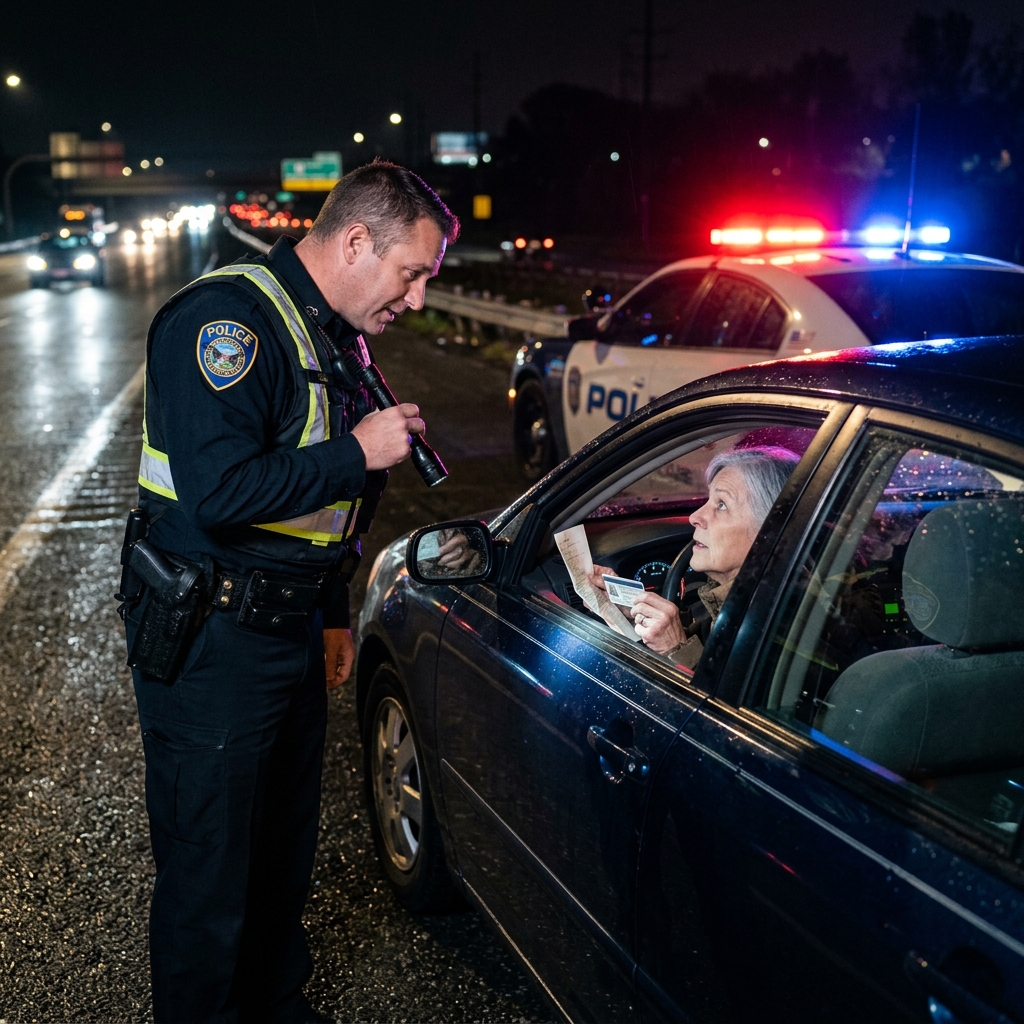
Police officers do not need perfect legal knowledge to make every roadside decision. Under Supreme Court precedent, a traffic stop may still be valid when it is based on an objectively reasonable mistake of law, so long as the mistake supports reasonable suspicion under the Fourth Amendment.
Why this issue matters
Traffic stops are one of the most common police encounters, and they often become the starting point for broader criminal investigations. Because a stop can lead to questioning, a citation, or a search, the legal basis for that stop matters to both drivers and passengers.
The constitutional question is simple in form but important in practice: if an officer misunderstands a traffic rule, does that mistake automatically make the stop unconstitutional? The Supreme Court answered no, at least when the mistake is reasonable.
The constitutional standard behind a stop
The Fourth Amendment protects people against unreasonable searches and seizures. In the traffic-stop setting, courts generally ask whether the officer had a lawful basis to detain the vehicle, often described as probable cause or reasonable suspicion depending on the context.
The Court has long recognized that an objectively reasonable mistake of fact can still justify a stop. The later question in this line of cases was whether the same logic also applies to a mistake about the law itself.
The Supreme Court’s approach to legal mistakes
In Heien v. North Carolina, the Court held that a stop based on a reasonable mistake of law does not violate the Fourth Amendment. The key idea is that constitutional reasonableness does not require perfection; it requires objective justification.
This does not mean any misunderstanding is enough. The mistake must be objectively reasonable, meaning that a trained officer could plausibly read the law the same way, even if a court later concludes that the officer was wrong.
What made the stop in Heien significant
The case involved a traffic stop that turned on a disputed reading of a vehicle-light requirement. The officer believed the driver had violated the law, but the legal issue was not as clear as the officer assumed.
The Supreme Court ultimately accepted the stop because the officer’s misunderstanding was reasonable in light of the statute’s ambiguity. That distinction is critical: the Court did not give police a free pass to stop cars on shaky or invented legal theories.
How this differs from an unreasonable mistake
A mistake of law can support a stop only when the law is genuinely ambiguous or unclear enough that the officer’s interpretation is objectively defensible. If the rule is plain, and the officer simply gets it wrong, the stop is much more vulnerable to challenge.
Courts continue to separate reasonable legal mistakes from mere ignorance. That distinction preserves a constitutional limit: officers must still act on a legally plausible basis, not a hunch dressed up as interpretation.
Reasonable mistake of law versus reasonable mistake of fact
Traffic-stop cases often involve both factual and legal uncertainty. A factual mistake occurs when an officer misperceives what happened, such as believing a vehicle has a broken light when it does not. A legal mistake occurs when the officer correctly sees the facts but misreads the law governing those facts.
Courts have generally been more comfortable with factual mistakes because real-world policing involves imperfect observation. The notable development in Heien is that the Court extended similar constitutional tolerance to some legal mistakes, but only if the officer’s reading of the law was objectively reasonable.
What lower courts have done with the ruling
After Heien, lower courts have applied the ruling by asking whether the statute or traffic rule was truly ambiguous and whether the officer’s interpretation was reasonable under the circumstances. Where the law is unclear, courts may uphold the stop; where the law is straightforward, they are more likely to suppress evidence.
This case-by-case analysis matters because it prevents the rule from becoming overly broad. Not every mistaken stop is constitutional, and not every citation survives judicial review simply because the officer thought he or she was correct.
What drivers should understand
For drivers, the most important practical point is that a stop is not automatically invalid just because the officer was mistaken. The legal question is whether the mistake was reasonable enough to support the detention under the Fourth Amendment.
If a stop leads to a ticket, arrest, or search, defense counsel may still challenge the stop by arguing that the law was clear and that the officer’s interpretation was not objectively reasonable. The more precise the statute, the stronger that challenge may be.
What passengers should know
Passengers are also affected by the legality of a traffic stop. The Supreme Court has recognized that passengers are seized during a traffic stop and may challenge the legality of that seizure.
That means a passenger may raise constitutional objections if the stop itself was unlawful. If the stop is valid, however, the passenger generally cannot attack the detention on that basis alone.
Common legal questions after a traffic stop
| Question | General rule |
|---|---|
| Does every officer mistake make a stop illegal? | No. An objectively reasonable mistake of law may still support the stop. |
| Does the officer need a perfect understanding of the statute? | No. The Constitution asks for objective reasonableness, not perfection. |
| Can passengers challenge the stop? | Yes. Passengers are seized during the stop and may contest its legality. |
| Will every ambiguous law save the stop? | No. The officer’s interpretation must still be objectively reasonable. |
Why the ruling remains controversial
Supporters of the decision argue that it reflects the realities of policing and avoids suppressing evidence when an officer makes a good-faith reading of an unclear law. Critics worry that the rule may encourage sloppy statutory interpretation and create too much room for after-the-fact justification.
The tension is between enforcing constitutional protections and recognizing that some traffic laws are complex enough to confuse even trained officers. The Court’s answer was to allow only reasonable mistakes, not routine ignorance.
How the ruling fits into broader traffic-stop law
Traffic-stop doctrine already allows police to detain a vehicle when they have probable cause to believe a traffic offense occurred. The legal-mistake rule from Heien adds a narrower layer: even if no violation actually occurred, the stop may still be valid if the officer reasonably misunderstood the law.
That framework makes traffic-stop litigation highly fact-specific. Courts often examine the wording of the statute, the officer’s explanation, and whether prior case law had already clarified the legal issue.
What to look for in a stop challenge
- Whether the traffic rule was genuinely ambiguous.
- Whether the officer identified the wrong legal standard or simply observed facts incorrectly.
- Whether prior court decisions had already resolved the meaning of the statute.
- Whether the officer’s stated reason for the stop matches the legal text.
- Whether the stop led to evidence that might be excluded if the detention was unlawful.
Practical impact on policing and defense strategy
For law enforcement, the ruling emphasizes the importance of knowing the traffic code and being able to explain why a stop was made. Officers who rely on a legal ambiguity may be protected if their reading is reasonable, but weak explanations can still undermine the stop in court.
For defense attorneys, the most useful strategy is often to attack the supposed ambiguity itself. If the statute is clear, then the officer’s mistake looks less like reasoned judgment and more like a constitutional defect.
Key takeaways for everyday readers
- A traffic stop can be constitutional even if the officer misunderstood the law, but only when the mistake is objectively reasonable.
- The Supreme Court’s ruling does not excuse every error; it applies to limited situations involving legal ambiguity.
- Passengers may challenge the stop because they are seized during the encounter.
- The strength of any challenge often turns on the exact wording of the traffic law and how a court reads that wording.
Frequently asked questions
Can police stop a car just because they think a law was broken?
Police need a lawful basis for the stop, such as probable cause or reasonable suspicion. If the officer’s belief rests on a reasonable mistake of law, the stop may still be valid under the Fourth Amendment.
Does the Supreme Court allow any mistaken interpretation of the law?
No. The mistake must be objectively reasonable. A plainly incorrect reading of a clear statute does not receive the same protection.
Can a passenger challenge a bad traffic stop?
Yes. The Court has recognized that passengers are seized during a stop and may contest its legality.
Why do courts care whether the law was ambiguous?
Ambiguity helps show whether the officer’s interpretation was reasonable. If the law is unclear, a mistaken reading may still fall within constitutional limits.
References
- Heien v. North Carolina, 574 U.S. 54 — Supreme Court of the United States. 2014-12-15. https://supreme.justia.com/cases/federal/us/574/54/
- An Officer’s Reasonable Mistake of Law and Recent Court of Appeals Ruling — University of North Carolina School of Government. 2016-09-27. https://nccriminallaw.sog.unc.edu/2016/09/27/officers-reasonable-mistake-law-recent-court-appeals-ruling/
- Mistake of Law — Cornell Law School, Legal Information Institute. 2014-12-15. https://www.law.cornell.edu/category/keywords/mistake_of_law
- Whren v. United States, 517 U.S. 806 — Supreme Court of the United States. 1996-04-15. https://supreme.justia.com/cases/federal/us/517/806/
- Mistakes of Law and Mistakes of Fact during Traffic Stops — DePaul Law Review. 2007-01-01. https://via.library.depaul.edu/cgi/viewcontent.cgi?article=1078&context=law-review
- Reasonable Suspicion for a Stop Can Arise from a Mistaken Understanding of the Law — Rigney Law. 2015-01-01. https://www.rigneylawindy.com/reasonable-suspicion-for-a-stop-can-arise-from-a-mistaken-understanding-of-the-law/
- Fourth Amendment: Passengers and Police Stops — Administrative Office of the U.S. Courts. 2007-01-01. https://www.uscourts.gov/sites/default/files/rights-police-stops.pdf
Similar Articles








Read full bio of Sneha Tete


