Real Estate LLC: 3 Key Benefits, 3 Major Risks
Discover if forming an LLC for your real estate investments offers superior protection, tax advantages, and flexibility worth the added complexity.
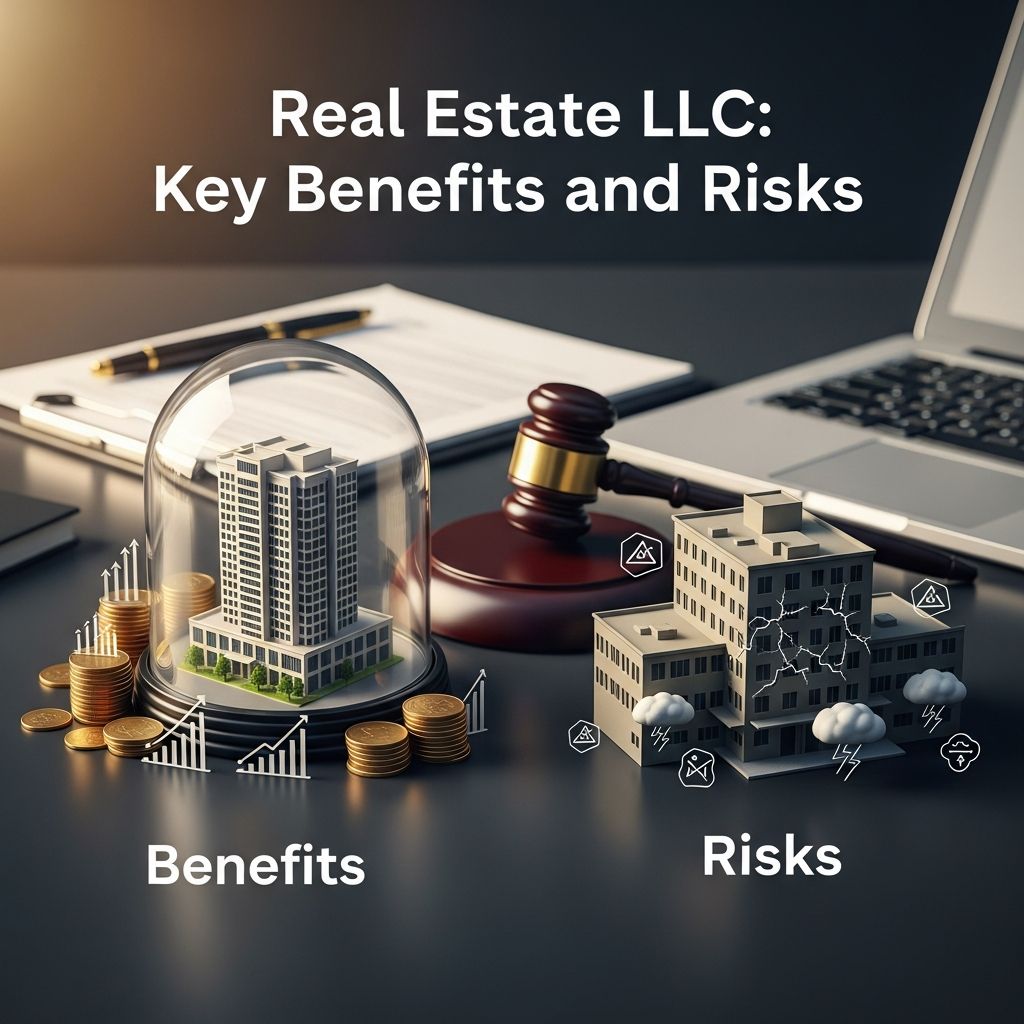
Real Estate LLC: Key Benefits and Risks
Forming a Limited Liability Company (LLC) to hold real estate investments has become a popular strategy among property owners seeking to safeguard their personal finances while optimizing operations. This business structure offers a blend of flexibility and protection that appeals to both novice and experienced investors. By separating business activities from personal assets, an LLC can mitigate risks associated with property management, tenant disputes, and unforeseen liabilities.
Core Advantages of Using an LLC for Property Investments
The primary appeal of an LLC lies in its ability to provide robust safeguards and operational efficiencies tailored to real estate. Investors often turn to this entity type to address common vulnerabilities in direct personal ownership.
Shielding Personal Assets from Legal Claims
One standout benefit is the
limited liability protection
, which confines potential lawsuits or debts to the LLC’s assets alone. For instance, if a tenant slips and falls on a rental property, creditors or plaintiffs can only pursue the property or LLC bank accounts, leaving homes, savings, and other investments untouched. This separation is crucial for rental portfolios, where slip-and-fall incidents or property damage claims are frequent. Multiple properties in separate LLCs further isolate risks, ensuring one problematic asset doesn’t jeopardize the entire portfolio.Tax Efficiency and Pass-Through Advantages
LLCs default to
pass-through taxation
, meaning profits and losses flow directly to members’ personal tax returns without corporate-level taxes. Rental income qualifies as passive, avoiding payroll taxes like Social Security or Medicare, which reduces the overall tax burden. Investors can deduct expenses such as repairs, depreciation, and management fees, mirroring benefits of individual ownership but with added structure. For those with substantial holdings, electing S-corp status can further minimize self-employment taxes on distributions.Simplified Ownership and Investor Collaboration
Transferring ownership interests in an LLC is straightforward, often avoiding real estate transfer taxes since the property title remains unchanged. This facilitates estate planning, joint ventures, and sales—ideal for bringing in partners or heirs without complex deed transfers. Foreign investors can participate easily, expanding funding options. Custom operating agreements define roles, profit shares, and decision-making, fostering smooth multi-member operations.
- Flexibility in Management: Member-managed or manager-managed structures suit solo operators or teams.
- Credit Building: Established LLCs can leverage business credit for better loan terms.
- Record-Keeping: Dedicated entities per property streamline accounting and audits.
Potential Drawbacks and Hidden Costs
Despite the upsides, LLCs introduce complexities that may deter casual investors. Weighing these against benefits is essential for informed decisions.
Upfront and Ongoing Expenses
Forming an LLC involves filing fees, often $50–$500 depending on the state, plus annual reports costing $10–$800. Legal assistance for operating agreements adds $500–$2,000 initially, with registered agent services at $100–$300 yearly. For multi-property portfolios, costs multiply, potentially eroding small investment returns.
Financing and Lender Restrictions
Banks view LLC-owned properties as riskier, demanding higher interest rates, larger down payments (20–30%), or personal guarantees that undermine liability shields. Refinancing or new loans may require transferring titles out temporarily, incurring fees and taxes. Commercial lenders are an option but less favorable for individuals.
| Aspect | Personal Ownership | LLC Ownership |
|---|---|---|
| Loan Availability | Residential rates, easier approval | Commercial terms, stricter requirements |
| Down Payment | 3–20% | 20–35% |
| Interest Rates | Lower | Higher by 1–2% |
Administrative Burdens and State-Specific Rules
Maintaining an LLC demands meticulous compliance: annual filings, separate bank accounts, and meeting minutes to preserve liability protections. Neglect can “pierce the veil,” exposing personal assets. Operating across states may require foreign qualification fees and taxes. Some locales impose higher property taxes on business-held real estate.
When an LLC Makes Strategic Sense
Not every investor needs an LLC. For a single flip or low-risk holding, personal ownership suffices with insurance coverage. However, benefits shine for:
- Owners of multiple rentals facing litigation risks.
- Partnerships pooling capital for larger deals.
- High-net-worth individuals prioritizing asset segregation.
- Estate planners transferring interests tax-efficiently.
Serial investors with diversified portfolios maximize protections by using series LLCs (where available) or one LLC per property, balancing isolation with manageability.
Steps to Establish a Real Estate LLC
- Choose a Name: Ensure availability and compliance with state rules (e.g., include “LLC”).
- File Articles of Organization: Submit to secretary of state with fees.
- Draft Operating Agreement: Outline ownership, management, and distributions—even for single members.
- Obtain EIN: From IRS for banking and taxes.
- Open Business Accounts: Separate finances strictly.
- Transfer Property: Use quitclaim deed; check due-on-sale clauses and taxes.
- Secure Insurance: Commercial policies often required.
Consult attorneys and CPAs early to navigate state laws and tax elections.
Alternatives to Full LLC Structure
If LLC drawbacks outweigh benefits, consider:
- Umbrella Insurance: Bolsters personal policies for under $300/year.
- Land Trusts: Anonymous holding with liability limits in some states.
- Series LLCs: One umbrella entity with internal compartments (not universal).
- Tenancy in Common: For co-owners without formal entity.
Hybrid approaches, like LLC for high-risk properties only, offer tailored protection.
Frequently Asked Questions (FAQs)
Is a real estate LLC worth it for one rental property?
For a single low-risk property, insurance may suffice, but LLCs add value if litigation exposure exists or expansion is planned.
Does transferring property to an LLC trigger taxes?
Often no real estate transfer tax if ownership doesn’t change, but confirm with local rules and mortgage terms.
Can I get a mortgage in an LLC’s name?
Yes, but expect commercial loans with tougher terms; personal guarantees are common.
What if my LLC faces a lawsuit?
Only LLC assets are at risk if formalities are maintained; personal assets stay protected.
Are LLCs better for short-term rentals like Airbnb?
Yes, heightened guest risks amplify liability benefits, though platform policies apply.
Final Strategic Insights
Real estate LLCs excel for scaling investors valuing protection over simplicity. Evaluate your risk tolerance, portfolio size, and costs annually. Professional guidance ensures compliance and optimization, turning potential pitfalls into long-term gains.
References
- Real Estate LLC Guide: Benefits and Drawbacks — Simplify LLC. 2024. https://www.simplifyllc.com/llc-glossary/real-estate-llc/
- Pros and Cons of Buying Property Through an LLC — Gatsby Investment. 2024. https://www.gatsbyinvestment.com/education-center/pros-and-cons-of-buying-property-through-an-llc
- Pros & Cons of Holding Rental Property in an LLC — REI Hub. 2024. https://www.reihub.net/resources/advantages-and-disadvantages-of-owning-rentals-in-an-llc/
- Transferring a Rental Property into an LLC: The Pros and Cons — Summit Law Group. 2024. https://www.summitlaw.com/law-blog/transferring-a-rental-property-into-an-llc-the-pros-and-cons
- The Advantages and Disadvantages of Holding an Investment Property in an LLC — LLK Law. 2024. https://llklaw.com/legal-blog/the-advantages-and-disadvantages-of-holding-an-investment-property-in-an-llc
- The Importance of Placing Properties in an LLC for Estate Purposes — BMT. 2024. https://www.bmt.com/news-insights-events/the-importance-of-placing-properties-in-an-llc-for-estate-purposes/
- Buying a House Under an LLC: Pros and Cons — Chase Bank. 2024. https://www.chase.com/personal/mortgage/education/financing-a-home/buying-a-house-under-an-llc
Similar Articles








Read full bio of Sneha Tete