
Real Estate Essentials for Massachusetts Cannabis Ventures
Key real estate, zoning, and licensing considerations for launching and leasing compliant cannabis facilities in Massachusetts.
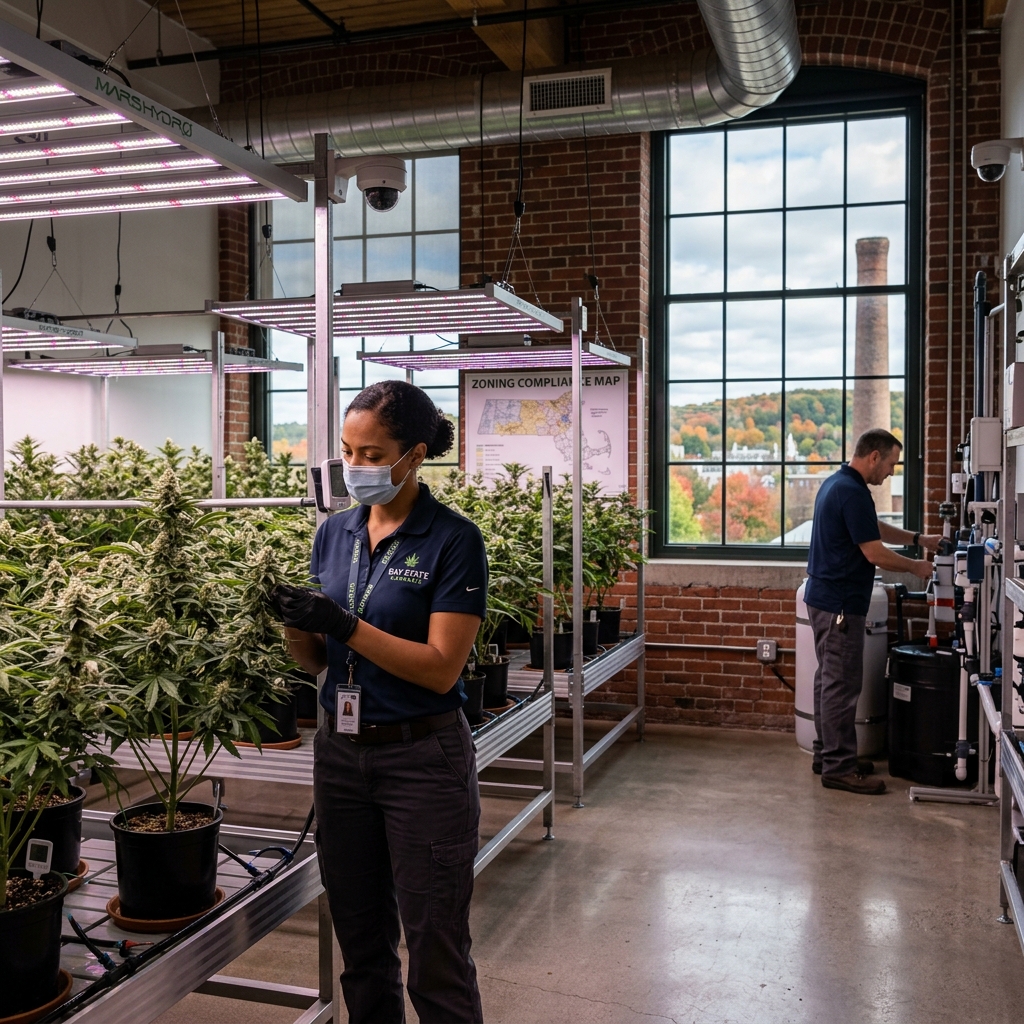
Securing the right property is one of the most critical steps in building a successful cannabis business in Massachusetts. Real estate decisions intersect directly with licensing, zoning, host community approval, financing, and ongoing regulatory compliance. Getting this wrong can delay your opening for months—or derail the venture altogether.
This guide explains how Massachusetts cannabis entrepreneurs and property owners can evaluate sites, structure deals, and manage risks in a regulatory environment where state law permits marijuana establishments but federal law still treats cannabis as illegal.
Understanding the Massachusetts Cannabis Regulatory Landscape
In Massachusetts, adult-use and medical marijuana establishments are regulated by the Cannabis Control Commission (CCC), a state agency that oversees licensing, compliance, and enforcement for the cannabis industry. No marijuana business can operate without CCC approval, and that approval is tightly linked to specific premises.
Types of Marijuana Establishments and Real Estate Needs
Massachusetts recognizes several types of licensees, each with distinct real estate requirements that influence location and building specifications.
- Cultivation facilities: Require substantial space, robust utilities, climate control, and often industrial or agricultural zoning.
- Manufacturing and processing sites: Need areas suitable for food-grade or laboratory-style operations and compliance with health and safety standards.
- Retail dispensaries: Typically seek high-visibility commercial locations with appropriate parking, security, and pedestrian access.
- Testing or research facilities: Often located in commercial or light industrial districts, with specialized lab infrastructure.
Each license type triggers different requirements under local zoning bylaws, building codes, and community expectations, so the choice of property should align with the intended license from the outset.
Premises Requirements and the CCC Licensing Process
The CCC will only grant a license where the applicant demonstrates control over a property that meets all state and local requirements for their specific license category. Real estate, therefore, is not an afterthought—it is embedded in the licensing sequence.
Provisional Licenses: A Key Milestone
Most applicants first receive a provisional license, which confirms that the CCC has reviewed and conditionally approved the proposed operation, subject to additional steps such as final inspections and verification of local permits. Provisional status allows businesses to:
- Finalize lease or purchase agreements.
- Complete build-out and tenant improvements.
- Obtain local building, fire, and health approvals.
- Prepare for CCC inspections and security verification.
However, provisional approval is not a guarantee of a final license, so transaction structures should account for the risk that the business may never reach full operational status.
Final License Tied to a Specific Property
Before issuing a final license, the CCC confirms not only that the facility meets state regulations but also that it complies with local zoning and has obtained all municipal permits and sign-offs. The license is specific to the premises, meaning substantial changes in location or building layout may require further CCC review.
Local Zoning and Municipal Oversight
State-level approval alone is never enough. Massachusetts municipalities have wide discretion to regulate where and how marijuana establishments may operate through zoning ordinances, special permits, and local policies.
Common Zoning Constraints
Local zoning bylaws often address issues such as:
- District eligibility: Limiting cannabis uses to certain commercial, industrial, or overlay districts.
- Buffers from sensitive uses: Setbacks from schools, playgrounds, houses of worship, or residential neighborhoods.
- Density and caps: Caps on the number of marijuana establishments allowed within town boundaries.
- Parking and traffic: Requirements for off-street parking, traffic management, and access routes.
Not all communities have opted to host marijuana businesses, and some have adopted restrictive zoning that effectively limits viable sites. Early engagement with planning staff and zoning boards is essential to avoid investing in a property that cannot qualify for local approval.
Host Community Agreements
Many municipalities require a Host Community Agreement (HCA) between the business and the town before supporting CCC licensure. While terms vary, HCAs typically address:
- Community impact fees and mitigation payments.
- Commitments on traffic, security, and nuisance control.
- Local hiring or economic development goals.
Because CCC staff may contact the municipality to verify compliance with local ordinances and the status of the HCA, property acquisition strategies should incorporate time for negotiation and approval at the local level.
Real Estate Risks for Landlords and Tenants
Owners, landlords, and tenants in the cannabis sector confront unique risks that ordinary commercial leasing does not present. Federal law continues to classify cannabis as a Schedule I controlled substance, and federal prohibition can affect financing, insurance, and enforcement of leases.
Impact of Federal Illegality
Under federal law, possessing, manufacturing, or distributing cannabis remains unlawful, even when state law permits those activities. This tension has several real estate implications:
- Mortgage restrictions: Many commercial mortgages prohibit using mortgaged property for activities that violate federal law.
- Banking and payments: Lenders and depository institutions may decline to service properties leased to cannabis businesses.
- Insurance concerns: Some insurers may limit coverage or impose special conditions for cannabis-related operations.
Property owners must review existing loan documents and insurance policies carefully before allowing a marijuana establishment on their premises.
Key Lease Provisions for Cannabis Tenancies
Well-crafted leases can allocate risk and clarify obligations in a highly regulated environment. Practice notes aimed at real property owners highlight the importance of provisions addressing licensing and compliance.[10]
| Lease Issue | Why It Matters for Cannabis Tenants |
|---|---|
| Regulatory compliance clause | Requires tenant to comply with all state and local cannabis laws, maintain CCC licensure, and promptly report regulatory actions.[10] |
| Use clause | Limits the permitted use to specifically defined marijuana activities, reducing ambiguity and signaling intent to lenders and insurers. |
| Termination tied to license status | Allows landlord to terminate if the tenant loses its CCC license or local approvals, protecting the property from noncompliant operations.[10] |
| Indemnity and insurance | Allocates responsibility for regulatory fines, enforcement actions, and third-party claims associated with cannabis operations. |
| Severability clause | Preserves the remainder of the lease if certain provisions are deemed unenforceable due to evolving cannabis laws. |
Because legal norms and enforcement priorities can change over time, both landlords and tenants should anticipate future regulatory shifts and build flexibility into their agreements.
Practical Steps for Selecting a Massachusetts Cannabis Site
Choosing a property for a marijuana establishment is not just a matter of finding suitable square footage. It requires a structured evaluation of legal, operational, and financial factors.
Phase 1: Pre-Screening Potential Locations
- Confirm municipal stance: Determine whether the municipality allows cannabis uses and, if so, under what conditions.
- Review zoning district maps: Focus on districts where marijuana establishments are permitted or conditionally allowed.
- Identify buffer zones: Map schools, playgrounds, and other sensitive uses to ensure compliance with setback requirements.
- Check existing mortgages and covenants: For landlords, confirm that leasing to a cannabis business will not breach loan or association restrictions.
Phase 2: Due Diligence on a Selected Property
- Assess building suitability: Evaluate utilities, security, loading access, and potential for required modifications.
- Engage local officials: Meet early with planning, building, health, and public safety departments to understand expectations and timelines.
- Model compliance costs: Estimate expenses for security systems, odor control, energy upgrades, and any mandated improvements.
- Structure contingencies in contracts: Include conditions in purchase agreements or leases tied to receiving provisional and final CCC licenses.
Phase 3: Integrating Real Estate into the Licensing Timeline
The CCC licensing process is intertwined with local approvals. A typical sequence for a new marijuana establishment often includes:
- Initial meetings with municipal officials to introduce the project.
- Negotiation of a Host Community Agreement, where required.
- Community outreach meetings to discuss impacts and gather feedback.
- Application to the CCC for a provisional license, with property information included.
- Obtaining local permits from planning boards, boards of health, and public safety agencies.
- CCC verification that the property complies with local ordinances and zoning.
- Final CCC license issuance, enabling full operation.
Understanding this sequence helps businesses plan capital deployment and lease commencement dates to avoid paying rent long before they may legally open.
Compliance Considerations During Operations
Once a marijuana establishment is open, the property continues to play a central role in compliance. Violations tied to the premises can jeopardize both the business and the landlord.
Security, Storage, and Access
CCC regulations require secure storage of cannabis products and restricted access to certain areas, which may dictate building layout, door hardware, surveillance systems, and alarm integration. Landlords and tenants should coordinate on:
- Placement of cameras and retention of footage.
- Alarm systems and monitoring agreements.
- Visitor management policies and lobby design.
Public Use and Nuisance Controls
Massachusetts law prohibits public consumption of marijuana and limits use to private property. Retail operators must manage loitering, odor, and congregation near entrances to avoid nuisance complaints that can trigger municipal scrutiny.
- Clear signage prohibiting on-premises consumption.
- Odor mitigation systems in cultivation and processing facilities.
- Communication with neighbors about complaint procedures.
Frequently Asked Questions
Do I need to control a property before applying for a Massachusetts cannabis license?
Yes. CCC applications require information about the proposed premises, and the Commission expects applicants to demonstrate a right to use the property—such as a lease, purchase agreement, or option—subject to receiving the license.
Can any commercially zoned property be used for a marijuana establishment?
No. Local zoning bylaws may only allow marijuana uses in specific districts, impose buffers from schools or residences, or cap the number of establishments. Always confirm local rules before committing to a site.
What is a Host Community Agreement, and how does it affect real estate planning?
A Host Community Agreement is a contract between a marijuana establishment and the municipality outlining impact fees, mitigation measures, and other conditions for local support. It can affect project feasibility, build-out plans, and operating costs, so it should be negotiated in parallel with property acquisition.
Are landlords exposed to risk by leasing to cannabis businesses?
Landlords face unique risks, including potential conflicts with mortgage provisions, insurance limitations, and evolving federal enforcement priorities. Strong lease language on compliance, licensing, and termination rights can help manage these risks.[10]
How does federal law influence cannabis real estate in Massachusetts?
Because cannabis remains illegal under federal law, some lenders, insurers, and institutional investors are hesitant to work with properties used by marijuana establishments. This can affect financing terms, refinance options, and asset valuation, even though state law allows cannabis operations.
References
- Real Estate Guidelines for Massachusetts Cannabis Businesses — Super Lawyers / Thomson Reuters. 2023-06-01. https://www.superlawyers.com/resources/cannabis-law/massachusetts/real-estate-guidelines-for-massachusetts-cannabis-businesses/
- Cannabis Business Policy — Town of Charlton, Massachusetts. 2023-01-10. https://www.townofcharlton.net/660/Cannabis-Business-Policy
- RE114C24: Navigating the Green Rush: Commercial Real Estate and Legalized Cannabis — Massachusetts Division of Professional Licensure. 2022-09-15. https://www.mass.gov/info-details/re114c24-ma-ce-navigating-the-green-rush-commercial-real-estate-and-legalized-cannabis
- Know the Laws — Massachusetts Cannabis Control Commission. 2023-04-20. https://masscannabiscontrol.com/know-the-laws/
- New Hampshire and Massachusetts Real Estate Issues for the Cannabis Industry — Sheehan Phinney. 2021-07-01. https://www.sheehan.com/news/new-hampshire-and-massachusetts-real-estate-issues-for-the-cannabis-industry
- Cannabis: Guidance for Real Property Owners (MA) — LexisNexis Practical Guidance. 2022-03-10. https://advance.lexis.com/open/document/openwebdocview/Cannabis-Guidance-for-Real-Property-Owners-MA-/
Similar Articles








Read full bio of medha deb


