
Racial Profiling: Basics, Your Rights And Remedies After A Stop
A clear look at when police conduct crosses the line from investigation into unlawful bias.
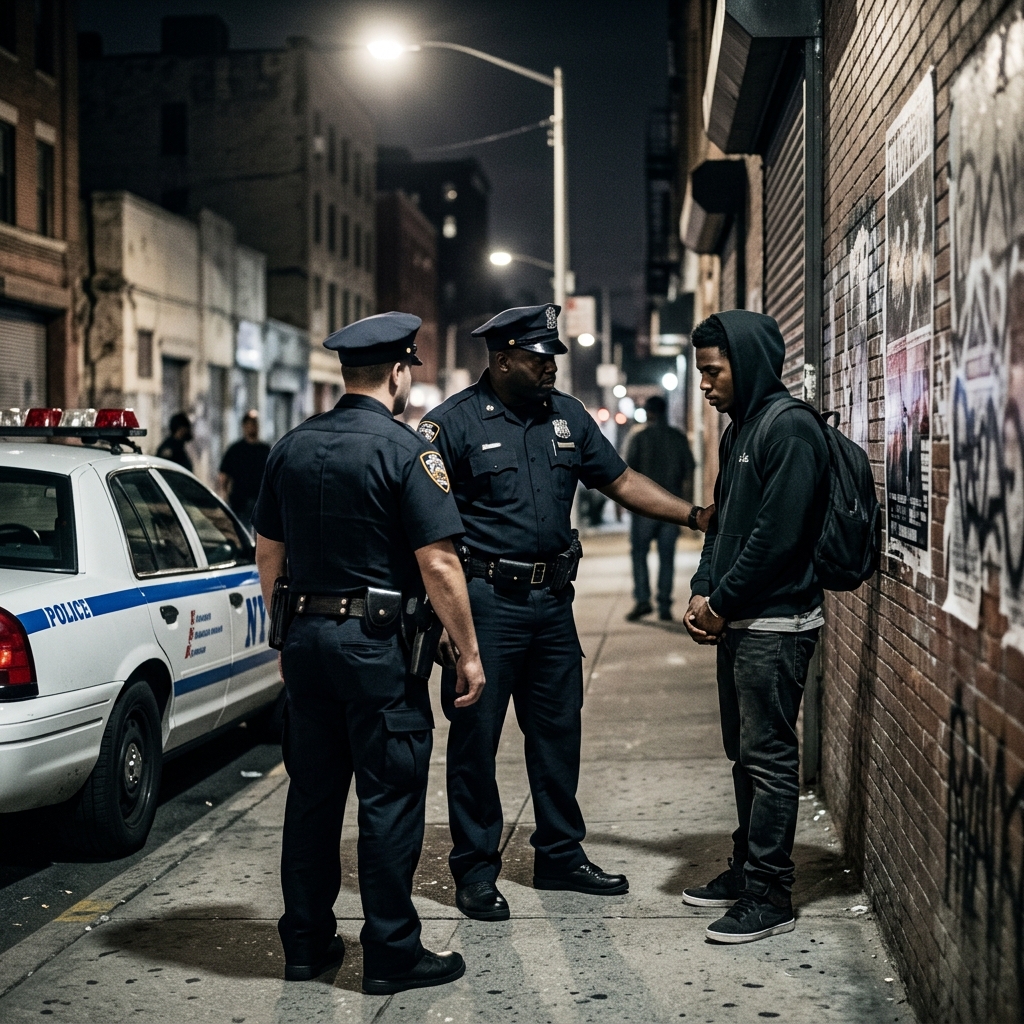
Police officers are allowed to investigate crime, make traffic stops, and use descriptions to identify suspects, but they are not allowed to rely on race alone as a basis for enforcement decisions. Under federal constitutional principles and many state laws, law enforcement action must be tied to behavior, evidence, or a specific suspect description—not stereotypes or generalized assumptions.
This distinction matters because a stop based on a person’s race can violate civil rights even when the officer claims to be acting in the interest of public safety. Several states have also adopted reporting rules, complaint procedures, and anti-profiling statutes designed to reduce biased policing and create accountability.
What racial profiling means in practice
Racial profiling happens when police target, question, search, or stop a person because of race, ethnicity, or national origin rather than individualized suspicion. In other words, the decision is driven by identity-based assumptions instead of facts pointing to criminal conduct.
That is different from using a suspect description. If witnesses describe a suspect as a Black male in a red jacket, officers may lawfully use that information in an investigation because the description is tied to a specific reported offense. The legal problem arises when race becomes the reason for police attention without a reliable connection to a crime.
- Profiling based on a specific suspect description may be lawful.
- Profiling based on general race-based suspicion is unlawful.
- Even brief stops can violate rights if they are motivated by bias rather than evidence.
Why the Constitution matters
The strongest legal limits on racial profiling come from the U.S. Constitution. The Equal Protection Clause of the Fourteenth Amendment prohibits discriminatory law enforcement practices, while the Fourth Amendment restricts unreasonable searches and seizures.
Those protections work together. A discriminatory stop can be challenged because it treats people differently based on race, and it may also be invalid because the officer lacked a lawful basis for the detention or search. In many cases, the constitutional question is not only whether police had a reason to act, but whether that reason was legitimate or tainted by bias.
| Legal principle | What it does | Why it matters |
|---|---|---|
| Equal protection | Forbids race-based discrimination by government actors | Blocks policing decisions rooted in racial bias |
| Fourth Amendment | Limits unreasonable stops, searches, and arrests | Requires lawful, individualized justification |
| Civil rights statutes | Allow enforcement against unconstitutional police conduct | Creates remedies for misconduct and systemic discrimination |
How state laws add another layer of protection
Many states have passed laws that specifically prohibit racial profiling or require police agencies to track and report stops. California’s Racial and Identity Profiling Act, for example, prohibits racial and identity profiling and requires agencies to report data on vehicle and pedestrian stops as well as complaints alleging profiling.
Texas also requires annual racial profiling reporting for agencies that make motor vehicle stops, including statistical analysis and complaint information. These laws do not replace constitutional protections; they supplement them by forcing agencies to document patterns that might otherwise remain hidden.
State anti-profiling laws commonly include the following features:
- mandatory officer training on bias and civil rights
- data collection on traffic stops and searches
- public reporting requirements
- internal or independent complaint review procedures
- disciplinary consequences for repeated violations
How police can use race lawfully
Race is not always irrelevant in police work. A lawful investigation may use race as one feature of a detailed description provided by witnesses or victims. The key issue is whether race is being used as one element of a specific, evidence-based description or as a shortcut for suspicion.
For example, if officers are looking for a person reported to have committed a robbery minutes earlier and the report includes race, clothing, height, and direction of travel, that can be part of a valid investigative response. By contrast, stopping drivers simply because they appear to belong to a racial group associated with crime statistics is not a lawful substitute for probable cause or reasonable suspicion.
The difference can be summarized this way:
- Lawful use: a race-based suspect description tied to a specific incident.
- Unlawful use: a race-based assumption untethered to any concrete facts.
What remedies may exist after a biased stop
People who believe they were stopped or searched because of race may have several possible avenues for relief. Civil lawsuits are common, and in some situations a constitutional violation can affect a criminal case as well.
One possible civil path is a lawsuit under civil rights law against an individual officer or agency. Federal law can also allow the Department of Justice to pursue agencies engaged in unconstitutional practices. Some state laws create separate causes of action or administrative complaint systems.
In a criminal case, evidence obtained through an unlawful stop or search may sometimes be challenged and excluded. That remedy depends on the facts, including whether the police misconduct led directly to the evidence at issue.
What evidence helps prove racial profiling
Racial profiling is often difficult to prove because officers may give a different explanation for a stop. That is why records and patterns matter. Data on stop rates, search rates, complaint histories, body camera footage, dispatch logs, and officer statements can all help show whether race played an improper role.
Evidence may be especially persuasive when it shows a pattern rather than a one-time incident. If one officer stops people of a certain race far more often than similarly situated drivers or pedestrians, that pattern may support a claim that the officer or department is engaging in discriminatory practices.
- body camera or dashboard video
- traffic ticket or stop records
- witness statements
- complaint files
- department stop data
- search and arrest statistics
Why reporting rules matter for accountability
Reporting rules are not just bureaucratic paperwork. They create a public record that can reveal whether police stops are distributed fairly across communities. California’s law requires agencies to report stop data and complaints, while Texas requires annual reporting and comparative statistical analysis for agencies that meet the reporting criteria.
These systems can help lawmakers, courts, and community members identify problem areas. They also push agencies to examine their own practices, retrain officers, and adjust policies when stop data suggests a racial disparity.
Frequently asked questions
Is racial profiling always illegal?
Yes. Police may use a specific suspect description that includes race, but they may not target someone solely because of race or ethnicity. Federal constitutional protections and many state statutes prohibit that kind of discrimination.
Can an officer mention race during an investigation?
Yes, if race is part of a specific description connected to a reported crime. The legality depends on context. A detailed suspect description is different from a generalized assumption about who is suspicious.
Can a racial profiling claim affect a criminal case?
Sometimes. If police obtained evidence through an unconstitutional stop or search, a defense lawyer may argue that the evidence should be excluded. The outcome depends on the facts and the type of violation involved.
What should someone document after a suspected biased stop?
A person should record the officer’s name, badge number, location, time, vehicle number if available, what was said, whether a search occurred, and whether witnesses or video exist. That information can be useful in a complaint or legal claim.
Do all states have anti-profiling laws?
No. Many states have adopted some form of reporting, training, or prohibition, but the details vary widely. Some states focus on data collection, while others create direct civil remedies or disciplinary rules.
Why the issue remains important
Racial profiling is not only a question of individual fairness. It also affects trust in law enforcement, the accuracy of investigations, and the legitimacy of the justice system. When people believe stops are based on appearance rather than conduct, cooperation with police can decline, which makes public safety harder to achieve.
For that reason, modern policing policies increasingly emphasize objective criteria, documentation, training, and review. The goal is not to prevent officers from doing their jobs; it is to ensure that enforcement decisions are based on lawful grounds and that race is not used as a substitute for evidence.
References
- AB 953: The Racial and Identity Profiling Act of 2015 — California Department of Justice. 2026. https://oag.ca.gov/ab953
- Racial Profiling and the Police — Criminal Defense Lawyer. 2026. https://www.criminaldefenselawyer.com/resources/racial-profiling-and-police.htm
- Annual Racial Profiling Reporting — Texas Commission on Law Enforcement. 2026. https://www.tcole.texas.gov/content/racial-profiling-reports
- Racial Profiling — American Civil Liberties Union. 2026. https://www.aclu.org/issues/racial-justice/race-and-criminal-justice/racial-profiling
- Racial Profiling: Constitutional and Statutory Considerations for Police — Congressional Research Service. 2024-03-01. https://www.congress.gov/crs-product/LSB10524
- Racial Profiling and Criminal Justice — EBSCO Research Starters. 2026. https://www.ebsco.com/research-starters/law/racial-profiling-and-criminal-justice
- Racial Profiling vs. Criminal Profiling: The Difference — American Public University System. 2026. https://www.amu.apus.edu/area-of-study/criminal-justice/resources/racial-profiling-vs-criminal-profiling/
Similar Articles








Read full bio of medha deb




