
Quitclaim Deeds in Divorce: Essential Guide
Master the role of quitclaim deeds in divorce: transfer property smoothly, avoid pitfalls, and secure your financial future effectively.
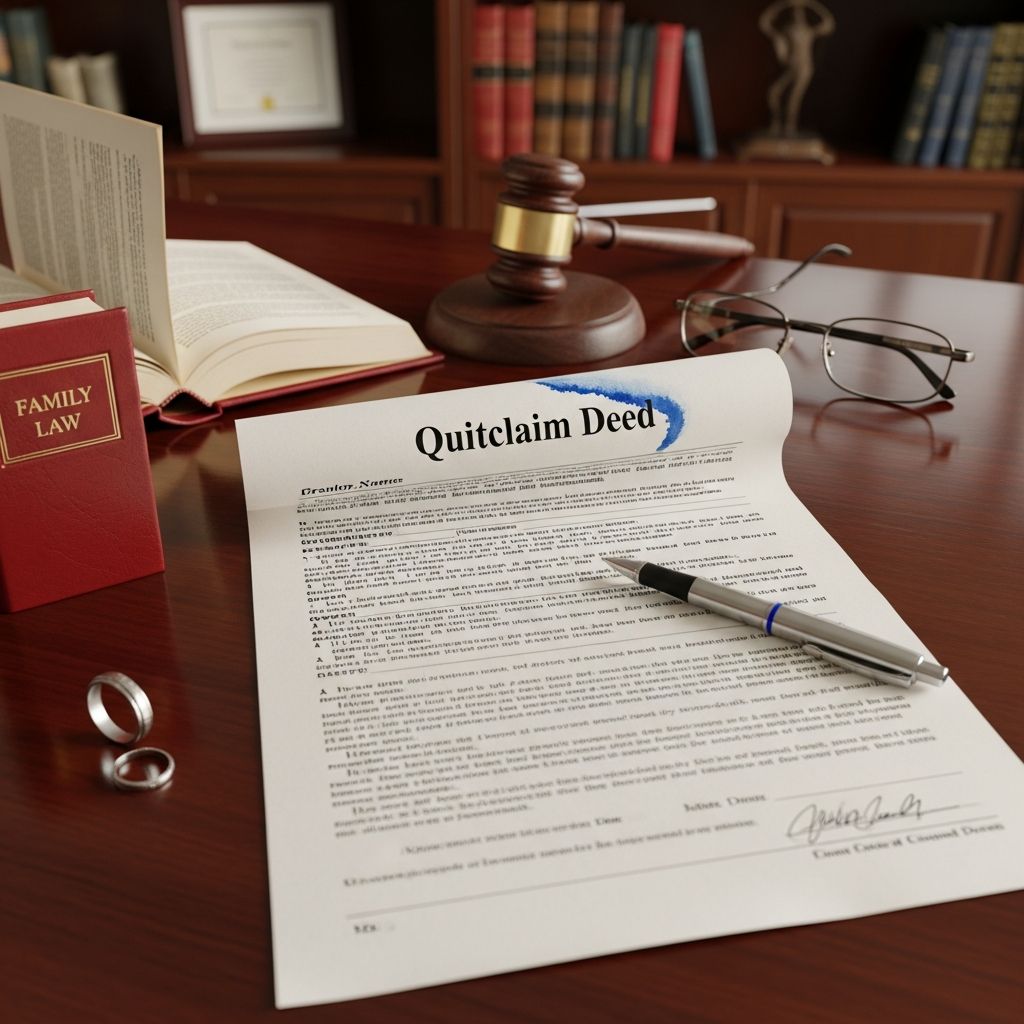
Quitclaim deeds serve as a vital tool for reallocating property ownership between divorcing spouses, enabling one party to relinquish all interest in real estate to the other without warranties of title. This mechanism streamlines the division of assets like the family home, aligning public records with divorce agreements.
Defining Quitclaim Deeds and Their Core Function
A quitclaim deed is a legal instrument where the grantor (transferring spouse) conveys any existing ownership rights in a property to the grantee (receiving spouse), but offers no assurances about the property’s title history or encumbrances. Unlike warranty deeds, it simply passes whatever interest the grantor holds, making it ideal for trusted transfers within family contexts, particularly divorces.
In marital dissolutions, this deed transforms joint tenancy or tenancy by the entirety into sole ownership, preventing future claims and facilitating independent management of the asset. Courts often mandate or approve its use when one spouse retains the home, ensuring the settlement’s enforceability.
Primary Applications in Divorce Proceedings
Quitclaim deeds find frequent use across various divorce scenarios to achieve fair asset distribution:
- Awarding the Marital Residence: When one spouse keeps the family home, the other executes the deed to remove their name from the title, solidifying exclusive ownership.
- Balancing Asset Division: In equitable distribution states like Colorado, transferring property helps offset awards in retirement funds or other assets, promoting overall fairness.
- Completing Buyouts: Post-buyout payments, the deed formalizes the transfer, clearing the path for refinancing or sales.
- Fulfilling Support Obligations: Property conveyance can satisfy alimony or support debts, avoiding ongoing cash payments.
These applications ensure compliance with divorce decrees, updating records to reflect new realities and minimizing disputes.
Step-by-Step Process for Executing a Quitclaim Deed
Proper execution demands precision to avoid invalidation. Here’s a structured walkthrough:
- Gather Essential Details: Compile the property’s legal description, full names and addresses of grantor and grantee, mortgage details, and any liens.
- Draft the Document: Use state-specific forms including transfer intent, property specifics, and nominal consideration like $1. Attorney involvement ensures compliance.
- Sign and Notarize: The grantor signs before a notary; both parties should comprehend the permanent relinquishment of rights.
- Record the Deed: File with the county recorder’s office where the property sits, paying any fees. This publicizes the change.
- Notify Stakeholders: Inform lenders, HOAs, and insurers to redirect communications and obligations.
| Step | Key Action | Potential Pitfalls |
|---|---|---|
| 1. Information Collection | Legal property description | Inaccurate details void deed |
| 2. Drafting | Include exemptions/taxes | Missing clauses trigger taxes |
| 3. Signing | Notary presence required | Unnotarized = invalid |
| 4. Recording | County filing | Unrecorded leaves joint title |
| 5. Notifications | Lender/HOA alerts | Oversight causes billing errors |
Many states exempt divorce-related transfers from realty taxes if tied to settlements, but verify locally.
Mortgage Realities: What Quitclaim Deeds Don’t Accomplish
A critical limitation: quitclaim deeds alter title only, not loan liability. Both spouses remain mortgagors post-transfer unless refinanced.
- The retaining spouse must qualify solo for a new mortgage to release the ex-partner.
- Failure risks credit damage if payments lapse, as lenders pursue both originally.
- Refinancing timing often aligns with deed recording for seamless transition.
Couples should prioritize refinancing plans in settlements to protect credit and enable independence.
Legal Requirements and State Variations
While basics are uniform, states differ:
- Missouri/Illinois/Kansas: Recorder filing essential; aligns with property division rulings.
- California: Flexible timing, but court-ordered if settlement-specified.
- General: Notarization mandatory; some require witnesses.
DIY forms abound online, but professionals mitigate errors in complex cases.
Risks, Refusals, and Enforcement Mechanisms
Challenges arise if cooperation falters:
- Refusal During Divorce: Possible, but courts compel via orders if settlement-mandated.
- Post-Decree Non-Compliance: Contempt proceedings enforce; violations invite penalties.
- Fraud/Duress Risks: Deeds signed under coercion may be challenged.
Reversals demand mutual new deeds or court intervention for mistake/fraud.
Strategic Considerations for Divorce Settlements
Incorporate deeds thoughtfully:
- Align with equitable goals, not equal splits.
- Anticipate tax implications; consult advisors.
- Pair with appraisals for fair buyouts.
Mediation fosters voluntary transfers, reducing litigation.
Common Misconceptions Clarified
| Myth | Reality |
|---|---|
| Quitclaim guarantees clear title | No warranties provided |
| Removes from mortgage | Title only; refinance needed |
| Always reversible | Requires new deed or court |
| DIY always safe | Errors common; pros advised |
Frequently Asked Questions
Can I file a quitclaim deed myself in divorce?
Yes, with forms and notary, but attorney review prevents errors, especially for tax exemptions.
What if my ex refuses to sign post-divorce?
Court enforcement via contempt if ordered in settlement.
Does it affect property taxes?
Often exempt in divorce transfers per agreement.
Is notarization always required?
Yes, for validity and recording.
Can it be used for non-home property?
Primarily real estate; not personal items.
What about liens or judgments?
Transfers subject to them; disclose fully.
Quitclaim deeds empower efficient property reallocations in divorce, but demand careful handling alongside refinancing and legal counsel for lasting clarity.
References
- Quit Claim Deed | Divorce | Property Division Lawyers — Stange Law Firm. 2023. https://www.stangelawfirm.com/property-division/quit-claim-deed-divorce-property-division-mo-il-ks/
- Quitclaim Deeds: How and When to Use Them — Main Line Divorce Mediator. 2023. https://www.mainlinedivorcemediator.com/healthy-divorce-blog/quit-claim-deeds-how-and-when-to-use-them
- A Complete Guide to Quitclaim Deeds in Divorce — Moshes Law. 2024. https://mosheslaw.com/a-complete-guide-to-quitclaim-deeds-in-divorce/
- Understanding a Quit Claim Deed During Divorce — Stahly Miner LLC. 2025-05. https://www.stahlyllc.com/blog/2025/05/understanding-a-quit-claim-deed-during-divorce/
- Quit Claim Deed vs. Warranty Deed: Key Differences — Divorce Lending Association. 2024. https://www.divorcelendingassociation.com/library/quit-claim-deed-vs-warranty-deed-key-differences-and-their-impact-on-divorce-property-settlement.cfm
- A Complete Guide to Quitclaim Deeds in Divorce — Divorce Mortgage Advisors. 2024. https://www.divorcemortgageadvisors.com/quitclaim-deed-divorce/
- Quitclaim Deed in Divorce: What It Does and Doesn’t Do — LegalZoom. 2024. https://www.legalzoom.com/articles/understanding-the-use-of-quit-claim-deeds-in-divorce
Similar Articles








Read full bio of medha deb


