
Puerto Rico Statehood: 6 Steps To Admission And Transition Now
Exploring the legal, political, and historical steps for Puerto Rico to join the U.S. as the 51st state amid ongoing debates.
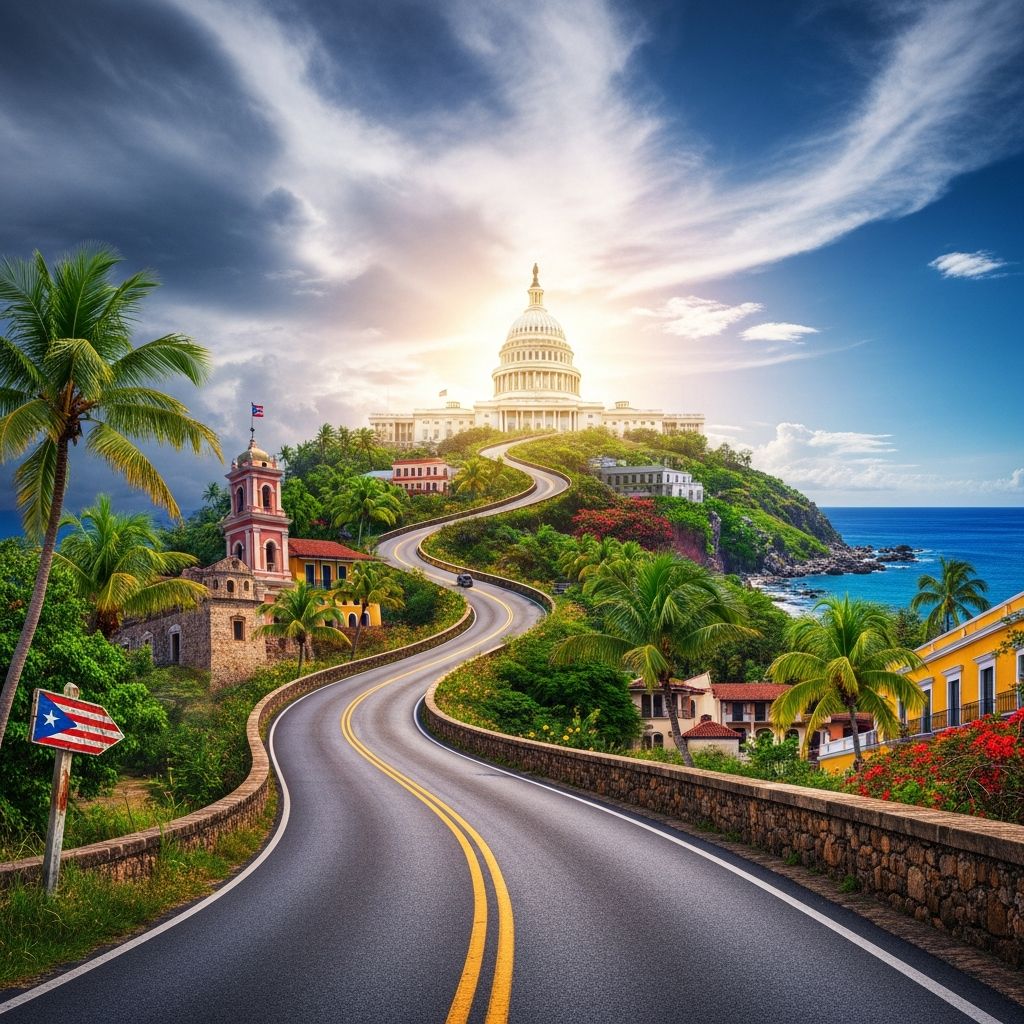
Puerto Rico, an unincorporated U.S. territory since 1898, has pursued statehood through multiple referendums showing majority support. Achieving this status requires Congressional action under Article IV, Section 3 of the U.S. Constitution, which grants Congress authority to admit new states.
Historical Context of Puerto Rico’s Territorial Status
Puerto Rico came under U.S. control after the Spanish-American War in 1898. As an unincorporated territory, its residents are U.S. citizens but lack full voting rights in Congress and presidential elections. Over decades, four non-binding plebiscites—1967, 1993, 1998, and 2012—demonstrated growing support for statehood, with the 2020 referendum directly asking if Puerto Rico should join as a state, receiving 52% approval.
This momentum reflects a desire for equal representation and benefits, including full constitutional protections. Unlike incorporated territories that became states, Puerto Rico’s status demands a deliberate transition process.
Constitutional and Legal Framework for Admission
The U.S. Constitution’s Article IV, Section 3 empowers Congress to admit states without specifying rigid criteria. Historically, 37 states joined via Congressional approval, often after enabling acts authorizing constitutional conventions. Puerto Rico meets basic thresholds: defined borders, a population exceeding 3.2 million (larger than 21 states), and an established republican government.
- Defined territory: Clear geographic boundaries.
- Population size: Sufficient for viable statehood.
- Government structure: Democratic institutions in place since 1952.
- Consent of the governed: Repeated voter majorities for statehood.
Congress has admitted all 32 territories that petitioned without denial, setting a precedent for Puerto Rico.
Step-by-Step Process to Statehood
The pathway involves local initiative followed by federal legislation. Here’s a structured overview:
- Local Referendum: Puerto Rico conducts a plebiscite on status options. Recent votes favor statehood.
- Legislative Proposal: Results prompt bills like the Puerto Rico Status Act for a binding federal vote.
- Congressional Enabling Act: Authorizes a constitutional convention and ratification.
- State Constitution: Drafted, approved by voters, and submitted to Congress.
- Admission Act: Simple majority in both houses admits the territory.
- Presidential Proclamation: Formalizes entry, initiating transition.
A transition period, potentially up to 10 years, allows negotiations on terms like debt and federal programs.
Key Legislative Efforts and Proposals
Several bills have advanced Puerto Rico’s case. The 2019 Puerto Rico Admission Act (H.R. 4901) proposed a yes/no statehood vote, with certification leading to automatic admission upon presidential proclamation. Though it stalled, it highlighted findings like Puerto Rico’s right to self-determination (Public Law 114-187).
In 2020, Puerto Rico’s local law enabled a statehood referendum, approved by 52%. Federally, H.R. 8393 passed the House in 2022 (233-191) for a binding plebiscite but died in the Senate. The 2023 Puerto Rico Status Act seeks a fair, federally overseen vote on three options: statehood, independence, or free association.
| Bill | Year | Key Features | Outcome |
|---|---|---|---|
| Puerto Rico Admission Act | 2018/2019 | Mandated statehood by 2021 if approved | Introduced, no passage |
| H.R. 4901 | 2019 | Yes/no referendum, auto-admission | Died in committee |
| H.R. 8393 | 2022 | Binding plebiscite | Passed House, stalled Senate |
| Puerto Rico Status Act | 2023 | Federal binding vote on options | Reintroduced |
Challenges and Political Hurdles
Opposition stems from fiscal concerns: Puerto Rico’s $70+ billion debt and reliance on federal aid raise questions about statehood costs. Critics argue new representatives might expand entitlements, straining budgets. Partisan divides persist—Democrats often support, while some Republicans cite voter turnout and status clarity issues.
Alternative paths like independence or enhanced commonwealth status divide locals. Low turnout in some referendums (e.g., 2020’s 51.9%) fuels debate on mandate strength. Incorporation as a prerequisite is debated but not legally required.
Potential Impacts of Statehood
Statehood would grant two senators, House seats based on census (likely 4-5), and full voting rights. Economically, residents gain equal welfare access but full federal taxes. Culturally, Spanish remains official alongside English.
- Political: Enhanced representation influences national policy.
- Economic: Phase-in of taxes; eligibility for all programs.
- Social: Full constitutional equality.
Proponents emphasize contributions: 200,000+ Puerto Ricans served in U.S. wars.
Public Opinion and Voter Trends
Statehood support has risen: 2012 (61%), 2020 (52%). Polls show 40-50% favor, with youth leaning pro-statehood. Independence hovers at 20-30%, commonwealth at 30-40%.
Frequently Asked Questions
Does Puerto Rico meet statehood requirements?
Yes, with population, government, and voter consent exceeding historical precedents.
Can Congress admit Puerto Rico without a referendum?
Yes, via simple majority, as with prior territories.
What happens if statehood is approved?
A transition begins, leading to full admission after constitution ratification.
Why has statehood stalled?
Partisan politics, debt concerns, and competing status options.
Could Puerto Rico become independent instead?
Yes, if chosen in a binding vote under proposed acts.
Future Outlook
With bipartisan bills pending and consistent voter support, 2025-2026 could see progress, especially post-elections. Resolving status fulfills self-determination promises.
References
- What Is Required for Puerto Rico Statehood? — PR51st. Accessed 2026. https://www.pr51st.com/what-is-required-for-puerto-rico-statehood/
- Puerto Rico statehood movement — Wikipedia. Accessed 2026. https://en.wikipedia.org/wiki/Puerto_Rico_statehood_movement
- The Puerto Rico Status Debate: Why Congress? Why Now? — LULAC. Accessed 2026. https://lulac.org/news/pr/pr_debate/
- To enable the admission of Puerto Rico as a State of the Union — U.S. House Natural Resources Committee. 2019-10-29. https://naturalresources.house.gov/uploadedfiles/pr_statehood_bill_10.29.2019.pdf
- Requirements for Statehood — Puerto Rico Report. Accessed 2026. https://puertoricoreport.com/requirements-for-statehood/
- D.C. and Puerto Rico Statehood Debate — Britannica. Accessed 2026. https://www.britannica.com/procon/DC-and-Puerto-Rico-statehood-debate
- Caution Needed on Puerto Rico Statehood — The Heritage Foundation. Accessed 2026. https://www.heritage.org/americas/report/caution-needed-puerto-rico-statehood-the-costlyconfusing-and-contentious
Similar Articles








Read full bio of medha deb




