
Publishing an App: Why Your Privacy Policy Comes First
A clear, compliant privacy policy is now a launch requirement, not an optional extra, for almost every mobile app in major app stores.
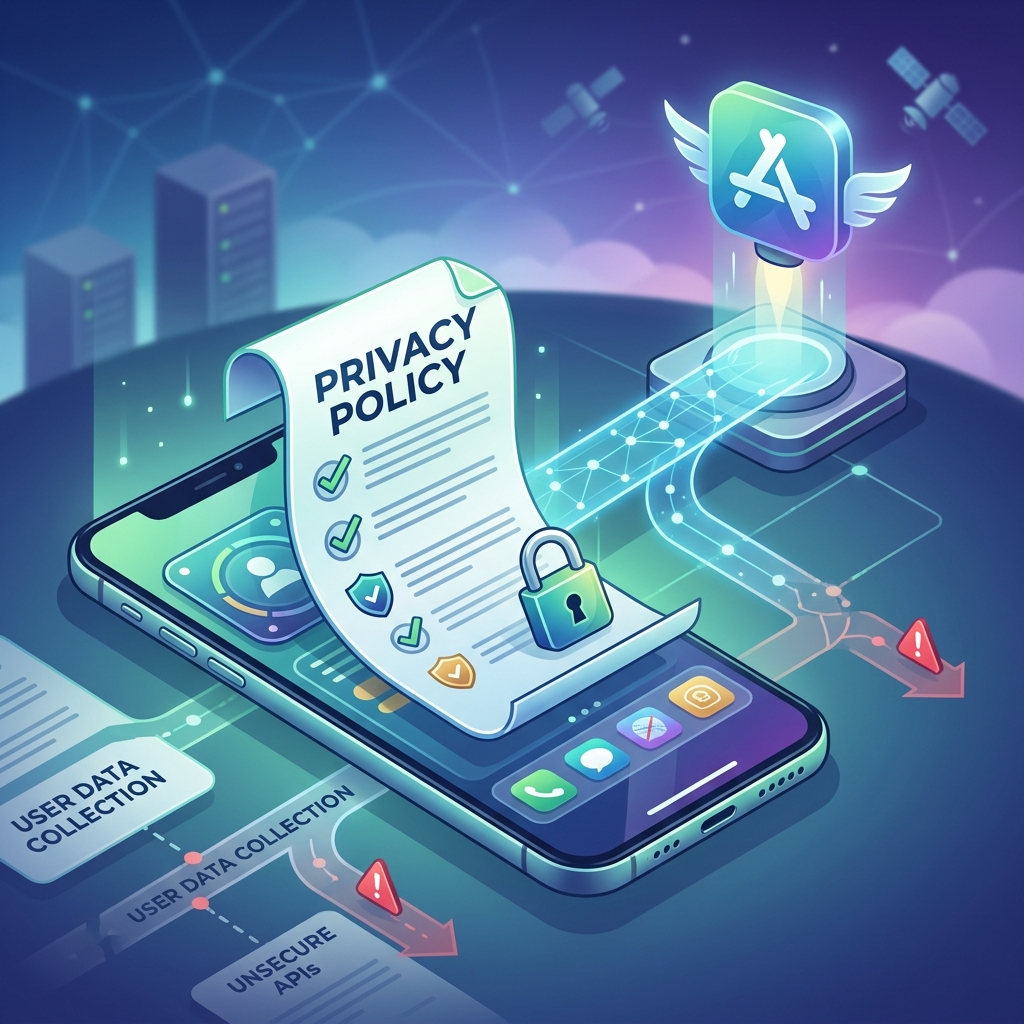
Launching a mobile app is no longer just about polishing your user interface and fixing bugs before release. For small businesses and independent developers, one document has become just as critical as your code: a privacy policy. App stores, data protection regulators, and increasingly savvy users all expect to see a clear explanation of how your app collects, uses, and protects personal information.
This article explains why privacy policies are mandatory for most modern apps, what laws you may need to comply with, how app store rules affect your launch, and practical steps to create, publish, and maintain a compliant policy.
Why Your App Needs a Privacy Policy Before Launch
A privacy policy is a publicly accessible notice that explains your data practices: what you collect, why you collect it, how you use and share it, and what rights users have over their information. For mobile apps, this is no longer optional in three major ways:
- Legal obligations under data protection laws like the EU’s General Data Protection Regulation (GDPR) and California’s Consumer Privacy Act (CCPA).
- Platform requirements from Apple’s App Store and Google Play, which require privacy information as a condition of listing.
- Trust and transparency, as users expect to understand and control how apps handle their personal data.
Even if you consider your app to be simple, it likely processes at least one type of personal data—such as device identifiers, IP addresses, usage analytics, or account details—which generally triggers some level of legal and platform disclosure requirements.
Key Data Protection Laws That Affect Mobile Apps
Many small businesses assume privacy laws only apply to large tech companies, but regulations like the GDPR and CCPA are based primarily on what data is processed and where users are located, not the size of the business.
GDPR: For Apps Reaching Users in the EU
The GDPR applies when you offer goods or services to people in the European Union or monitor their behavior, even if your company is based elsewhere. Under GDPR, your privacy policy must clearly describe:
- Contact details for the data controller (usually your business).
- Types of personal data you collect and the lawful basis for processing each type (e.g., consent, contract, legitimate interest).
- Data retention periods, or criteria for determining how long you store personal data.
- International transfers of data outside the EU and safeguards used (such as standard contractual clauses).
- User rights including access, rectification, erasure, restriction, objection, and data portability, plus how users can exercise these rights.
GDPR emphasizes clear, accessible language, especially when addressing children, and requires that privacy information be easy to find and understand.
CCPA and CPRA: For Apps Serving California Residents
The California Consumer Privacy Act, as amended by the California Privacy Rights Act, creates specific rights for California residents and obligations for businesses that meet certain thresholds (such as revenue or data volume). Even if you are not sure you cross those thresholds, many businesses adopt CCPA-style disclosures because users increasingly expect them. A CCPA-compliant privacy policy typically includes:
- Categories of personal information collected and sources of that data.
- Purposes for which the information is used (e.g., providing services, analytics, marketing).
- Categories of third parties with whom personal information is shared or sold.
- Explanation of user rights such as the right to know, delete, and opt out of the sale or sharing of data.
- How users can submit requests and how you will respond.
Several other U.S. states now have comprehensive privacy laws modeled on these concepts, so apps operating nationwide increasingly need a policy that sensibly covers multiple jurisdictions.
App Store Requirements: Privacy as a Launch Condition
Even if your app collected no personal information—a rare scenario—major app stores still require privacy disclosures. Failing to meet these requirements can delay approval or result in removal from the store.
Apple App Store
Apple requires developers to provide privacy details via App Store Connect, including data collected and how it is used, for the app and for any third-party code integrated. Apple specifically expects disclosure of:
- Types of data collected (e.g., contact details, location, identifiers, usage data).
- Whether data is linked to a user’s identity.
- Whether data is used for tracking across apps and websites.
Apple’s policies also make clear that you must not retroactively identify de-identified data, nor combine it with other datasets to link it to individuals. Additionally, a separate, accessible privacy policy URL is required and must be kept up to date.
Google Play Store
Google Play requires a privacy policy for apps that handle personal or sensitive user data and strongly encourages clear disclosure for all apps. You must link your policy in the store listing and align the policy with the permissions your app requests, such as location, contacts, or camera access.
Listing requirements typically include:
- A functioning URL where the privacy policy can be viewed.
- Consistency between the policy and the data safety information submitted through the developer console.
- Clear explanation of how data is collected, used, and shared, including any third-party SDKs or analytics tools.
| Requirement | Apple App Store | Google Play Store |
|---|---|---|
| Privacy policy URL | Mandatory for new and updated apps. | Required for apps collecting personal/sensitive data. |
| Data collection disclosure | Detailed app privacy section in App Store Connect. | Data safety form and aligned store listing. |
| Third-party SDKs | Must be included in privacy disclosures. | Must be disclosed in policy and safety section. |
| De-identified data | Rules against re-linking de-identified data to users. | Expectations around proper handling and security. |
What a Strong Mobile App Privacy Policy Should Cover
While exact requirements depend on the laws that apply to you and the nature of your app, most mobile app privacy policies share several core elements.
Core Clauses and Explanations
- Introduction and scope
Briefly describe your app, who operates it, and what the policy covers (for example, mobile app only, or app plus related website). - Types of personal information collected
List categories such as account details, device identifiers, location data, usage analytics, and any sensitive information (e.g., health data) where applicable. - Methods of collection
Explain whether data is collected directly from the user (forms, sign-ups), automatically (cookies, SDKs, native APIs), or from third parties. - Purposes of processing
Describe why you collect data: to deliver core features, personalize content, measure performance, prevent fraud, comply with law, or support customer service. - Legal bases (for GDPR-covered users)
Identify whether processing is based on consent, contract performance, legitimate interests, legal obligation, or protection of vital interests. - Data sharing and third parties
Disclose any sharing with service providers, analytics tools, advertising partners, or other third parties, and clarify whether data is sold or used for targeted advertising. - International transfers
Explain when data may be stored or processed in other countries and how you protect it (e.g., standard contractual clauses, recognized adequacy decisions). - Retention and deletion
State how long you keep personal data or provide criteria used to determine retention periods, and explain how users can request deletion. - User rights and choices
Describe rights of access, correction, deletion, restriction, objection, opt out of marketing, and data portability, depending on jurisdiction. - Security measures
Provide a high-level description of technical and organizational safeguards used to protect user data, without revealing sensitive security details. - Children’s privacy
State whether the app is directed to children and, if it is, how you comply with children’s privacy rules in applicable regions. - Changes to the policy
Explain how you will notify users about updates and where the latest version will be posted. - Contact information
Provide a clear way to contact your business or data protection contact for privacy questions or rights requests.
Where and How to Display Your Privacy Policy
Meeting legal and platform requirements is not just about what your policy says, but also where users see it. Regulators and app stores expect the policy to be accessible at key points in the user journey.
Essential Placement Points
- App store listings
Include a dedicated privacy policy URL in both Apple’s App Store Connect and the Google Play Console. This is often checked during review. - In-app legal or settings menu
Add a clearly labeled “Privacy Policy” item inside an “Legal”, “About”, or “Settings” menu so users can revisit the policy at any time. - Account creation and login
Link to your policy near signup forms or login screens, especially when collecting emails, usernames, or phone numbers. - Permissions requests
When asking for access to camera, contacts, location, or other device features, explain why you need these permissions and reference the relevant sections of your policy. - Payment and checkout screens
If your app processes payments or subscriptions, make your privacy notice visible when collecting billing information.
Practical Steps for Small Businesses Drafting a Policy
Creating a privacy policy can feel intimidating, but a methodical approach simplifies the process. Here is a practical workflow:
1. Map Your Data Flows
- List all features of your app that involve user input or device access.
- Identify what data is collected (e.g., email, location, device ID) from each feature.
- Note how the data moves: stored locally, sent to your server, or transmitted to third-party services.
2. Identify Applicable Laws and Store Rules
- Determine where your users are located and whether you actively target specific regions.
- Check whether GDPR, CCPA, or other regional laws likely apply.
- Review Apple and Google’s latest developer documentation on privacy and data safety requirements.
3. Draft Clear, User-Friendly Text
- Use plain language wherever possible; avoid unnecessary legal jargon.
- Group related information into logical sections, such as “Data We Collect” and “How We Use Your Information.”
- Be consistent with your actual practices—your policy must reflect reality, not aspirations.
4. Check Alignment With App Behavior
- Verify that all permissions requested by the app are explained in the policy.
- Ensure any SDKs (analytics, crash reporting, ads) are mentioned and correctly described.
- Confirm that retention periods and user rights mechanisms are technically feasible for your team.
5. Publish, Monitor, and Update
- Host the policy on a stable URL, ideally on your company site or a dedicated legal page.
- Update app store listings with the correct URL and double-check during app review.
- Set a recurring reminder to revisit the policy when you add major features or integrate new third-party tools.
Common Mistakes to Avoid
Many app submissions are delayed or rejected due to privacy oversights. Watch for these frequent pitfalls:
- Missing or broken privacy policy link in the store listing.
- Policy text that does not match permissions or data safety declarations.
- Ignoring third-party data collection by analytics or advertising SDKs.
- Overly vague explanations that merely say “we may collect information” without specifying what and why.
- No information on user rights for jurisdictions that require them, such as the EU.
FAQs: Privacy Policies for Mobile Apps
Do I still need a privacy policy if my app only collects analytics data?
Yes. Analytics data often includes device identifiers, IP addresses, and usage patterns that qualify as personal information under laws like GDPR and CCPA. Your policy should describe these practices and identify any third-party analytics providers used.
Can I use a generic privacy policy template for my app?
Templates can be helpful starting points, but you must adapt them to reflect your actual data collection, third-party tools, and legal obligations. Regulators and app stores expect accuracy and specificity rather than boilerplate language.
Where should I place my privacy policy in the app?
At minimum, include a link in your store listing and a clearly labeled item within the app’s settings or legal menu. Also link the policy near account creation, login, permissions requests, and payment screens to provide context when users are sharing data.
What happens if I change how my app uses data?
If you significantly change your data practices, you should update your privacy policy and, depending on jurisdiction and the nature of the change, may need to notify users or obtain fresh consent. App store entries and any in-app references must also be updated to match.
Do small businesses face the same privacy expectations as big apps?
Yes, in principle. Many laws apply regardless of company size, and app stores do not differentiate privacy disclosure requirements based on revenue. While enforcement may focus more on larger actors, small apps are still expected to comply and provide transparent notices.
References
- Privacy Policy for Android Apps — TermsFeed. 2023-05-12. https://www.termsfeed.com/blog/privacy-policy-android-apps/
- Mobile App Privacy Policy Template & Examples — Termly. 2024-02-01. https://termly.io/resources/templates/app-privacy-policy/
- Privacy Policies for Mobile Apps — PrivacyPolicies.com. 2023-03-10. https://www.privacypolicies.com/blog/mobile-apps-privacy-policy/
- App Privacy Details on the App Store — Apple Developer. 2024-01-15. https://developer.apple.com/app-store/app-privacy-details/
- Google Privacy Policy — Google LLC. 2024-04-01. https://policies.google.com/privacy
Similar Articles








Read full bio of medha deb


