
Public Policy Wrongful Termination: A Practical Guide Explained
Learn how public policy violations can turn a firing into actionable wrongful termination.
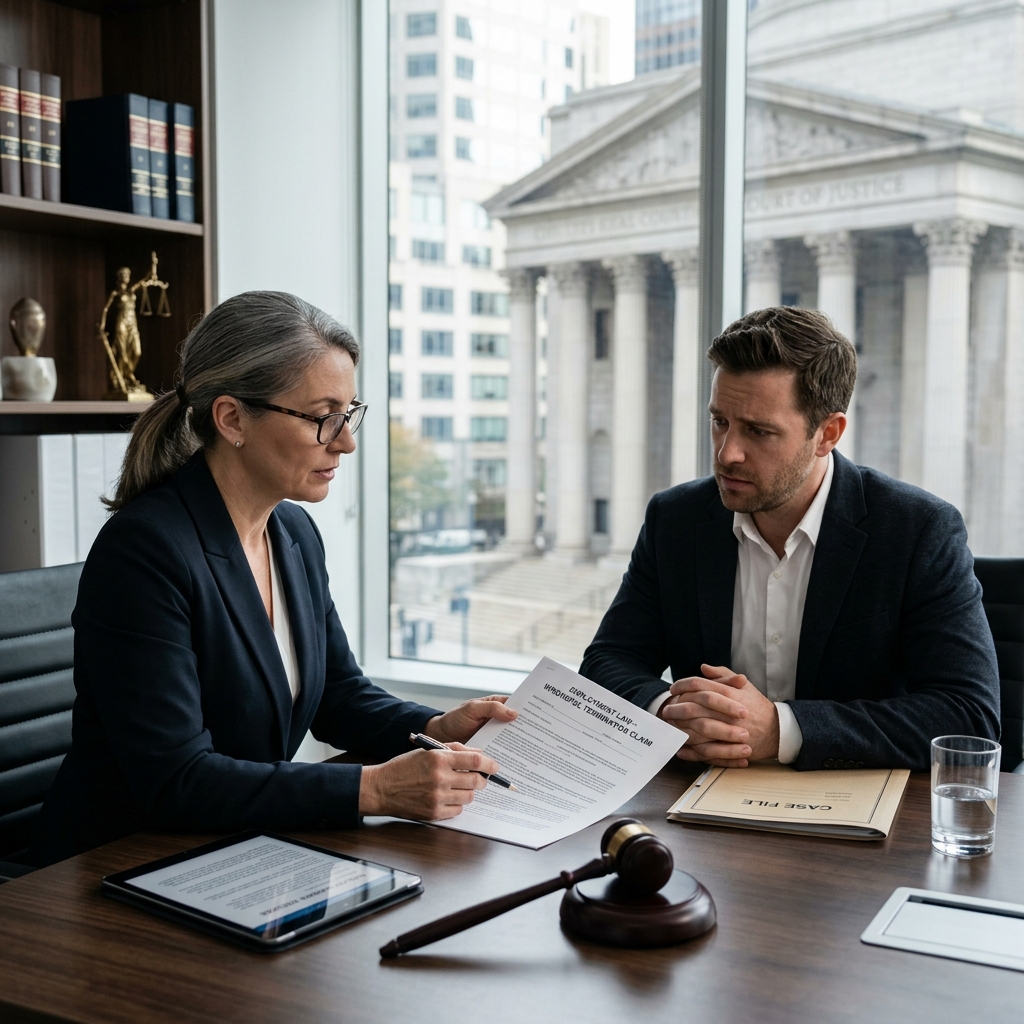
Most jobs in the United States are at-will, which means an employer can generally end the relationship at any time and for many reasons. But that freedom is not unlimited. One important exception arises when a firing conflicts with a clearly established public policy, such as laws that protect workers, the public, or the legal system.
When a termination crosses that line, the employee may have a claim for wrongful termination. These cases often involve retaliation for refusing to break the law, reporting misconduct, seeking legally protected benefits, or standing up for rights the law is designed to protect.
What public policy means in the employment context
In wrongful termination law, public policy refers to a legal principle that serves the public interest rather than a private dispute. Courts and statutes recognize that some actions are so important to the public good that employers may not punish workers for following them or refusing to violate them.
A policy usually qualifies only if it is clearly grounded in a constitution, statute, regulation, or settled common-law rule. It must also be fundamental enough that firing someone for complying with it would undermine the policy itself.
Common situations that may support a claim
Public policy cases are fact-specific, but several recurring scenarios appear often in employment disputes.
- Filing a workers’ compensation claim and then being fired because the employer dislikes the claim.
- Reporting illegal conduct, unsafe conditions, or fraud to a supervisor or government agency.
- Refusing to commit an unlawful act, such as falsifying records or violating safety rules.
- Complaining about wage violations, overtime issues, or other labor-law protections.
- Exercising protected workplace rights, including certain collective activity or leave-related rights.
These examples are not exhaustive. The key question is whether the firing was tied to conduct that the law encourages, requires, or protects in the public interest.
How this type of claim differs from ordinary unfair treatment
Not every bad firing is illegal. A termination may feel unjust, abrupt, or harsh without violating public policy. The legal issue is whether the employer’s reason for ending employment was connected to a protected public-interest rule or a refusal to break one.
For that reason, an employee usually needs more than disappointment or poor management. The worker must identify a specific policy and show a real connection between that policy and the termination decision.
Elements an employee typically must prove
Although the exact wording can vary by state, public policy wrongful termination claims usually require proof of several core elements.
| Element | What it means |
|---|---|
| Employment relationship | The worker must have been an employee, not merely an independent contractor unless misclassification can be shown. |
| Termination | The employer must have fired the worker, or the worker must have been effectively forced to quit through intolerable conditions. |
| Public-policy connection | The discharge must be substantially motivated by conduct that public policy protects or encourages, or by the worker’s refusal to violate the policy. |
| Harm | The employee must have suffered losses such as lost pay, lost benefits, emotional harm, or other damages. |
Some jurisdictions also require proof that the employer lacked a strong, legitimate business justification for the termination.
Constructive discharge can matter too
Employees are not always formally fired. Sometimes the workplace becomes so intolerable that quitting is the only realistic option. In those cases, the law may treat the resignation as a constructive discharge if the employer knowingly created or tolerated conditions that would force a reasonable person to leave.
This matters because a claim may still proceed even when there is no direct termination notice. The legal focus shifts to whether the employer made continued employment practically impossible.
Why documentation is important
Public policy claims often turn on evidence that shows what happened before the termination and why it happened. Good records can make the difference between a weak suspicion and a credible legal case.
- Email or text messages discussing the protected complaint or refusal.
- Performance reviews that differ sharply from the stated reason for the firing.
- Internal reports, incident logs, or complaint records.
- Witness statements from coworkers or supervisors.
- Copies of policies, handbooks, or agency complaints tied to the issue.
Consistent documentation is especially useful when the employer gives a reason that appears unrelated to the protected conduct.
Deadlines can be short
Employees considering a claim should pay close attention to the statute of limitations, because the deadline can expire before a case is fully investigated. One source notes a two-year filing period in New Jersey, while another notes a three-year period in Washington for wrongful termination based on public policy.
Because deadlines vary by state and by the type of claim involved, workers should confirm the applicable time limit as soon as possible after the termination.
Possible remedies in a successful case
If an employee proves a wrongful termination claim, the available remedies may include financial compensation and, in some cases, additional relief.
- Lost wages and lost future earnings.
- Lost benefits, such as health or retirement-related losses.
- Emotional distress or similar non-economic harm where allowed.
- Attorney’s fees in jurisdictions that permit fee recovery.
- Other damages tied to the employee’s specific losses.
Not every case will include every category of damages, and the final measure of recovery depends on the facts, the law of the state, and the proof offered.
How public policy claims fit with other employment laws
A public policy wrongful termination claim may overlap with other legal protections. For example, a firing tied to discrimination, whistleblowing, wage complaints, or safety concerns may implicate both public policy and separate statutes.
That overlap can matter because different claims may involve different agencies, different deadlines, and different proof requirements. Some workers may need to file administrative complaints before suing, especially in discrimination matters.
Practical signs that a firing may be suspicious
Certain patterns can suggest that an employer’s stated reason is not the whole story. Those patterns do not prove an illegal firing by themselves, but they can strengthen a case when combined with other evidence.
- The firing happened soon after a complaint or refusal to participate in misconduct.
- Managers changed their explanation over time.
- Only the employee who raised the issue was disciplined.
- The employer ignored its own policies or treated similar conduct differently.
- There is written evidence linking the termination to the protected activity.
These warning signs are often more persuasive when the worker can show a clear timeline and preserve communications from the period before the discharge.
What employees can do after a suspected violation
After a potentially unlawful firing, workers often benefit from acting quickly and in an organized way. That usually means saving documents, avoiding deletions, and identifying the specific policy that may have been violated.
- Gather pay records, handbooks, reviews, and correspondence.
- Write a timeline of the complaint, refusal, or protected activity.
- Identify anyone who witnessed the events.
- Check whether an agency complaint must be filed first.
- Consult an employment lawyer before the deadline passes.
In many cases, early review helps determine whether the facts support a public policy theory, a retaliation claim, a wage claim, or another remedy.
Frequently asked questions
Can an at-will employee sue for wrongful termination?
Yes. At-will employment allows broad firing discretion, but not when the reason violates a clearly established public policy.
Do I need proof that my employer admitted the illegal motive?
No. Direct admissions are rare. Many cases rely on timing, documents, witness accounts, and inconsistencies in the employer’s explanation.
Is quitting ever treated like being fired?
Yes. If working conditions were made so intolerable that a reasonable employee would feel forced to resign, the law may treat the departure as constructive discharge.
What if I was fired after reporting unsafe or illegal conduct?
That can support a public policy claim and may also implicate whistleblower or agency-specific protections.
Why legal review matters early
Public policy cases are often won or lost on details: the exact policy involved, the timing of the discharge, the quality of the employer’s explanation, and the available evidence.
Because state rules differ, and because some claims must be filed within a short period, an early legal review can help preserve rights and identify the strongest legal theory. That review is especially valuable when the termination followed a complaint, a refusal to violate the law, or an effort to use a workplace right the law was designed to protect.
References
- NJ Wrongful Termination In Violation of Public Policy Lawyer — Coughlin & McLaughlin, LLC. 2026-07-10. https://www.cmlaw.com/nj-wrongful-termination-lawyers/violation-of-a-public-policy/
- Wrongful termination in violation of public policy — Advocate Magazine. 2015-06-01. https://www.advocatemagazine.com/article/2015-june/wrongful-termination-in-violation-of-public-policy
- CACI No. 2430. Wrongful Discharge in Violation of Public Policy — Judicial Council of California / Justia. 2026-07-10. https://www.justia.com/trials-litigation/docs/caci/2400/2430/
- Experienced Attorney for Wrongful Termination in Washington — HKM Employment Attorneys. 2026-07-10. https://hkm.com/seattle/wrongful-termination/violation-of-public-policy/
- Wrongful Termination — Wyatt & Associates PLLC. 2026-07-10. https://wyattlegalservices.com/practice-areas/employees/wrongful-termination/
- Was My Termination a Violation of Public Policy? — Red Bank Legal. 2026-07-10. https://www.redbanklegal.com/faq/was-my-termination-a-violation-of-public-policy/
- What is Termination in Violation of Public Policy? — Lalak LLC. 2026-07-10. https://www.employmentlawohio.com/what-is-termination-in-violation-of-public-policy/
- Wrongful termination — USAGov. 2026-07-10. https://www.usa.gov/wrongful-termination
Similar Articles








Read full bio of Sneha Tete




