
Proving Texting While Driving: Key Evidence Strategies
Discover essential methods to gather and present evidence proving texting while driving in accident cases for stronger legal claims.
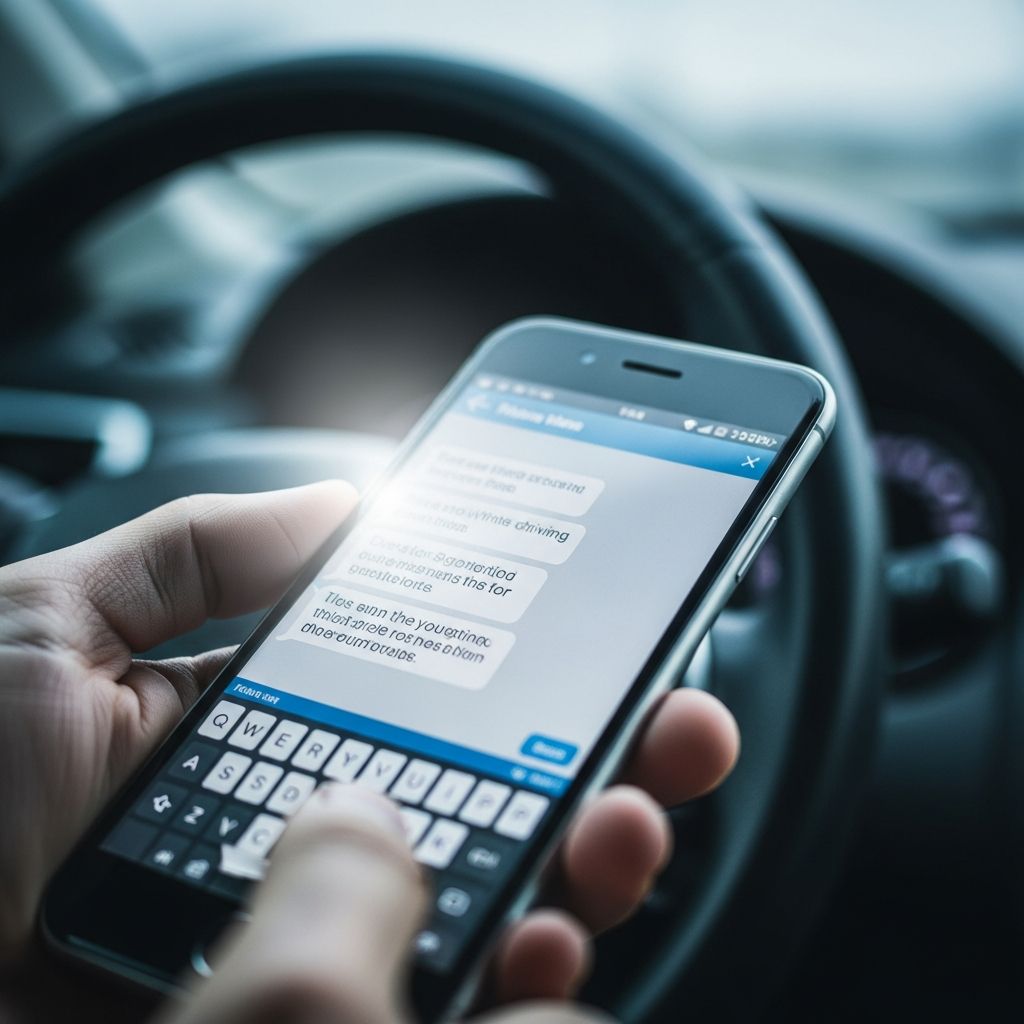
Texting while driving remains a leading cause of road accidents, creating significant legal challenges for victims seeking compensation. Establishing proof of distraction is crucial in personal injury claims, as it directly ties the at-fault driver’s negligence to the harm caused. This article explores comprehensive methods to gather irrefutable evidence, navigate defenses, and understand state-specific laws like Florida’s primary offense statute.
The Dangers and Legal Landscape of Distracted Driving
Distracted driving, particularly texting, impairs reaction times and attention, contributing to thousands of crashes annually. In personal injury litigation, plaintiffs bear the burden of proving the defendant’s phone use caused the collision. Evidence must be legally admissible, timely preserved, and compelling enough to overcome common defenses such as comparative negligence or lack of direct proof.
States like Florida classify texting as a primary offense under Florida Statute 316.305, allowing officers to pull over drivers solely for observed handheld device use. This shift from secondary to primary status, effective since 2019, underscores heightened enforcement. Violations carry fines from $30-$500, license points, and potential jail time for repeats, impacting insurance and civil claims.
Essential Evidence Types for Building Your Case
Gathering multifaceted evidence strengthens claims. Here’s a breakdown of primary sources:
- Cell Phone Records: Subpoena records from carriers showing call logs, texts, and data usage timestamps matching the accident time. These provide circumstantial proof of active engagement.
- Witness Testimonies: Eyewitness accounts of the driver holding or glancing at a phone are powerful, especially if documented in police reports.
- Video Surveillance: Dashcams, traffic cams, or business footage capturing head-down posture or single-handed steering.
- Police Documentation: Officer notes on phone inspection, driver admissions, or scene observations.
Harnessing Cell Phone Data: From Records to Forensics
Cell phone evidence forms the cornerstone of many cases. Basic records reveal incoming/outgoing texts, call durations, and data spikes indicating app use like social media or navigation. Even deleted messages can be traced via provider logs, countering attempts to conceal activity.
For deeper analysis, forensic experts extract device data with court approval. This includes app launch timestamps, typing patterns, cached images, and Bluetooth connections to vehicles. Such details prove handheld vs. hands-free use, crucial in jurisdictions banning manual operation.
| Evidence Type | What It Reveals | Acquisition Method |
|---|---|---|
| Call Logs | Timing and duration of calls | Carrier subpoena |
| Text Metadata | Send/receive times, even deleted | Provider records |
| Forensic Dump | App activity, screenshots | Court-ordered imaging |
| Data Usage | Internet/app engagement | Monthly bills/logs |
Act swiftly—carriers retain data briefly, and devices may be wiped. Legal counsel can issue preservation letters immediately post-accident.
Leveraging Video and Surveillance Footage
Visual proof trumps circumstantial data. Traffic cameras, often held by public works, show lane weaving or delayed braking—hallmarks of distraction. Footage auto-overwrites in 7-10 days, necessitating prompt requests.
Private sources like nearby businesses or red-light cams capture the driver’s posture. Dashcam videos from other vehicles, increasingly common, provide real-time evidence of phone handling. In Florida work/school zones, handheld use is explicitly prosecutable.
The Role of Police Reports and Officer Observations
At-scene investigations yield valuable notes. Officers may confiscate phones, note admissions (e.g., “I was just checking a text”), or record witness statements. These become admissible in civil court, bolstering negligence claims.
In primary offense states, tickets for texting enhance liability proof. However, reports alone rarely suffice; corroborate with phone data or video for ‘clear and convincing’ evidence standards.
Overcoming Common Legal Defenses
Defendants often challenge proof:
- No Direct Evidence: Argue records/witnesses are insufficient without device forensics.
- Comparative Fault: Claim plaintiff contributed (e.g., sudden stop).
- Alternative Causes: Mechanical issues or road conditions.
Counter by diversifying evidence and expert testimony on distraction’s crash probability. Social media metadata, like post timestamps, adds layers—e.g., a TikTok uploaded seconds before impact.
Florida’s Strict Texting Laws: Implications for Claims
Florida’s ban prohibits reading/writing data on wireless devices while moving, except at stops or for navigation. Primary status enables immediate stops, with penalties escalating: first offense non-moving violation ($30+ fees), repeats add 3 points and $60+ fines.
In accidents, proven texting amplifies damages awards, as courts view it as gross negligence. Victims should document everything and consult attorneys to subpoena records promptly, given concealment risks.
Practical Steps for Victims Post-Accident
- Seek medical care and report to police, requesting phone checks.
- Collect witness contacts and scene photos/videos.
- Hire a lawyer to issue preservation demands.
- Subpoena records and pursue forensics if warranted.
- Monitor social media for at-fault driver’s posts.
These actions maximize compensation for medical bills, lost wages, and pain.
Frequently Asked Questions (FAQs)
Q: How soon must I request cell phone records after an accident?
A: Immediately—data overwrites quickly; lawyers send preservation letters within days to carriers.
Q: Can deleted texts still prove texting while driving?
A: Yes, carrier metadata retains send times; forensics recover residues from devices.
Q: Is texting a primary offense everywhere?
A: No, but in Florida it is, allowing stops without other violations.
Q: What if the driver claims hands-free use?
A: Forensics show Bluetooth status; video/witnesses confirm handheld posture.
Q: Do police always check phones at crashes?
A: Not always, but reports may note suspicions; subpoena independently.
Expert Tips for Stronger Cases
Engage accident reconstructionists to model distraction timelines. Use telematics from vehicles (e.g., event data recorders) correlating with phone logs. In multi-vehicle pileups, chain evidence across sources for irrefutable narratives.
Insurance adjusters undervalue distraction claims without proof—arm yourself accordingly.
References
- How Can I Prove the Other Driver Was Distracted or Texting? — GTW Lawyers. 2023. https://gtwlawyers.com/blog/how-can-i-prove-the-other-driver-was-distracted-or-texting/
- What Are the Legal Defenses in Texting and Driving Accident Cases? — Law Team. 2024. https://lawteam.com/what-are-the-legal-defenses-in-texting-and-driving-accident-cases/
- Ways to Prove a Driver Was Distracted or Texting When They Hit You — Levecker. 2023. https://www.leverecker.com/blog/how-to-prove-distracted-driving/
- What Does It Mean That Florida’s Texting While Driving Law Is a Primary Offense? — LCPA Law. 2024. https://lcpalaw.com/what-does-it-mean-that-floridas-texting-while-driving-law-is-a-primary-offense/
- 3 Ways to Prove That a Driver Who Caused a Crash Was Texting While Driving — Mojy Law. 2023. https://mojylaw.com/3-ways-to-prove-that-a-driver-who-caused-a-crash-was-texting-while-driving/
- Florida’s Texting While Driving Law | How to Avoid a Ticket — Florida Online Traffic School. 2024. https://www.floridaonlinetrafficschool.com/articles/texting-while-driving-law/
- How Florida’s New Texting While Driving Law is Impacting Personal Injury Cases — MW Personal Injury. 2023. https://mwpersonalinjury.com/how-floridas-new-texting-while-driving-law-is-impacting-personal-injury-cases
Similar Articles








Read full bio of medha deb




