Public protest remains one of the most visible ways people try to influence law, policy, and culture in the United States. The Occupy demonstrations in the early 2010s highlighted both the strength of collective action and the complex legal landscape that protesters must navigate. At the same time, new state and local laws have increased criminal and civil penalties for certain protest-related conduct, especially when demonstrations disrupt traffic or involve encampments. Understanding these rules is essential for anyone planning a protest that is both impactful and legally informed.
From Occupy Camps to Today’s Street Protests
The Occupy movement drew global attention to economic inequality and the influence of financial institutions, particularly through the Occupy Wall Street encampment in New York City’s Zuccotti Park. These protests combined traditional marches and rallies with long-term camping, creating legal questions about how far First Amendment protections extend when demonstration activities conflict with property rules or public safety regulations.
Authorities in numerous cities eventually cleared the camps, citing health, safety, and property concerns. Courts often recognized a robust right to protest but did not treat long-term camping as automatically protected speech. Instead, they examined whether local rules were narrowly focused on maintaining public order and the intended use of parks and plazas. These decisions illustrate a key tension still present today: protesters may express their views loudly and visibly, but they are not generally granted unlimited control over public or private space.
- Marches and rallies are typically protected speech, subject to reasonable time, place, and manner limits.
- Encampments and long-term occupation may be restricted through park rules, permit systems, and safety regulations, even when politically motivated.
- Blocking roads or entrances is increasingly targeted by specific criminal statutes and enhanced penalties.
Core Legal Framework for Protest Activity
In the United States, the First Amendment to the Constitution protects the right to assemble and express opinions, including through protest. However, this protection is not absolute. Government officials may impose content-neutral restrictions to address safety and order, and protesters who violate valid laws can face arrest or civil liability.
| Legal Concept | Practical Impact on Protests |
|---|---|
| First Amendment | Protects protest speech and peaceful assembly, but allows rules about permits, noise, and location. |
| Time, Place, Manner Limits | Governments may regulate when, where, and how protests occur, so long as restrictions are neutral and reasonable. |
| Property Rules | Private owners can enforce rules on use of their property, including parks or plazas designated for public use. |
| Criminal Statutes | Specific laws address trespass, obstruction of streets, disorderly conduct, and riot-related offenses. |
| Civil Liability | Individuals may be sued for damages caused during protests, especially where new statutes create explicit civil causes of action. |
Common Criminal Charges Linked to Protest Conduct
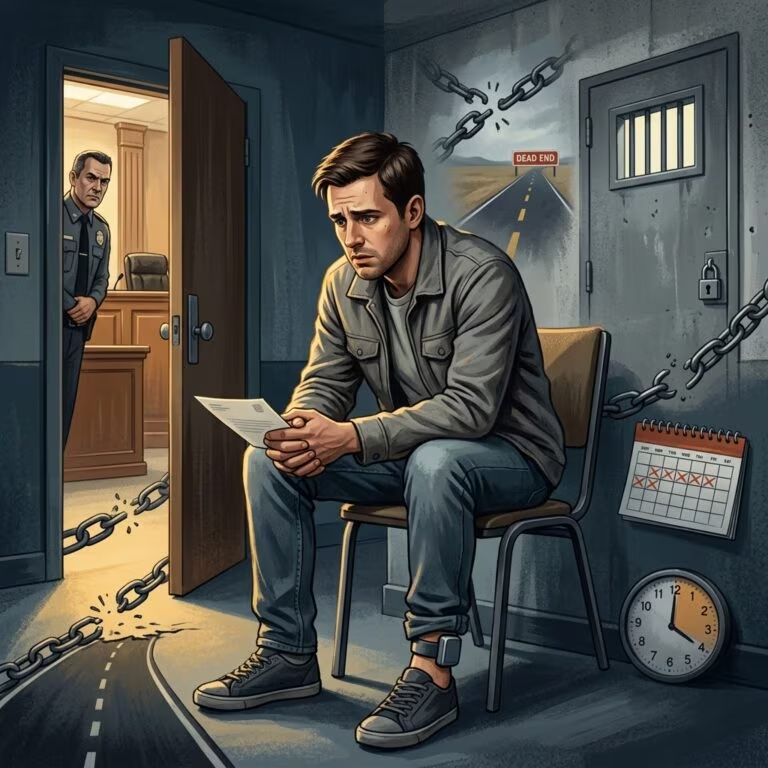
Most protests are peaceful and never lead to charges. Nonetheless, organizers should understand how routine demonstration tactics can intersect with criminal law, especially where newer statutes elevate penalties.
Obstruction of Roads, Sidewalks, and Public Passage
Blocking traffic or making a public passageway impassable is a frequent point of friction between protesters and law enforcement. Several U.S. jurisdictions have adopted laws that increase penalties for obstructing streets or highways.
- Some state laws upgrade obstruction from a minor offense to a serious misdemeanor carrying up to one year in jail and fines of several thousand dollars.
- In certain areas, protesters who obstruct streets may also face civil suits seeking compensation for any economic damage caused.
- Even where statute language appears broad, authorities typically invoke these laws when demonstrations cause significant disruption or safety concerns.
For organizers, the practical takeaway is that tactics involving sitting in roads, forming human chains across intersections, or blocking entrances should be considered high-risk from a criminal and civil standpoint, even when they are part of nonviolent civil disobedience.
Disorderly Conduct and Related Offenses
Disorderly conduct laws are widely used and often written in general terms. They can apply to loud, disruptive, or confrontational behavior, especially in crowded public spaces.
- Shouting slogans is typically protected, but sustained noise late at night or near sensitive locations can trigger enforcement.
- Refusing lawful orders to disperse in unsafe situations may lead to arrests for disorderly conduct or similar offenses.
- These statutes are sometimes criticized by scholars and advocates as being prone to overbroad enforcement, especially against marginalized groups.
From a planning perspective, identifying sound policies, quiet hours, and de-escalation roles within protest teams can help reduce the risk of disorderly conduct allegations.
Riot, Incitement, and Enhanced Penalties
Riot and incitement to riot laws are applied far less frequently than basic protest-related charges but carry serious penalties. Recent legislative trends in some states have introduced mandatory minimum sentences and higher fines for riot-related offenses.
- Definitions of “riot” differ across jurisdictions but often involve a group engaged in violence or property destruction.
- Statutes may require anyone charged with riot-related offenses to be held without bail for a short period pending a hearing.
- Some laws impose mandatory restitution for injuries or property damage arising from a riot, increasing long-term financial consequences.
Organizers who explicitly reject violence and property destruction should make this stance clear in public materials and internal communications, both to support safer protest culture and to reduce exposure to more serious charges.
Encampments, Parks, and Property-Based Restrictions
The Occupy era highlighted unique legal questions about long-term encampments in parks and plazas. In the case of Zuccotti Park, a privately owned public space, courts considered whether park rules limiting camping and certain activities were compatible with the First Amendment.
Judges generally distinguished between the right to protest and the right to live or sleep in a park indefinitely. They acknowledged protest rights but allowed enforcement of reasonable regulations concerning sanitation, safety, and access for others. This reasoning continues to influence how cities respond to encampment-based demonstrations.
- Park curfew rules may limit overnight occupation even when daytime rallies are permitted.
- Sanitation and safety regulations can justify removal of tents or structures that pose health risks, independent of protest content.
- Private property open to the public often comes with posted rules that courts will analyze for fairness and neutrality rather than striking them down automatically.
Organizers considering an occupation-style demonstration should carefully review park rules, local ordinances, and the owner’s regulations, documenting these before committing to an encampment strategy.
Civil Liability: Financial Consequences Beyond Arrest
Criminal charges are not the only concern for protesters. Some recent state laws explicitly allow civil suits against individuals who obstruct roads or cause damage during demonstrations. In addition, standard civil law principles, such as negligence or intentional property damage, may apply even without special protest statutes.
Civil liability is particularly significant because it can lead to long-term financial obligations:
- Courts may order restitution for property damage, medical costs, or other losses associated with protest-related offenses.
- New statutes can make obstruction of streets both a crime and a basis for civil suits by injured parties.
- Large-scale actions involving many defendants may result in complex litigation, sometimes beyond the capacity of grassroots groups to defend.[10]
Organizers cannot fully eliminate civil risk, but they can mitigate it by emphasizing non-destructive tactics, clarifying codes of conduct, and obtaining legal guidance before engaging in high-risk activities such as road blockades.
Know Your Rights: Practical Planning Steps
Civil liberties organizations have prepared widely used guidance on protest rights, emphasizing the importance of planning and documentation. Drawing on these principles and lessons from Occupy-era litigation, the following steps can help protest organizers balance effectiveness with legal awareness.
Before the Protest
- Research local laws: Identify statutes addressing protest permits, park rules, obstruction of traffic, and curfews. State-level protest law trackers and municipal codes are key tools.
- Consult legal support: Connect with local legal rights organizations or pro bono lawyers who understand protest law in your jurisdiction.
- Decide on risk tolerance: Clarify whether the event will deliberately include civil disobedience tactics that may result in arrest and ensure participants are informed.
- Set clear behavioral expectations: Draft guidelines about nonviolence, property respect, and interactions with police.
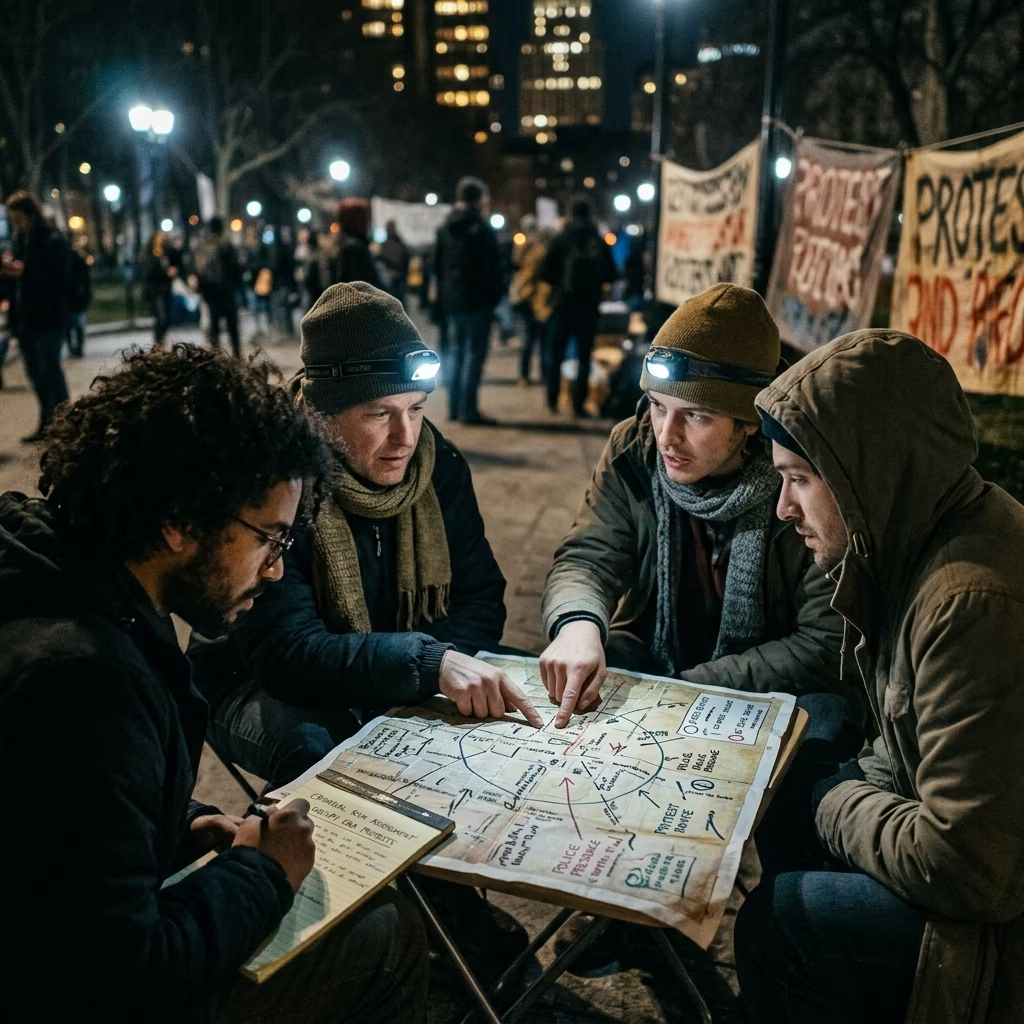
- Develop communication plans: Use trained marshals or volunteers to relay information, adjust routes, and de-escalate tensions.
During the Protest
- Follow permit conditions: If you have a permit, keep a copy on hand and comply with agreed routes and times.
- Stay aware of police orders: Officers may issue dispersal orders when they believe there is a safety or legal issue; understanding when these orders are lawful is important but often requires quick judgment.
- Document events: Designate people to record interactions with law enforcement and incidents involving potential rights violations or conflicts.
- Monitor crowd dynamics: Large gatherings can quickly shift from calm to tense. Marshals should intervene early when they see behavior that may invite serious charges.
After the Protest
- Collect accounts and evidence: After the event, gather written statements and media from participants to preserve evidence in case of legal disputes.
- Support arrested individuals: Coordinate with attorneys or support networks to help those who face charges or civil actions.
- Review what worked: Reflect on whether routes, tactics, and communication strategies minimized unnecessary legal exposure.
Strategic Choices: Impact vs. Legal Exposure
One important lesson from Occupy and similar movements is that impactful protest often involves tension with existing rules. For example, occupying a park overnight or blocking a major financial district street may convey the depth of activists’ concerns but also triggers stronger enforcement responses.
Organizers can think about protest tactics along a spectrum:
- Low-risk tactics: Permitted marches, rallies in designated plazas, online campaigns, and educational events.
- Moderate-risk tactics: Vigils near sensitive locations, spontaneous gatherings that remain on sidewalks, symbolic displays that may test local ordinances.
- High-risk tactics: Road blockades, encampments in regulated parks, occupation of private property, and actions likely to draw riot-related or obstruction charges.
Not every movement will want or need to avoid high-risk tactics entirely. Some choose civil disobedience with full awareness of potential consequences. The key is transparent planning so that participants understand legal risks and can make informed choices about their level of involvement.
Frequently Asked Questions (FAQs)
Are peaceful protests always protected from arrest?
No. While peaceful expression lies at the heart of First Amendment protection, protesters can still be arrested if they violate valid laws concerning permits, obstruction of traffic, trespass, or other generally applicable rules. Courts often examine whether restrictions are content-neutral and reasonably related to safety or order, rather than targeting speech itself.
Can I be arrested for blocking a street during a demonstration?
Yes. In several states, laws specifically increase penalties for protesters who obstruct public roads and highways, and can also expose them to civil liability for resulting damages. Even in jurisdictions without heightened penalties, local ordinances typically prohibit making streets impassable except where permits authorize temporary closures.
Is camping in a park for political reasons protected speech?
Not necessarily. Courts that examined Occupy-era encampments recognized the right to protest in parks but generally held that long-term camping can be restricted through reasonable regulations focused on health, safety, and access. The First Amendment does not automatically override park curfews or prohibitions on tents, even when camping is part of a protest message.
What should I do if police order the crowd to disperse?
Dispersal orders are often issued in situations officials view as unsafe or unlawful. While some orders have been challenged as overbroad or unjustified, refusing a clear order may lead to arrests for disorderly conduct or related offenses. Documenting the order, its timing, and the context can be important for later legal review, but individuals must weigh the immediate risk of arrest.
How can protest organizers reduce legal risk without weakening their message?
Organizers can reduce risk by researching local law, communicating clear codes of conduct, coordinating with legal observers, and selecting tactics that align with their risk tolerance. Occupy-era experiences suggest that combining strong messaging with thoughtful logistics—such as planned routes, sanitation arrangements, and transparent goals—can maintain impact while limiting unnecessary exposure to serious charges or civil suits.
References
- US Protest Law Tracker — International Center for Not-for-Profit Law. 2026-01-01. http://www.icnl.org/usprotestlawtracker/
- Protesters’ Rights — American Civil Liberties Union. 2022-08-01. https://www.aclu.org/know-your-rights/protesters-rights
- The Occupy Wall Street Movement and the Constitution: Protestors and Public Parks — Touro Law Review. 2013-01-01. https://digitalcommons.tourolaw.edu/cgi/viewcontent.cgi?article=1706&context=lawreview
- Occupy Wall Street — Encyclopaedia Britannica. 2011-11-15. https://www.britannica.com/topic/Occupy-Wall-Street
- Suppressing Protest: Human Rights Violations in the U.S. Response to Occupy Wall Street — Harvard Law School Human Rights Program. 2013-06-01. https://hrp.law.harvard.edu/wp-content/uploads/2013/06/suppressing-protest-2.pdf
- Public, by Necessity — Seattle Journal for Social Justice. 2014-01-01. https://digitalcommons.law.seattleu.edu/cgi/viewcontent.cgi?article=1747&context=sjsj
- What are the legal issues faced by Occupy protests? — vLex International. 2021-05-01. https://international.vlex.com/vid/what-are-the-legal-924381547