After a hurricane or other major disaster, communities face not only damaged homes and disrupted lives but also a surge of fraudsters looking to profit from chaos and fear. Understanding how these scams work, what warning signs to watch for, and how to respond safely can help you protect both your finances and your recovery.
Why Scammers Target Disaster Survivors
In the aftermath of events like Hurricane Sandy, large numbers of homeowners are suddenly dealing with urgent repairs, complex insurance claims, and government relief programs. This creates an environment where people may feel pressured to make quick decisions, trust strangers, or share sensitive information. Scammers know this and design schemes that:
- Exploit urgent needs for housing, repairs, and cash.
- Capitalize on emotional distress and a desire to help others.
- Take advantage of confusing processes, such as insurance claims or FEMA applications.
By recognizing these dynamics, you can pause and verify before acting, even when the situation feels overwhelming.
Common Types of Post-Disaster Scams
While each scheme has its own twists, most post-disaster fraud falls into a few predictable categories. The table below summarizes several of the most common types reported after hurricanes and similar events.
| Scam Type | Typical Approach | Main Risk |
|---|---|---|
| Home repair & construction scams | Unlicensed contractors offering quick, cheap repairs door-to-door. | Shoddy or unfinished work, loss of deposits, further property damage. |
| Charity & donation fraud | Fake charities or individuals soliciting funds for disaster relief. | Misused donations, identity theft, financial loss. |
| Investment “opportunities” tied to the disaster | Cold calls or online promotions for special post-disaster investments. | Complete loss of investment, illegal securities activity. |
| Insurance & claims-related scams | Imposters posing as insurance agents or adjusters. | Stolen personal data, altered claims, underpayment of legitimate claims. |
| Government aid (FEMA) impersonation | Fraudsters pretending to be FEMA or other officials seeking information or fees. | Loss of benefits, identity theft, misuse of relief funds. |
Home Repair and Contractor Scams
Construction and repair scams are among the most widespread after a storm. With roofs leaking, power out, and walls damaged, homeowners may feel desperate to hire the first person who offers help, especially if they claim to have materials and workers ready to start immediately.
Typical Warning Signs
- Contractors appear uninvited at your door, often from out of state, offering to start work immediately.
- They insist on cash payments or ask for most of the money upfront before work begins.
- They cannot provide a local address, proof of insurance, or licensing information.
- They use high-pressure tactics, claiming your home is unsafe and you must act now.
Safer Ways to Hire Contractors
To reduce the risk of fraud and poor workmanship, take the following steps when arranging repairs:
- Check with your insurance company first. Confirm what repairs are covered and any rules about approved contractors.
- Get multiple estimates. Compare 3–4 written bids, making sure they describe similar scope and materials.
- Verify credentials. Contact your state or local licensing board and use trusted resources, such as the Better Business Bureau, to research companies.
- Insist on a detailed written contract. It should include labor and material costs, timelines, clean-up responsibilities, and proof of insurance.
- Never pay in full in advance. A modest deposit may be reasonable, but schedule payments based on completed work and inspect before the final payment.
Charity and Donation Fraud
Disasters often prompt a strong desire to help. Unfortunately, scammers exploit this generosity by creating fake charities or posing as victims in need of immediate cash. Some schemes also harvest credit card numbers and other personal information under the guise of relief work.
How Charity Scams Operate
- Unsolicited calls, emails, or social media posts ask for donations for “disaster relief” but provide few verifiable details.
- Social media profiles claim to be individual victims seeking direct transfers, sometimes using stolen photos or fabricated stories.
- Fraudsters urge payment via wire transfer, cryptocurrency, or cash, which are harder to trace and recover.
Donating Safely After a Disaster
When giving, focus on trusted organizations and transparent processes:
- Research the charity. Use established evaluators like Charity Navigator or GuideStar to confirm legitimacy and track records.
- Give through official channels. Donate via the charity’s website or well-known platforms rather than links sent by unknown individuals.
- Avoid cash and wire transfers. Use credit cards or other secure payment methods that offer dispute protections.
- Be cautious with personal data. Legitimate charities do not need your Social Security number or full bank details.
Disaster-Linked Investment Schemes
Another category of fraud involves investments marketed as opportunities arising from the disaster, such as special bonds, pooled funds for rebuilding, or companies claiming breakthrough technologies for cleanup or power restoration. Regulators have repeatedly warned investors to be skeptical of high-return promises tied to recent catastrophes.
Red Flags for Disaster Investments
- Aggressive cold calls or spam emails promoting urgent investment in “storm recovery” or “disaster technology” firms.
- Promises of exceptionally high, fast returns with minimal risk.
- Pressure not to contact your own financial advisor or to skip independent research.
- Inability or refusal to verify registration of the seller or the security with state or provincial regulators.
Steps to Protect Your Portfolio
Before committing funds to any post-disaster investment:
- Hang up on cold callers. Do not share personal or financial information over unsolicited calls.
- Check registration status. Contact your state securities regulator to confirm that both the promoter and investment are properly licensed.
- Use common sense. Be skeptical of “too good to be true” returns, especially when tied to recent tragedies.
- Consult a trusted advisor. Before acting, speak with a financial professional who is not connected to the scheme.
Insurance, Claims, and Underpayment Issues
In addition to outright imposters, some disaster survivors experience disputes over claim amounts or suspect that reports have been altered to minimize payouts. Investigations after Hurricane Sandy, for example, highlighted cases where engineering reports were allegedly changed, leading to lower flood insurance settlements.
Insurance-Related Scams and Problems
- Individuals pretending to represent your insurer and requesting sensitive data or fees to “speed up” your claim.
- Offers to handle your claim or provide specialized damage reports for an upfront fee.
- Discrepancies between initial assessments and final documentation used to calculate payouts, potentially reducing compensation.
Managing Claims Safely
To safeguard your insurance benefits:
- Contact your insurer directly. Use the number listed on your policy rather than one provided by a caller or stranger.
- Keep thorough records. Save receipts, photos, emails, and damage reports; these can be vital if disputes arise.
- Review all documents. Read engineering reports and settlement offers carefully, and ask questions about any unexpected changes.
- Seek legal or expert help if needed. If you suspect manipulation or systematic underpayment, consider consulting an attorney or independent engineer.
Government Aid and FEMA Impersonation
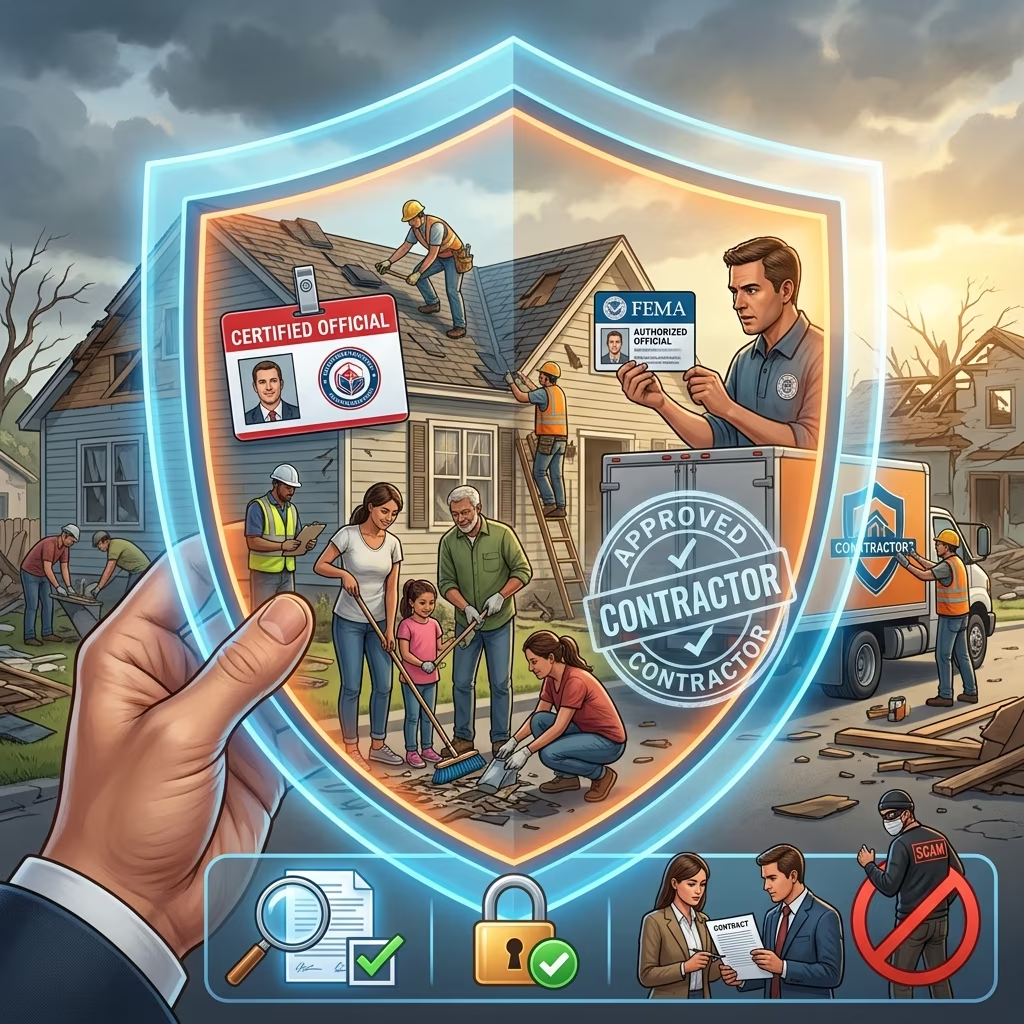
Federal and state agencies, such as FEMA, play a central role in disaster recovery. This visibility makes them prime targets for impersonation. Scammers may pose as inspectors, caseworkers, or contractors “certified” by FEMA, aiming to collect fees or personal data.
How to Verify Genuine FEMA Contacts
Trusted guidance emphasizes that legitimate FEMA representatives will never ask for cash or charge for assistance.
- Look for official photo ID. Real FEMA workers carry a laminated FEMA badge; do not rely solely on shirts or logos.
- Confirm through the helpline. If you are unsure, call FEMA’s official helpline to verify whether someone is assigned to your case.
- Guard your application number. Keep your FEMA registration number private, and do not share it with unsolicited contacts.
- Refuse fee-based application help. FEMA does not charge for help completing grant applications or forms.
Practical Checklist: Staying Safe After a Disaster
Use the following checklist as a quick reference during recovery:
- Pause before paying. Never make financial decisions on the spot under pressure.
- Verify identities. Confirm credentials for contractors, charity solicitors, investment promoters, and government workers.
- Use written agreements. For any substantial work or financial commitment, insist on clear contracts or documentation.
- Limit personal data. Share only what is necessary, and only with verified organizations.
- Keep copies of everything. Store contracts, receipts, claim numbers, and correspondence in a safe place.
FAQ: Post-Disaster Scams and Your Rights
How can I tell if a contractor is legitimate?
Check whether the contractor is licensed or registered with your state or local authorities, confirm their physical business address, review references, and verify their status with reputable organizations such as the Better Business Bureau. Legitimate contractors are willing to provide written estimates and proof of insurance.
Is it safe to donate to individuals on social media who say they are disaster victims?
Direct donations to individuals you do not know personally carry significant risks. Regulators warn that fake victims often use social media to solicit funds, sometimes without any connection to the affected region. To ensure your money helps genuine survivors, donate through established charities with a documented presence in the disaster area.
What should I do if someone claims to be from FEMA and asks for money?
Do not provide money or personal information. FEMA representatives do not charge for assistance or inspections. Ask to see an official FEMA photo ID, and then independently call the FEMA helpline using the number published by the agency to confirm the person’s identity and role.
Who should I contact if I think I’ve been scammed?
If you suspect fraud, report it to local law enforcement and national agencies such as the Federal Trade Commission. For scams involving federal disaster aid, FEMA operates a fraud hotline where you can report suspicious activity. Prompt reporting may help authorities stop the scheme and can support any efforts to recover losses.
Are investment offers related to disaster recovery ever legitimate?
Some businesses legitimately participate in rebuilding and may seek investors, but regulators advise extreme caution with unsolicited offers that emphasize the disaster itself. Always verify registration, consult independent advisors, and research the underlying business thoroughly before considering such investments.
Reporting Fraud and Getting Help
Stopping post-disaster scams depends on timely reporting and coordination between victims, communities, and regulators. High-quality guidance recommends that survivors and donors take an active role in flagging suspicious activity to authorities.
- Local police: Report immediate threats, thefts, or fraud affecting your property or safety.
- Federal Trade Commission: File complaints about deceptive practices, telemarketing scams, and identity theft.
- FEMA fraud hotlines: Contact designated numbers to report misuse of disaster assistance or impersonation of FEMA staff.
- State securities regulators: Alert them to suspicious investment promotions tied to disasters.
By sharing information, you protect not only yourself but also neighbors and future disaster survivors who might otherwise fall prey to the same schemes.
References
- BBB warns of home repair scams following Hurricane Sandy — Pennsylvania Association of Realtors / Better Business Bureau. 2012-11-01. https://www.parealtors.org/blog/bbb-warns-of-home-repair-scams-following-hurricane-sandy/
- NASAA warns investors to watch for “Sandy scams” — North American Securities Administrators Association. 2012-10-31. https://www.nasaa.org/17185/nasaa-warns-investors-to-watch-for-sandy-scams/
- Avoid the dangers of 5 common post-disaster scams — Champions First Credit Union. 2022-08-10. https://championsfirst.org/avoid-the-dangers-of-5-common-post-disaster-scams/
- 8 Tips to Avoid Disaster Relief Scams and Fraud — Team Rubicon. 2023-09-15. https://teamrubiconusa.org/news-and-stories/tips-to-avoid-disaster-relief-scams/
- Underpaid flood insurance claims (60 Minutes investigation) — CBS News. 2015-03-01. https://www.youtube.com/watch?v=KTc9udJG3QM