
Protecting Your Business From W‑2 Phishing Attacks
Learn how W‑2 phishing scams target small businesses and the practical steps you can take to prevent, detect, and respond to these tax‑season attacks.
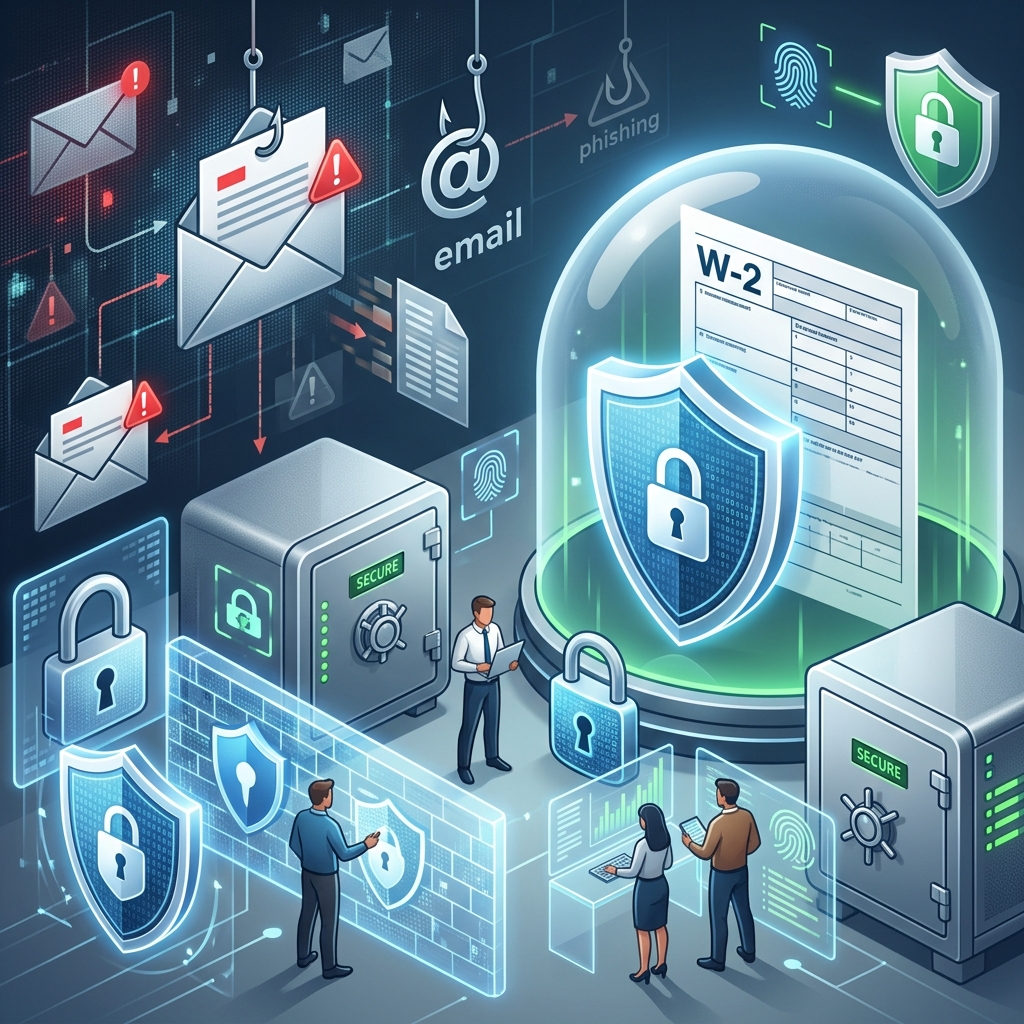
W‑2 phishing schemes have become one of the most damaging tax‑season threats for employers, especially small and midsized businesses that may not have dedicated security teams. These scams target the personal and tax information contained in employee W‑2 forms, putting both workers and the business at risk of identity theft, tax fraud, and costly remediation.
This article explains how W‑2 phishing attacks work, why smaller organizations are frequently targeted, and the concrete steps you can take to prevent, detect, and report them. It is designed for business owners, HR and payroll staff, and anyone responsible for safeguarding employee tax data.
Understanding W‑2 Phishing: How Criminals Steal Tax Data
At its core, a W‑2 phishing scam is a social‑engineering attack. Cybercriminals trick a trusted employee—often someone in human resources, payroll, or finance—into sending W‑2 information or related data directly to them. The attacker rarely “hacks” into systems in a technical sense; instead, they exploit human trust and organizational weaknesses.
Typical Anatomy of a W‑2 Phishing Scheme
While specific tactics vary, most W‑2 scams follow a similar pattern:
- Impersonation of an authority figure: The attacker poses as a CEO, CFO, controller, HR director, or sometimes a government agency such as the IRS.
- Urgent, unusual request: The email or text message asks for copies of all employee W‑2 forms, payroll data, or Social Security numbers, typically claiming an urgent deadline or a special audit.
- Pressure to bypass normal procedures: The message encourages the recipient to send data quickly, often discouraging phone calls or verification.
- Direct delivery of sensitive data: If the employee complies, the attacker immediately gains access to names, addresses, Social Security numbers, wage information, and tax details.
With this information, criminals may file fraudulent tax returns, commit other forms of identity theft, or sell the data on underground markets.
Why W‑2 Data Is So Valuable
W‑2 forms contain a combination of personal identifiers and financial information that makes them a prime target:
- Full legal name and address
- Social Security number (SSN)
- Employer identification number (EIN)
- Annual wage and tax information
According to the IRS, theft of W‑2/SSN data enables criminals to create highly convincing fraudulent tax returns and can lead to long‑term identity theft issues for affected employees.
Why Small Businesses Are Prime Targets
Although organizations of all sizes face W‑2 phishing threats, government and security advisories repeatedly warn that small and midsized businesses are particularly exposed. Several factors explain this pattern.
Limited Security Resources
Large enterprises may have security operations centers, formal incident response plans, and dedicated IT departments. Smaller organizations often rely on a small team—or a single individual—to handle HR, payroll, and IT tasks. This can create gaps in:
- Formal data‑handling policies
- Employee security training
- Multi‑person approval or review processes
- Technical protections such as email filtering and advanced authentication
Concentration of Sensitive Information
Regardless of size, employers hold large amounts of sensitive tax data on their staff. In a small business, this data is often controlled by a very small number of people. If one of these individuals is successfully targeted, a criminal may obtain W‑2 data for the entire workforce in a single attack.
Higher Likelihood of Trust‑Based Processes
Smaller companies frequently depend on informal, trust‑based communication. A request that appears to be from the business owner or accountant may be accepted without verification, especially during busy periods such as year‑end closing or tax filing season.
| Factor | Small Business | Large Enterprise |
|---|---|---|
| Dedicated security team | Rare; security handled by general staff | Common; specialized information security staff |
| Formal approval workflow for data requests | Often informal or ad‑hoc | Documented processes and multi‑step approval |
| Employee phishing training | Inconsistent; sometimes absent | Regular, often mandatory, training and testing |
| Impact of a single successful W‑2 scam | Can expose most or all employees | Still serious, but mitigated by segmentation and controls |
Key Warning Signs of a W‑2 Phishing Attempt
Recognizing early warning signs is critical. The IRS and other authorities highlight several red flags commonly seen in W‑2 phishing emails and texts.
Common Red Flags in Messages
- Unusual or urgent request: A sudden demand for all employee W‑2s, payroll records, or SSNs, especially near tax filing deadlines.
- Grammar and spelling problems: Poorly written emails, strange phrasing, or unusual capitalization and punctuation.
- Spoofed addresses: Sender addresses that look similar but not identical to legitimate company or government domains (e.g., extra characters or incorrect top‑level domains).
- Requests to bypass normal channels: Encouragement to send data via personal email, unsecured file‑sharing services, or text message.
- Claims to be the IRS or another government agency: The IRS emphasizes that it does not initiate contact with businesses by email or text to demand tax information or payment.
Behavioral Indicators Inside the Organization
In addition to suspicious messages, you may notice internal signs that someone is being targeted:
- Multiple staff receiving similar unexpected requests for W‑2 data
- Employees being asked not to discuss the request with others
- Attempts to gain updated contact information for HR or payroll staff
Building a Preventive Defense: Policies, Training, and Technology
Effective protection against W‑2 phishing scams combines clear policies, continuous employee education, and basic technical safeguards. No single control is sufficient; they work best as layers.
Establish Strict Data‑Handling Policies
Formalizing how tax and identity data is requested, approved, and transmitted significantly reduces the risk of impulsive or pressured decisions. Consider implementing the following:
- Define who can request W‑2 data: Limit access to specific roles (e.g., payroll manager, CFO, external accountant) and document these permissions.
- Require multi‑person verification: For any bulk W‑2 release, require at least two authorized employees to review and approve the request.
- Mandate out‑of‑band confirmation: If a request arrives by email, verify it using another method such as a known phone number or an in‑person conversation.
- Use secure transmission channels: Prohibit sending W‑2 forms or SSNs via regular email. Instead, use encrypted portals, secure file transfer, or password‑protected documents with separate password delivery.
Train Employees to Recognize and Report Phishing
Human awareness is one of the most effective defenses against W‑2 scams. Security guidance from both government and private organizations stresses the importance of regular, targeted training.
- Offer annual tax‑season briefings: Remind staff who handle payroll and HR data about current scam tactics each year.
- Run phishing simulations: Controlled tests can help employees practice spotting suspicious emails and safely reporting them.
- Provide clear reporting channels: Establish a simple process (e.g., a specific email address or helpdesk ticket type) for staff to forward suspicious messages to IT or management.
- Reinforce the right to say “no”: Emphasize that employees are encouraged to question unusual requests for sensitive data, even when they appear to come from senior executives.
Strengthen Technical and Network Defenses
While W‑2 scams rely heavily on social engineering, basic technical measures make them harder to execute successfully and reduce overall risk.
- Secure your business router and Wi‑Fi: Change default credentials, disable remote management, and use strong encryption (WPA2 or WPA3) to protect network traffic.
- Enable multi‑factor authentication (MFA): Require MFA for email accounts and systems that store payroll or HR data.
- Use email security tools: Implement spam filters, sender authentication (SPF, DKIM, DMARC), and threat protection that can flag or block known phishing patterns.
- Keep systems and security software updated: Regular updates help close vulnerabilities that criminals might exploit.
Responding If Your Business Is Targeted or Compromised
Even well‑prepared organizations may encounter W‑2 phishing attempts. A swift and coordinated response can limit damage and help protect affected employees. Authorities such as the IRS provide detailed reporting guidance for businesses that suffer W‑2 data loss.
If You Receive a Suspicious W‑2 Phishing Email
When a questionable request for W‑2 data arrives but you have not responded or sent any information, take the following steps:
- Do not reply or click links: Avoid engaging with the sender or opening attachments.
- Preserve the email with full headers: Save the phishing email as a file and keep its technical header information for investigators.
- Forward the email to the IRS: The IRS asks businesses to send the preserved email to
phishing@irs.govwith “W2 Scam” in the subject line and include the email headers in plain text. - Notify internal security or IT: Inform your IT support, security provider, or external consultant so they can check for related activity.
If W‑2 or SSN Data Has Already Been Sent
Where an employee has unknowingly shared W‑2 data with an attacker, treat the incident as a serious data breach and act promptly. Official guidance recommends the following steps.
- Notify the IRS of W‑2 data loss: Email
dataloss@irs.govwith “W2 Data Loss” in the subject line and provide your business name, EIN, contact details, a summary of the incident, and number of employees affected, without attaching any personal W‑2 or SSN data. - Contact state tax authorities: Email the Federation of Tax Administrators at
statealert@taxadmin.orgto obtain instructions for notifying relevant state tax agencies. - Report the crime to law enforcement: File a complaint with the FBI’s Internet Crime Complaint Center (IC3) and, where appropriate, with local law enforcement.
- Inform affected employees: Notify staff whose data may have been exposed so they can take identity protection steps, including monitoring accounts and contacting the FTC’s IdentityTheft.gov website for guidance.
In some cases, small businesses may also consider using IRS resources such as the Business Identity Theft Affidavit (Form 14039‑B) to report potential identity theft indicators, such as a rejected e‑filed return due to a duplicate filing for the same period.
Practical Steps for Small Businesses: A Simple Action Plan
To make this guidance actionable, the following checklist summarizes key measures a small business can adopt to reduce W‑2 phishing risk:
- Document who may request, approve, and transmit W‑2 data.
- Implement two‑person review for any bulk W‑2 or SSN release.
- Require out‑of‑band verification for email requests involving tax data.
- Provide yearly training to HR, payroll, and finance staff on phishing tactics.
- Use secure, encrypted methods for transmitting employee tax documents.
- Enable multi‑factor authentication on email and payroll systems.
- Establish a clear, written incident response process for suspected W‑2 scams.
Frequently Asked Questions About W‑2 Phishing Scams
1. Are W‑2 phishing scams only a problem during tax season?
While these attacks spike around the time employers prepare and file W‑2s, criminals may attempt scams at any time of year. Businesses should remain vigilant year‑round and treat any unexpected request for tax or identity data as potentially suspicious.
2. Does the IRS ever email or text businesses to request W‑2 forms?
No. The IRS and many state authorities emphasize that they do not initiate contact by email or text asking for W‑2 forms, SSNs, or immediate tax payments. Legitimate contacts about tax matters typically begin with postal mail.
3. What should employees do if they suspect a W‑2 phishing attempt?
Employees should immediately stop interacting with the message, avoid clicking any links or attachments, and report it using the business’s internal procedure—usually forwarding the email to IT or a designated security contact. If no such process exists, they should inform their manager or the business owner and preserve the email for further review.
4. Can small businesses face penalties if W‑2 data is leaked?
Data exposure can lead to regulatory, contractual, and reputational consequences. Depending on the jurisdiction, businesses may have legal obligations to notify affected individuals, regulators, and tax agencies. While specific penalties vary, failing to protect employee data or to disclose breaches promptly can increase legal and financial risk.
5. How can we help employees protect themselves after a W‑2 data breach?
Employees should be informed about the incident and directed to trusted resources such as the Federal Trade Commission’s IdentityTheft.gov site, which provides step‑by‑step guidance on addressing identity theft and placing fraud alerts. Employers may also consider offering credit monitoring or identity‑protection services where appropriate.
References
- Tax Scams Targeting Small and Midsized Businesses — Michigan Department of Attorney General. 2022-02-11. https://www.michigan.gov/consumerprotection/protect-yourself/consumer-alerts/scams/tax-scams-targeting-small-and-midsized-businesses
- IRS Warns Small Businesses of Common Scams — IRS (via Tax Notes summary). 2023-03-27. https://www.taxnotes.com/research/federal/other-documents/irs-news-releases/irs-warns-small-businesses-common-scams/7jgyz
- Everything You Need to Know About W-2 Phishing Scams — Avast. 2023-01-05. https://blog.avast.com/w-2-phishing-scams
- Form W-2/SSN Data Theft: Information for Businesses and Payroll Service Providers — Internal Revenue Service. 2024-01-18. https://www.irs.gov/newsroom/form-w-2-ssn-data-theft-information-for-businesses-and-payroll-service-providers
- IRS Warns of W-2 Tax Scams — Brigham Young University Information Security. 2017-02-06. https://infosec.byu.edu/security-updates-ii/w-2-tax-scams
- What Are W-2 Scams and How Can You Protect Yourself? — Experian. 2024-02-14. https://www.experian.com/blogs/ask-experian/what-are-w2-scams-and-how-to-protect-yourself/
Similar Articles








Read full bio of Sneha Tete


