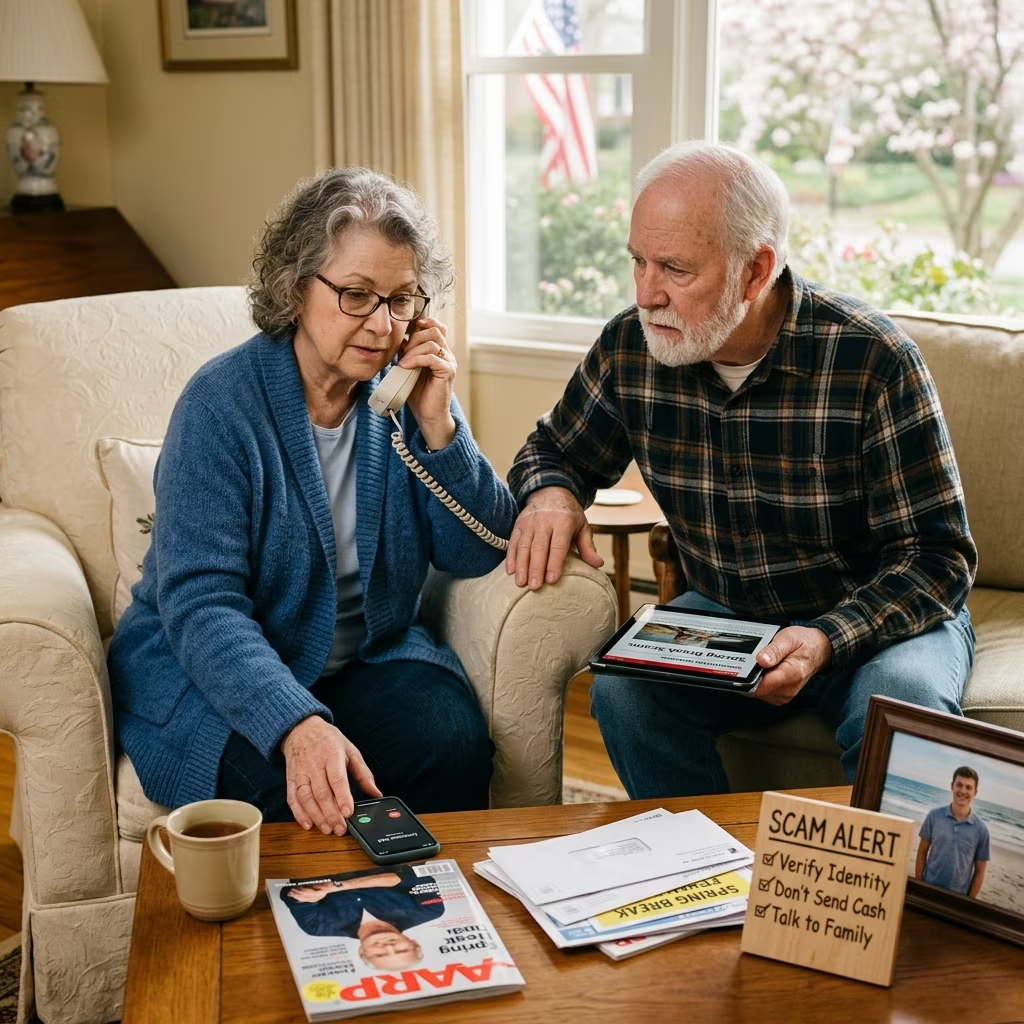
Every year, as travel season ramps up and college students head out for spring break, a particular type of fraud resurfaces: the grandparent scam. Criminals exploit the worry and love older adults feel for their families, especially grandchildren, by inventing urgent emergencies and demanding money. This guide explains how these scams operate, why they spike around spring break, and the concrete steps you can take to protect yourself and your loved ones.
What Is a Grandparent Scam?
A grandparent scam is a form of emergency or family-impostor fraud in which a scammer pretends to be a relative or someone speaking on a relative’s behalf and claims they need immediate financial help. The contact usually comes by phone, but email, text message, and social media are increasingly used as well.
The core of the scam is emotional pressure. The fraudster creates a believable crisis, insists that the victim must act right away, and often pleads for secrecy so that no one else discovers the situation.
Why Spring Break Creates a Perfect Opportunity
Spring break gives scammers a ready-made cover story. Many students travel, go out at night, and may be genuinely hard to reach. This makes it easier for criminals to pretend that a grandchild is stranded or in trouble and harder for grandparents to immediately verify the situation.
According to consumer protection authorities, scammers often time these calls around major travel periods and school holidays, when families expect younger relatives to be away and out of routine contact. That seasonal expectation works in the scammer’s favor.
Common Spring Break Storylines Used by Scammers
- Arrest after a party: The caller claims the grandchild was arrested for drunk driving or disorderly conduct and needs money for bail and legal fees.
- Car accident abroad: The scammer says the grandchild had a crash in another country and must pay for medical treatment or vehicle damage quickly.
- Lost passport or stolen wallet: The caller insists the student’s documents and money were stolen and they need funds wired to come home.
- Hospital emergency: A fake doctor or nurse claims the grandchild is hospitalized and immediate payment is required before treatment continues.
In some cases, scammers escalate the fear by suggesting that the grandchild could face jail time, deportation, or serious harm if the grandparent does not send funds within hours.
How Criminals Make the Scam Sound Real
Modern grandparent scams are sophisticated. Fraudsters gather personal details from social media, data breaches, or public records to make their stories sound authentic. They might know the grandchild’s name, the school they attend, or recent travel destinations.
Key Tactics Used in Grandparent Scams
- Distressed voice or poor connection: Scammers often speak quickly, sound upset, or claim a bad phone connection, making it harder to recognize the voice.
- Use of intermediaries: Instead of posing directly as the grandchild, the scammer might pretend to be a lawyer, police officer, hospital worker, or friend handling the situation.
- Partial information questions: They may say, “Grandma, it’s me” and wait for the victim to supply a name, then use that name throughout the call.
- Demand for unusual payment methods: Criminals usually request payment through wire transfers, prepaid debit cards, gift cards, or cryptocurrency because these methods are fast and difficult to reverse.
- Insistence on secrecy: Victims are frequently urged not to tell parents or other relatives because “it will only make things worse” or “they will be angry.”
These tactics are designed to shut down logical thinking and push the victim to act under emotional stress rather than take time to verify the situation.
Who Is Most at Risk?
Older adults are the primary targets of grandparent scams, particularly those who are financially stable, live alone, or are perceived as less familiar with digital fraud. However, anyone who is emotionally invested in a younger relative can be targeted, including aunts, uncles, and even older siblings.
| Risk Factor | Why It Matters |
|---|---|
| Living alone | Less immediate access to a second opinion or help verifying the story. |
| Limited tech experience | May be less aware of common phone and internet scams. |
| Strong family bonds | Highly motivated to help loved ones, even at financial risk. |
| Hearing or cognitive difficulties | Can make it easier for scammers to confuse or pressure the victim. |
Recognizing Warning Signs in Real Time
Although each scam call sounds unique, certain patterns appear again and again. Learning these red flags can help you spot a grandparent scam before you lose money.
Major Red Flags
- Unexpected emergency call: You receive a sudden call about a crisis involving a relative, especially one who is traveling or out of town.
- Pressure to make immediate payment: The caller insists that money must be sent right away or something terrible will happen.
- Unusual payment requests: Payment is demanded via wire transfer, prepaid cards, gift cards, or cryptocurrency instead of a standard bank transaction.
- Request for secrecy: You are asked not to contact anyone else about the situation, especially parents, other grandparents, or the alleged victim.
- Vague details and evasive answers: The caller avoids answering basic questions or gives inconsistent information about location and identity.
Immediate Steps to Take If You Receive a Suspicious Call
If you get a call claiming that your grandchild or another relative is in trouble, staying calm is crucial. Consumer protection agencies recommend taking the following steps before you send money or share personal information.
Step-by-Step Response Checklist
- Ask verification questions: Request details only the real person would know, such as a family nickname, recent shared memory, or specific information not publicly available.
- Refuse to be rushed: Tell the caller you will call back. Use that time to contact the grandchild directly or speak to another family member.
- Hang up and independently confirm: Use a phone number you already have (not one provided by the caller) to reach your grandchild, their parents, or another trusted contact.
- Do not share financial data: Never give bank account numbers, card details, online account credentials, or identification data over the phone to someone you are not certain about.
- Trust your instincts: If something feels off—or if the caller becomes aggressive when questioned—it is safer to hang up and verify the situation through other channels.
Preventive Strategies for Families Before Spring Break
Planning ahead can dramatically reduce the risk that a grandparent scam will succeed. Several financial institutions and fraud centers advise families to discuss these scams openly and establish clear rules before travel.
Family Communication Plan
- Agree on primary contacts: Decide who will be the main point of contact during travel (e.g., a parent or sibling) and ensure grandparents know how to reach them.
- Share travel basics: Without oversharing on public social media, let close relatives know general locations and dates of travel.
- Set a verification word: Create a family password or phrase that can be used in genuine emergencies to prove identity.
- Explain what you will never do: Make it clear that you will not ask for money by wire transfer or gift cards, even if you experience an emergency.
Educating Older Relatives
- Review common scams together: Talk about grandparent scams, tech support scams, and other frauds that target older adults.
- Encourage skepticism: Remind them that unexpected calls asking for secrecy and money are always suspicious.
- Keep important numbers handy: Provide a written list of verified phone numbers for parents, grandchildren, doctors, and local police.
- Practice responses: Role-play what to say and do if a suspicious call comes in, so they feel prepared rather than panicked.
What To Do If You Already Sent Money
Realizing you have been scammed can be devastating, but rapid action can sometimes help limit the damage. Law enforcement and fraud centers advise victims to contact financial institutions and authorities as quickly as possible.
Critical Actions After a Grandparent Scam
- Contact your bank or card issuer immediately: Report the transaction and ask whether a reversal or hold is possible. Some transfers cannot be undone, but early reporting improves your chances.
- Notify local law enforcement: File a police report with as much detail as you can recall, including phone numbers used, amounts requested, and any names or stories provided by the scammer.
- Report to national fraud centers: In many countries, there are dedicated agencies that collect reports on fraud and scams; these organizations use the data to track patterns and support investigations.
- Warn family and friends: Tell relatives about the incident so they can watch for similar calls. Sharing your experience, even if embarrassing, helps others avoid becoming victims.
Frequently Asked Questions About Grandparent Scams
Are grandparent scams always phone calls?
No. While phone calls are the most traditional method, scammers also use text messages, email, and social media direct messages to pose as relatives and request money. In any format, the combination of a sudden emergency and pressure to send funds quickly is a warning sign.
Can scammers really know my grandchild’s name and school?
Yes. Many details can be taken from public social media profiles, school websites, online obituaries, or data breaches. Fraudsters often piece these bits of information together to sound more convincing. Limiting public personal information online can make impersonation harder.
Is it safe to ask questions during the call?
It is not only safe but strongly recommended. Fraud experts advise asking questions that only the genuine person would know and avoiding answering leading questions posed by the scammer. If the caller refuses to answer or becomes hostile, that is a strong indication of a scam.
What payment methods are legitimate in a real emergency?
In genuine emergencies, payments are usually made through recognized channels such as hospital billing departments, legal firms, or direct bank transfers, and you receive clear documentation. Requests for wire transfers, prepaid cards, or gift cards—especially when combined with secrecy—are typical of scams.
How can I talk to my grandchildren about these scams without worrying them?
Frame the conversation as part of general travel safety. Explain that scammers sometimes misuse family information and that you want to agree on how to handle real emergencies. Emphasize that clear communication protects everyone, rather than suggesting that you do not trust them.
Building a Culture of Fraud Awareness
Grandparent scams exploit care and trust within families. One of the most effective defenses is a culture where discussing fraud is normal and seeking verification is encouraged. When grandparents know that questioning a call, contacting other relatives, and taking time before sending money are expected behaviors, scammers lose much of their power.
Before each travel season—and especially before spring break—families can review key principles together:
- Verification before action is always the rule.
- Secrecy plus urgency is a major red flag.
- Unusual payment methods are rarely used in legitimate emergencies.
- Open communication helps protect everyone from fraud.
By combining clear information, practical planning, and supportive conversations, families can dramatically reduce the risk that a grandparent will be tricked during spring break or at any other time of year.
References
- Be on the Lookout for a Grandparent Scam — Identity Theft Resource Center. 2021-03-10. https://www.idtheftcenter.org/post/be-on-the-lookout-for-a-grandparent-scam/
- How to spot the grandparent or emergency scam — TD Bank / TD Stories. 2023-03-21. https://stories.td.com/ca/en/article/grandparent-scam
- Spring Break Checklist: Swimsuit. Sunscreen. “Grandparent Scam” — Wisconsin Department of Agriculture, Trade and Consumer Protection. 2017-03-17. https://datcp.wi.gov/Pages/News_Media/20170317SpringBreakGrandparentScam.aspx
- Grandparent Scam — Royal Canadian Mounted Police / Canadian Anti-Fraud Centre. 2024-02-01. https://www.antifraudcentre-centreantifraude.ca/scams-fraudes/emergency-urgence-eng.htm