
Protecting Client Secrets: Managing Metadata in Court Filings
Learn how hidden document metadata can expose client confidences in court filings and how to control, review, and remove it safely.
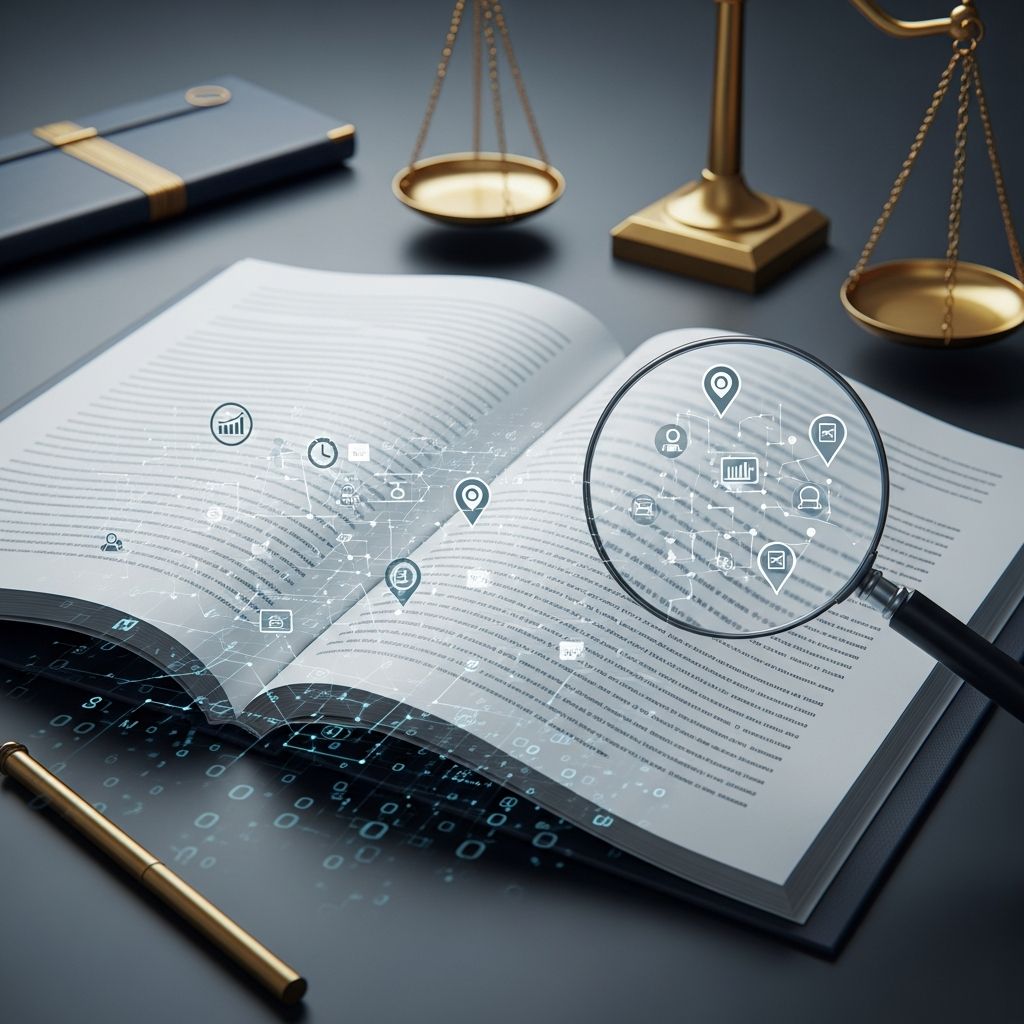
Every electronic document you file with a court carries more than what appears on the screen. Beneath the visible text lives metadata—hidden information that can expose confidential client details, internal strategy, and drafting history. For lawyers, understanding and controlling this invisible layer is now a core part of professional responsibility and litigation practice.
What Is Metadata in Legal Documents?
Metadata is data that describes other data. In the context of legal documents, it is the information stored inside a file that tells you about how, when, where, and by whom the document was created and edited.
Common examples of metadata in word-processing files, PDFs, and emails include:
- Author and organization fields (e.g., lawyer name, firm name, office)
- Creation, modification, and printing dates
- Revision and version history
- Tracked changes and comments (even if not visible in the final version)
- Hidden text or content outside page margins
- Embedded objects such as spreadsheets or images with their own metadata
- Document properties such as file path, template used, and case-related fields
- Email routing data (sender, recipients, message IDs, and sometimes server paths)
Metadata can be useful for internal document management and for authenticating evidence in e-discovery. But when it travels with a court filing or production set without review, it can create serious risk.
Why Metadata Matters in Court Filings
For litigators and transactional lawyers alike, metadata is more than a technical footnote. It goes directly to confidentiality, ethics, and case strategy.
| Aspect | How Metadata Affects Court Filings |
|---|---|
| Client confidentiality | Hidden properties can expose client names, prior matters, and privileged details not meant for the court or opposing counsel. |
| Legal strategy | Tracked changes and comments may reveal negotiation positions, internal debates, and rejection of prior language. |
| Ethical duties | Rules on confidentiality require reasonable steps to prevent inadvertent disclosure through electronic documents. |
| Court compliance | Some jurisdictions and bar opinions expect lawyers to scrub metadata before e-filing and to apply proper redaction. |
| Reputation and malpractice | Exposed metadata can undermine trust, draw disciplinary complaints, or support malpractice claims if harm follows disclosure. |
Key Risks of Failing to Remove Metadata
Leaving metadata intact in documents you file, serve, or share can create several distinct categories of risk.
1. Confidentiality Breaches and Privilege Waiver
Many professional conduct rules, including confidentiality provisions such as those modeled on ABA Model Rule 1.6, require lawyers to take reasonable measures to protect client information from unauthorized access or disclosure.
Metadata can inadvertently reveal:
- Names of other clients if the document was based on a prior template
- Settlement ranges or internal risk assessments recorded in comments
- Draft arguments or legal theories that were considered but not advanced
- Internal file paths that identify client matter numbers or practice groups
If disclosed to opposing counsel or the public, such information can undermine attorney–client privilege and potentially be treated as a waiver, especially if the court finds that reasonable precautions were not taken.
2. Ethical and Professional Responsibility Issues
State bar opinions increasingly recognize that competent representation includes understanding the benefits and risks associated with relevant technology. That includes awareness of the presence of metadata and steps to prevent harmful disclosures.
Failing to manage metadata appropriately may implicate:
- Confidentiality obligations (e.g., rules analogous to ABA Model Rule 1.6)
- Competence and diligence requirements in handling electronic information
- Supervision duties regarding nonlawyer staff who prepare and file documents
3. Damage to Negotiation and Litigation Strategy
Opposing counsel who receive un-scrubbed documents may be able to recover:
- Earlier versions of key clauses in a settlement agreement
- Notes about how far a client is willing to compromise
- Comparisons against an opponent’s draft that show your redlines and concessions
Access to that information can affect negotiation leverage, influence case strategy, and shape how your opponent frames arguments in motion practice or trial.
4. Missteps in E-Filing and Public Access
Many courts provide online access to electronic filings, sometimes with minimal review. If a document is filed with intact metadata, that data may remain accessible to:
- Opposing counsel and parties
- Journalists and the public
- Third-party service providers
In addition, courts often have specific rules for redaction of sensitive information in e-filed documents (such as social security numbers or financial account numbers). If redaction is performed incorrectly—such as drawing a black box over text without removing the underlying data—the information can sometimes be restored or copied, making metadata and underlying layers particularly important.
5. Tension with E-Discovery Obligations
Metadata is also an important source of evidence in electronic discovery. It can reveal when a document was created, who edited it, and whether it was altered, which may be central to authenticity and spoliation questions.
This dual role creates a tension:
- You must protect confidential metadata in routine filings and external sharing.
- You must also preserve and produce relevant metadata when required by discovery rules or court orders.
Careful planning is therefore necessary to distinguish between filings intended for the public record and productions made in response to discovery, where altering metadata could be improper or equivalent to shredding evidence.
Ethical and Regulatory Framework
While specific requirements vary across jurisdictions, several consistent themes appear in bar guidance and case law.
- Reasonable precautions: Ethics authorities emphasize that lawyers must take reasonable steps to prevent inadvertent disclosure via electronic documents, including managing metadata.
- Technology competence: Many states adopt a version of the ABA’s commentary requiring lawyers to keep abreast of the benefits and risks associated with relevant technology, which includes file metadata.
- E-filing expectations: Bar resources and court guidance frequently describe removing metadata from documents that are e-filed as a best practice.
- Metadata in discovery: Litigators must understand that metadata can be discoverable and that altering it during preservation or production may run afoul of discovery obligations.
Professional liability carriers and bar risk-management groups also stress metadata scrubbing as part of broader information-security and malpractice-avoidance programs.
Practical Steps to Control Metadata Before Filing
Effective metadata management does not require advanced technical expertise, but it does demand consistent habits and appropriate tools.
1. Build Metadata Awareness into Your Workflow
First, ensure that lawyers and staff understand where metadata comes from and how it behaves:
- Train users on track changes, comments, and document properties in common tools like Microsoft Word and Adobe Acrobat.
- Discourage reusing client documents as templates without cleaning them first, since remnants of prior matters may remain embedded as metadata.
- Explain that simply converting a document to PDF does not guarantee removal of all metadata.
2. Use Built-In Metadata Cleaning Options
Most major office and PDF applications include basic metadata review and removal tools, such as:
- Document inspector or “check for issues” features in word processors
- Options to remove author details and personal information when saving
- PDF optimization or sanitization tools for clearing hidden content
These are often sufficient for solo lawyers or small practices handling a limited volume of filings, provided they are used consistently.
3. Deploy Dedicated Metadata Scrubbing Tools
Larger firms and legal departments often rely on specialized metadata removal software integrated with their email or document management systems. These tools can:
- Automatically scan outgoing attachments for hidden metadata
- Remove or neutralize risky elements from Office, PDF, and image files
- Offer rules-based policies (for example, always scrub attachments sent outside the firm)
- Log actions to support compliance and internal audits
Automation reduces the risk that a busy lawyer forgets to run a manual inspection as a filing deadline approaches.
4. Create a Firm-Wide Metadata Policy
A documented policy ensures that all personnel treat metadata consistently. Consider addressing:
- Which file types must be scrubbed before e-filing or external transmission
- When and how to preserve original files with full metadata for internal use or discovery
- Use of templates and form documents to avoid cross-matter contamination
- Responsibilities of lawyers, paralegals, and IT staff for metadata management
- Procedures for applying and verifying redaction in e-filed materials
5. Preserve Metadata When Legally Required
When a litigation hold is in place or e-discovery is anticipated, firms must adjust their normal scrubbing practices to avoid spoliation. In some contexts, metadata is explicitly recognized as part of electronically stored information and must be preserved and produced.
In such matters, collaborate with knowledgeable e-discovery professionals to:
- Identify which systems and file types hold potentially relevant metadata
- Implement legal holds that protect both content and associated metadata
- Agree with opposing counsel on production formats that retain necessary metadata fields
Managing Metadata in Common Filing Scenarios
Different stages of a case present different metadata challenges. The following scenarios illustrate how to adapt your approach.
Pleadings and Motions Filed with the Court
- Draft in a controlled template that minimizes unnecessary properties.
- Accept all tracked changes and delete comments in the working document.
- Run a metadata inspector or scrubbing tool on the final file.
- Verify redactions by attempting to copy and paste text from the redacted areas in a test copy.
Discovery Productions
- Coordinate early with opposing counsel regarding the format of production and treatment of metadata.
- Preserve system metadata (dates, authors, file paths) as agreed or ordered.
- Apply targeted redactions only to privileged or protected content, documenting any changes.
Client Communications and Sharing with Third Parties
- Use scrubbing tools on attachments to emails sent outside the firm, particularly when forwarding drafts received from co-counsel or experts.
- Explain to clients that forwarding drafts or forms without review can propagate metadata to unintended recipients.
- When sharing with vendors or experts under protective orders, align metadata handling with confidentiality obligations.
Simple Checklist Before You E-File
Before uploading any document to an e-filing system, confirm that you have:
- Used a clean template or removed legacy client data
- Accepted tracked changes and deleted comments
- Run a metadata inspection or scrubbing tool
- Applied proper redaction techniques, not just visual black boxes
- Saved and preserved an internal copy with full metadata if discovery or future disputes may require it
Frequently Asked Questions (FAQs)
Q: Is it always necessary to remove all metadata from a court filing?
Not always. You should remove metadata that could reveal confidential, privileged, or strategic information, but in some contexts—especially e-discovery—metadata must be preserved and may need to be produced. Distinguish between documents meant for public filing and those produced as evidence.
Q: Does converting a Word document to PDF automatically strip metadata?
No. Converting to PDF may hide some information visually, but many metadata fields and even hidden layers can remain accessible. Use PDF-specific tools to inspect and sanitize metadata and hidden content.
Q: Can I rely only on manual review to catch harmful metadata?
Manual review is important but not sufficient on its own, especially in high-volume practices. Automated metadata scrubbing tools help ensure consistency and reduce the chance of human error.
Q: How do metadata issues interact with my duty of technological competence?
Many jurisdictions interpret the duty of competence to include understanding the benefits and risks of relevant technology, which encompasses awareness of metadata and basic methods to manage it. Ignoring metadata can be viewed as falling short of this standard.
Q: What should I do if I discover that I have already filed a document with sensitive metadata?
Consider contacting the court clerk promptly to determine whether the filing can be replaced or sealed, consult applicable procedural rules, and evaluate whether you must inform the client, your professional liability carrier, or disciplinary authorities depending on the circumstances and any resulting harm.
References
- Metadata Scrubbing for Law Firms and Legal Departments — PageLightPrime. 2023-06-01. https://pagelightprime.com/blogs/metadata-scrubbing-for-law-firms/
- Metadata Scrubber 101 for Lawyers — Attorney at Work. 2022-04-15. https://www.attorneyatwork.com/101-lawyers-metadata-scrubber/
- Exposed! What Lawyers Need to Know About Metadata — North Carolina Bar Association. 2022-01-04. https://www.ncbar.org/2022/01/04/exposed-what-lawyers-need-to-know-about-metadata/
- Best Practices – Removing Metadata — Ohio Bar Liability Insurance Company (OBLIC). 2023-02-07. https://www.oblic.com/resources/oblic-news/02/07/2023/best-practices-removing-metadata/
- Seven Things Every Litigator Must Know About Metadata — LegalFuel, The Practice Resource Center of The Florida Bar. 2018-11-01. https://www.legalfuel.com/seven-things-every-litigator-should-must-know-about-metadata/
- Document Metadata: What to Know & Why — BigHand. 2021-09-10. https://www.bighand.com/en-us/resources/blog/document-metadata-what-to-know-why/
Similar Articles








Read full bio of Sneha Tete


