
Protect Yourself From Holiday Gift Card Scams
Learn how modern gift card scams work, the warning signs to watch for, and practical steps to keep your holiday spending safe.
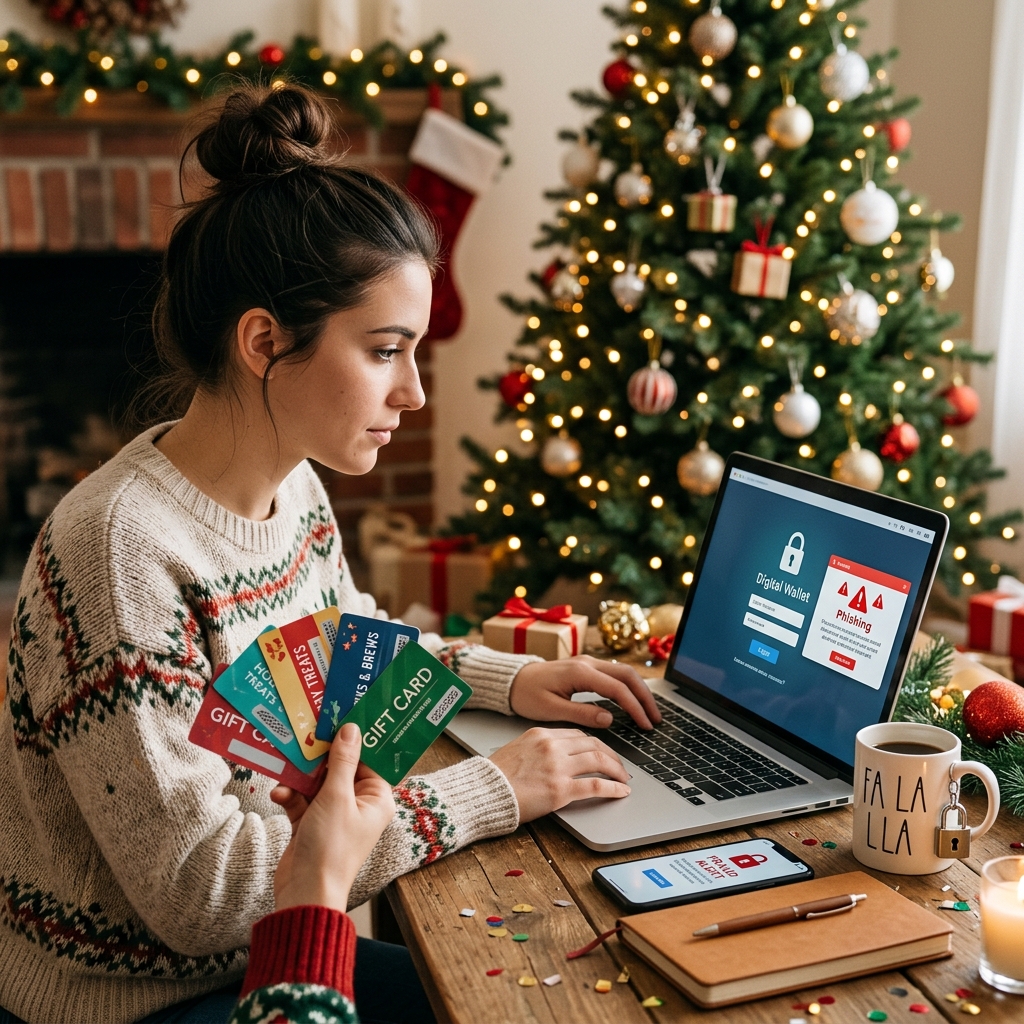
Gift cards are a popular choice for holiday giving, but scammers have turned them into a powerful tool for stealing money quickly and anonymously. Understanding how these frauds work and how to respond can protect both your wallet and your peace of mind during busy shopping seasons.
Why Gift Cards Are a Prime Target for Scammers
From the scammer’s perspective, gift cards are almost ideal. They are widely available, easy to purchase, and designed for quick spending without the protections that typically come with credit or debit cards. Once a fraudster gets the card number and PIN, they can drain the balance in minutes, often before the victim realizes what happened.
Unlike many other payment methods, gift cards are difficult to trace and often harder to recover, which makes them attractive to criminals and risky for uninformed consumers.
Major Types of Gift Card Scams
Gift card fraud comes in several forms. Some schemes target shoppers buying cards for others, while others trick people into using gift cards as a method of payment for supposed emergencies or bills.
1. Tampered Gift Cards on Store Racks
In this scheme, criminals manipulate physical gift cards before you buy them. They may scratch off the protective covering to reveal the code, record the numbers, and then reseal the card so the tampering is hard to notice.
- Fraudsters record card numbers and PINs from cards on open racks.
- They monitor the balance online until the card is activated at checkout.
- Once the card is loaded, they immediately spend or transfer the funds, leaving the legitimate buyer with a worthless card.
2. “Pay Me With Gift Cards” Imposter Scams
Another widespread tactic involves scammers posing as government agencies, tech support, retailers, or even coworkers and family members. They contact victims by phone, text, email, or social media and insist that urgent payments must be made using gift cards.
Typical scenarios include:
- Claims that you owe taxes or fines and must pay immediately with gift cards.
- Messages stating your bank account or computer is at risk unless you “secure” it by purchasing cards.
- Requests to buy cards for a supervisor or friend who is “too busy” to do it themselves.
No legitimate organization demands payment via gift cards. Any instruction to buy cards and read the numbers over the phone or send them electronically is a clear indication of fraud.
3. Fake Discounts and Free Gift Card Offers
Scammers also exploit people’s desire for holiday deals. They send emails, texts, or social media messages offering free or heavily discounted gift cards in exchange for personal information, survey participation, or payment of a small “processing fee.”
- Messages may promise a gift card if you click a link and provide your banking or login details.
- Some posts advertise cards for far less than face value through unverified sellers or auctions.
- Once you provide information or money, the promised card never arrives, and your data may be misused for other fraud.
4. Counterfeit or Stolen Cards Sold Online
Criminals sometimes sell cards with falsified or stolen balances through auction platforms or informal online marketplaces. The card appears legitimate, but the funds are fake, already spent, or quickly removed after the sale.
Because many such sellers vanish after transactions, victims often have limited recourse.
Common Red Flags That Signal a Gift Card Scam
While scammers constantly adjust their tactics, certain warning signs are consistent across many gift card schemes.
- Urgent demands for payment: Any caller or messenger insisting you must pay immediately with gift cards for taxes, bail, utilities, or fees is highly suspect.
- Instructions to share card numbers and PINs: Being asked to read numbers over the phone or send photos of the card is a central feature of gift card payment scams.
- Unsolicited offers of free or discounted cards: Messages that promise large-value cards in exchange for personal data or a small fee are often fraudulent.
- Damaged or unusual physical cards: Resealed packaging, exposed PIN areas, or stickers covering original barcodes can indicate tampering.
- Requests not to tell anyone: Scammers may insist you keep the purchase a secret, claiming confidentiality or security reasons.
Safe Ways to Buy Gift Cards
Thoughtful purchase habits can significantly reduce your risk of buying compromised cards or engaging with fraudulent sellers.
Buy From Trusted Sources
- Prefer purchases directly from well-known retailers either in-store or on their official websites.
- Avoid third-party sellers or auction sites offering steep discounts; these are frequent channels for counterfeit or drained cards.
- If buying online, navigate to the retailer’s site yourself instead of clicking promotional links in emails or social posts.
Inspect Physical Cards Carefully
- Check that packaging is intact and the protective layer covering the PIN has not been scratched or removed.
- Look for unusual stickers, especially ones covering original barcodes or numbers—these can be signs of tampering.
- If anything appears suspicious, skip that display, notify store staff, and choose another location or buy electronically instead.
Consider Digital Gift Cards
Electronic cards purchased directly from reputable retailers can reduce the risk of physical tampering and may offer better tracking and support options.
How to Use and Store Gift Cards Safely
Protective steps after purchase are just as important as careful buying. Treat gift cards with the same care you give to cash or payment cards.
- Keep proof of purchase: Retain receipts and, where possible, digital confirmation messages for each card.
- Document card details: Take clear photos of the front and back of each card before giving or using it; these can help if problems arise.
- Check balances promptly: Ask recipients to verify card balances as soon as they receive them to spot issues early.
- Register cards when possible: Some issuers allow registration, which can help with balance recovery or dispute resolution.
- Store cards securely: Keep unused cards in a safe place, and do not share card numbers or PINs over unsecured channels.
What to Do If You Think You’ve Been Scammed
Fast action is critical. While recovering money from a gift card scam can be challenging, quick reporting improves your chances and helps authorities track fraudulent activity.
| Step | What to Do | Why It Matters |
|---|---|---|
| 1. Contact the card issuer | Use the customer service number or website listed on the card to report the scam, supply card details, receipts, and any communication with the scammer. | The issuer may be able to freeze remaining funds or, in some cases, restore part of the balance. |
| 2. Report to the FTC | File a complaint at the U.S. Federal Trade Commission’s fraud reporting website or by phone. | FTC reports help identify patterns, inform enforcement, and support broader consumer protection efforts. |
| 3. Notify law enforcement | Provide documentation to local police or appropriate agencies. | Official reports may assist investigations and can be useful for further disputes or insurance claims. |
| 4. Inform banks or credit card issuers | If you shared financial information or used a card to buy the compromised gift card, alert your bank and dispute unauthorized charges. | Early notification can limit additional losses and prevent further misuse of your accounts. |
| 5. Alert relevant retailers or platforms | Report the scam to the store or marketplace where the card was purchased or advertised. | Businesses can review video footage, monitor suspicious accounts, and tighten security on their systems. |
Practical Prevention Tips for the Holiday Season
Adopting a few habits can dramatically lower your risk of falling for gift card-related fraud during busy holidays or sales events.
- Use credit cards or secure digital payment services for purchases whenever possible, as they generally offer stronger dispute rights than cash or debit.
- Research unfamiliar retailers by searching their name along with words like “scam” or “complaint” to check for warning signs from other consumers.
- Do not click links in unsolicited emails or texts that promise free or discounted gift cards; instead, navigate directly to official websites.
- Be cautious of deals that appear far better than typical promotions, especially from individuals or small sites with limited track records.
- Educate family members, particularly older adults and younger shoppers, about the risks of gift card payment requests and how to decline them.
FAQs About Holiday Gift Card Scams
Are gift card scams really that common?
Government consumer protection agencies and major news organizations consistently warn that gift card scams are widespread, particularly around the holiday season when card purchases increase. The combination of high demand and limited protections makes these schemes common targets for fraudsters.
Can I ever safely pay someone with a gift card?
Gift cards are designed for purchases from the issuing retailer, not for payments to third parties. Official guidance emphasizes that legitimate businesses, government agencies, and trustworthy charities do not request payment via gift cards. If someone insists you must use a card to pay them, you should treat it as a strong sign of a scam.
Is it safer to buy gift cards online or in-store?
Both methods can be safe if you buy directly from reputable retailers. Physical cards in open racks are more vulnerable to tampering, so careful inspection is vital when buying in-store. Many experts recommend purchasing digital cards through official websites to reduce exposure to physical manipulation and to improve tracking options.
What information should I provide when reporting a scam?
When contacting a card issuer, the FTC, law enforcement, or a retailer, gather the card number, receipt, dates and times of purchases, and copies of any emails, texts, or call logs related to the scam. The more detail you can provide, the better authorities and companies can investigate and potentially assist with recovery.
Can I get my money back after a gift card scam?
Recovery is not guaranteed. However, some card issuers and retailers actively work to assist victims, especially if fraud is reported quickly. Contacting the issuer immediately, asking clearly for a refund or credit, and reporting the incident to regulators and law enforcement can improve your chances and supports wider efforts to combat these scams.
References
- Holiday and Gift Card Scams — Office of the Comptroller of the Currency (OCC). 2023-11-01. https://www.occ.gov/topics/consumers-and-communities/consumer-protection/fraud-resources/holiday-and-gift-card-scams.html
- Keep your money safe from gift card scammers this holiday season — Federal Trade Commission. 2023-12-21. https://consumer.ftc.gov/consumer-alerts/2023/12/keep-your-money-safe-gift-card-scammers-holiday-season-heres-how
- Giving gift cards this holiday season? Here’s how to avoid getting scammed — CNN Business. 2025-12-12. https://www.cnn.com/2025/12/12/business/gift-card-scams-holidays
- The Dark Side of the Holiday Season: How to Stay Safe from Scammers — TrustLab. 2023-12-15. https://www.trustlab.com/post/the-dark-side-of-the-holiday-season-how-to-stay-safe-from-scammers
- 4 common scams to watch out for this holiday season — NPR. 2025-12-19. https://www.npr.org/2025/12/19/nx-s1-5613431/4-common-scams-to-watch-out-for-this-holiday-season
- 5 Holiday Scams to Avoid — Morgan Stanley. 2023-11-27. https://www.morganstanley.com/articles/holiday-scams
Similar Articles








Read full bio of Sneha Tete




