
Weighing the Pros and Cons of Chapter 7 Bankruptcy
Understand how Chapter 7 bankruptcy can erase debt, what it may cost you, and when it makes legal and financial sense to file.
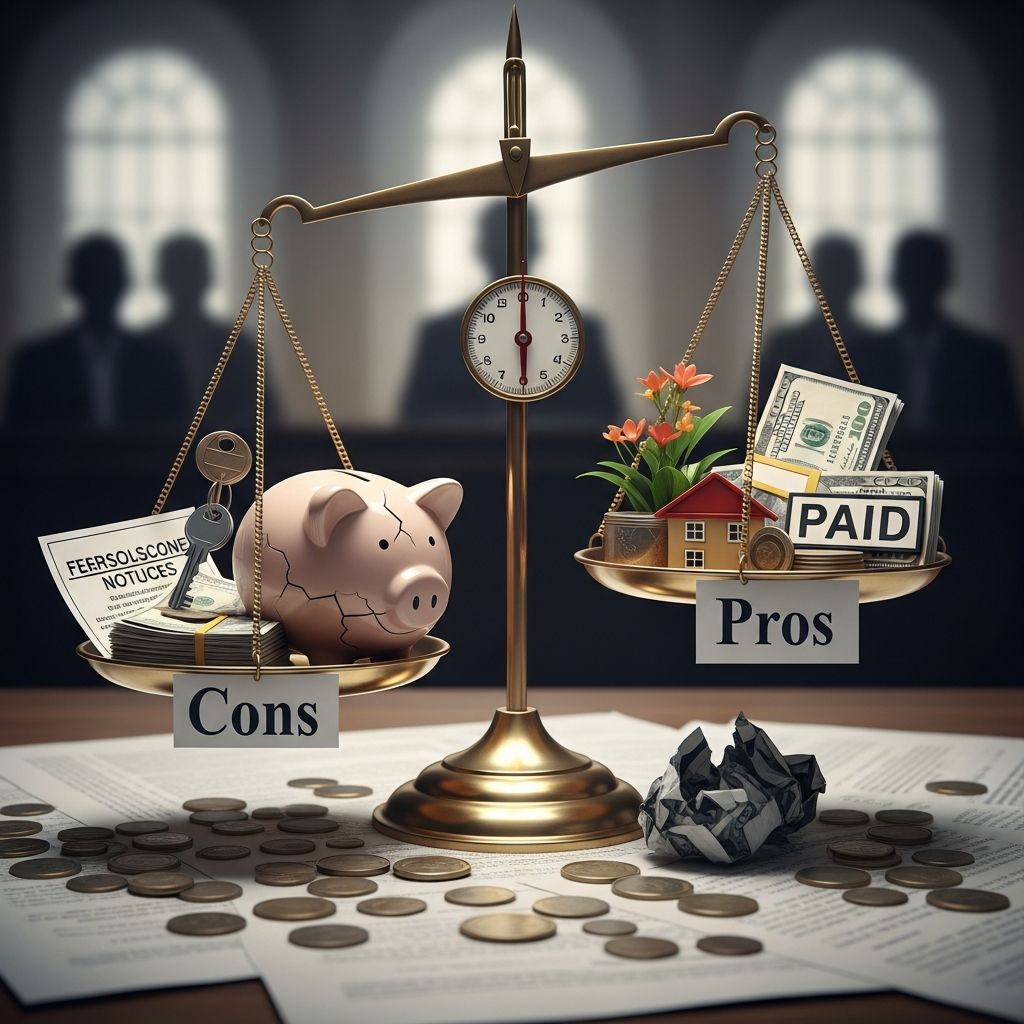
Chapter 7 bankruptcy can offer powerful relief from overwhelming debt, but it also carries serious legal and financial consequences. Understanding both the advantages and disadvantages will help you decide whether it is the right step for your situation.
What Chapter 7 Bankruptcy Does and How It Works
Chapter 7 is often called a liquidation bankruptcy because a court-appointed trustee may sell non-exempt property to pay creditors, and most remaining qualifying debts are then discharged (legally wiped out). The process is governed by federal law and handled in the U.S. Bankruptcy Court.
Key features of Chapter 7 include:
- Appointment of a trustee who reviews your finances and may liquidate non-exempt assets.
- Use of exemptions under federal or state law that allow you to keep certain property, such as limited equity in a home, basic household items, and some retirement accounts.
- Entry of a discharge order that permanently eliminates many unsecured debts if you are eligible and follow the process correctly.
Major Advantages of Chapter 7 Bankruptcy
For many individuals with heavy unsecured debt and limited assets, Chapter 7 can provide fast, meaningful financial relief.
1. Powerful Automatic Stay Protection
The moment you file a Chapter 7 petition, an automatic stay generally goes into effect. This is a court order that usually stops most collection activity while the case is pending.
In many cases, the automatic stay can:
- Pause or stop wage garnishments for most unsecured debts
- Halt most collection calls and letters from creditors and collection agencies
- Temporarily stop foreclosure sales or repossessions (unless there are special circumstances or prior filings)
- Delay certain lawsuits to collect pre-bankruptcy debts
Although some actions may resume if the creditor gets court permission, the stay often provides immediate breathing room and time to reorganize your finances.
2. Discharge of Many Unsecured Debts
One of the primary goals of Chapter 7 is to provide a fresh start by eliminating many types of unsecured debt.
Common debts that are often dischargeable include:
- Credit card balances
- Medical bills
- Personal loans not tied to collateral
- Past-due utility bills
- Some old lease or contract obligations
Once the court issues a discharge order, creditors for these debts can no longer legally demand payment or take collection action against you for those discharged obligations.
3. Relatively Fast and Predictable Process
For typical consumer cases, the Chapter 7 process is generally shorter than many other forms of bankruptcy.
- Many simple Chapter 7 cases are completed in about three to six months from filing to discharge, assuming no major complications.
- Most filers attend only one brief meeting of creditors (a “341 meeting”), and often no formal court hearing is required.
This relatively quick timeline can be especially attractive if you need to address urgent collection problems or lawsuits and return to financial stability as soon as possible.
4. You May Keep Significant Exempt Property
Contrary to common fears, many Chapter 7 cases are considered “no-asset” cases, meaning there is no non-exempt property for the trustee to sell. That happens when the property you own is fully covered by exemptions.
Depending on your state or the federal exemption scheme, you might be able to keep:
- Reasonably necessary household furniture and clothing
- A vehicle up to a certain equity value
- A portion of the equity in your primary residence
- Retirement accounts such as many 401(k)s, IRAs, and pensions
- Some public benefits and recent wages, subject to exemption limits
The specific property you can keep depends on the exemption laws that apply in your state and how much equity you have in each asset.
5. A Path Toward Rebuilding Your Finances
Although a Chapter 7 filing is damaging to your credit in the short term, many people see it as a way to reset their financial life.
- Discharging large debts can free up income for savings and essential living expenses.
- After discharge, you can begin rebuilding credit with responsible use of new accounts, on-time payments, and budgeting.
Over time, lenders may be more willing to work with someone who has eliminated unmanageable debt and kept their finances current after bankruptcy than with someone who remains severely delinquent on many accounts.
Key Drawbacks and Risks of Chapter 7 Bankruptcy
Despite its advantages, Chapter 7 is not without serious downsides. These should be weighed carefully before making a decision.
1. Possible Loss of Non-Exempt Property
Any property that is not protected by exemptions may be sold by the Chapter 7 trustee to pay creditors.
Non-exempt property might include, depending on your state’s laws and your situation:
- Valuable collections (art, coins, stamps, etc.)
- Luxury items such as expensive jewelry beyond exemption limits
- Second homes, vacation properties, or investment real estate
- Non-retirement investment accounts and substantial cash savings
- Extra vehicles or recreational vehicles that are not exempt
If you own significant non-exempt assets, you must be prepared for the possibility that they could be sold as part of the bankruptcy, or you may want to explore alternatives such as Chapter 13 reorganization.
2. Long-Term Credit Impact
A Chapter 7 bankruptcy can stay on your credit report for up to 10 years from the filing date. Credit scoring systems treat bankruptcy as a major negative event, especially in the first few years.
Some of the potential credit-related consequences include:
- Difficulty qualifying for new credit in the short term
- Higher interest rates and less favorable loan terms if you are approved
- Challenges in obtaining certain types of housing or insurance that consider credit reports
With time and positive credit behavior after the filing, your credit profile can improve, but there is no quick fix to remove a legitimate bankruptcy from your reports.
3. Not All Debts Can Be Discharged
Chapter 7 does not erase every type of debt. The Bankruptcy Code excludes certain obligations from discharge or makes discharge more difficult to obtain.
Debts that are often not dischargeable, or are only rarely dischargeable, include:
- Most student loans, unless you prove undue hardship in a separate legal proceeding
- Recent income tax debts and some other tax obligations
- Domestic support obligations such as child support and alimony
- Court fines, certain penalties, and some types of restitution
- Debts stemming from certain fraudulent or malicious conduct, as determined by the court
If your financial stress is mainly caused by non-dischargeable debts, Chapter 7 may offer limited relief and might not be the best solution.
4. Eligibility Limits and the Means Test
Not everyone qualifies for Chapter 7. Individuals with primarily consumer debts must usually pass a means test, which compares their income to their state’s median and evaluates disposable income after certain expenses.
If your income is above the applicable threshold and you have enough disposable income to repay a portion of your debts, you may be required to file under Chapter 13 or have your Chapter 7 case dismissed. Business debtors generally have more flexibility, but complex eligibility issues should be reviewed with a lawyer.
5. Public Record and Loss of Financial Privacy
A bankruptcy filing is generally a matter of public record in federal court. While most people you know are unlikely to search those records, the information is available to lenders, landlords, and other parties who obtain your credit reports or search court dockets.
You will also need to disclose detailed information about your income, assets, debts, and recent financial transactions to the court and trustee, which some people find intrusive.
6. Waiting Periods for Future Bankruptcies
Bankruptcy law imposes time limits on how often you can receive a Chapter 7 discharge. For example, if you received a Chapter 7 discharge in a prior case, you must typically wait several years before obtaining another Chapter 7 discharge. These waiting periods make bankruptcy a tool that should be used carefully.
Comparing Chapter 7 to Other Options
It is important to compare Chapter 7 with alternatives such as Chapter 13, debt management plans, or negotiated settlements.
| Option | Main Approach | Typical Timeline | Key Trade-Offs |
|---|---|---|---|
| Chapter 7 Bankruptcy | Liquidation of non-exempt assets; most unsecured debts discharged | Often 3–6 months | Fast relief but possible asset loss and long-lasting credit impact |
| Chapter 13 Bankruptcy | 3–5 year repayment plan; catch up on secured debts while keeping property | Usually 3–5 years | May keep more assets, but requires steady income and long-term payments |
| Non-Bankruptcy Debt Plans | Negotiated settlements or credit counseling agency repayment plans | Varies (often several years) | No court filing, but creditors are not always obligated to cooperate |
When Chapter 7 May Be Worth Considering
Each financial situation is unique, but Chapter 7 may be worth a close look if several of the following are true:
- Your debts are primarily unsecured (credit cards, medical bills, personal loans).
- You have little or no significant non-exempt property at risk of liquidation.
- You are facing aggressive collection actions, lawsuits, or wage garnishments.
- You cannot realistically pay off your debts within a few years, even with strict budgeting.
- You meet, or are likely to meet, the means test requirements for Chapter 7.
If, on the other hand, you have substantial non-exempt assets, mainly non-dischargeable debts, or income high enough to repay a meaningful portion of what you owe, another strategy might be more appropriate.
Practical Steps Before You Decide
Because of the long-term consequences, informed preparation is critical before filing.
Review Your Complete Financial Picture
- Create a detailed list of all debts, including amounts, interest rates, and whether they are secured or unsecured.
- Inventory your property and estimate what may be exempt under your state or federal exemption system.
- Evaluate your current and expected income and essential living expenses.
Consider Required Counseling and Education
Federal law requires most individual filers to complete two educational steps: a pre-filing credit counseling session and a post-filing financial education course from approved providers. These requirements are designed to ensure that you understand alternatives and strategies for managing money after bankruptcy.
Speak With a Qualified Professional
The rules governing Chapter 7, including exemptions, dischargeability, and eligibility, are complex and vary by jurisdiction. Consulting with an experienced bankruptcy attorney or reputable legal aid organization can help you:
- Determine whether you qualify for Chapter 7 under the means test
- Understand what property you are likely to keep or lose
- Compare Chapter 7 with Chapter 13 and non-bankruptcy options
- Avoid costly mistakes such as improper transfers of property before filing
Frequently Asked Questions (FAQs)
Q: Will I lose my home or car if I file Chapter 7?
A: It depends on your equity, your state or federal exemptions, and whether you are current on payments. In many cases, people keep a modest home or car if the equity is fully exempt and they keep up with secured loan payments, but significant non-exempt equity can put property at risk of sale by the trustee.
Q: How often can I receive a Chapter 7 discharge?
A: Bankruptcy law imposes waiting periods between discharges. If you previously received a Chapter 7 discharge, you generally must wait several years before qualifying for another Chapter 7 discharge, and different time frames apply if your prior case was under Chapter 13.
Q: Will Chapter 7 stop a wage garnishment?
A: In many situations, the automatic stay that begins when you file Chapter 7 will stop ongoing wage garnishments for dischargeable unsecured debts. Garnishments for certain non-dischargeable debts, such as some taxes or child support, may not be fully stopped or may resume later, so legal advice is critical.
Q: How long does it take to rebuild credit after Chapter 7?
A: A Chapter 7 case can stay on your credit report for up to 10 years, but many filers begin improving their scores within a few years by paying all remaining obligations on time, using small amounts of new credit responsibly, and maintaining stable income and housing.
Q: Can businesses file for Chapter 7?
A: Yes. Chapter 7 is available to both individuals and businesses that want to wind down operations and liquidate assets under court supervision. However, business cases involve different strategic and legal considerations, so specialized legal advice is important.
References
- Chapter 7 Bankruptcy: Liquidation Under the Bankruptcy Code — Internal Revenue Service. 2024-03-21. https://www.irs.gov/businesses/small-businesses-self-employed/chapter-7-bankruptcy-liquidation-under-the-bankruptcy-code
- Chapter 7: Liquidation — Maryland People’s Law Library. 2023-05-10. https://www.peoples-law.org/chapter-7-liquidation
- Bankruptcy Basics: Process — United States Courts. 2023-11-01. https://www.uscourts.gov/court-programs/bankruptcy/bankruptcy-basics/process-bankruptcy-basics
- Chapter 7 Bankruptcy: The Complete Guide to Filing & Debt Relief — Upsolve. 2024-02-14. https://upsolve.org/learn/should-i-file-for-chapter-7-bankruptcy/
- What Is Chapter 7 Bankruptcy? — Experian. 2023-08-18. https://www.experian.com/blogs/ask-experian/what-is-chapter-7-bankruptcy/
- What Should I Know About Chapter 7 Bankruptcy? — GeorgiaLegalAid.org. 2023-06-30. https://www.georgialegalaid.org/resource/what-should-i-know-about-chapter-7-bankruptcy
- What Is Chapter 7 Bankruptcy? — New York City Bar Association. 2022-11-15. https://www.nycbar.org/get-legal-help/article/bankruptcy/chapter-7-bankruptcy/
Similar Articles








Read full bio of medha deb




