
Property Deeds vs. Titles: A Practical Guide
Understand how deeds and titles work together to prove, transfer, and protect ownership of your real estate.
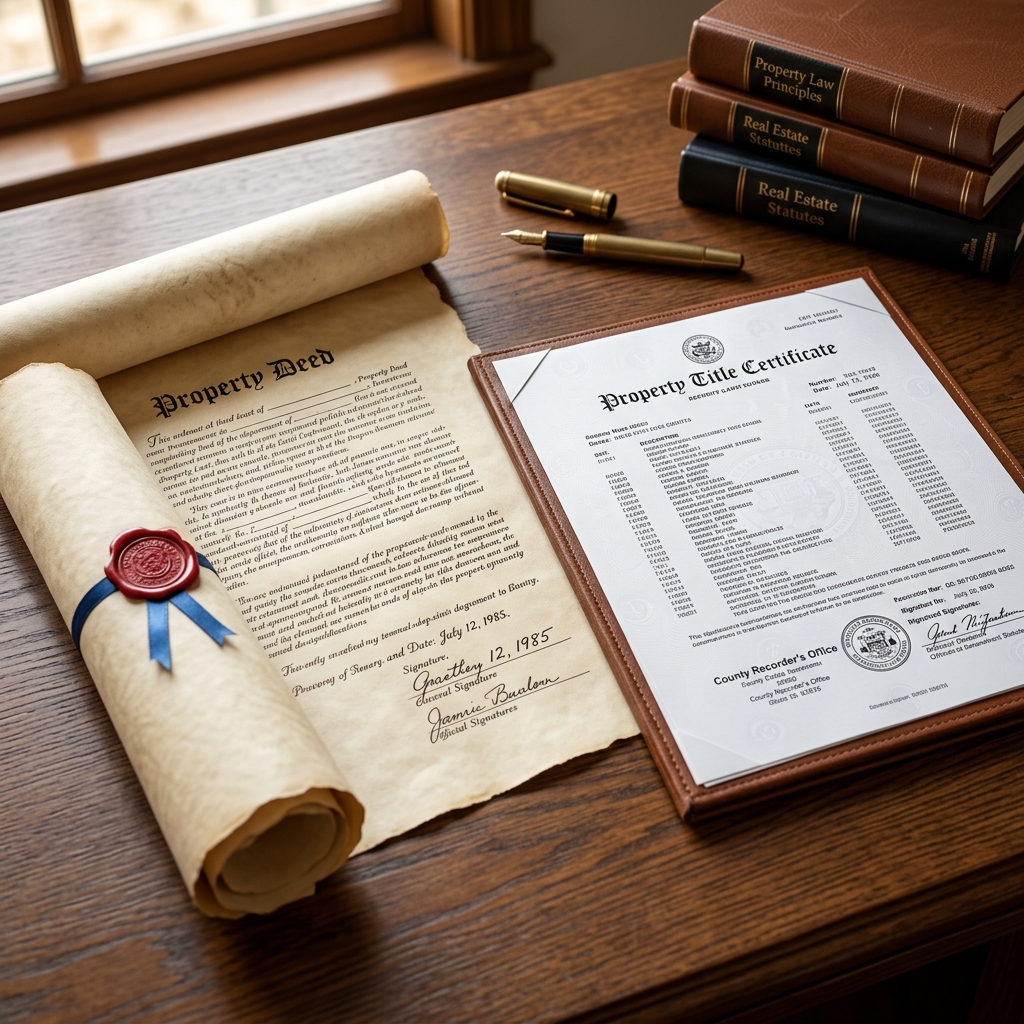
When you buy a home or any other real estate, you are not only purchasing bricks and land—you are also acquiring a legal set of rights. Two concepts are central to those rights: the property deed and the title. They are closely related, often discussed together, and sometimes confused, but they serve different purposes in law and practice.
This guide explains, in clear language, how deeds and titles work, the differences between them, and what every buyer, seller, and owner should know to protect their property interests.
Core Concepts: What Is a Deed? What Is a Title?
In real estate law, ownership is not proven by a single universal document. Instead, ownership is understood through legal concepts and paper records that work together. At the heart of that system are deeds and title.
Understanding Property Deeds
A property deed is a written legal instrument used to transfer real estate from one party to another. It is a physical document that must meet formal requirements to be valid.
Common features of a deed include:
- Identification of the current owner (the grantor) and the new owner (the grantee).
- A legal description of the property, such as lot number, boundaries, or metes and bounds.
- Language showing the grantor’s intention to convey ownership rights to the grantee.
- The grantor’s signature, sometimes with witnesses, and usually notarization according to state law.
In most jurisdictions in the United States, a deed must be delivered to and accepted by the grantee to complete the transfer, and it is typically recorded in a local land records office (such as a county recorder or registrar of deeds) to give public notice of the change in ownership.
Understanding Title
A title is not a single piece of paper. It is a legal concept describing who has rights in a piece of real estate—who owns it, who may use it, and what legal claims or restrictions affect it.
When lawyers and lenders talk about “title,” they are referring to the total bundle of rights and interests recognized by law, including:
- The identity of the legal owner or owners.
- Any co-ownership arrangements, such as joint tenancy or tenancy in common.
- Liens, mortgages, easements, or other encumbrances that limit or shape the owner’s rights.
- Conditions and restrictions, such as covenants or homeowner association rules.
Because title is a legal status rather than a single document, it is understood by examining public records, deeds, court orders, and other filings—often through a process called a title search and verified with title insurance.
Key Differences Between a Deed and Title
Deeds and title are intertwined, but they are not interchangeable. The following table summarizes the main distinctions.
| Aspect | Property Deed | Title |
|---|---|---|
| Nature | Physical document | Legal concept/status |
| Main function | Transfers ownership from one party to another | Describes who owns the property and what rights or claims exist |
| Form requirements | Must be written, signed, and usually notarized and recorded | No single form; determined by public records and legal rules |
| Use in transactions | Executed at closing to convey property to buyer | Investigated through title search and protected via title insurance |
| Proof of ownership | Evidence of a transfer; supports title but does not stand alone | Ultimate legal determination of ownership and encumbrances |
Common Types of Deeds in Real Estate
Not all deeds offer the same level of protection to the buyer. The wording used in the deed and the type of deed selected influence the guarantees the seller is making about title.
General Warranty Deeds
A general warranty deed offers the broadest protection available in most U.S. jurisdictions. The grantor promises that:
- They own the property and have the right to convey it.
- The title is free from defects and encumbrances, except those specifically listed in the deed.
- They will defend the grantee against future claims based on events that occurred at any point in the past, not just during their period of ownership.
Because of these comprehensive warranties, this type of deed is often favored in residential real estate transactions.
Special Warranty Deeds
A special warranty deed (sometimes called a limited warranty deed) provides narrower assurances. The grantor typically warrants that:
- They have not done anything during their ownership to impair title.
- They will defend the grantee against claims arising from their own acts or omissions.
However, the grantor does not guarantee the entire history of the property. This form of deed is more common in commercial transactions and sales by entities such as builders or banks.
Quitclaim Deeds
A quitclaim deed transfers whatever interest the grantor has in the property, if any, but makes no promises about the quality of title. There are typically no warranties of ownership or of freedom from liens.
Quitclaim deeds are often used:
- To transfer property between family members (for example, adding a spouse to the title).
- To correct an error in the legal description or the name of an owner.
- To release potential claims when ownership is disputed.
Because quitclaim deeds offer no guarantee of clean title, they are rarely used in ordinary arm’s-length purchases where the buyer is paying fair market value.
How Deeds and Title Work Together in a Real Estate Closing
Understanding the closing process helps illustrate how the deed and title interact in practice.
Step 1: Title Search and Examination
Before a sale is completed, a title professional or attorney typically conducts a title search. This involves reviewing recorded deeds, mortgages, tax records, court judgments, and other filings to confirm who owns the property and identify any claims or defects.
The goals of a title search include:
- Verifying that the seller is the legal owner.
- Finding liens or mortgages that must be paid off or released.
- Detecting easements or restrictions that affect the buyer’s future use.
- Flagging issues such as boundary disputes or missing heirs.
Step 2: Resolving Title Issues
If the search shows problems—such as an unreleased mortgage or a judgment lien—those issues are normally resolved before closing. This may mean paying debts, obtaining releases, filing corrective deeds, or seeking court orders.
Step 3: Executing and Recording the Deed
Once title is acceptable, the seller signs the appropriate deed (often a general warranty deed in residential transactions) to transfer ownership to the buyer. The deed is then:
- Delivered to the buyer or their representative.
- Accepted by the buyer.
- Recorded in the public land records to give constructive notice of the new ownership.
Recording does not create title, but it protects the buyer by establishing public evidence of the transfer and helping prioritize competing claims.
Step 4: Title Insurance
To further protect against unknown defects, many buyers obtain title insurance. According to the American Land Title Association, title insurers cover losses arising from past events, such as recording mistakes, undisclosed heirs, or fraud, that were not discovered in the title search.
In many mortgage transactions, lenders require a lender’s title insurance policy to safeguard the amount loaned, and buyers often purchase an owner’s policy for their own protection.
Why Both Deed and Title Matter to Property Owners
Because deeds and title describe different aspects of land ownership, problems in either area can affect your rights. As an owner, understanding their roles helps you guard against future disputes.
Risks Related to Deeds
Deed-related issues often arise from drafting or recording problems, such as:
- Incomplete legal descriptions that fail to accurately capture the boundaries of the property.
- Missing signatures or failure to comply with notarization requirements, which can undermine validity.
- Failure to record the deed, which may leave room for later competing transfers.
Regularly keeping your deed and closing documents accessible and verifying that the deed was properly recorded with the local land records office can reduce these risks.
Risks Related to Title
Title problems are often more complex and may involve events long before you acquired the property. Common title risks include:
- Undisclosed liens, such as unpaid property taxes or contractor claims, that attach to the property.
- Ownership disputes involving heirs, ex-spouses, or prior co-owners.
- Recorded easements that grant utilities, neighbors, or the public rights to use parts of the property.
- Fraud or forgery in past transfers, which can call current ownership into question.
A careful title search combined with title insurance is the standard way to manage these risks.
Practical Tips for Buyers, Sellers, and Owners
Whether you are entering your first purchase or managing property you have owned for years, the following practical steps can help you handle deeds and title with confidence.
For Home Buyers
- Work with a qualified real estate attorney or title company to conduct a thorough title search.
- Review key terms of the deed type (warranty, special warranty, quitclaim) and understand the level of protection you are receiving.
- Confirm that the deed correctly identifies you, co-owners, and the manner of holding title (for example, joint tenancy or tenancy in common).
- Verify that the deed is recorded soon after closing and keep certified copies with your records.
- Consider purchasing owner’s title insurance, especially for significant or complex transactions.
For Sellers
- Gather existing deeds, surveys, and loan payoff information in advance to streamline the closing.
- Disclose known encumbrances or disputes to avoid later claims of misrepresentation.
- Ensure that all required parties sign the deed, particularly in cases involving co-ownership or marital property.
For Current Property Owners
- Store your recorded deed and title insurance policy in a secure, accessible location.
- Check public records if you suspect a recording error or notice conflicting claims.
- Consult legal counsel before executing quitclaim deeds or changing title to avoid unintended tax or estate consequences.
Frequently Asked Questions (FAQ)
Do I need both a deed and title to own my home?
Yes. In a typical real estate transaction, you acquire ownership rights (title) through the legal transfer documented in a deed. The deed is the written instrument that conveys title from the seller to you, while title is the legal status that reflects your rights after the transfer.
Is my deed the same thing as my title?
No. Your deed is one piece of evidence showing that ownership was transferred to you. Title describes your entire legal interest in the property, including any liens, restrictions, or co-ownership arrangements. You could have a deed that appears valid but still face title problems if prior defects or encumbrances exist.
Who keeps the original deed after closing?
After closing, the deed is generally recorded by the local land records office. The original may be retained by that office or returned to you, depending on local practice. You should receive either the original or a certified copy and keep it with your important documents. Many jurisdictions also provide online access to the recorded document.
Can I sell my house without resolving old title issues?
In practice, most buyers and lenders will not proceed with a purchase if title is clouded by unresolved liens, claims, or disputes. These issues are typically discovered during the title search and must be cleared before closing to give the buyer marketable title.
What happens if a deed was never recorded?
An unrecorded deed may still be valid between the parties involved, but it can create serious problems. If someone later records a conflicting deed, or if a creditor records a lien, the lack of recording could weaken your position. Recording promptly in the public land records is the standard way to protect your ownership against later claims.
Do different states have different rules for deeds and title?
Yes. Real property law is largely state-based in the United States. While the basic concepts of deeds and title are similar across states, requirements for execution, notarization, recording, and the effect of recording can differ. State statutes and case law define the exact rules that apply in your jurisdiction.
References
- Real Estate Title Insurance: A Primer — American Land Title Association. 2023-04-10. https://www.alta.org/title-search/
- Property and Deeds — U.S. Legal Information Institute (Cornell Law School). 2022-06-01. https://www.law.cornell.edu/wex/deed
- Escritura vs. título: conoce la diferencia — Rocket Mortgage. 2022-11-15. https://www.rocketmortgage.com/es/learn/escritura-vs-titulo
- Principles of Real Estate Practice — Dearborn Real Estate Education. 2021-01-01. https://www.dearborn.com/resources/principles-of-real-estate-practice/
Similar Articles








Read full bio of Sneha Tete


