
Can A Will Be Probated In Another State: What Executors Need
Understand how wills are probated when someone dies owning property or residing in more than one U.S. state, and what executors should expect.
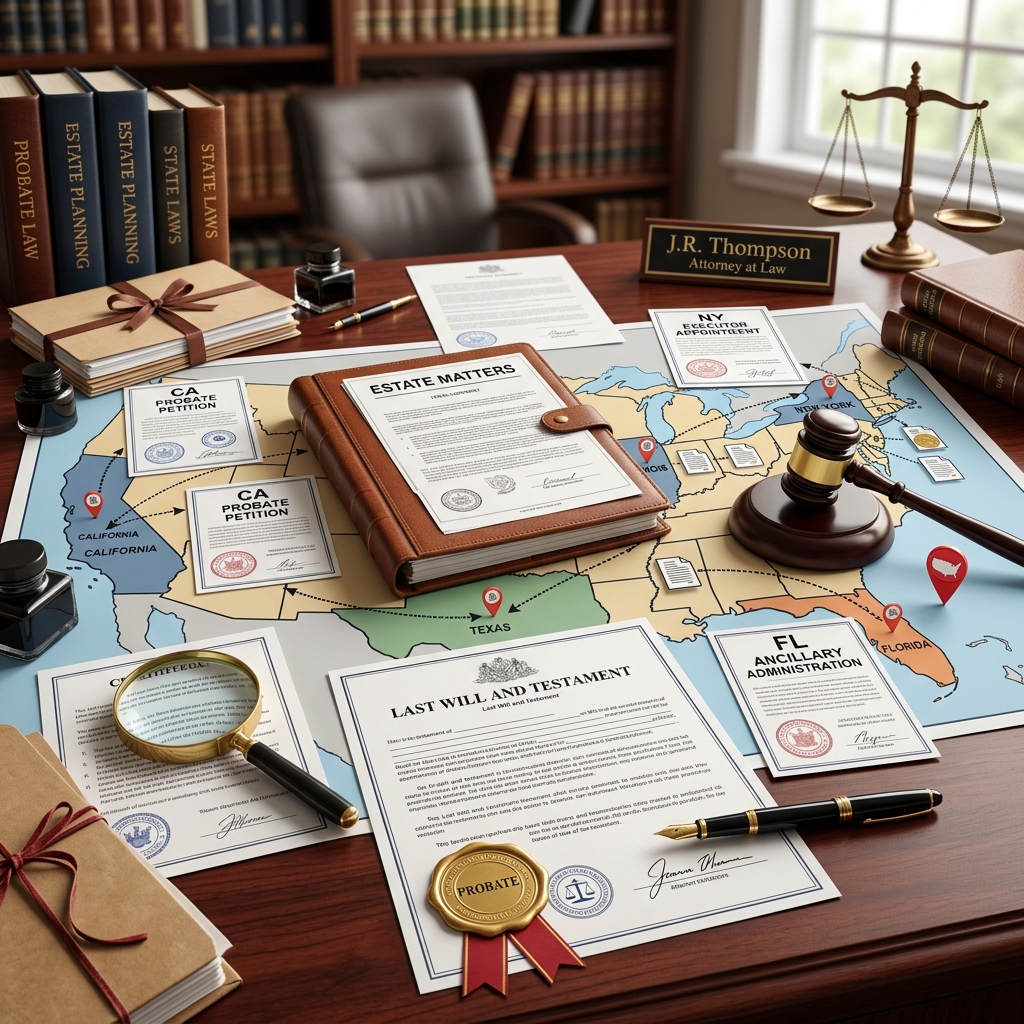
When someone dies, their will does not simply follow the convenience of family members. Probate starts in the state where the person legally lived and may need to be opened in other states if they owned property there. Understanding this framework is essential for executors, personal representatives, and family members who are trying to settle an estate that crosses state borders.
This guide explains where a will must be probated, when additional probate proceedings are required in other states, and the practical steps involved in administering a multistate estate. It is focused on U.S. law in general; specific rules vary by state, so local legal advice is always important.
Core Concepts: Domicile, Jurisdiction, and Probate
Probate law is rooted in the idea that each state has authority over certain people and property. Three core concepts drive where probate occurs and whether proceedings must be replicated in another state.
What Is Domicile and Why Does It Matter?
A person’s domicile is the state where they lived with the intention of making it their permanent home. At death, the state of domicile almost always controls the main probate case, often called domiciliary probate.
- Primary probate typically opens in the county and state of the decedent’s domicile.
- Domicile is determined by factors such as voting registration, driver’s license, tax filings, and the location of the main residence.
- The court of domicile generally oversees the appointment of the personal representative and the overall administration of the estate.
Even if family members or the executor live somewhere else, they cannot simply move the probate case to their preferred state; jurisdiction follows the decedent’s domicile and the location of certain assets.
Jurisdiction Over Property: Real vs. Intangible Assets
States draw a sharp line between physical property located within their borders and intangible assets such as bank accounts and stocks:
| Type of Asset | Typical Governing Law | Probate Implications |
|---|---|---|
| Real estate (land, houses, farms) | State where the property is located | Often requires local probate or ancillary probate in that state. |
| Tangible personal property (vehicles, equipment, livestock) | Generally where the property is physically located | May require ancillary probate if located outside the domicile state. |
| Intangible personal property (bank accounts, stocks, retirement accounts) | Usually governed by the domicile state and the institution’s rules | Frequently administered through the primary probate without separate out-of-state proceedings. |
Because a state court has no authority over land or physical assets in another state, a single probate court usually cannot fully resolve ownership of out-of-state property.
Main Probate vs. Ancillary Probate
When an estate touches more than one state, two related but distinct probate processes may be involved: domiciliary probate and ancillary probate.
Domiciliary Probate: The Primary Case
Domiciliary probate is the main probate proceeding in the decedent’s home state.
- It typically covers all assets except real estate and certain tangible property physically located in another state.
- The court validates the will, appoints an executor or personal representative, and oversees the distribution of the estate.
- Creditors in the domicile state receive notice and have an opportunity to file claims.
This primary case is the cornerstone of estate administration; other proceedings in different states usually reference and rely on it.
Ancillary Probate: Handling Out-of-State Property
Ancillary probate is a secondary proceeding opened in a state other than the decedent’s domicile when the decedent owned property there.
- Ancillary probate focuses on out-of-state assets, most commonly real estate, mineral rights, and other physical property.
- Its purpose is to allow the local court to recognize the will and authorize transfers of title under the laws of that state.
- The executor or another representative may need to be formally appointed in the ancillary jurisdiction, even if they already serve in the domicile state.
This secondary process protects local interests and ensures that title to property is legally transferred under the correct state’s rules.
When Can a Will Be Probated in Another State?
Despite some confusion, a will is not freely portable; it follows specific rules about domicile and asset location. There are several common scenarios involving probate across state lines.
Scenario 1: Decedent Moved Before Death
Imagine someone signs a will in State A but later moves and becomes a resident of State B. At death, their estate will ordinarily be probated in State B, the new domicile, not in the state where the document was originally signed.
- Most states honor wills that were validly executed under the law of another state, even if the testator later moves.
- However, specific requirements such as witness rules or restrictions on certain types of wills (for example, handwritten wills) may differ, and local law controls the probate process.
- If the decedent still owns real estate in State A, an ancillary probate may be required there in addition to the primary case in State B.
In short, the main probate follows the new state of residence, but real estate and certain assets in the former state may demand separate attention.
Scenario 2: Out-of-State Real Estate or Business Interests
If the decedent lived in one state but owned real property in another—such as a vacation home, rental property, farm, or business facility—probate issues become more complex.
- Real estate is governed by the law of the state where the property is located, and title changes usually must be approved by a court in that state.
- The executor may need to open ancillary probate in each state where the decedent owned real property, especially if local recording offices require court orders from a local judge.
- Failure to address these local requirements can delay or prevent the transfer of ownership to heirs or buyers.
For estates with significant out-of-state business operations or mineral rights, coordination between lawyers in multiple jurisdictions is often essential.
Scenario 3: Multistate Ownership of Tangible Personal Property
Vehicles, equipment, and other tangible items located outside the domicile state may also implicate another state’s jurisdiction, especially if they are registered or titled locally.
- Some states require local proceedings to transfer titles for vehicles or other tangible assets located in that state, particularly if they are part of a business operation.
- Ancillary probate may be necessary where such assets are physically located, even if their total value is modest.
On the other hand, many intangible assets—such as stock portfolios, brokerage accounts, and bank deposits—can be administered entirely through the domiciliary probate without additional court cases.
Executor Responsibilities in Multistate Estates
For executors and personal representatives, handling an estate with property in multiple states involves additional planning and coordination.
Initial Steps for the Executor
Executors should begin by clarifying both domicile and the geographic distribution of assets.
- Confirm domicile: Review voting records, driver’s license, tax filings, and where the decedent primarily lived.
- Inventory assets: Identify real estate, business interests, vehicles, and other property, noting the state where each is located.
- Open domiciliary probate: File the will in the probate court of the decedent’s home county and state and seek appointment as executor.
Once the primary probate is underway, the executor can determine whether ancillary proceedings are required elsewhere.
Coordinating Ancillary Proceedings
Where out-of-state property is involved, ancillary probate often follows a predictable sequence.
- Obtain certified copies of key documents from the domiciliary court (the will, order admitting the will to probate, and appointment of the personal representative).
- Engage counsel in each state where ancillary probate appears necessary; local lawyers can guide the executor through state-specific procedures.
- File petitions in the appropriate local courts, typically in the county where the out-of-state property is located.
- Comply with notice requirements to creditors and heirs in those jurisdictions.
Although the core estate decisions remain anchored in the domicile state, local courts still play a key role in transferring legal title to out-of-state assets.
Estate Planning Strategies to Reduce Multistate Probate
Handling multiple probate cases can be time-consuming and costly. Thoughtful planning during life can significantly limit or avoid the need for ancillary proceedings.
Using Trusts and Non-Probate Transfers
One common approach is to use ownership structures that bypass probate altogether:
- Revocable living trusts: Transferring real estate and out-of-state assets into a trust during life can allow them to pass outside of the probate system, avoiding ancillary proceedings in other states.
- Joint ownership with right of survivorship: In some cases, property titled in this way passes automatically to the surviving owner, though local state law and tax considerations must be reviewed.
- Beneficiary designations: Bank accounts, retirement plans, and insurance policies can often be structured to pass directly to named beneficiaries, without probate.
These strategies do not eliminate the need for domiciliary probate in every case, but they can minimize the reach of ancillary probate and streamline administration.
Updating the Estate Plan After Moving
Because probate and property rules vary by state, moving across state lines is often a trigger to review and update one’s estate plan.
- Most states will honor a will that was validly executed in another state, yet local law may handle spouses, community property, and elective share rights differently.
- Executor eligibility rules differ; some states limit who can serve if they live elsewhere, which can complicate administration if the chosen executor is an out-of-state resident.
- Other documents, such as powers of attorney and health care directives, may need to be updated to comply with the new state’s statutory forms and requirements.
Consulting a lawyer in the new state after a move helps ensure that existing documents remain effective and that any out-of-state property will be handled efficiently at death.
Frequently Asked Questions
Can I choose which state will probate the will?
No. Probate generally begins in the state where the deceased was domiciled at the time of death, not wherever the executor or family members prefer. Ancillary proceedings are then driven by where specific property is located.
Is a will still valid if I move to another state?
In most cases, yes. A will that was valid when executed under the law of one state is usually recognized in a new state after a move, although there can be exceptions and local requirements. Even if the will remains valid, updating the plan to reflect the new state’s rules is prudent.
Do I always need ancillary probate for out-of-state assets?
Not always. Real estate and certain tangible property often require ancillary probate, but many intangible assets (such as bank accounts and securities) can be administered through the domiciliary probate alone. The need for ancillary proceedings depends on the type and location of each asset and on local law.
Can one probate court control all property everywhere?
Generally, no. A probate judge in one state does not have legal authority over real estate and certain assets located in another state. That is why ancillary probate exists: it allows courts in each state to address property within their jurisdiction in coordination with the primary estate.
How can I avoid having my heirs deal with multiple probate cases?
Estate planning tools such as revocable living trusts, joint ownership arrangements, and carefully structured beneficiary designations can reduce the need for ancillary probate by allowing out-of-state property to pass outside the court-supervised process. Reviewing your plan with counsel familiar with multistate issues is particularly helpful if you own property in more than one state.
References
- Can a Will Be Probated in Another State? — FindLaw. 2024-04-09. https://www.findlaw.com/estate/probate/can-a-will-be-probated-in-another-state.html
- Can a Will be Probated in Another State? — Trust & Will. 2023-07-12. https://trustandwill.com/learn/can-a-will-be-probated-in-another-state
- Probate for Non-Residents: What to Do If the Deceased Lived Out of State — Heartland Estate Law. 2022-10-15. https://heartlandestatelaw.com/blog/probate-for-non-residents-what-to-do-if-the-deceased-lived-out-of-state/
- The Impact of Texas Probate Laws on Out-of-State Assets — Hatchett Law Firm. 2022-06-20. https://hatchettlegalteam.com/the-impact-of-texas-probate-laws-on-out-of-state-assets/
- Probating a Will — Texas State Law Library. 2023-05-05. https://guides.sll.texas.gov/probate/probating-a-will
- Is My Will Valid If I Move to Another State? — Trustful Wills. 2023-02-01. https://trustfulwills.com/is-my-will-valid-if-i-move-to-another-state/
- Out of State Probate: How to Handle It — Copenbarger Law Firm. 2021-09-10. https://www.copenbarger.com/how-to-handle-out-of-state-probate/
Similar Articles








Read full bio of Sneha Tete


