
Premium Air Travel: Understanding Private Aviation Benefits
Discover why high-net-worth individuals and executives choose private aviation for superior comfort, time savings, and flexibility.
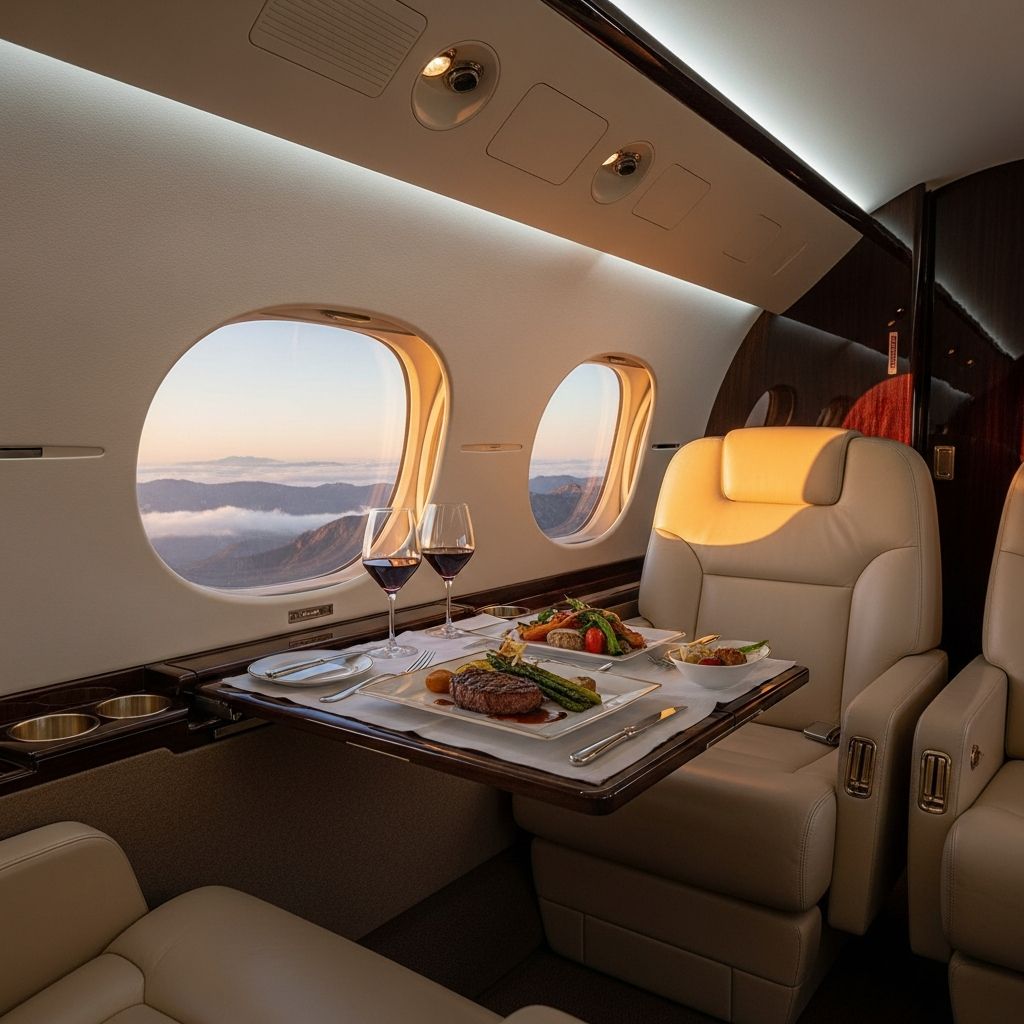
The Case for Elevated Air Travel: Why Executives Choose Private Aviation
Commercial air travel has become increasingly standardized and crowded, leaving many affluent travelers and busy professionals dissatisfied with standard offerings. From lengthy security procedures to inflexible schedules and limited destination accessibility, traditional commercial aviation presents numerous obstacles for those whose time is valuable. Private aviation has emerged as a compelling alternative that addresses these pain points while delivering a fundamentally different travel experience. Understanding the substantive advantages of private jet charter services reveals why an expanding segment of travelers views commercial air transportation, even premium cabins, as inadequate for their sophisticated needs.
Time Efficiency: The Most Valuable Commodity
One of the most significant advantages of private aviation centers on time savings throughout the entire journey. Private jet travel eliminates multiple time-consuming steps inherent to commercial aviation. Unlike passengers on scheduled flights who must arrive hours early, navigate security checkpoints, wait in boarding queues, and contend with terminal congestion, private aviation passengers experience a fundamentally streamlined process.
When departing via private aviation, passengers arrive at fixed-base operators (FBOs) or private terminals rather than crowded commercial airports. This eliminates exposure to congested security lines and lengthy check-in procedures. Boarding begins immediately upon passenger arrival, with aircraft ready for departure within minutes. This efficiency extends to the flight itself—private jets operate with complete autonomy regarding routing and scheduling, enabling direct flights to destinations that commercial carriers may not service directly.
For business travelers, the time advantage compounds across multiple dimensions. Executives can schedule departures aligned with their business requirements rather than adapting schedules to airline timetables. A traveler might complete a morning meeting, depart within the hour, and arrive at their evening destination completely refreshed and prepared—a schedule virtually impossible via commercial aviation. Over a year, frequent travelers can reclaim dozens of hours previously lost to airport procedures and layovers.
Destination Flexibility and Airport Access
Commercial aviation concentrates operations at major hub airports, typically located 30-60 miles from business districts and residential areas. This geographic limitation requires additional ground transportation, compounding total travel duration. Private aviation, by contrast, provides access to approximately 5,000 smaller regional airports across North America alone—roughly ten times the number available to commercial passengers.
This expanded network enables private jet passengers to depart from and arrive at facilities substantially closer to their actual destinations. An executive in Manhattan can depart from a nearby regional airport rather than traveling to LaGuardia or Newark. Similarly, upon arrival, passengers can land at facilities adjacent to their business location or accommodations. The cumulative time savings from this geographic advantage proves substantial, particularly for business travel involving multiple cities within a region.
Beyond domestic applications, private aviation enables access to remote destinations entirely unavailable via commercial service. Whether traveling to exclusive resort properties, corporate retreat locations, or underserved international destinations, private aviation eliminates the constraint of commercial route networks. This capability particularly benefits business delegations, incentive travel groups, and executives requiring access to specialized venues.
Customization and Personalized Service
Private aviation fundamentally transforms the travel experience through comprehensive customization. From aircraft selection through in-flight service, private jet passengers dictate every aspect of their journey. Flight operators assess passenger requirements and allocate appropriately-sized aircraft—whether accommodating three passengers in a light jet or thirty in a heavy-cabin aircraft. This matching of aircraft to actual requirements eliminates the inefficiencies inherent to standardized commercial cabins designed for broad passenger populations.
Catering reflects passenger preferences completely rather than offering standardized menu options. Dietary requirements, cuisine preferences, and beverage selections receive advance attention, ensuring in-flight dining aligns precisely with passenger expectations. This level of culinary customization extends to sophisticated business entertaining—private aviation enables productive business meetings conducted in a private cabin environment with executive-quality catering and beverage service.
Beyond meals, private aviation passengers control cabin environment variables including temperature, lighting, and entertainment selections. For business travelers, onboard connectivity and conference capabilities facilitate productive work without interruption from other passengers. Confidential business discussions occur in complete privacy, enabling discussions of sensitive strategic matters without concern regarding inadvertent exposure to competitors or unauthorized parties.
Superior Comfort and Wellness Considerations
The physical environment in private aviation contrasts dramatically with commercial cabin configurations. Commercial aircraft cabins, even premium sections, accommodate numerous passengers in relatively confined spaces. Private aviation provides exclusive access to spacious cabins where passengers can move freely, conduct business, rest, or hold private conversations without restriction.
Air quality and pressurization in private aircraft typically exceeds commercial standards, reducing fatigue associated with long-duration flights. Passengers arrive at destinations noticeably less exhausted than after equivalent commercial flights, a physiological advantage that translates to enhanced professional performance and improved wellness outcomes. For international travelers crossing multiple time zones, the superior cabin environment and ability to sleep comfortably in a fully-reclined position significantly alleviates jet lag.
Passengers with health considerations or compromised immune systems benefit from reduced exposure to large crowds and simplified boarding procedures. Private aviation eliminates time spent in crowded terminal environments where communicable illness exposure increases. Fewer individuals occupying the aircraft reduces infection transmission risk, a consideration particularly relevant for health-conscious travelers and those responsible for vulnerable populations.
Operational Flexibility and Schedule Control
Schedule flexibility represents a cornerstone advantage distinguishing private aviation from commercial service. Commercial airlines operate predetermined schedules with limited accommodation for passenger-specific requirements. Private aviation operates according to passenger scheduling needs, enabling departures that align with business requirements rather than airline convenience.
This flexibility extends to spontaneous itinerary modifications. Should business circumstances change, private jet passengers can alter destinations, modify departure times, or adjust the overall trip structure with minimal friction. Commercial air travel offers no comparable capability—passengers must accept published schedules or incur substantial change fees and rebooking complications.
For business executives, this operational control provides invaluable strategic advantages. A delayed meeting conclusion need not impact subsequent travel—aircraft depart when the executive determines they are prepared to travel. A last-minute business opportunity requiring travel can be accommodated without waiting for next available commercial departures. This responsiveness to business dynamics creates competitive advantages in fast-moving business environments where timing often determines outcomes.
Group Travel Economics and Value Proposition
A frequently overlooked advantage of private aviation concerns cost-effectiveness for group travel. While private jet charter pricing appears substantial on surface analysis, cost allocation across multiple passengers often yields per-passenger expenses comparable to or less than premium commercial cabin tickets. A business delegation traveling via private charter can divide total aircraft costs across all participants, frequently resulting in per-person pricing equivalent to first-class commercial fares.
This economic equivalency transforms private aviation from luxury luxury into practical transportation solution for organizations traveling with multiple executives. Furthermore, private aviation savings extend beyond base ticket pricing. Eliminated layovers reduce travel duration, enabling same-day business completion rather than overnight hotel stays. Streamlined ground procedures and proximate airport access eliminate ground transportation costs and time investments. For business groups, these cumulative savings frequently justify private charter selection from economic standpoint independent of comfort and efficiency considerations.
| Travel Factor | Commercial Aviation | Private Aviation |
|---|---|---|
| Departure Timing | Fixed schedule | On-demand, passenger-determined |
| Security Procedures | Extended checkpoints required | Minimal security procedures |
| Destination Selection | Limited to major hubs | 5,000+ accessible airports |
| Baggage Allowance | Restricted quantities | Flexible per aircraft capacity |
| Catering Options | Standardized menu | Fully customized |
| Privacy | Shared cabin space | Exclusive cabin access |
| Schedule Changes | Substantial fees and complications | Accommodated with minimal friction |
Privacy and Confidentiality Advantages
Business executives, corporate boards, and high-profile individuals frequently require travel environments where confidential discussions occur without risk of inadvertent exposure. Private aviation provides completely controlled environments where sensitive strategic matters, financial negotiations, and proprietary information can be discussed freely.
Commercial aviation, even premium cabins, offers no comparable privacy. Passengers remain exposed to numerous surrounding individuals who might overhear confidential information. Business competitors, corporate rivals, or media representatives might occupy adjacent seats. For organizations handling sensitive information or engaged in confidential negotiations, this exposure creates unacceptable security risks. Private aviation eliminates these vulnerabilities by restricting cabin access to approved participants exclusively.
Safety and Security Considerations
Private aviation operators maintain safety and maintenance standards frequently exceeding commercial airline requirements. Aircraft undergo rigorous inspection protocols and maintenance procedures monitored closely by experienced operators prioritizing safety and reliability. Smaller passenger counts on private aircraft reduce the potential scale of incidents and simplify emergency procedures.
Security procedures for private aviation differ substantially from commercial terminals. Passengers board through secure facilities with limited public access, reducing security risks associated with large terminal environments. Ground transportation to aircraft occurs via direct routes, eliminating exposure to crowded public areas. For security-conscious travelers, executives requiring protective details, and high-profile individuals, these controlled environments provide substantial security advantages.
Long-Distance Travel and International Capabilities
Modern private aviation capabilities extend to long-distance international travel, with many aircraft capable of flying over 12,000 kilometers non-stop. Transatlantic and transpacific routes that typically require layovers or connections via commercial airlines become feasible as direct flights via private aviation. The time savings associated with eliminating layovers compounds significantly on extended international journeys.
International private aviation also simplifies customs and immigration procedures at numerous airports where private terminals operate dedicated customs facilities. Passengers can clear international requirements efficiently without navigating commercial terminal procedures. This capability particularly benefits international business travel where procedural delays frequently consume multiple hours.
Common Questions About Private Aviation Travel
Q: How does private aviation cost compare to premium commercial fares?
A: For individual passengers, private jet costs typically exceed premium commercial fares. However, for groups, per-passenger costs often rival or undercut first-class pricing when charter expenses are divided among all passengers. Organizations traveling with multiple executives frequently find private aviation economically competitive.
Q: What are the environmental considerations of private aviation?
A: Private aviation utilizes fuel less efficiently per passenger than large commercial aircraft on full flights. However, private aviation enables more direct routing, reducing total fuel consumption and emissions relative to flights requiring connections. Increasingly, operators offer sustainable aviation fuel options and carbon offset programs.
Q: How far in advance must private jet travel be booked?
A: Private aviation offers exceptional booking flexibility, accommodating same-day or next-day departures in many cases. Unlike commercial airlines requiring advance reservations, private charter operators prioritize availability and can mobilize aircraft rapidly to meet passenger requirements.
Q: Can pets accompany passengers on private aircraft?
A: Yes, private aviation permits pets onboard, accommodating them within flight crew-approved parameters. This eliminates the need for pet transportation services or kenneling arrangements, simplifying travel logistics for passengers with animal companions.
Q: What aircraft types are available through charter services?
A: Charter operators maintain diverse aircraft ranging from light jets accommodating three passengers to heavy-cabin aircraft carrying thirty or more. Selection enables precise matching of aircraft capabilities to specific group sizes and route requirements.
The Strategic Value of Time and Convenience
Ultimately, private aviation’s appeal transcends luxury branding to address fundamental business and personal needs. Executives whose hourly value reaches hundreds or thousands of dollars recapture meaningful compensation through time savings alone. Organizations managing complex travel requirements discover private aviation eliminates scheduling constraints that commercial aviation imposes. Business delegations find private charter economics increasingly competitive compared to premium commercial alternatives when comprehensive cost analysis occurs.
The decision to utilize private aviation reflects rational evaluation of time value, operational requirements, and strategic benefits rather than purely aspirational motivations. As business environments become increasingly complex and competitive advantage increasingly depends on executive availability and responsiveness, private aviation transforms from discretionary luxury into operational necessity for organizations prioritizing executive effectiveness.
References
- Private Jet vs. Business Class – How Much Time Can You Save? — Air Partner. 2024. https://www.airpartner.com/en/discover/blogs/private-jet-vs-business-class-on-scheduled-flights-how-much-time-can-you-really-save/
- Private Jet Travel vs Commercial Air Travel — A Complete Guide — Chapman Freeborn Aerospace. 2024. https://chapmanfreeborn.aero/news-and-blog/private-jet-travel-vs-commercial-air-travel-a-complete-guide/
- The Benefits of Private Charter Flights — Fly Advanced. 2024. https://flyadvanced.com/private-charter-flights-vs-commercial-air-travel-benefits/
- Benefits of Flying Private vs. First Class — Latitude 33 Aviation. 2024. https://l33jets.com/resources/blog/benefits-of-flying-private/
- Is Chartering a Private Jet Worth It? A Practical Cost Comparison — BlackJet. 2024. https://www.blackjet.com/post/chartering-a-jet-is-it-worth-it-a-detailed-analysis
- Private Jet Charter vs. First-Class Travel: Which Offers More Luxury — Jettly. 2024. https://jettly.com/post/private-jet-charter-vs-first-class-travel-which-offers-more-luxury
Similar Articles








Read full bio of Sneha Tete




