
The Privacy Implications of Digital Contact Tracing
Balancing public health tech and digital privacy rights.
Introduction to Public Health Surveillance
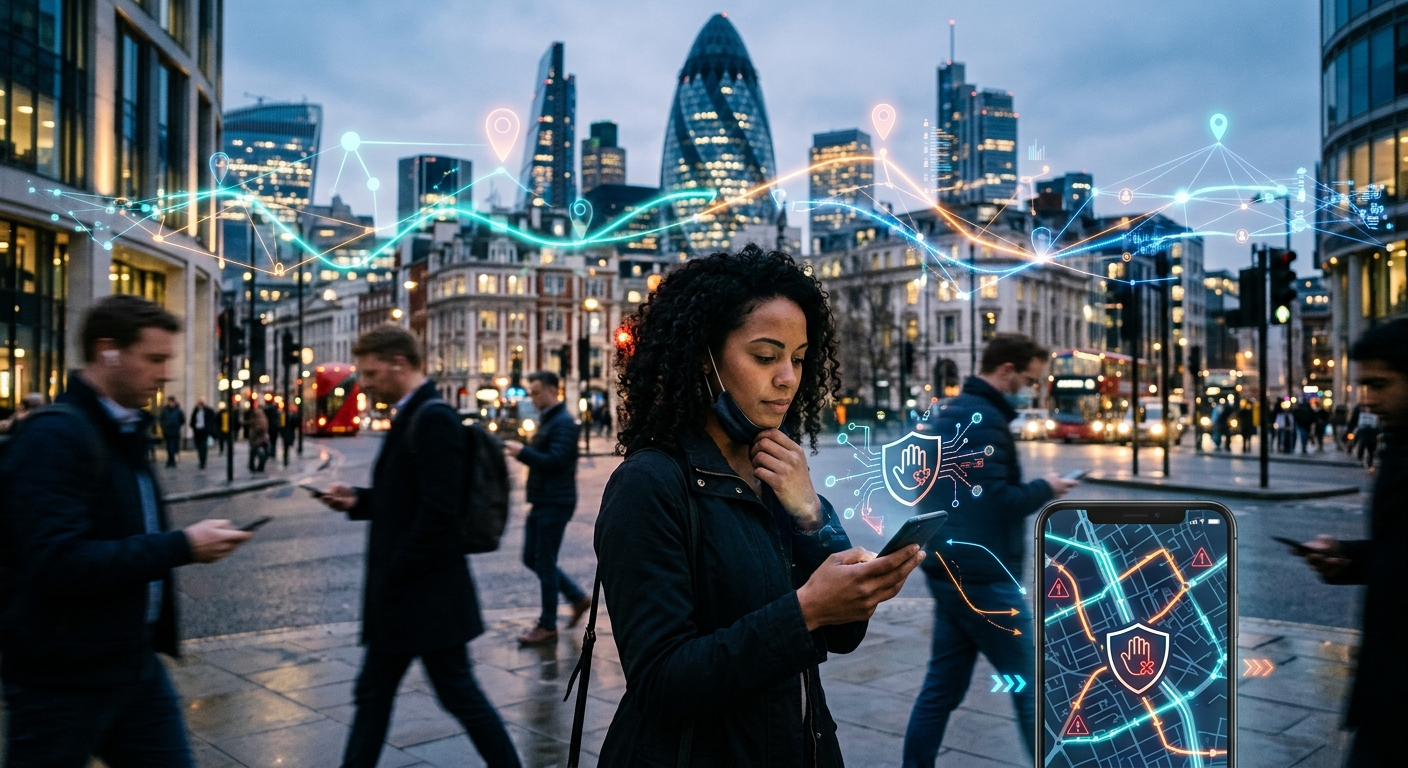
When infectious disease outbreaks threaten global stability, the race to contain transmission often intersects with rapid technological innovation. In the modern era, one of the most significant testaments to this intersection is the deployment of digital contact tracing systems. Prompted by an urgent need to supplement traditional public health measures, historically fierce tech rivals occasionally join forces to engineer massive infrastructural shifts. By embedding exposure notification frameworks directly into mobile operating systems, these tech giants promise a highly scalable solution to viral spread. However, this unprecedented integration of public health and consumer technology triggers profound debates regarding digital privacy, government surveillance, and individual autonomy. The core dilemma facing civil liberties advocates is clear: can we harness the ubiquitous power of mobile devices to save lives without constructing a permanent surveillance apparatus? Navigating this tension requires a meticulous examination of the underlying technology, the data architecture, and the regulatory guardrails necessary to protect fundamental human rights.
The Evolution of Contact Tracing: From Manual to Digital
To understand the profound significance of smartphone-based exposure notifications, one must first examine the inherent limitations of traditional epidemiological methods. Historically, contact tracing has been a manual, highly resource-intensive endeavor. When a patient tests positive for a transmissible pathogen, trained health workers conduct extensive, detailed interviews to map out the patient’s recent physical interactions. They ask the infected individual to recall every person they spent time with, every public venue they visited, and every mass transit system they utilized over a specific incubation period.
While this method is exceptionally effective for localized, slow-moving outbreaks, it faces severe logistical bottlenecks during widespread, rapid-transmission scenarios. Human memory is remarkably fallible; an infected person might easily remember dining with a close friend but cannot possibly identify the stranger who stood next to them on a crowded subway train for thirty minutes.
Digital contact tracing emerged as a highly attractive, automated supplement to these manual efforts. By leveraging the advanced sensors already present in modern smartphones, public health authorities sought to bridge the critical gaps left by human forgetfulness. A smartphone, which is practically an extension of the modern individual, can objectively record proximity events that the user might completely ignore. This realization catalyzed extraordinary partnerships within the technology sector to develop a universal Application Programming Interface (API). The ultimate goal was to provide a standardized, cross-platform foundation upon which local and national health agencies could build their own custom contact tracing applications, ensuring that devices running entirely different operating systems could seamlessly communicate with one another in the background.
Bluetooth Proximity Over GPS Location: A Crucial Distinction
When the concept of smartphone-assisted tracing first surfaced in public health discourse, initial proposals often centered around utilizing the Global Positioning System (GPS) network. The underlying logic seemed straightforward: if an application tracks exactly where an infected person has been, it can cross-reference that geographical data against the historical coordinates of other application users. However, from both a fundamental privacy and a technical standpoint, GPS represents a deeply flawed approach. Location tracking inherently maps a user’s entire life, generating highly sensitive logs of their home addresses, workplaces, medical clinic visits, and social gatherings. Furthermore, GPS accuracy heavily degrades indoors, in dense urban environments, or underground, making it virtually useless for determining if two people were standing within six feet of each other inside a multi-level grocery store.
The privacy-preserving alternative to GPS technology is Bluetooth Low Energy (BLE). Instead of recording where a physical interaction occurred, Bluetooth proximity tracking simply records that an interaction occurred. The mechanism functions much like a continuous, invisible digital handshake. As individuals move through the physical world, their smartphones passively emit short-range Bluetooth beacons containing anonymous, mathematically randomized identifiers. These digital “chirps” change frequently—often every ten to twenty minutes—to prevent third parties, hackers, or corporate entities from linking them back to a specific mobile device or individual identity.
When two smartphones come into close physical proximity, they silently exchange and store these ephemeral keys in a local database. If a user later tests positive for a disease and voluntarily inputs that certified diagnosis into their public health app, the system can notify any devices that recently collected the infected user’s beacons. Because BLE relies directly on signal strength degradation to estimate physical distance, it serves as a far more accurate proxy for epidemiological risk than satellite-based location services. Most importantly, it completely severs the link between exposure notification and geographic surveillance, ensuring that neither the government nor the tech companies can build a geographical map of a citizen’s movements.
The Architecture of Privacy: Decentralized vs. Centralized Systems
Even if a health system appropriately utilizes Bluetooth instead of GPS, the specific way the collected data is managed and processed remains a critical privacy battleground. The core engineering architecture behind exposure notifications typically falls into one of two distinct categories: centralized or decentralized data storage.
In a centralized model, the anonymous identifiers collected by users’ devices are uploaded directly to a server controlled by a central authority, typically a national or regional health ministry. When someone tests positive, the central server handles the complex computational task of matching the infected person’s broadcasted keys with the proximity logs of all other registered users across the network. While this centralized approach gives public health officials detailed epidemiological analytics and granular insight into community transmission chains, it simultaneously creates an irresistible honeypot of sensitive interaction data. Privacy advocates and security researchers fiercely warn that centralized databases are highly vulnerable to catastrophic data breaches and state-sponsored deanonymization efforts. In the wrong hands, a centralized digital graph of who interacted with whom could easily be weaponized to suppress political dissent, monitor marginalized communities, or track the covert associations of journalists and human rights activists.
Conversely, the decentralized model—often based on robust cryptographic protocols like the Decentralized Privacy-Preserving Proximity Tracing (DP-3T) framework—shifts the computational burden away from government servers and directly onto the users’ personal smartphones. In this privacy-forward paradigm, the central server merely acts as a passive bulletin board. It hosts a public list of the anonymous keys belonging to individuals who have officially confirmed they are infected. Every user’s phone periodically downloads this master list and performs the cryptographic matching process locally, entirely within the secure confines of the device’s hardware. If the phone discovers a match between the downloaded positive keys and the keys it has securely saved in its own private proximity log, it generates a localized health alert. This decentralized approach mathematically ensures that the central authority never learns who has been exposed to whom, dramatically reducing the systemic risk of mass surveillance and making it the overwhelmingly preferred architecture among global civil rights organizations.
Core Principles for Ethical Digital Public Health Tools
The introduction of profound digital tracking capabilities, even in the name of a severe public health emergency, requires rigorous, non-negotiable ethical boundaries. Without strict legal safeguards, temporary emergency measures have a documented historical tendency to transform into permanent fixtures of the state security apparatus. To ensure that digital public health tools respect foundational civil liberties, several core principles must be rigidly enforced by lawmakers and software engineers alike.
- Voluntary Adoption and Informed Consent: The utilization of any exposure notification system must be strictly opt-in. Mandating the installation of tracking software fundamentally violates bodily and digital autonomy. Individuals must be entirely free to download the app, free to activate the Bluetooth API, and free to delete the system at any time without facing societal or legal penalties. Furthermore, testing positive for a disease should never trigger an automatic data upload; the infected user must explicitly and clearly consent to sharing their diagnosis keys with the broader network.
- Purpose Limitation: Data collected under the guise of public health protection must never be repurposed for alternative governmental functions. There must be impenetrable legal and technical firewalls preventing local law enforcement, immigration authorities, or national intelligence agencies from accessing smartphone proximity logs. If citizens even remotely suspect that a contact tracing app could lead to criminal arrest or deportation, public adoption rates will plummet, rendering the public health initiative completely useless.
- Data Minimization and Ephemerality: Software systems should only collect the absolute minimum amount of data required to accurately calculate exposure risk. IP addresses, phone numbers, and identifying digital metadata must be aggressively scrubbed or encrypted. Furthermore, the digital handshakes exchanged by devices should have a strict, hard-coded lifespan. Once a key exceeds the known biological incubation period of the pathogen (typically 14 to 21 days), it must be automatically and permanently purged from both the individual device and any associated network servers.
- Sunset Clauses: Emergency digital technologies must not outlive the physical emergencies that justified their creation. Government legislation and software terms of service must include definitive, unambiguous sunset clauses that legally mandate the total decommissioning of the API and the irreversible deletion of all residual data once public health authorities formally declare the crisis over.
Efficacy and Societal Pitfalls
Beyond the theoretical debates surrounding data privacy, digital exposure notification systems face highly pragmatic hurdles that can severely undermine their overall efficacy and disproportionately affect vulnerable populations. It is crucial to recognize that technology is not a magical panacea for complex sociological and biological crises.
One primary concern among epidemiologists is the frequency of false positives. Bluetooth radio signals behave very differently depending on the immediate physical environment. They can easily pass through thin apartment walls, glass office windows, or the floors of a multi-story residential building. As a result, a smartphone might record a high-risk proximity event with a neighbor who was merely sitting in the adjacent apartment, separated by a physical, airtight barrier that entirely prevents viral transmission. Widespread false positives can lead to completely unnecessary quarantines, severe economic disruption for hourly workers, and a general, lasting erosion of public trust in the application’s utility.
Additionally, the heavy reliance on modern smartphone technology starkly exacerbates the existing digital divide. The populations most inherently vulnerable to infectious diseases—such as the elderly, lower-income communities, and essential manual laborers—are precisely the demographic groups least likely to own the latest, expensive smartphone models required to run advanced, battery-intensive Bluetooth APIs. If a digital health intervention only actively protects wealthy technology adopters while systematically ignoring marginalized demographics, it fundamentally fails as a comprehensive, equitable public health strategy.
Looking Ahead: Building Trust in Digital Public Health
The rapid, collaborative development of decentralized exposure notification APIs clearly demonstrated that the global technology industry is capable of prioritizing privacy-by-design principles even during times of unprecedented global panic. However, maintaining essential civil liberties requires constant, unwavering vigilance from civil society. The true measure of a society’s overarching resilience is not merely its operational ability to stop a pathogen, but its ability to do so without permanently sacrificing its core democratic values. Moving forward into an increasingly digitized future, public trust will remain the absolute cornerstone of any tech-assisted health initiative. If populations believe their digital trails will be exploited by the state, they will reject the tools outright. Therefore, future software innovations must continue to intricately intertwine robust epidemiological utility with uncompromising, externally auditable privacy protections.
Frequently Asked Questions (FAQs)
What is the core difference between traditional and digital contact tracing?
Traditional contact tracing heavily relies on manual, retrospective interviews conducted by trained health workers to identify a patient’s recent physical contacts. Digital contact tracing, on the other hand, automates this labor-intensive process using integrated smartphone sensors. It allows devices to anonymously and passively log physical interactions with other nearby users, thereby bridging the inevitable gaps in human memory and scaling the notification process instantly.
Why do civil liberties advocates prefer Bluetooth over GPS for exposure notifications?
GPS tracking records absolute physical locations, which can easily map a person’s entire life and daily movements, leading to severe privacy violations and potential state surveillance. Bluetooth Low Energy (BLE) instead measures physical proximity by exchanging anonymous, constantly rotating digital identifiers with nearby devices. This method logs who you were near without ever tracking or recording where you were.
What exactly is a decentralized contact tracing architecture?
In a decentralized software system, the cryptographic matching process used to determine if you have been exposed to an infected person happens entirely locally on your own smartphone. The central government server only distributes the anonymous keys of positive cases; it never collects or computes a master list of all user interactions, making systemic mass surveillance virtually impossible to execute.
Can local police or immigration authorities access my exposure notification data?
Ethical digital public health tools are strictly built on the fundamental principle of purpose limitation. Strong legal frameworks and advanced technical encryption should explicitly block law enforcement, immigration, and intelligence agencies from accessing proximity logs. Systems designed around the decentralized API fundamentally and mathematically restrict the availability of this sensitive data.
References
- Apple and Google partner on COVID-19 contact tracing technology — Apple Inc. 2020-04-10. https://www.apple.com/newsroom/2020/04/apple-and-google-partner-on-covid-19-contact-tracing-technology/
- The Challenge of Proximity Apps For COVID-19 Contact Tracing — Electronic Frontier Foundation (EFF). 2020-04-10. https://www.eff.org/deeplinks/2020/04/challenge-proximity-apps-covid-19-contact-tracing
- EPFL and ETH Zurich advance digital contact tracing project — École Polytechnique Fédérale de Lausanne (EPFL). 2020-04-21. https://actu.epfl.ch/news/epfl-and-eth-zurich-advance-digital-contact-tracin/
Similar Articles








Read full bio of medha deb


