Privacy and California’s Digital License Plate Law
Exploring how California’s digital license plate law reshapes vehicle data, GPS tracking, and privacy expectations for drivers and employees.
Understanding Privacy in California’s Digital License Plate Era
California’s move to allow digital license plates marks a major shift in how vehicles are identified, registered, and monitored. As these connected plates replace traditional metal tags and paper stickers, they raise important questions about location tracking, data sharing, and employee monitoring that the state’s new legal framework must address.
This article explains the core features of California’s Motor Vehicle Digital Number Plates Act (AB 984), highlights key privacy protections and risks, and offers practical guidance for drivers, employers, and legal professionals.
1. How California Arrived at Digital License Plates
Digital license plates did not appear overnight. They are the result of years of pilot testing and legislative debate over how far connected-vehicle technology should go.
1.1 From pilot programs to permanent authorization
- In 2015, California’s DMV launched a pilot program to test alternatives to paper registration cards, stickers, and metal plates, including digital license plates.
- On September 29, 2022, Governor Gavin Newsom signed AB 984, the Motor Vehicle Digital Number Plates Act, authorizing a permanent digital plate program effective January 1, 2023.
- The law empowers the Department of Motor Vehicles (DMV) to approve “alternative devices” that can stand in for conventional license plates, tabs, and registration cards.
With AB 984, California joined states such as Arizona, Michigan, and limited-use programs in Texas in allowing digital license plates.
1.2 What makes a plate “digital”?
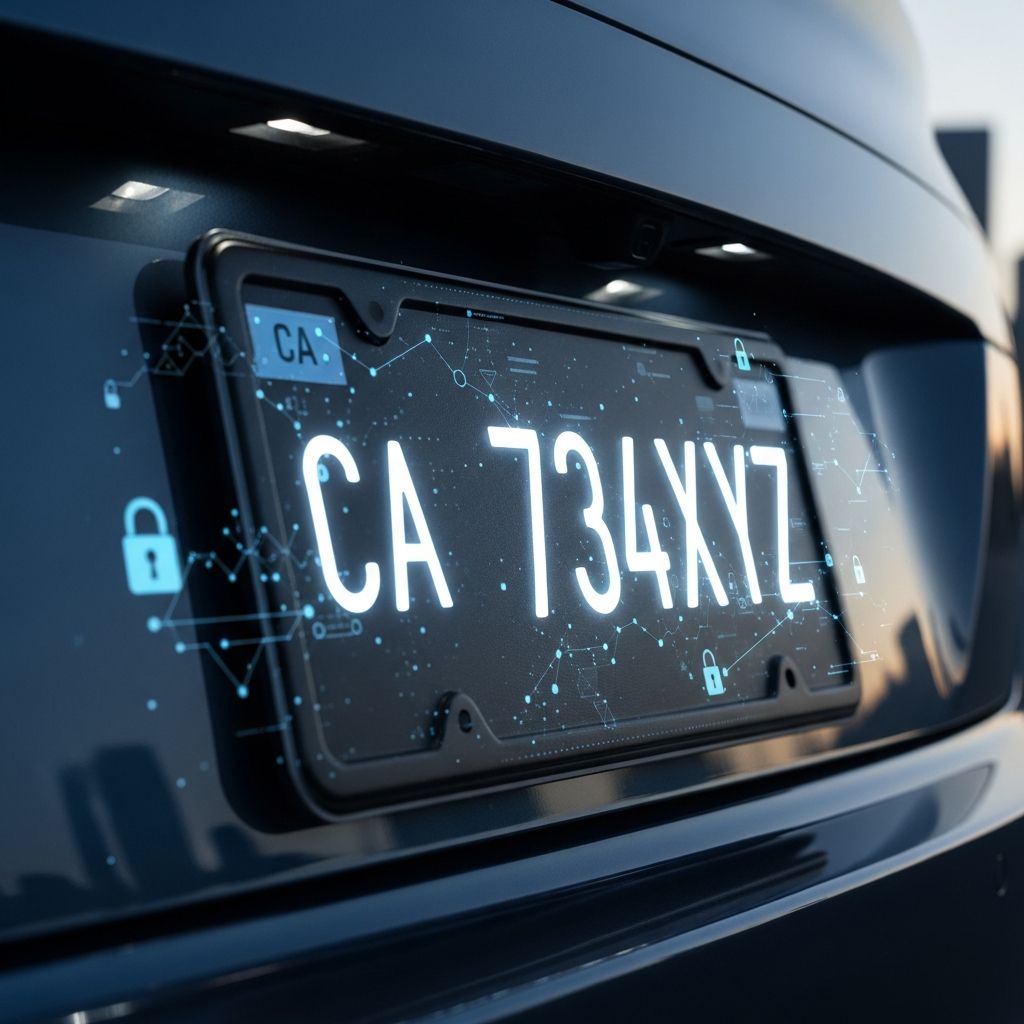
Digital license plates are electronic displays mounted in place of traditional plates and connected to backend systems through wireless communication.
- They can show registration status and plate numbers electronically instead of using stamped metal.
- Some models allow custom messages or alerts (such as a stolen vehicle notice) when enabled by the owner and consistent with DMV rules.
- Because they are networked devices, they raise immediate questions about data collection and location tracking, even where vendors emphasize non-tracking designs.
2. Core Features of AB 984: What the Law Actually Does
AB 984 is designed to modernize registration while placing guardrails around data use. Understanding those guardrails is essential for evaluating privacy risks.
2.1 Digital plates and “alternative devices”
The law allows the DMV to approve alternative devices that serve the same legal role as traditional:
- License plates
- Registration stickers or tabs
- Paper registration cards
Once approved and installed:
- The device is treated as valid evidence of registration.
- Drivers can rely on the digital plate instead of carrying physical documents, subject to DMV guidance.
2.2 General ban on vehicle location technology
To address privacy concerns, AB 984 generally prohibits GPS or similar vehicle location technology in alternative devices.
- The statute explicitly states that an approved alternative device may not include vehicle location technology in most cases.
- The DMV must recall any pilot-program devices that included GPS unless they fall within limited exemptions.
However, this broad ban is subject to important exceptions for certain categories of vehicles.
2.3 Fleet and commercial exceptions
AB 984 allows vehicle location technology for specific vehicle types, including:
- Fleet vehicles managed collectively by a company
- Commercial vehicles used for business operations
- Vehicles operating under certain occupational licenses (e.g., dealers)
For these vehicles, digital plates or alternative devices may incorporate GPS tracking and related telemetry. This exception is central to employer monitoring issues and worker privacy debates.
3. Privacy Protections Written into AB 984
While digital plates raise obvious surveillance risks, AB 984 and related privacy laws include several safeguards intended to limit misuse.
3.1 Restrictions on DMV data collection and sharing
AB 984 tightly limits what information the DMV can obtain from digital plate providers.
- Data exchanged between providers and the DMV must be confined to what is necessary to display proof of registration and related compliance.
- The DMV is prohibited from receiving or storing information about a vehicle’s movement, location, or usage through these devices.
These restrictions aim to prevent digital plates from becoming a de facto statewide tracking grid administered by the DMV.
3.2 Employee monitoring rules and notice duties
AB 984 significantly reshapes how employers may monitor employees through connected vehicle technologies.
When an employer uses a digital plate or related device with GPS or monitoring capabilities, the law:
- Requires advance written notice to employees before monitoring begins.
- Mandates that notice include, at a minimum:
- What data will be collected (e.g., location, time, vehicle status)
- When and how often monitoring will occur
- How long data will be retained and where it will be stored
- Whether monitoring includes off-duty or non-working hours
- The employee’s right to disable location tracking outside of working hours if vehicle location technology is present
- Prohibits retaliation against employees who disable vehicle location tracking outside work hours where the law grants that right.
These safeguards reflect a broader trend in workplace privacy law: consent alone is not enough; transparency and clear limits on use and retaliation are required.
3.3 User control and disabling location technology
For devices that incorporate GPS (e.g., fleet vehicles), AB 984 indicates that vehicle location technology must be capable of being disabled by the user outside of working hours.
- Disabling should not require unreasonable effort or technical sophistication on the part of the user.
- Employers must not punish workers for using this off-duty disable function when the law grants them that right.
Disputes may still arise over what counts as a meaningful ability to disable tracking, especially if location data is still logged indirectly (such as by telematics systems outside the plate itself).
4. How Digital Plates Interact with Other Privacy Laws
AB 984 does not exist in isolation. California has a dense framework of privacy statutes that interact with digital plates, especially in the context of data security and law enforcement access.
4.1 Automatic license plate readers (ALPRs) and SB 34
Digital plates are often confused with automatic license plate reader (ALPR) systems, but they are legally and technically distinct.
- ALPRs are external cameras and software used by law enforcement and private entities to capture plate images, time, date, and GPS location, building searchable databases of vehicle movements.
- California’s SB 34 governs ALPR use, requiring agencies to adopt privacy policies, protect data security, and limit data sharing.
- The California Department of Justice enforces ALPR rules and has reported violations where agencies improperly shared ALPR data with out-of-state or federal entities, highlighting the risks of mission creep even under strong laws.
Digital plates themselves are not ALPRs; they are data sources, not scanning tools. However, they coexist in an ecosystem where plate data may be captured and cross-referenced, increasing the importance of strict data separation between digital-plate systems and ALPR databases.
4.2 Consumer privacy and data security obligations
In addition to AB 984, digital plate providers and employers must navigate broader privacy and cybersecurity rules, such as:
- General consumer privacy and unfair practices standards enforced by state authorities
- Data breach notification laws requiring organizations to inform individuals and regulators when certain sensitive information is compromised
- Contractual and regulatory security requirements that may apply to connected vehicles and telematics, particularly in regulated industries
Although AB 984 does not list detailed technical security controls, providers that fail to protect plate data from breaches or misuse may face significant regulatory and civil exposure.
5. Key Privacy Risks and Open Questions
Despite the protections built into AB 984, digital license plates introduce new and unresolved privacy risks.
5.1 Function creep and secondary data uses
Digital plates enable a level of connectivity that could be repurposed over time, even if current law and vendor policies are conservative.
- Additional sensors or integrations could provide detailed telemetry, including real-time location, driving behavior, or vehicle status.
- Combined with ALPR records, toll data, and smartphone location history, plate-related information could contribute to highly detailed movement profiles.
- There is an ongoing risk of function creep, where data collected for registration or security purposes is gradually used for marketing, law enforcement, or analytics outside the original intent.
5.2 Security vulnerabilities and data breaches
Connected license plate systems must be designed to withstand hacking, unauthorized access, and simple misconfiguration.
- If a provider’s backend systems are compromised, attackers could access personal account data, billing information, or in some cases location history.
- Weak authentication or insecure apps could allow unauthorized users to change plate displays, impersonate vehicles, or disable alerts.
- Misconfigured access controls may lead to inappropriate sharing of fleet or employee location data.
Although AB 984 does not describe penalties line by line for every type of data breach, violations of data protection statutes, consumer-protection laws, or contractual security duties can carry substantial liability.
5.3 Worker surveillance and power imbalances
Even with notice and anti-retaliation provisions, digital plates and GPS-enabled devices can deepen concerns about workplace surveillance.
- Employees may feel compelled to accept extensive monitoring to keep their jobs, undermining the notion of voluntary consent.
- Granular GPS logs can reveal off-duty behavior, visits to sensitive locations, or participation in union activities.
- Disputes may arise over whether tracking was truly disabled outside working hours, and how to prove misuse.
AB 984 represents a meaningful attempt to set boundaries, but it does not end debates over how much monitoring is appropriate or how to prevent covert expansion of surveillance.
6. Practical Guidance for Stakeholders
Digital plates are likely to expand in usage as more vehicles adopt connected technologies. The following table summarizes key considerations for drivers, employers, and legal professionals.
| Stakeholder | Main Concern | Recommended Actions |
|---|---|---|
| Individual drivers | Personal privacy, tracking, and data sharing |
|
| Fleet owners and employers | Compliance with AB 984 and worker privacy |
|
| Legal and compliance teams | Risk management and policy design |
|
7. Frequently Asked Questions (FAQs)
Q1: Do digital license plates always track a vehicle’s location?
No. Under AB 984, most consumer digital plates in California are not allowed to include vehicle location technology. GPS can be used in limited cases for fleet, commercial, or occupationally licensed vehicles, and even then, additional notice and worker protections apply.
Q2: Can law enforcement use data from my digital plate to follow me?
The DMV is barred from collecting or storing data about a vehicle’s movement, location, or use through digital plates, and vendors emphasize that plate data is limited to registration, security, and theft-recovery functions. However, law enforcement may still rely on external tools like ALPR systems and other lawful investigative methods, which are regulated separately under SB 34.
Q3: I drive a company vehicle with a digital plate. Can my employer track me off the clock?
If the vehicle uses GPS or related monitoring, your employer must provide clear notice describing when and how monitoring occurs, how long data is kept, and your right to disable tracking outside work hours where AB 984 grants that right. The law also prohibits retaliation for disabling location tracking when you are not working.
Q4: What happens if digital plate data is hacked or leaked?
Vendors and employers that collect personal information through digital plate systems remain subject to California’s data breach notification laws and broader consumer-protection standards. A significant breach could trigger mandatory notices, regulatory investigations, and civil liability, especially if security practices were inadequate or inconsistent with published privacy policies.
Q5: Are digital plates mandatory in California?
No. AB 984 creates a permissive program, allowing drivers and fleet owners to adopt digital plates as an alternative to traditional metal plates, stickers, and cards once approved by the DMV. Participation is voluntary, and conventional plates remain available.
References
- Dissecting the privacy implications of California’s digital license plate law — One Legal Blog. 2023-01-27. https://www.onelegal.com/blog/dissecting-privacy-implications-californias-digital-license-plate-law/
- California AB 984: Digital License Plates, GPS Tracking, and Employee Privacy — California Lawyers Association. 2022-11-03. https://calawyers.org/privacy-law/california-ab-984-digital-license-plates-gps-tracking-and-employee-privacy/
- Digital License Plates and Tracking Devices — ArentFox Schiff. 2022-10-18. https://www.afslaw.com/perspectives/managing-automotive-blog/digital-license-plates-and-tracking-devices
- ALPR Use in California & What It Means For Digital License Plates — Reviver. 2023-08-15. https://reviver.com/the-legal-rules-behind-alpr-use-in-california-and-what-it-means-for-digital-license-plates/
- Digital License Plates in California — Reviver. 2023-06-01. https://reviver.com/geo-expansion/california/
- Here’s How To Get a Digital License Plate in California — dot.LA. 2022-10-06. https://dot.la/digital-drivers-license-2658454276.html
Similar Articles







Read full bio of medha deb