
Prison Tablets: Tech Tools or Security Nightmares?
Examining the dual-edged sword of inmate tablets: boosting education and family ties while sparking hacks, surveillance, and costly controversies.
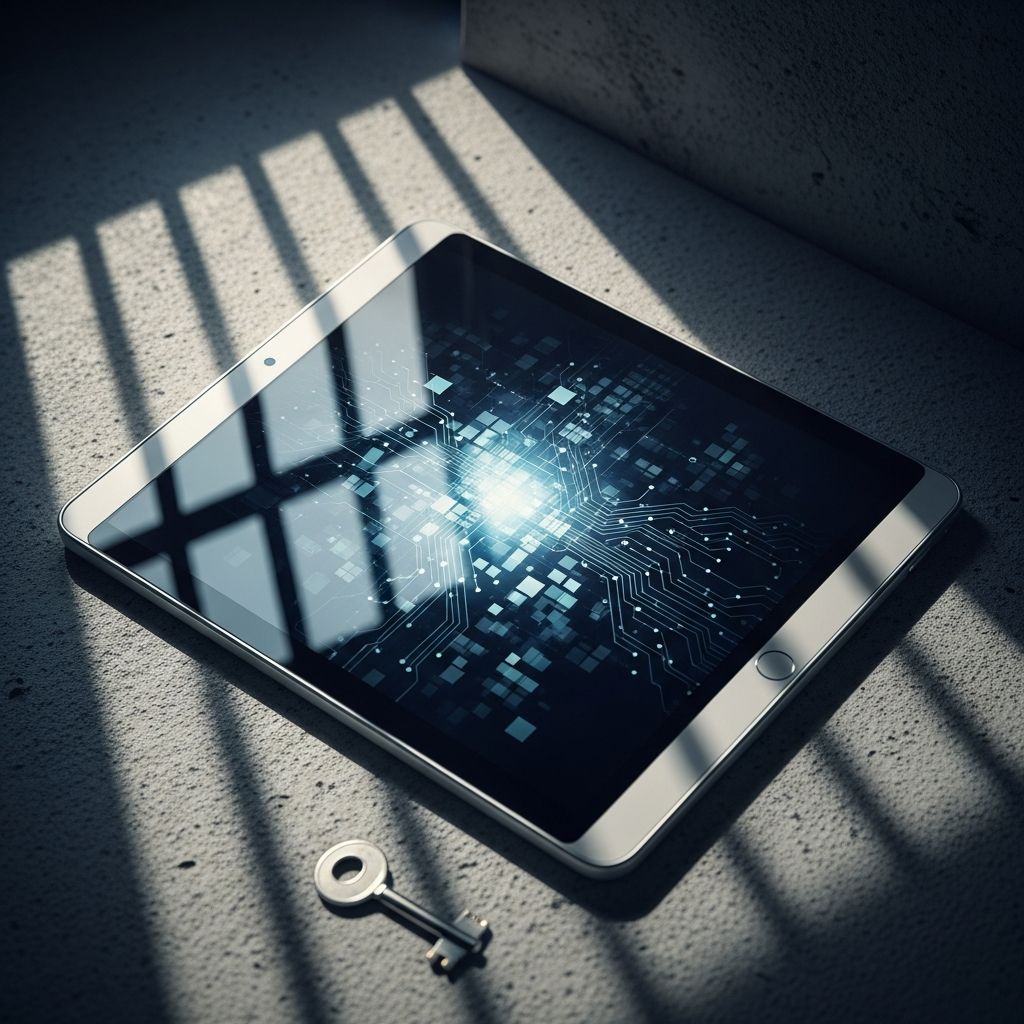
Correctional facilities across the United States have increasingly adopted tablet computers for inmates, aiming to enhance education, rehabilitation, and communication. These devices, often provided by vendors like GTL/ViaPath, Securus, and Edovo, offer controlled access to e-books, videos, messaging, and job training modules. However, this technological shift brings significant challenges, including vulnerability to hacking, expansive surveillance, and exploitative pricing models that can net vendors millions.
The Rise of Digital Devices Behind Bars
Tablet programs in prisons represent a departure from traditional restrictions on technology. Starting around 2019, states like Texas and New York rolled out widespread distribution, with Texas’s Department of Criminal Justice (TDCJ) providing Securus tablets to state prisoners in 2021. These devices connect via prison kiosks or restricted wireless networks, deliberately blocking full internet access to maintain security.
Proponents highlight multiple benefits. Officials note reduced violence and improved staff-prisoner dynamics, as tablets keep inmates engaged and reduce idle time. For instance, Edovo’s platform incentivizes good behavior by unlocking entertainment after completing educational modules, leading to quieter units and fewer incidents. In North Carolina, free tablets distributed in 2020 were initially met with skepticism but quickly became integral, featuring facial recognition and security codes for access.
- Educational Access: Pre-loaded courses in vocational skills, literacy, and life skills.
- Family Connectivity: Video calls, e-messaging, and photo sharing (subject to monitoring).
- Administrative Efficiency: Digital grievances, commissary orders, and account checks streamline operations.
Yet, these perks come at a cost—literally. Many programs operate on a ‘pay-for-play’ model, where basic access might be free, but premium content like movies or extra calling minutes requires purchases funded by inmates’ commissary accounts.
Financial Windfalls and Inmate Exploitation
Vendors reap substantial profits from these captive markets. A single high-profile case underscores the potential for abuse: an inmate allegedly hacked a prison tablet system to siphon off $250,000 through unauthorized transactions, prompting a federal investigation. Such incidents reveal how restricted devices can become lucrative loopholes for fraud.
Broader data shows the scale. With over 26,000 active tablets in New York alone by 2022, and similar deployments nationwide, commissions from commissary integrations generate millions annually for providers. Critics argue this creates a regressive economy, where low-income families subsidize vendors via inflated rates for calls and media—often 10-20 times higher than market prices.
| State/Program | Tablets Deployed | Vendor | Key Features |
|---|---|---|---|
| Texas (TDCJ) | Statewide since 2021 | Securus | Education, calls, e-messaging |
| New York (DOCCS) | 26,563 active (2022) | GTL/ViaPath | Kiosks, secure messaging |
| North Carolina | Free to all (2020) | Global Tel Link | Facial recognition, surveillance |
| South Carolina | Policy-regulated | Various | 6-hour access limits |
Equitable alternatives, like North Carolina’s no-cost model, show promise but often falter under maintenance expenses passed indirectly to taxpayers or inmates.
Security Vulnerabilities and Hacking Threats
Despite ‘corrections-grade’ designs with tamper-resistant features, GPS tracking, and no Wi-Fi on most units, tablets remain hackable. In March 2024, South Dakota’s Department of Corrections halted GTL services after a reported hack where an inmate allegedly accessed the system to issue staff threats. Investigations revealed potential rooting or jailbreaking, granting unauthorized features like social media or external communications.
Official policies emphasize safeguards. Montana’s procedures mandate daily audits, prohibit external chargers, and treat tablets as revocable privileges. Damage or tampering triggers disciplinary reports, with devices locked in secure charging carts overnight. South Carolina bans sharing PINs or corrupting files, limiting access to six hours daily. New York’s audit from 2019-2022 stressed vendor-supported updates and daily kiosk inspections to prevent breaches.
However real-world exploits persist. Inmates have reportedly ‘jailbroken’ devices for contraband coordination or fraud, exploiting software gaps. Vendors like Securus have faced multiple data breaches, exposing call records and messages—sometimes hacked by inmates themselves. Advanced models like Securus’s EVOTAB incorporate tamper alarms, but no system is foolproof.
Surveillance Overreach and Privacy Erosion
Tablets amplify prison oversight into a digital panopticon. All e-messages, calls, and attachments are stored in searchable databases, scanned for keywords like ‘escape’ or ‘contraband.’ Mail scanning services retain originals for a year and metadata for five, alerting staff to flagged terms.
This extends surveillance beyond walls. Families’ communications become permanent records, vulnerable to hacks—as seen in Securus breaches reported in 2016, 2019, and 2024. Unlike physical mail, digital trails capture usage patterns: music preferences, game habits, and educational progress, bundling them with communication logs.
EPIC warns that without privacy norms, tablets entrench state power, indexing every interaction for indefinite review. North Carolina’s rollout exemplified this, turning personal letters into searchable archives.
Balancing Benefits with Reforms
To harness tablets’ potential, reforms are essential. Free core services, rate caps on communications, and independent audits could mitigate exploitation. Secure storage like LocknCharge carts prevents physical tampering, while evidence-based content ensures rehabilitative value.
Facilities using Edovo report drops in violence and paperwork, freeing staff for human-focused tasks. Yet, treating tablets as privileges—revokable for infractions—raises due process concerns.
Future-proofing requires hybrid models: free education tablets separate from paid entertainment devices, bolstered by regular penetration testing and transparent vendor contracts.
Frequently Asked Questions (FAQs)
Q: Are prison tablets truly secure against hacking?
A: No system is impenetrable; incidents like South Dakota’s 2024 hack show rooting vulnerabilities despite safeguards like no Wi-Fi and tamper detection.
Q: Do inmates pay for tablet access?
Q:
A: Many programs are ‘pay-for-play,’ with free basics but fees for calls, media, and extras funded via commissary—criticized as exploitative.
Q: How does tablet surveillance work?
A: Messages, calls, and scanned mail are keyword-searched and stored long-term, often indefinitely, expanding monitoring beyond traditional methods.
Q: Can tablets reduce prison violence?
A: Yes, providers like Edovo report quieter units as inmates engage in education and entertainment, easing staff burdens.
Q: What happens if a tablet is tampered with?
A: Policies mandate confiscation, disciplinary action, and incident reports; daily audits and secure charging enforce compliance.
Policy Recommendations for Safer Implementation
Stakeholders must prioritize:
- Legislate communication rate caps and free educational access.
- Mandate annual security audits by third parties.
- Limit data retention to essential periods with anonymization.
- Invest in rugged, updatable hardware with AI-driven anomaly detection.
By addressing these, prisons can transform tablets from risky gadgets into genuine tools for reform.
References
- Pay-for-Play Tablets: The Costly New Prison Paradigm — Prison Legal News. 2025-03-01. https://www.prisonlegalnews.org/news/2025/mar/1/pay-play-tablets-costly-new-prison-paradigm/
- Prison technology: North Carolina’s most insidious surveillance — Scalawag Magazine. 2022-09-01. https://scalawagmagazine.org/2022/09/free-tablets-north-carolina-prisons/
- Secure Tablet Storage in Prisons: A Case Study — LocknCharge. 2023-01-01. https://www.lockncharge.com/blog/tablets-in-prisons
- Controls Over Tablet and Kiosk Usage by Incarcerated Individuals — New York Office of the State Comptroller. 2023-05-11. https://www.osc.ny.gov/state-agencies/audits/2023/05/11/controls-over-tablet-and-kiosk-usage-incarcerated-individuals
- “Free” Prison Tablets: In Promise and In Practice — Electronic Privacy Information Center (EPIC). 2023-01-01. https://epic.org/free-prison-tablets-in-promise-and-in-practice/
- Inmate-Issued Computer Tablets Procedure — Montana Department of Corrections. 2023-01-01. https://cor.mt.gov/DataStatsContractsPoliciesProcedures/Procedures/MSP-Procedures/3.3.10-Inmate–Issued–Computer–Tablets.pdf
- Inmate Tablets and Kiosks Policy — South Carolina Department of Corrections. 2023-01-01. https://www.doc.sc.gov/sites/doc/files/Documents/policy/OP-22-53.pdf
Similar Articles








Read full bio of Sneha Tete




