Hidden Messages: How Prison Mail Becomes a Drug Pipeline
Exploring how ordinary prison mail becomes a vehicle for drug smuggling, and what law, policy, and technology are doing to keep up.
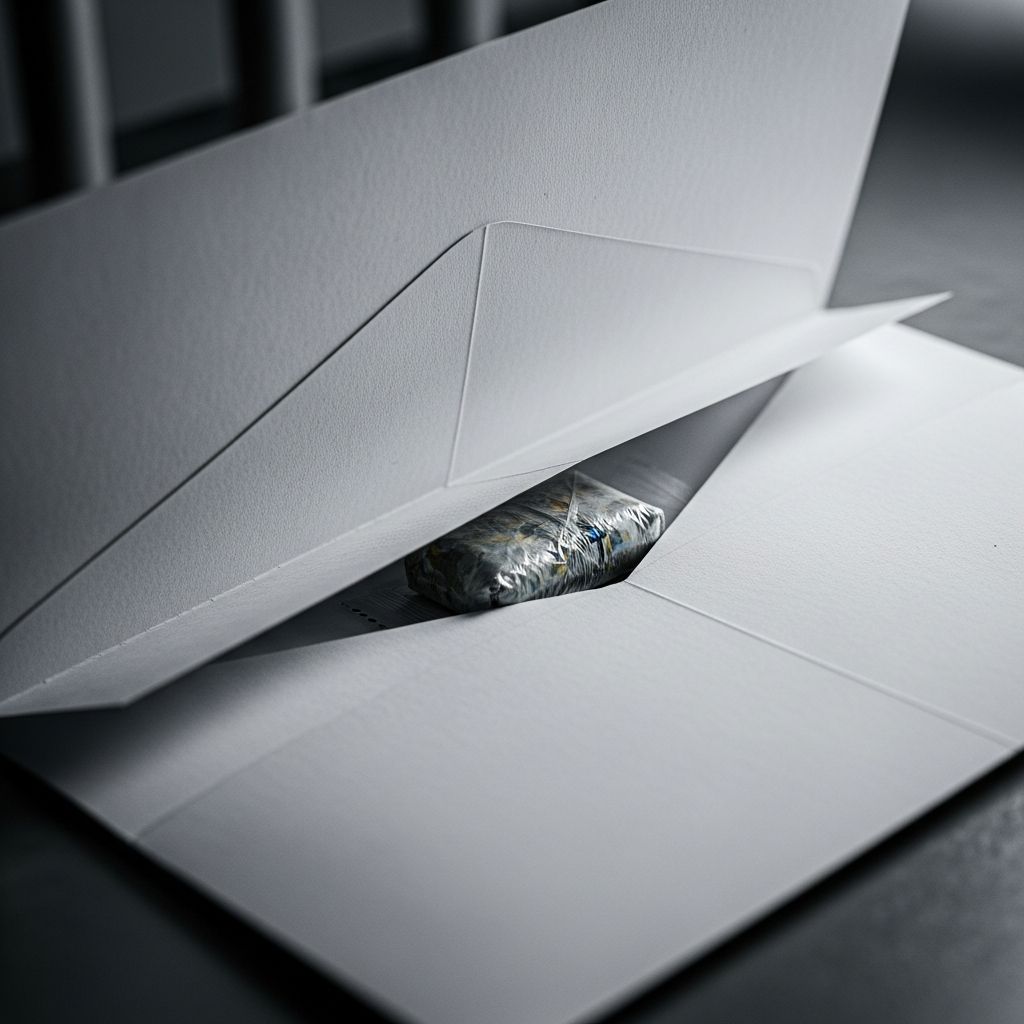
When Love Letters Turn Criminal: Drugs Hidden in Prison Mail
On the surface, a prison letter, birthday card, or hand-drawn picture looks like a fragile lifeline between people behind bars and their loved ones. Yet around the United States, those same items have been transformed into a sophisticated delivery system for illegal drugs, putting incarcerated people, staff, and visitors at risk. This article explores how drugs make their way into prison mail, why the problem is growing, and how the law is struggling to balance safety with the basic human need for connection.
Why Mail Matters So Much Behind Bars
Physical mail plays a unique role in jails and prisons:
- Emotional support: Letters help people maintain family ties and a sense of identity.
- Rehabilitation: Communication with the outside world is linked to lower recidivism and better mental health.
- Limited alternatives: Phone calls, video visits, and email-like systems can be expensive or restricted.
Because mail is so central and so frequent, it has also become a prime target for traffickers looking for ways to bypass security and deliver drugs into tightly controlled environments.
From Envelopes to Evidence: How Drugs Enter Through Mail
Contraband has always been a challenge for correctional facilities, but the methods used to exploit mail have become increasingly inventive. Authorities and investigators have reported drugs and other contraband entering facilities through:
- Letters and greeting cards soaked in or dusted with synthetic drugs like fentanyl or K2/Spice.
- Children’s drawings and artwork infused with narcotics to disguise their purpose.
- Books, magazines, and legal papers whose pages have been sprayed, soaked, or glued with drug solutions.
- Stamps, stickers, and labels that act as carriers for powdered or liquid drugs.
Once inside, even a small amount of high-potency synthetic drugs can be divided into tiny doses and sold for a premium on the prison black market, turning a single letter into dozens of hits.
Common Mail-Based Smuggling Techniques
| Method | How It Works | Main Risks |
|---|---|---|
| Drug-soaked paper | Paper is dipped or sprayed with liquid narcotics, dried, then written on like normal. | Hard to detect visually; small pieces can cause overdoses. |
| Infused artwork or cards | Ink, paint, or card stock is laced with drugs. | Children’s drawings and sentimental items can become lethal carriers. |
| Altered books | Pages coated or glued with drug solutions, sometimes between covers. | May bypass casual inspection; large surface area for transport. |
| Hidden powders or strips | Powder tucked into seams or drugs embedded as thin strips in envelopes. | Can be missed by basic searches; easy to share inside. |
The Fentanyl Factor: Why the Stakes Have Risen
Fentanyl and other synthetic opioids have changed the calculus for prison security. According to public health and law enforcement data, fentanyl is extremely potent: tiny amounts can be fatal, and it has driven a surge in overdose deaths nationwide. In correctional settings, this creates several serious problems:
- Overdose risk: Even a fragment of fentanyl-laced paper can cause severe intoxication or death when chewed or smoked.
- Staff exposure: Officers and mailroom employees handling contaminated letters may face health risks without adequate protective gear and training.
- Medical strain: Facilities must carry and train staff to use naloxone (Narcan) to reverse overdoses, adding logistical and financial burdens.
Correctional officials from large jail systems have publicly linked a portion of in-custody overdoses to drugs arriving through the mail, including fentanyl-laced paper items.
Love, Loyalty, and Criminal Liability
The emotional tone of prison mail can hide serious legal risk. People on the outside may convince themselves that sending a drug-soaked card is a minor favor or an act of devotion. In reality, it can lead to substantial criminal charges.
Potential Charges for Sending Drug-Contaminated Mail
Depending on the jurisdiction and circumstances, someone who sends drug-laced mail to an incarcerated person could face:
- Possession with intent to distribute controlled substances.
- Introducing contraband into a correctional facility or aiding such an offense.
- Conspiracy or attempt charges if there is evidence of coordination between the sender and the inmate.
- Federal charges if the offense involves interstate mail or certain types of narcotics or if it violates federal prison regulations.
Courts often treat smuggling into prisons as an aggravating factor, because the conduct undermines institutional security and can endanger many people, not just the intended recipient.
What Incarcerated People Risk
Incarcerated recipients are also exposed to serious consequences, such as:
- New criminal charges for possession, trafficking, or conspiracy.
- Loss of good-time credits that would otherwise reduce their sentence.
- Disciplinary segregation or other internal sanctions.
- Loss of privileges such as visits, access to programs, or phone and mail rights.
Some facilities also place inmates under closer monitoring or transfer them to higher-security units when they are suspected of involvement in mail-based smuggling schemes.
Real-World Responses: Copying, Scanning, and Going Digital
As drug overdoses and contraband incidents have risen, state and local corrections systems have begun to overhaul how mail is handled. Three major trends have emerged:
1. Photocopying Physical Mail
Some prison systems now intercept all personal mail, photocopy it, and only deliver copies to incarcerated people while storing or destroying the originals. Officials argue that this limits the ability to introduce drug-soaked papers while still allowing written communication.
Reported features of these programs include:
- Centralized processing centers where all mail is opened and scanned or copied.
- Delayed delivery times due to the extra steps and volume of mail.
- Preservation of text content but not the physical, sentimental value of original letters and drawings.
2. Full Digital Mail Systems
Other jurisdictions have explored or adopted systems in which incoming mail is scanned electronically, then viewed by inmates on tablets or kiosks instead of on paper. This approach offers some advantages:
- Reduced introduction of physical contraband via paper and envelopes.
- Centralized scanning and monitoring that can flag suspicious patterns or content.
- Potential searchability and storage for legal and investigative purposes.
However, critics worry about fees, data privacy, and the loss of tangible keepsakes that can be taped to cell walls or saved as mementos, which some see as essential to rehabilitation and human dignity.
3. Legislative Proposals and Federal Attention
Members of Congress and state legislators have begun to propose laws addressing drug-laced mail, particularly involving fentanyl. Some proposals focus on:
- Enhancing penalties for smuggling narcotics via mail into prisons and jails.
- Funding for detection technologies and protective equipment for staff.
- Standards for screening mail that may contain powdered or synthetic opioids.
Public statements from lawmakers have specifically cited narcotics being infused into items like children’s drawings and love letters as a reason for tougher safeguards.
Security vs. Humanity: A Difficult Trade-Off
Efforts to crack down on drug-laced mail raise an uncomfortable tension between two important goals: keeping prisons safe and preserving meaningful contact with the outside world.
Arguments for Stricter Controls
- Health and safety: Overdoses in custody have been framed as a humanitarian crisis, especially where synthetic opioids are involved.
- Staff protection: Officers, mailroom workers, and medical teams face direct risk from accidental exposure to contaminated mail.
- Institutional order: Drug markets inside facilities can fuel violence, extortion, and corruption.
Concerns Raised by Advocates and Families
- Loss of tangible connection: Photos, drawings, and handwritten cards often carry deep emotional significance that digital copies may not replace.
- Costs and access barriers: If digital mail platforms charge per page or message, low-income families may be effectively priced out of communication.
- Surveillance and privacy: Centralized scanning and storage can raise concerns about monitoring of intimate or sensitive messages.
Policy debates increasingly focus on whether it is possible to combine robust scanning and detection with continued access to low-cost, low-tech ways to stay in touch.
Legal Rights and Practical Realities
Mail to incarcerated people touches on several areas of law, including First Amendment rights, due process, and institutional security. Courts generally allow prisons to impose reasonable restrictions on mail to maintain safety, but blanket bans or arbitrary censorship can face legal challenges.
Key legal themes include:
- Content-neutral restrictions: Rules targeting the physical form of mail (such as banning originals or limiting page counts) are often viewed differently than bans based on the viewpoints expressed.
- Notice and appeal: When mail is withheld, some policies provide notice to the sender and recipient, along with procedures for challenging the decision.
- Attorney-client mail: Legal correspondence is typically given heightened protection, often requiring special handling to avoid violating confidentiality.
As scanning and photocopying become more common, courts will likely be asked to decide where the line lies between legitimate safety measures and unjustified interference with constitutional rights.
Staying on the Right Side of the Law
For people who want to support loved ones in custody, avoiding legal trouble boils down to a few core principles.
What Families and Friends Should Never Do
- Do not send any substance or item that could be considered a drug, medication, or contraband, whether in solid, liquid, or powder form.
- Do not agree to mail items provided or prepared by third parties who claim they can get drugs into a facility.
- Do not alter books, cards, or letters with chemicals, adhesives, or unknown sprays.
- Do not ignore warnings from the facility about prohibited items or formats.
Safer Ways to Communicate
To maintain connection without violating the law or facility rules, consider:
- Plain, handwritten letters using standard ink pens on regular paper.
- Unaltered photographs printed by reputable services within size and quantity limits.
- Officially approved books sent directly from publishers or authorized vendors, where allowed.
- Authorized electronic messaging systems if the facility offers them at reasonable cost.
When in doubt, it is wise to check the facility’s official mail policy or consult a qualified attorney to understand what is permitted.
Frequently Asked Questions (FAQs)
Q: How do prisons detect drugs in letters and cards?
A: Facilities use a mix of visual inspection, trained staff, sometimes drug-sniffing dogs, and increasingly, centralized scanning or photocopying of all incoming mail. Some also use chemical detection tools or test strips when mail appears suspicious.
Q: Can someone be charged just for mailing a drug-soaked love letter?
A: Yes. Sending any controlled substance into a jail or prison, even disguised as a letter or drawing, can lead to charges for introducing contraband, drug distribution, and conspiracy, along with possible federal offenses depending on the facts.
Q: Why are prisons moving to scanned or digital mail instead of just searching envelopes more carefully?
A: High-potency drugs like fentanyl can be infused into paper in ways that are very hard to spot by eye, and even tiny amounts can cause overdoses. Scanning or copying aims to deny traffickers the physical medium they rely on while still allowing written communication.
Q: Does photocopying or scanning mail violate inmates’ rights?
A: Courts generally allow prisons to adopt reasonable, content-neutral measures to protect safety and security. Whether a specific policy is lawful can depend on how broad it is, how it is implemented, and whether it provides safeguards against arbitrary censorship.
Q: Are there any safe ways to send artwork or cards to someone in prison?
A: Many facilities still allow simple cards or drawings made with standard materials, but rules vary widely. Some systems now only provide black-and-white photocopies of artwork to inmates. Checking the facility’s mail guidelines before sending anything decorative is essential.
References
- Rikers Island taking measures to stop flow of drug-laced mail — WABC-TV / ABC7NY. 2022-10-31. https://abc7ny.com/post/rikers-island-drugs-fentanyl-drug-smuggling/12694123/
- North Carolina prison system delivers copies of mailed letters to cut down on drugs — North Carolina Public Radio (WUNC). 2021-10-20. https://www.wunc.org/2021-10-20/nc-prison-system-delivers-copies-of-mailed-letters-to-cut-down-on-drugs
- A new bill will guard against lethal letters in U.S. prisons — Office of Rep. Don Bacon. 2023-06-15. https://bacon.house.gov/news/documentsingle.aspx?DocumentID=1368
- Children’s drawings, love letters sent to Rikers laced with drugs — WABC-TV / ABC7NY (video report). 2022-10-31. https://www.youtube.com/watch?v=rxiyxpYve8I
- Overdose deaths involving opioids, cocaine, and psychostimulants — Centers for Disease Control and Prevention. 2022-02-09. https://www.cdc.gov/drugoverdose/deaths/index.html
Similar Articles








Read full bio of medha deb