Receiving letters and packages addressed to someone who no longer lives at your home is common, especially after a recent move or a change in tenancy. Yet many people do not realize that simply shredding, discarding, or opening that mail can cross the line into a federal crime in the United States.
This guide explains when handling a previous tenant’s mail becomes illegal, what laws are involved, and the practical, lawful steps you can take so you stay on the right side of the law while dealing with unwanted envelopes.
Why Shredding a Previous Tenant’s Mail Can Be Illegal
Under U.S. federal law, mail is protected property and is part of a regulated system run by the United States Postal Service (USPS). Interfering with that system or with another person’s mail can trigger serious criminal consequences.
The key issue is intentional interference. If you knowingly prevent mail from reaching the person it is addressed to, you may be committing a crime, even if you believe the mail is unimportant or the recipient moved away years ago.
- Shredding mail addressed to someone else can be treated as intentional destruction.
- Throwing it away instead of returning it to the postal system can be viewed as hiding or discarding protected correspondence.
- Opening and then destroying someone else’s letter is even more serious, because it combines invasion of privacy with interference in delivery.
Even if you are frustrated by constant mail for people who moved years ago, the safest approach is to assume that destroying or discarding that mail is not permitted.
The Federal Crime: Obstruction of Correspondence
In U.S. law, interfering with another person’s mail is generally prosecuted under the offense commonly known as obstruction of correspondence. This falls within the federal criminal code governing the mail system.
In plain language, obstruction of correspondence covers actions such as:
- Destroying mail that is not yours
- Hiding or intentionally withholding someone else’s mail
- Opening mail that is clearly addressed to another person and then preventing delivery
- Embezzling or diverting mail for personal gain
Because this is a federal offense, it is prosecuted by federal authorities rather than under ordinary state theft or property laws. That gives the government broad power to pursue cases, especially if the conduct is repeated or financially motivated.
Potential Penalties
Obstruction of correspondence is not a minor infraction—it is classified as a felony under federal law.
| Type of Conduct | Possible Legal Consequences |
|---|---|
| Destroying mail (e.g., shredding letters) | Felony charges, potential prison term up to several years, and fines |
| Intentionally hiding or discarding mail | Felony charges for obstructing delivery of correspondence |
| Opening mail and then preventing delivery | Felony charges, increased likelihood of prosecution due to clear intent |
| Repeated or financially motivated mail interference | May be treated more severely, possibly alongside theft or fraud offenses |
While ordinary tenants or homeowners are rarely prosecuted for isolated, low-impact incidents, the law itself is strict. The safest assumption is that intentionally interfering with mail that is not addressed to you can expose you to significant criminal liability.
Intent: The Line Between Accident and Crime
Federal mail crimes generally require intent, meaning prosecutors must show that you knowingly interfered with the mail’s delivery.
In practice, this distinction matters in scenarios like:
- Accidental opening: If you genuinely mistake a letter addressed to someone else for your own and open it, that alone is unlikely to be treated as a crime. The key is what you do afterward—taping it closed, notifying the carrier, and returning it helps show you are not trying to obstruct delivery.
- Deliberate destruction: If you repeatedly shred or throw away mail addressed to another person because you do not want to deal with it, that pattern may demonstrate intent to keep that mail from its recipient.
Intent can be inferred from behavior. Ignoring clear instructions, destroying mail instead of returning it, or consciously hiding important letters can all signal criminal purpose.
Is Junk Mail Treated Differently?
Many people assume that advertising flyers or bulk mail are exempt from legal protection. However, reliable guidance for landlords and tenants stresses that even junk or bulk mail should not be tampered with if it is addressed to someone else.
There is debate among commentators about how strictly the law applies to standard advertising mail, but two points are clear:
- Federal statutes do not distinguish between important and unimportant mail when defining obstruction of correspondence.
- Professional guidance to landlords consistently advises returning all mail to the postal system rather than discarding it.
Because you cannot easily tell whether a piece of mail contains sensitive information, financial data, or legal notices, treating all mail equally and returning it is the safest legal and ethical choice.
What You Should NOT Do with Previous Tenant Mail
To minimize legal risk, there are several actions you should avoid when dealing with mail addressed to a former resident:
- Do not shred someone else’s mail. Shredding is a deliberate act of destruction and can be viewed as obstruction of correspondence.
- Do not throw mail directly into the trash. Discarding mail without returning it to the postal system may be treated as intentional interference.
- Do not open the mail out of curiosity. Opening another person’s mail is generally prohibited and often regarded as a serious invasion of privacy as well as a potential felony if delivery is obstructed.
- Do not file a change-of-address form on their behalf. Submitting a forwarding request for a previous tenant without authorization can itself be illegal and may compound the problem.
If you are uncertain whether a particular action is allowed, err on the side of caution and return the mail to USPS rather than taking matters into your own hands.
Lawful Options: How to Handle Previous Tenant Mail Safely
Although destroying mail is not permitted, there are several straightforward, lawful ways to manage correspondence that is not addressed to you.
1. Mark and Return the Mail
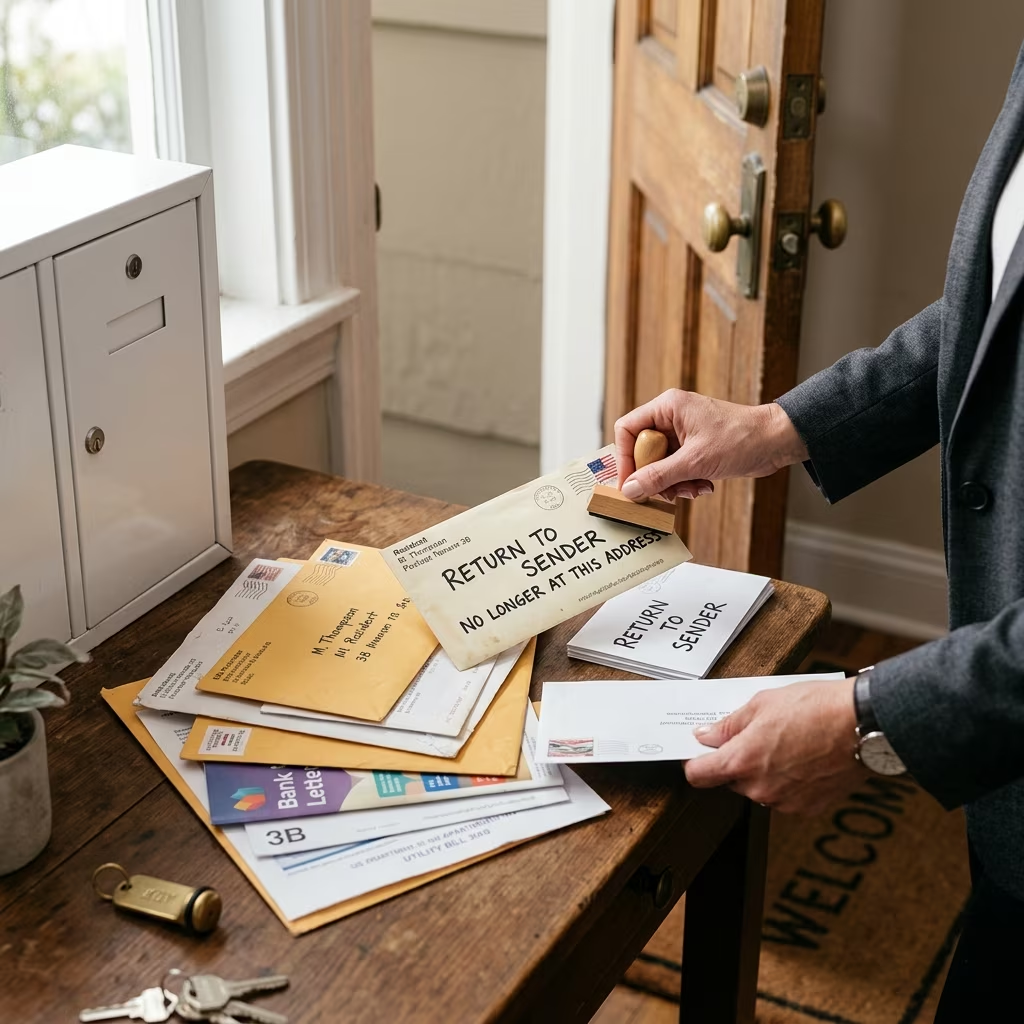
The simplest method is to hand the mail back to the postal system with a clear indication that the addressee no longer lives at your address.
- Write phrases such as “Return to Sender”, “Not at This Address”, or “Moved” on the envelope.
- If there is a barcode printed along the bottom of the envelope, draw a line through it to signal that the item should be treated as undeliverable by automated sorting systems.
- Place the marked mail back into your mailbox or a USPS collection box so the carrier can process it.
By doing this, you allow the sender and the postal service to update their records and you avoid any suggestion that you tried to obstruct delivery.
2. Leave a Note for the Mail Carrier
Another effective step is to inform your mail carrier directly that the previous tenant no longer resides at your address.
- Attach a short note inside or outside your mailbox stating that mail should not be delivered for the former resident.
- Include the names of current authorized recipients if helpful.
- If the issue continues, speak to your carrier or visit your local post office to request that they treat mail for the previous resident as undeliverable.
Clear communication can reduce the volume of misdelivered mail and shows that you are acting cooperatively with USPS rather than interfering with it.
3. Contact the Former Tenant (If Possible)
In some cases, you or your landlord may still have contact information for the previous tenant. If so, you can encourage them to update their address with USPS and their banks, government agencies, and other senders.
- Inform them that mail is still arriving and ask them to submit a formal change-of-address request with USPS.
- Suggest they notify important contacts (such as employers, financial institutions, and healthcare providers) of their new address.
When tenants take responsibility for their own mail, the problem usually resolves without further action on your part.
4. Temporary Storage for Non-Urgent Mail
For landlords or property managers handling large volumes of mail, a short period of temporary storage can be reasonable, especially while attempts to contact the former tenant continue.
- Keep non-urgent mail in a designated place for a limited time (often suggested as 30–60 days), but check local guidance or company policy.
- Label stored mail clearly to avoid confusion among multiple former tenants.
Even when you store mail, the safest practice is to continue returning important or official-looking items to the sender and avoid destroying them.
Landlords and Property Managers: Extra Responsibilities
Landlords and property managers often receive more mail for former tenants than ordinary residents do. Professional resources emphasize that they are held to the same legal standard regarding mail tampering and must avoid destroying or discarding mail addressed to others.
Best practices for landlords include:
- Educate new tenants about the need to mark and return mail rather than shredding it.
- Maintain clear written instructions for staff on how to handle mail addressed to past tenants.
- Never open, shred, or throw away mail that is not addressed to the property owner or current tenant.
- Document efforts to return mail or contact former tenants, especially where legal notices or security deposit communications are involved.
Following these procedures reduces legal risk and supports compliance with federal mailing laws.
Frequently Asked Questions
Is it always illegal to throw away someone else’s mail?
Federal law prohibits intentionally destroying, hiding, or otherwise preventing mail from reaching its intended recipient. That means throwing away mail addressed to someone else can qualify as obstruction of correspondence. While enforcement may be rare in minor cases, the law itself is broad, so the recommended approach is to return the mail rather than discard it.
What if I accidentally opened a previous tenant’s letter?
Accidental opening is unlikely by itself to constitute a crime, because mail offenses generally require intent. However, once you realize the mail is not yours, you should stop reading, reseal the envelope if possible, and write a note such as “Delivered to Wrong Address” or “Not at This Address” before returning it to USPS. Acting promptly helps demonstrate that you are not trying to obstruct delivery.
Does it matter if the mail is just junk advertising?
Even advertising mail can contain personal data or financial offers, and official guidance for landlords and residents warns against tampering with any mail that is not addressed to you. Because the law does not clearly exempt junk mail, the safest course is to mark it and return it instead of shredding or discarding it.
Can I file a change of address for a former tenant?
No. Submitting a change-of-address request on behalf of someone else without authorization can itself be unlawful and may interfere with their ability to receive important mail. Only the addressee or a legally authorized agent (such as an executor or guardian) should file a change-of-address request with USPS.
What should I write on the envelope to handle mail correctly?
Common, lawful phrases include “Return to Sender,” “Not at This Address,” “Moved,” or “Deceased, Return to Sender” where applicable. Crossing out the barcode at the bottom of the envelope can help ensure postal sorting machines treat the mail as undeliverable. Place the envelope back into your mailbox or a USPS collection box once you have marked it.
Key Takeaways
- Shredding, throwing away, or hiding a previous tenant’s mail can amount to obstruction of correspondence, a federal felony.
- Intent is central: criminal liability usually arises when you knowingly prevent mail from reaching its intended recipient.
- The safest practice is always to mark misdelivered mail and return it to the postal system.
- Do not submit change-of-address forms for former tenants unless you are legally authorized to do so.
- Landlords and property managers should adopt written policies and educate tenants to avoid any mail tampering.
References
- Is It Illegal to Shred Previous Tenants’ Mail? — FindLaw. 2024-05-20. https://www.findlaw.com/criminal/criminal-charges/is-it-illegal-to-shred-previous-tenants-mail.html
- What to Do with Mail from Previous Tenants — Blanket Homes. 2023-08-10. https://blankethomes.com/previous-tenant-mail/
- What To Do With Mail From Tenant With No Forwarding Address? — Landlord Studio. 2023-04-12. https://www.landlordstudio.com/blog/mail-from-a-previous-tenant
- What to Do with Mail That Is Not Yours — Allied Van Lines. 2024-03-15. https://www.allied.com/blog/view/all-blogs/2024/03/15/what-to-do-with-mail-that-is-not-yours
- Is It Illegal to Throw Away Someone Else’s Mail? | Expert Q&A — JustAnswer (Canada Law). 2022-06-01. https://www.justanswer.com/canada-law/l2ihd-people-throw-previous-tenants-mail.html