
Prepaid, Debit, and Credit Cards: Understanding the Key Differences
Learn how prepaid, debit, and credit cards work, how they differ, and how to choose the safest and smartest option for everyday spending.
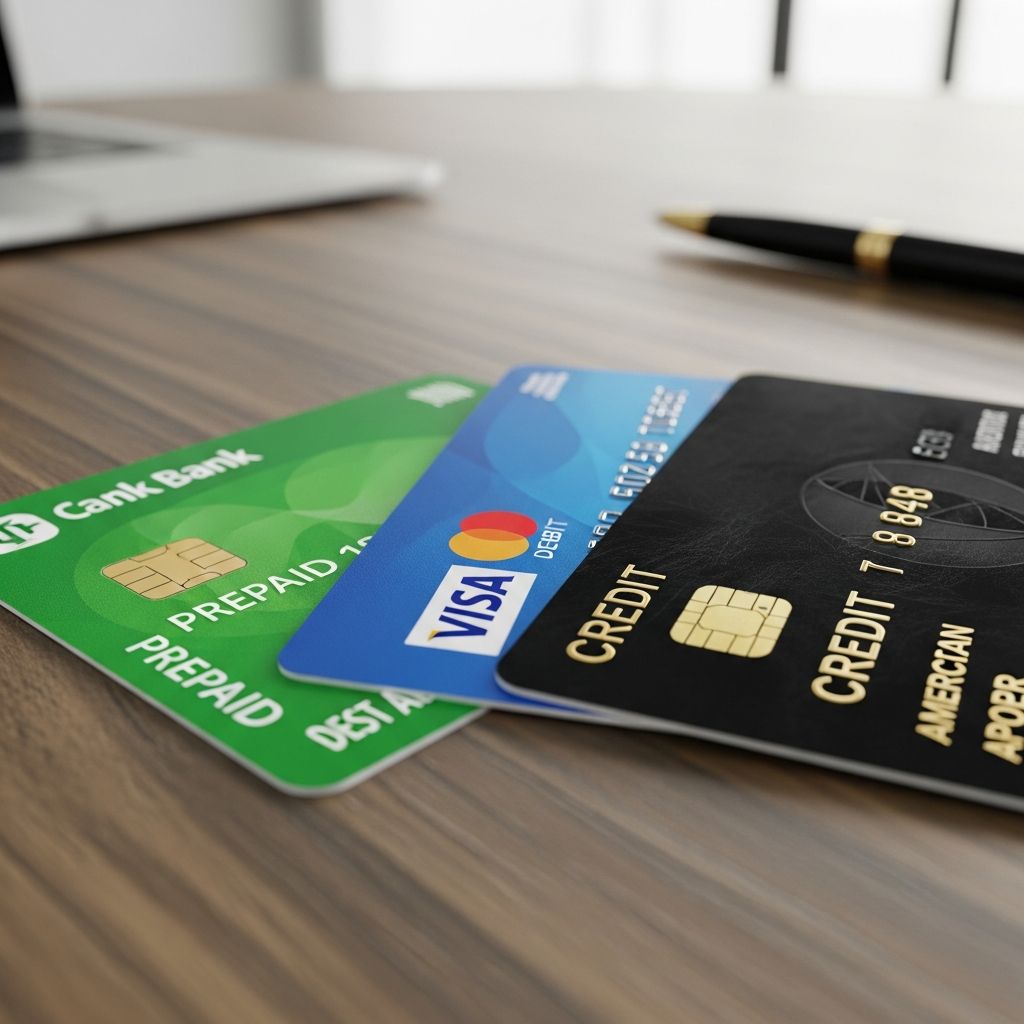
Payment cards may look similar in your wallet, but they do not all work the same way. Understanding how prepaid cards, debit cards, and credit cards differ is essential for avoiding unnecessary fees, protecting your money, and choosing the right tool for everyday spending.
This guide explains, in plain language, how each type of card works, where the money comes from, how you are protected, and what that means for your budget and your credit profile.
Big Picture: How These Cards Differ at a Glance
The most important distinction among prepaid, debit, and credit cards is whose money you are using when you pay.
| Card type | Whose money are you spending? | Account connection | Can it build credit? |
|---|---|---|---|
| Prepaid card | Your own funds you loaded in advance | Usually not linked to a bank account | No, activity is typically not reported to credit bureaus |
| Debit card | Your money in a checking or similar account | Directly linked to your bank or credit union account | No, normal use does not build credit |
| Credit card | Money borrowed from the card issuer | Line of credit, not a deposit account | Yes, if the issuer reports to credit bureaus and you pay on time |
How Prepaid Cards Work
A prepaid card is a payment card that you load with money before you spend. You are not borrowing; you are just accessing funds you already deposited on the card.
Basic features of prepaid cards
- Load first, then spend: You add money to the card (often called “loading” or “reloading”), and you can spend only up to the loaded amount.
- No bank account required: Many general purpose prepaid cards do not require you to have a checking account or traditional banking relationship.
- Card network branding: Many carry logos such as Visa, Mastercard, or American Express, so they can often be used where those networks are accepted, including online.
- Multiple types: They may be reloadable general-purpose cards, payroll cards, or gift cards that are limited to specific merchants or amounts.
Where the money comes from
When you pay with a prepaid card, the transaction pulls money from the prepaid card account balance that you previously funded. Once that balance reaches zero, purchases will be declined unless you reload the card.
Potential fees on prepaid cards
Prepaid cards can be convenient, but they may come with a variety of fees. Fee structures differ widely by provider, so reading the disclosure is critical.
- Initial purchase or activation fee
- Monthly or maintenance fee
- Reload fees when adding cash
- ATM withdrawal fees or balance inquiry fees
- Transaction or inactivity fees, depending on the card terms
Pros and cons of prepaid cards
Advantages:
- No need for a traditional bank account to use card-based payments.
- Helps control overspending, since you can use only the amount loaded.
- Safer than carrying cash, and some cards offer protections if registered.
Drawbacks:
- Fees can significantly reduce the value of the money you load if you are not careful.
- Does not usually help build your credit history.
- Some cards have limited protections or fewer dispute rights compared with credit cards.
How Debit Cards Work
A debit card allows you to spend money directly from your bank or credit union account. It is usually linked to a checking account, though it can also access certain savings or other accounts depending on your financial institution.
Key characteristics of debit cards
- Direct link to your account: When you pay with a debit card, the money is taken straight from your deposit account balance, often within a short period of time.
- ATM access: Debit cards commonly function as ATM cards, allowing cash withdrawals and balance inquiries.
- Network-branded: Many debit cards carry card network logos, so you can use them anywhere that network is accepted, as long as funds are available.
Spending limits and overdrafts
Since debit cards draw from your bank account, you are normally limited to the amount available in that account. However, if you have overdraft services, your bank may allow certain transactions that exceed your balance, and then charge overdraft fees or require repayment for the negative amount.
Fees that may apply to debit cards
Debit cards are often part of a bank account package, so fees may be tied to the account rather than the plastic card itself.
- Monthly maintenance fees for the account, unless waived
- Overdraft or non-sufficient funds (NSF) fees if you spend more than you have
- ATM fees for using out-of-network machines
Pros and cons of debit cards
Advantages:
- Helps you avoid long-term debt, because you are spending money you already have.
- Useful for everyday purchases and ATM withdrawals.
- No interest charges, since you are not borrowing.
Drawbacks:
- Overdraft fees can be high if you are not monitoring your balance.
- Dispute and fraud protections may be more limited than with credit cards, especially for certain types of transactions or if you delay reporting a problem.
- Does not typically contribute to building a credit history.
How Credit Cards Work
A credit card gives you access to a line of credit from a bank or other issuer. Each time you use the card, you are borrowing money and promising to repay the amount, plus any applicable interest and fees.
Main elements of a credit card
- Credit limit: The maximum amount you can borrow on the card at any one time.
- Billing cycle and statement: Purchases are grouped into monthly cycles, and you receive a statement showing your total balance, minimum payment due, and due date.
- Interest charges: If you do not pay your full statement balance by the due date, the issuer generally charges interest on the remaining balance at an annual percentage rate (APR).
- Fees: Cards may have annual fees, late payment fees, balance transfer fees, and other charges depending on the product.
Minimum payments and interest
Credit card statements usually offer a minimum payment option, which is a small percentage of what you owe. Paying only the minimum may keep the account current, but the remaining balance will continue to accrue interest, often at a relatively high rate.
Credit cards and credit scores
Most mainstream credit card issuers report your account activity to the major credit bureaus. Using a credit card responsibly—keeping balances low relative to your limit and making all payments on time—can help you build or improve your credit history.
By contrast, missing payments, going over your limit, or letting an account go into collections can significantly damage your credit profile.
Comparing Key Features Across Card Types
The following table brings together crucial differences that matter for day-to-day use.
| Feature | Prepaid card | Debit card | Credit card |
|---|---|---|---|
| Source of funds | Pre-loaded balance | Deposits in linked account | Borrowed from issuer |
| Can you spend more than you have? | Generally no; transactions decline when funds are insufficient | Possibly, if overdraft is allowed, often with fees | Yes, up to your credit limit; unpaid balances may accrue interest |
| Interest charges | No interest on purchases | No interest on purchases | Interest usually applies if you carry a balance past the due date |
| Impact on credit history | Usually none | Generally none | Yes, reported to credit bureaus and can help or hurt your score |
| Typical uses | Budgeting, alternative to cash, income disbursements | Everyday purchases, bill payments, ATM withdrawals | Larger purchases, online shopping, travel, rewards earning |
Fraud, Mistakes, and Consumer Protections
Fraud protections and your potential liability differ by card type and by the law that applies to the account.
Credit card protections
Federal law generally limits your liability for unauthorized use of a credit card to $50, and many card issuers voluntarily provide zero-liability policies.
- Disputed charges can often be temporarily reversed while the issuer investigates.
- Strong protections apply for certain billing errors and unauthorized use under federal regulations.
Debit card protections
Debit cards are covered by different rules related to electronic fund transfers. Your liability for unauthorized transactions depends on how quickly you notify your bank after learning of the loss or theft. Prompt reporting reduces your potential loss, while delays can increase it.
- Since funds are taken directly from your account, it may take time to restore money after a fraudulent transaction.
- Monitoring your account activity and setting alerts can help catch issues early.
Prepaid card protections
General purpose reloadable prepaid cards that are registered and meet certain conditions may receive protections similar to debit cards, including limited liability for unauthorized transfers.
- Protections may vary by card type (for example, some gift cards or closed-loop cards may have different rules).
- Registering your card and keeping records of loads and receipts can help if you need to dispute a transaction.
Choosing the Right Card for Your Situation
No single card type is best in all circumstances. Instead, consider your goals, habits, and tolerance for risk and fees.
When a prepaid card may make sense
- You do not have or do not want a traditional bank account but need a card for purchases or bill payments.
- You are budgeting for a specific purpose (such as travel or a project) and want to limit spending to a set amount.
- You are providing a card to someone else (for example, a teen or employee) and want strict limits on available funds.
When a debit card may be the better option
- You have a checking account and want simple access to your own money.
- You prefer to avoid borrowing and interest charges entirely.
- You make frequent ATM withdrawals and want to minimize cash-carrying risks.
When a credit card can be beneficial
- You are able to pay your balance in full each month and want to earn rewards or cash back.
- You are focused on building or improving your credit history over time.
- You want stronger protections for online shopping or travel-related purchases.
However, using a credit card effectively requires discipline. Relying on credit cards for everyday spending without a clear repayment plan can lead to debt accumulation and interest costs.
Practical Tips for Safer Card Use
Regardless of which card you choose, a few habits can reduce risk and unnecessary costs.
- Read the fee and terms disclosures: For prepaid and debit cards, pay attention to monthly and transaction fees. For credit cards, review APRs, grace periods, and penalty fees.
- Monitor your accounts regularly: Check statements or use mobile apps to spot unauthorized activity or errors quickly.
- Set alerts: Many issuers allow text or email alerts for large transactions, low balances, or approaching due dates.
- Report problems immediately: Rapid reporting is critical to limiting your liability for unauthorized transactions, especially with debit and prepaid cards.
- Use strong, unique passwords and enable multifactor authentication: This helps protect online access to your card accounts.
Frequently Asked Questions (FAQs)
Q1: Can using a prepaid card help me build credit?
No. Standard prepaid card activity is not reported to credit bureaus, so it does not help build or improve your credit history. If your goal is to establish credit, a credit card or secured credit card that reports to the bureaus is typically required.
Q2: Is a debit card safer than using cash?
In many situations, yes. If cash is lost or stolen, it is usually gone for good. With a debit card, you may have legal protections that limit your liability for unauthorized electronic transfers if you report them promptly, though it can still take time to get your money back.
Q3: Why does my prepaid or debit card have a Visa or Mastercard logo if it is not a credit card?
Card networks like Visa and Mastercard provide the payment infrastructure, but they do not determine whether the card is a prepaid, debit, or credit product. A card can be linked to your bank account (debit), to a prepaid balance, or to a credit line and still carry the same network logo for acceptance.
Q4: What happens if I only pay the minimum on my credit card?
Paying only the minimum will generally keep your account in good standing, but it leaves most of the balance unpaid. The remaining amount will usually accrue interest, which can significantly increase the total cost of your purchases over time.
Q5: Can I be charged overdraft fees on a prepaid or debit card?
Debit cards can incur overdraft fees if your bank allows transactions that exceed your account balance and you are enrolled in an overdraft program. Many prepaid cards do not permit overdrafts and will simply decline transactions when your balance is insufficient, but you should review the specific terms of your card to be sure.
References
- How are prepaid cards, debit cards, and credit cards different? — Consumer Financial Protection Bureau. 2021-09-01. https://www.consumerfinance.gov/ask-cfpb/how-are-prepaid-cards-debit-cards-and-credit-cards-different-en-433/
- Differences Between Credit, Debit, and Prepaid Cards — Wisconsin Department of Financial Institutions. 2023-02-10. https://dfi.wi.gov/Pages/ConsumerServices/WisconsinConsumerAct/DifferencesBetweenCreditDebitPrepaidCards.aspx
- What Is a Prepaid Card and How Does It Work? — Capital One. 2023-06-15. https://www.capitalone.com/learn-grow/money-management/how-do-prepaid-debit-cards-work/
- Comparing Credit, Charge, Secured Credit, Debit, or Prepaid Cards — Federal Trade Commission. 2022-04-28. https://consumer.ftc.gov/node/78357
- What is the difference between a prepaid card, a credit card, and a debit card? — U.S. Air Force, Ellsworth AFB (PDF educational material). 2018-01-01. https://www.ellsworth.af.mil/Portals/146/4_%20Debits%20Cards,%20Credit%20Cards,%20and%20Prepaid%20Cards.pdf
Similar Articles








Read full bio of Sneha Tete




